Categories:

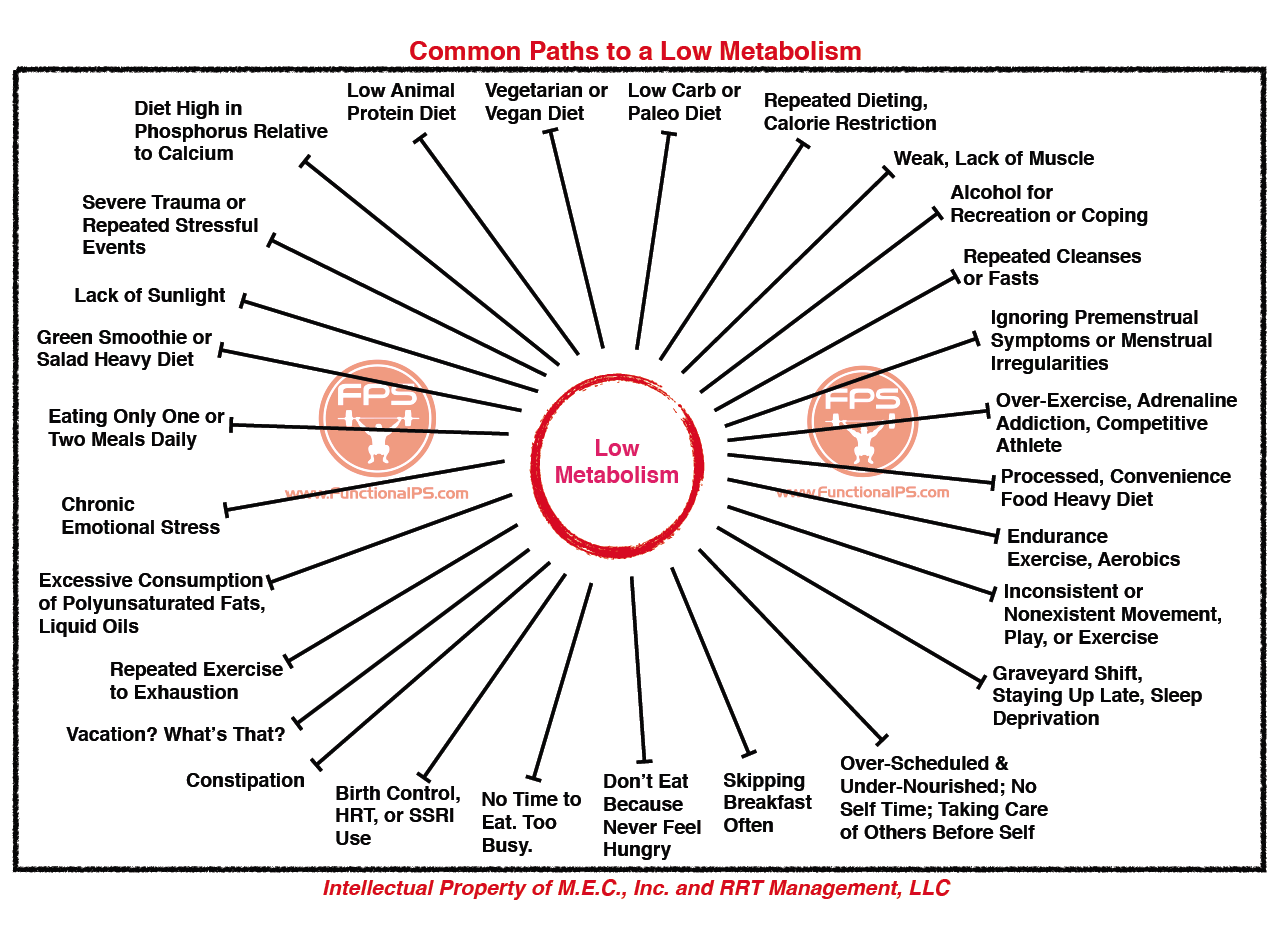
Common Paths to a Low Metabolism

Also see:
Common Paths to a High MetabolismCollection of FPS Charts
Collection of Ray Peat Quote Blogs by FPS
Master List – Ray Peat, PhD Interviews
Components of Daily Energy Expenditure
Body Temperature, Metabolism, and Obesity

This chart indicates commons ways in which cell metabolism is suppressed. More than one factor may be acting at once. Commonalities among the factors are lean tissue loss, thyroid suppression, blood sugar dysregulation, malnutrition, steroid hormone imbalance, and frequent activation of systems used to prolong life during actual starvation.

fps metabolism chart fps

Posted in General.

Tagged with , , , , .


The Glucose Song

Also see:
Comparison: Carbon Dioxide v. Lactic Acid
Cellular Energy Production – Aerobic Respiration – The Krebs Cycle
Carbon Dioxide Basics
Carbon Dioxide as an Antioxidant
Comparison: Oxidative Metabolism v. Glycolytic Metabolic
Promoters of Efficient v. Inefficient Metabolism
Trauma & Resuscitation: Toxicity of Lactated Ringer’s Solution
Altitude Sickness: Therapeutic Effects of Acetazolamide and Carbon Dioxide
Low CO2 in Hypothyroidism
Protective Altitude
Protect the Mitochondria
Lactate Paradox: High Altitude and Exercise
Altitude Improves T3 Levels
Protective Carbon Dioxide, Exercise, and Performance
Synergistic Effect of Creatine and Baking Soda on Performance
Ray Peat, PhD on Carbon Dioxide, Longevity, and Regeneration
Mitochondria & Mortality
Altitude and Mortality

Posted in General.

Tagged with , , , , , , , , , , , .


Ray Peat, PhD on Nitric Oxide

Also see:
LED Light Therapy Could Radically Change Our Treatment of Brain Disease
Collection of Ray Peat Quote Blogs by FPS
Collection of FPS Charts
Master List – Ray Peat, PhD Interviews
Protective Glycine
Thyroid peroxidase activity is inhibited by amino acids
Gelatin, Glycine, and Metabolism
Gelatin > Whey
Ray Peat, PhD on Endotoxin
Bowel Toxins Accelerate Aging
Ray Peat, PhD on the Benefits of the Raw Carrot
Protective Cascara Sagrada and Emodin
Fermentable Carbohydrates, Anxiety, Aggression
Protective Bamboo Shoots
Endotoxin-lipoprotein Hypothesis
Endotoxin: Poisoning from the Inside Out
Protection from Endotoxin
How does estrogen enhance endotoxin toxicity? Let me count the ways.
Intestinal Serotonin and Bone Loss
Carbon Dioxide Basics
Comparison: Carbon Dioxide v. Lactic Acid
Carbon Dioxide as an Antioxidant
Bohr Effect and Cells O2 Levels: Healthy vs. Sick People
Comparison: Oxidative Metabolism v. Glycolytic Metabolic
Promoters of Efficient v. Inefficient Metabolism
Altitude Sickness: Therapeutic Effects of Acetazolamide and Carbon Dioxide
Low CO2 in Hypothyroidism
Protective Altitude
Lactate Paradox: High Altitude and Exercise
Protective Carbon Dioxide, Exercise, and Performance
Benefits of Aspirin
Ray Peat, PhD on Aspirin
Sodium Deficiency in Pre-eclampsia
Role of Serotonin in Preeclampsia

“Prostaglandins, platelet activating factor, nitric oxide, peroxidase, lipases, histamine, serotonin, lactate, insulin, intracellular calcium, carbon dioxide, osmolarity, pH, and the redox environment are all relevant to cancer, and are affected systemically and locally by estrogen and progesterone in generally opposing ways.”

“And, obviously, drugs that are intended to increased the effects of nitric oxide (asparagine, zildenafil/Viagra, minoxidil/Rogaine) and acetylcholine (bethanechol, benzpyrinium, etc.) should be avoided.”

“The basic control of blood flow in the brain is the result of the relaxation of the wall of blood vessels in the presence of carbon dioxide, which is produced in proportion to the rate at which oxygen and glucose are being metabolically combined by active cells. In the inability of cells to produce CO2 at a normal rate, nitric oxide synthesis in blood vessels can cause them to dilate. The mechanism of relaxation by NO is very different, however, involving the inhibition of mitochondrial energy production (Barron, et al., 2001). Situations that favor the production and retention of larger amounts of carbon dioxide in the tissues are likely to reduce the basic “tone” of the parasympathetic nervous system, and there is less need for additional vasodilation.”

“Nitric oxide is increasingly seen as an important factor in nerve degeneration (Doherty, 2011). Nitric oxide activates processes (Obukuro, et al., 2013) that can lead to cell death. Inhibition on the production of nitric oxide protects again various kinds of dementia (Sharma & Sharma, 2013, Sharma & Singh, 2013). Brain trauma cases large increase in nitric oxide formation, and blocking its synthesis improves recovery (Huttenmann, et al., 2008); Gahn, et al., 2006).

Organophosphates increase nitric oxide formation, and the protective anticholinergic drugs such as atropine reduce it (Chang, et al., 2001; Kim, et al., 1997). Stress, including fear (Campos., et al., 2013) and isolation (Zlatokovic & Filipovic, 2013) can activate the formation of nitric oxide, and various mediators of inflammation also activate it. The nitric oxide in a person’s exhaled breath can be used to diagnose some diseases, and it probably reflects the level of their emotional well-being.”

“Niacianamide, like progesterone, inhibits the production of nitric oxide, and also like progesterone, it improves recovery from brain injury. (Hoane, et al., 2008).”

“There is a lot of talk about melatonin’s function as an antioxidant, but, like so many other “antioxidants,” melatonin can act as a pro-oxidant at physiologically relevant concentrations; some studies have found that it, like estrogen, increases the activity of the pro-oxidative free radical nitric oxide (which acts like melatonin on pigment cells, causing them to lighten). The promoters of estrogen are also making claims that estrogen is a protective antioxidant, though that isn’t true of physiological concentrations of the estrogens, which can catalyze intense oxidations. The market culture seems to guide most research in these substances.”

“When doctors are talking about diseases of the heart and circulatory system, it’s common for them to say that estrogen is protective, because it causes blood vessels to relax and dilate, improving circulation and preventing hypertension. The fact that estrogen increases the formation of nitric oxide, a vasodilator, is often mentioned as one of its beneficial effects. But in the case of hot flashes, dilation of the blood vessels is exactly the problem, and estrogen is commonly prescribed to prevent the episodic dilation of blood vessels that constitutes the hot flash. Nitric oxide increases in women in association with the menopause (Watanabe, et al., 2000), and it is increased by inflammation, and hot flushes are associated with various mediators of inflammation, but, as far as I can tell, no one has measured the production of nitric oxide during a hot flash. Inhibitors of nitric oxide formation reduce vasodilation during hot flushes (Hubing, et al., 2010).”

“The exhaled breath is being used to diagnose inflammatory lung disease, since so many of the mediators of inflammation are volatile, but systemic diseases such as cancer and arthritis, and relatively minor stress can be detected by changes in the chemicals found in the breath. Polyunsaturated fats and their breakdown products-aldehydes, prostaglandins, isoprostanes, hydrocarbons, and free radicals–and carbon monoxide, nitric oxide, nitrite, and hydrogen peroxide are increased in the breath by most stresses.

Both proline and glycine (which are major amino acids in gelatin) are very protective for the liver, increasing albumin, and stopping oxidative damage.”

“Although fish oil interferes with prostaglandin synthesis, it can contribute to the formation of PAF (Triggiani, et aI., 1990), and other mediators of inflammation, energy suppression, and free radicals, including nitric oxide (Nishimura, et aI., 2000; Hirafuji, et aI., 2002). Since the fish oils are commonly studied by comparing the supplemented animals with “control” animals receiving soy oil, corn oil, or safflower oil, which are strongly pro-inflammatory and broadly toxic, it isn’t surprising that their effects usually seem favorable. But when they are compared with saturated fats (as I mentioned in the “Fats and degeneration” newsletter) or with a fat free diet, their effects are seen to be pro-inflammatory and toxic.”

“Although caffeine, if it’s combined with hypoglycemia and stress, will increase lipolysis and free fatty acids, several of the methylxanthines, including caffeine, theophylline, and pentoxifylline, can protect against capillary leakage, probably by a variety of antiinflammatory actions, including inhibition of nitric oxide synthesis (Bereta, et al., 1994).”

“The unsaturated fats and estrogen contribute to the increased release of serotonin and nitric oxide (NO). Nitric oxide is produced during inflammation, and, like ethane, can be detected in the breath when the lungs are inflamed. Nitric oxide, as a pro-inflammatory free radical, stimulates the peroxidation of the unsaturated fats. Both NO and serotonin inhibit mitochondrial respiration, shifting metabolism toward glycolysis.”

“In women with preeclampsia, there are abnormally high levels of serotonin, nitric oxide, and lipid peroxidation.”

“In women with preeclampsia, there are abnormally high levels of serotonin, nitric oxide, and lipid peroxidation. In a study of more than 3000 women (Clausen, et al., 2001), the consumption of sugar and polyunsaturated fat was strongly associated with the development of preeclampsia. Women who don’t eat enough protein are likely to substitute sugar and fat for the absent protein, so this study is consistent with Brewer’s work, but it’s very important to see that it was polyunsaturated fats, not saturated or monounsaturated fats, that caused the problem. Eclampsia (pregnancy-related seizures) and preeclampsia are caused by oxidative stress, produced by the excessive unstable fats. The increased serotonin and nitric oxide are exactly what would be expected to result from the high consumption of polyunsaturated fats, especially with a deficiency of protein in the diet.”

“Yaffe, et al., in associating depression and osteoporosis with dementia, are arguing that estrogen deficiency is the cause of all three conditions. They offer some hypothetical mechanisms for how estrogen might prevent Alzheimer’s disease. Observing that brain cells die in people with Alzheimer’s disease, they mention that estrogen stimulates “dendritic sprouting” in brain cells, as if that could compensate for the loss of cells (it doesn’t). They observe that estrogen delivers more tryptophan to the brain, increasing the production of serotonin, and that it inhibits the monoamine oxidases and other enzymes that inactivate transmitter substances, increasing the activity of adrenaline, serotonin, and other transmitter substances. They suggest that increased circulation caused by estrogen might protect the brain. Here, Yaffe, et al., have invoked the serotonin myth and other myths, including the nitric oxide myth, to substantiate the estrogen myth.

Serotonin doesn’t “cure depression,” and both serotonin and nitric oxide impair circulation and are toxic to brain cells. Both of them poison mitochondrial respiration. Estrogen increases the viscosity of blood, and impairs circulation and oxygenation in many other ways.”

“Estrogen and PUFA create insulin resistance, and the resulting state of “diabetes” and stress de-energizes tissues, with the mitochondria that are damaged by unsaturated fatty acids, nitric oxide, tumor necrosis factor (TNT), serotonin, etc., failing to meet the tissues’ energy needs. Stress, endotoxinemia, and increased estrogen tend to activate TNF, which has a role in brain degenerative diseases and osteoporosis and multiple organ failure. Much research has focussed on a search for a single substance that is responsible for the inflammatory conditions of Alzheimer’s disease, but inflammation and aging are processes that involve many causes and mediators, with each individual’s history causing variations in the details.”

“Nitric oxide, a third cultic substance along with serotonin and estrogen, is invoked as a normalizer of brain circulation and protector of nerve cells from peroxidation. Whether a substance is an antioxidant or pro-oxidant depends on its environment, and both nitric oxide and estrogen are pro-oxidants, promoters of lipid peroxidation and other forms of cell damage, under a variety of physiological situations.”

“To reverse this process, it’s necessary to avoid doing the things that caused the problem to develop. The accumulation of heavy metals and of the unstable unsaturated fats (linoleic, linolenic, and arachidonic acids) can be slowed or reversed by careful dietary choices. The calorie restricted diets that slow the aging process reduce the accumulation of the unstable fats and the heavy metals. Vitamin E reduces the vascular leakiness and the free radical peroxidation that are so closely involved in fibrosis. Since serotonin and nitric oxide are involved in these processes, they should be minimized by keeping carbon dioxide production high (by optimizing thyroid function), and by eating protein that have a safe balance of the amino acids. Too much arginine increases nitric oxide formation, and too much tryptophan increases serotonin production. Too much glutamic acid, aspartic acid, and cysteine can be directly excitotoxic, and the metabolites of cysteine include proinfiammatory homocysteine, which can disrupt collagen structure.”

“Energy depletion, free-radical generation, and gene mutations are produced by estrogen and by the nitric oxide (NO) promoted by estrogen.”

“Ammonia, like estrogen, promotes the excitotoxic processes, activating the production of nitric oxide (NO), and stimulating the glutamate receptors, sometimes causing seizures, and if prolonged, causing stupor or coma. But it always activates the pituitary, and in other tissues, the production of free radicals causes molecular tissue damage. The stressors produced by estrogen, for example NO and growth hormone, activate the enzyme aromatase, which synthesizes estrogen, in just one of the many vicious circles. Growth hormone tends to increase ammonia levels.

Estrogen is just one of the intrinsic excitatory substances, which are produced by stress, and which participate in self-stimulating loops. Ammonia and nitric oxide are two of the most pervasive endogenous excitants and toxins. NO [nitric oxide] is emerging as an important endogenously-derived neurotoxin” (Dawson and Dawson, 1995).

Ammonia, like nitric oxide, inhibits respiration, and can increase the Crabtree effect (with aerobic glycolysis stimulated by increased glucose, inhibiting respiration). This suggests an important role for it in cancer in general, and especially in liver cancer. In the uncontrolled glycolysis of cancer, ammonia can be used to form amino acids from the lactate and pyruvate produced by glycolysis, supporting growth of the tumor at the expense of the normal tissues that are producing ammonia by protein degradation.”

“Ammonia has also been found to be increased during migraine attacks. I suspect that progesterone’s sometimes dramatic effect on migraine involves ammonia and energy metabolism.

Ammonia disturbs carbon dioxide’s regulation of brain circulation, and when ammonia is “detoxified” into glutamine (though glutamine is still toxic in excess) ATP is consumed, leading to dysregulation of vascular smooth muscle. Progesterone’s ability to stop the local excitation of nerve cells spares ATP. It seems likely that nitric oxide, the production of which is inhibited by progesterone, is also involved in the vasodilation and energy depletion.”

“Lactic acid, produced by splitting glucose to pyruvic acid followed by its reduction, is associated with calcium uptake and nitric oxide production, depletes energy, contributing to cell death.”

“Since the presence of lactate is so commonly considered to be a normal and adaptive response to stress, the shut-down of respiration in the presence of lactate is generally considered to be caused by something else, with lactate being seen as an effect rather than a cause. Nitric oside and calcium exces I have been identified as the main endogenous antirespiratory factors in stress, though free unsaturated fatty acids are clearly involved, too. However, glycolysis and the products of glycolysis, lactate and pyruvate, have been found to have a causal role in the suppression of respiration; it is both a cause and a consequence of the respiratory shutdown, though nitric oxide, calcium, and fatty acids are closely involved.”

“Glycolysis produces both pyruvate and lactate, and excessive pyruvate produces almost the same inhibitory effect as lactate; since the Crabtree effect involves nitric oxide and fatty acids as well as calcium, I think it is reasonable to look for the simplest sort of explanation, instead of trying to experimentally trace all the possible interactions of these substances; a simple physical competition between the products of glycolysis and carbon dioxide, for the binding sites, such as lysine, that would amount to a phase change in the mitochondrion. Glucose, and apparently glycolysis, are required for the production of nitric oxide, as for the accumulation of calcium, at least in some types of cell, and these coordinated changes, which lower energy production, could be produced by a reduction in carbon dioxide, in a physical change even more basic than the energy level represented by ATP The use of Krebs cycle substances in the synthesis of amino acids, and other products, would decrease the formation of CO2, creating a situation in which the system would have two possible states, one, the glycolytic stress state, and the other, the carbon dioxide producing energy-efficient state.”

“But they identified several proteins that estrogen stuck to: ATPase (regulating energy and salt and water), and GAPDH, the rate controlling enzyme of glycolysis. Estrogen activates this enzyme, and physiologically estrogen activates the glycolytic pathway, increasing the production of lactic acid as it shifts metabolism away from mitochondrial oxidation, lowering the cell’s ATP production, and shifts the use of oxygen functions, such as producing nitric oxide, the free radical which is a common mediator for all the harmful forms of radiation, and for oxygen deprivation.”

“Estrogen, like radiation and oxygen deprivation, increases formation of the nitric oxide (NO) free radical, which has so many harmful effects, ranging from damaging DNA to poisoning mitochondria. One of the consequences of increasing NO formation (and estrogen) is the activation of an enzyme (heme oxygenase) which produces carbon monoxide, in the process of breaking down the heme molecule (which is needed for respiratory enzymes, among other essential functions). In previous newsletters I have discussed the reasons for thinking that endogenously produced carbon monoxide could explain the gradual development of cancer, since it stabilizes cells in the primitive anti-respiratory condition.”

“Estrogen, growth hormone, and nitric oxide, which tend to work as a system, along with free fatty acids, all increase the permeability of blood vessels. The leaking of albumin into the urine, which is characteristic of diabetes, is promoted by GH. In diabetes and GH treatment, the basement membrane, the jelly-like material that forms a foundation for capillary cells, is thickened. The reason for this isn’t known, but it could be a compensatory”anti-Ieak” response tending to reduce the leakage of proteins and fats.”

“Carbon monoxide, and other substances such as nitric oxide which also function as respiratory poisons, suppress energy production by the mitochondria, and this activates enzymes which cut DNA molecules, producing either DNA rearrangement, or apoptotic cell death.”

“This would include antiestrogen regimes, antiinflammatory and antihistamine factors (histamine interacts closely with nitric oxide and carbon monoxide), adequate nutrition, carbon dioxide, and specific anti-carbon monoxide therapies (such as light, alcohol, and possibly the minerals which convert porphyrin into compounds that inhibit the production of carbon monoxide), and methods to decrease nitric oxide formation and to restrain cortisol production, since these promote the formation of carbon monoxide. One of the most interesting approaches to inhibiting carbon monoxide production is to use vitamin B12, as hydroxocobalamin, as an antidote to nitric oxide, preventing the nitric oxide from stimulating the formation of heme oxygenase.

Wherever carbon monoxide mediates a biological malfunction, as in acquired immunodeficiency, Alzheimer’s disease, and cancer, vitamin B12 seems to have a place as a detoxicant.”

“Estrogen increases most of the mediators of inflammation, which are generally inhibited by progesterone. Estrogen also shifts many processes toward excitation, and it’s often hard to distinguish the mediators of inflammation from the mediators of excitation. Free polyunsaturated fatty acids, for example, which are increased under the influence of estrogen (or exercise, diabetes, nighttime, aging, histamine, parasympathetic dominance, etc.), produce both inflammation and excitation. Associated with the processes of inflammation and excitation is the tendency of estrogen and other inflammatory mediators, such as nitric oxide and serotonin, to impair mitochondrial respiration. This effect on the cells’ energy production is probably responsible for many of the things that occur in asthma, such as edema and smooth muscle contraction. Acute or chronic interference with mitochondrial respiration can produce a tremendous variety of symptoms, depending on the location, and the degree of the energy deprivation. Exercise, probably acting through some of the same mediators, also impairs mitochondrial respiration.”

“Calcium, which is released into the cytoplasm by the excitotoxins, triggers the release of fatty acids, the activation of nerve and muscle, and the release of a variety of transmitter substances, in a cascade of excitatory processes, but at the same time, it tends to impair mitochondrial metabolism, and progressively tends to accumulate in mitochondria, leading to their calcification death, which is also promoted by the antirespiratory effects of the unsaturated fatty acids and the lipid peroxidation they promote. Iron and calcium both tend to accumulate with aging or stress, and both promote excitatory damage; bicarbonate contributes to keeping iron in its inactive state, and probably has a similar effect against a broad spectrum of excitatory substances. Histamine release, nitric oxide, and carbon monoxide are broadly involved in excitotoxic damage, and carbon dioxide tends to be protective against these, too.”

“The PUFA (especially the omega -3 fatty acids) spontaneously decompose into a variety of toxins, and arachidonate is also enzymically converted into prostaglandins, some of which exacerbate the excitatory damage (pepicelli, et al., 2005); aspirin’s neuroprotective effect (Riepe, et aI., 1997) is probably partly caused by inhibiting prostaglandin synthesis. Besides the prostaglandins, other mediators of inflammation including nitric oxide and interleukins are produced by excessive excitation, as cells lose their ability to retain magnesium, and to control excitatory intracellular calcium.

Nitric oxide, associated with unbalanced excitation, is involved in the nerve damage of epilepsy, amyotrophic lateral sclerosis, Parkinson’s disease, Alzheimer’s disease, and Huntington’s disease. An energy deficit increases excitation and cellular calcium uptake, increasing nitric oxide synthesis (Schulz, et aI., 1997). Nitric oxide increases the ratio of glutamate to GABA (“the excitotoxicity index”), (Demchenko & Piantadosi, 2006), while lowering mitochondrial energy production.

The PUFA increase the susceptibility to excessive serotonin in the nervous system. One of the functions of the GABA system is to inhibit serotonergic nerves (Calogero, et aI., 1988; Kaura, et aI., 2007). Eating a diet with a very low tryptophan content, and lacking PUFA, can support that function of the GABA system. The tea amino acid, theanine, suppresses serotonin by supporting the effects of GABA. Three of the major types of antidepressant also protect against glutamate/aspartate-induced nitric oxide formation and nerve cell damage (Li, et. al., 2006).”

“It is antagonistic to the GABA system, and promotes the action of excitatory transmitters, and increases formation of nitric oxide and prostaglandins. In cancers that are promoted by estrogen, GABA, like progesterone, inhibits cell division. It is an antiproliferative agent in normal tissues, too, opposing estrogen’s effects and supporting progesterone’s.”

“Stress increases nitric oxide, and an excess of that poisons mitochondrial energy production, making stress worse. The right amount of coffee inhibits nitric oxide and so improves energy efficiency. Nitric oxide increases parathyroid hormone and aldosterone, which increase blood pressure. Vitamin D and vitamin K lower those.”

“Bacterial endotoxin increases serotonin release from the intestine, and increases its synthesis in the brain (Nolan, et al., 2000) and liver (Bado, 1983). It also stimulates its release from platelets, and reduces the lungs’ ability to destroy it. The formation of serotonin in the intestine is also stimulated by the lactate, propionate and butyrate that are formed by bacteria fermenting fiber and starch, but these bacteria also produce endotoxin. The inflammation-producing effects of lactate, serotonin, and endotoxin are overlapping, additive, and sometimes synergistic, along with histamine, nitric oxide, bradykinin, and the cytokines.”

“Chronically elevated cortisol is commonly seen in depressed people, but giving a supplement of cortisol is effective in relieving depression. Both cortisol and the pituitary corticotropic hormone that stimulates its production, ACTH, have some antidepressant effects, and they inhibit the hypothalamic corticotropin release honnone, CRH. CRH is more directly associated with depression than cortisol is, and it by itself activates many inflammatory processes, including the release of histamine, cytokines, and nitric oxide. CRH is promoted in the hypothalamus (and in many other tissues) by inflammation, endotoxin, serotonin, interleukins, and prostaglandins, but also by the perception of unavoidable difficulties.”

“A localized stress or irritation at first produces vasodilation that increases the delivery of blood to the tissues, allowing them to compensate for the stress by producing more energy. Some of the agents that produce vasodilation also reduce oxygen consumption (nitric oxide, for example), helping to restore a normal oxygen tension to the tissue. Hypoxia itself (produced by factors other than irritation) can induce vasodilation, and if prolonged sufficiently, tends to produce neovascularization and fibrosis.

Sensitivity to the harmful effects of light can be increased by some drugs and by excess porphyrins produced in the body (and by the porphyrin precursor, delta-amino levulinic acid), leading to rosacea, so those factors should be considered, but too often alcohol (which can cause porphyrin to increase) is blamed for rosacea and rhinophyma, without justification. There are many ways in which poor health can increase light sensitivity. Some types of excitation produced by metabolites (or by the failure of inhibitory metabolites) can produce vasodilation, involving the release of nitric oxide (Cardenas, et al., 2000), setting off a series of potentially pathological reactions, including fibrosis. The nitric oxide increases glycolysis while lowering energy production. The excitatory metabolite glutamate, and nitric oxide, are both inhibited by aspirin (Moro, et al., 2000).”

“The excess excitation that produces nitric oxide and lactic acid lowers the energy production of vascular cells, possibly enough to lower their contractile ability (Geng, et al., 1992), causing vasodilation. When flushing is caused by a mismatch between energy supply and energy demand, caffeine can decrease the vasodilation (Eikvar & Kirkebeen, 1998), but when vasodilation is caused more physiologically by carbon dioxide, caffeine doesn’t have that effect (Meno, et al., 2005). In a study in which drinking hot water or coffee was compared with drinking room temperature coffee or caffeine, it was found that the hot liquids caused flushing, but cool coffee and caffeine didn’t.”

“Estrogen’s most immediate effect on cells is to alter their oxidative metabolism. It promotes the formation of lactic acid. In the long run, it increases the nutritional requirements for the B vitamins, as well as for other vitamins. It also increases the formation of aminolevulinic acid, a precursor of porphyrin, and increases the risk of excess porphyrin increasing light sensitivity. Both aminolevulinic acid and excess porphyrins are toxic to mitochondria, apart from their photosensitizing actions. Nitric oxide, glutamate, and cortisol all tend to be increased by estrogen.

Veins and capillaries are highly sensitive to estrogen, and women are more likely than men to have varicose veins, spider veins, leaky capillaries, and other vascular problems besides rosacea. Estrogen can promote angioneogenesis by a variety of mechanisms, including nitric oxide (Johnson, et al., 2006). “Estrogens potentiate corticosteroid effects on the skin such as striae, telangiectasiae, and rosacea dermatitis” (Zaun, 1981). Early forms of oral contraceptives, high in estrogen, were found to increase acne rosacea more than three-fold (prenen & Ledoux-Corbusier, 1971).

Lactic acid, produced under the influence of estrogen, nitric oxide, or other problems of energy formation, besides causing vasodilation, also stimulates the growth of fibroblasts. Oxygen deprivation, or damage to mitochondria, will increase lactic acid formation, and so it will immediately cause vasodilation, and if the problem is prolonged, new blood vessels will grow, and fibrous connective tissue will increase. Estrogen stimulates collagen synthesis, and it has been associated with a variety of inflammatory and fibrotic conditions (for example, Cutolo, et al., 2003. Payne, et al., 2006, suggest the use of the anti-estrogen, tamoxifen, to treat rhinophyma.)”

“Lactate, glutamate, ammonium, nitric oxide, quinolinate, estrogen, histamine, aminolevulinate, porphyrin, ultraviolet light, polyunsaturated fatty acids and endotoxin contribute to excitatory and excitotoxic processes, vasodilation, angioneogenesis, and fibrosis.”

“PTH (like estrogen) causes mast cells to release promoters of inflammation, including histamine and serotonin. Serotonin and nitric oxide contribute to increasing PTH secretion.”

“Multiple sclerosis relapses essentially occur at times of high PTH, and remissions consistently occur at times of low PTH (Soilu-Hfuminen, et al., 2008). PTH increases the activity of nitric oxide synthase, and nitric oxide is a factor in the vascular leakiness that is so important in MS.”

“Substances such as PTH, nitric oxide, serotonin, cortisol, aldosterone, estrogen, thyroid
stimulating hormone, and prolactin have regulatory and adaptive functions that are essential, but that ideally should act only intermittently, producing changes that are needed momentarily. When the environment is too stressful, or when nutrition isn’t adequate, the organism may be unable to mobilize the opposing and complementary substances to stop their actions.”

“Endotoxin and estrogen interact in many interesting and potentially deadly ways. Both of them activate many of the same alarm systems, including phospholipases, nitric oxide synthase, tumor necrosis factor (TNF), interleukins (including IL-6, according to Bengtsson, et aI., 2004), and the enzymes that form prostaglandins from polyunsaturated fatty acids. Estrogen makes the toxic-mediator-producing cells in the liver (Kupffer cells) hypersensitive to LPS–15 times more sensitive than normal (Ikejima, et a!., 1998).”

“Estrogen (like endotoxin) activates nuclear factor kappa-B (Shyamala and Guiot, 1992; Hamilton, et a!., 2003), which activates cells to produce TNF, nitric oxide, prostaglandins, and interleukins. A long series of observations have indicated that estrogen’s main effects begin with redox changes in the mitochondria, and recent evidence (Felty and Roy, 2005) shows that oxidative free radicals produced in the mitochondria by estrogen induce NF kappa-B. Old age is associated with increased activity of NF kappa-B.”

“Nitric oxide, which is promoted by resveratrol, according to numerous publications (Klinge, et al., 2008; Gresele, et al. 2008; Gan, et al., 2009), and estrogens (acting partly through nitric oxide), including some phytoestrogens, cause chromosomal damage (Banerjee, et al., 1994; Kulling, et al., 1999) which contributes to cancer and possibly to birth defects. Nitric oxide has been proposed to be a major factor in causing the degenerative diseases of aging.”

“Niacinamide protects mitochondrial respiration from many of the age-related factors that can damage mitochondria and decrease energy production. Lipopolysaccharide, the bacterial endotoxin, increases the production of the free radical nitric oxide, leading to the secretion of inflammatory mediators and the suppression of energy production by the mitochondria. These effects are blocked by niacinamide (Fukuzawa, et al., 1997). Calorie restriction also protects mitochondrial respiration, in yeasts (Lin, et al., 2002) and rats (Broderick, et al., 2002)”

“In an experiment with human keratinocytes in vitro, resveratrol had the opposite effect, reducing their ability to divide (Blander, et al., 2009). By the definitions of “aging” used by the advocates of the rate-of-living theory, this experiment suggests that resveratrol causes premature aging. Estrogen has a similar effect on keratinocytes. Resveratrol, nitric oxide, and estrogen, unlike niacinamide, suppress mitochondrial respiration. Resveratrol inhibits the formation of progesterone (Chen, et al., 2007), which is synthesized in mitochondria.”

“One factor involved in the increased production of TSH in hypothyroidism is that the low metabolic rate allows estrogen to accumulate, leading to increased serotonin production. Serotonin stimulates both TSH and prolactin. Serotonin and prolactin both happen to cause bone loss. They increase nitric oxide, which inhibits mitochondrial respiration. Serotonin increases a cytokine, osteoprotegerin, that inhibits osteoclasts, reducing bone turnover. However, serotonin’s other antimetabolic effects outweigh that effect, and it is a major factor in causing osteoporosis. The antimetabolic factors that slow the rate of living also slow the rate of renewal, and on balance lead to tissue atrophy, fibrosis, inflammation, and degeneration. Several decades after estrogen-induced prolactin might have been recognized as a cause of bone loss in aging, a few people are mentioning the mechanism in specific situations (Homer, 2009; Homer, et al., 2007).”

“In the presence of bacterial endotoxin, respiratory energy production fails in the cells lining the intestine. Nitric oxide is probably the main mediator of this effect.”

“Since the cells that form the barrier begin to form regulatory substances such as nitric oxide when they are exposed to endotoxin, it is clear that major metabolic and energetic changes coincide in the cell with the observed leakiness. Permeability varies with the nature of the substance, its oil and water solubility, and the direction of its movement, arguing clearly that it isn’t a matter of mere holes between cells.

Besides endotoxin, estrogen, vibrational injury, radiation, aging, cold, and hypoosmolarity, increase NO synthesis and release, and increase cellular permeabilities throughout the body.

Estrogen excess (relative to progesterone and androgens), as in pregnancy, stress, and aging, reduces intestinal motility, probably by increasing nitric oxide production. The anthraquinones inhibit the formation of nitric oxide, which is constantly being promoted by endotoxin.”

“Emodin inhibits the formation of nitric oxide, increases mitochondrial respiration, inhibits angiogenesis and invasiveness, inhibits fatty acid synthase (Zhang, et al., 2002), inhibits HER-2 neu and tyrosine phosphorylases (Zhang, et al., 1995, 1999), and promotes cellular differentiation in cancer cells (Zhang, et al., 1995). The anthraquinones, like other antiinflammatory substances, reduce leakage from blood vessels, but they also reduce the absorption of water from the intestine. Reduced water absorption can be seen in a slight
shrinkage of cells in certain circumstances, and is probably related to their promotion of cellular differentiation.”

“Zelnorm was said to “act like serotonin.” Serotonin slows metabolism, reduces oxygen consumption, and increases free radicals such as superoxide and nitric oxide; the production of reactive oxygen species is probably an essential part of its normal function. Emodin has an opposing effect, increasing the metabolic rate. It increases mitochondrial oxygen consumption and ATP synthesis, while decreasing oxidative damage (Du and Ko, 2005, 2006; Huang, et al., 1995).”

“When destabilizing factors are transmitted from cells that were damaged, for example by irradiation, to other cells that weren’t exposed to the radiation, but which then undergo changes similar to those of the exposed cells, these changes are called “bystander effects.” Besides being transmitted from one part of the body to another, for example from the head to the reproductive organs, these effects can even be transmitted from one animal to another, for example from fish exposed to radiation to other fish which enter water after the exposed fish have been in it (Mothersill, et aI., 2007). Serotonin has been identified as one of the substances transmitting the effect (poon, et aI., 2007). In some situations, the transmitted factors include nitric oxide and “persistent” free radicals (Harada, et al. 2008).”

“Lactic acid activates the other major mediators of inflammation, including prostaglandins (made from PDFA), free fatty acids (including arachidonate, that forms prostaglandins; Schoonderwoerd, et al., 1989), nitric oxide, carbon monoxide, proteolytic enzymes that degrade the extracellular matrix, TNF (Jensen, et al.,· 1990), hypoxia inducible factor (Lu, et al., 2002; McFate, et al., 2008), interferon, and interleukins. Arachidonic acid itself can increase lactate production (Meroni, et aI., 2003). TNFalpha and interferon gamma activate lactic acid production by increasing prostaglandins (Taylor, et al., 1992).

Most of the present information about cancer cells’ behavior, such as reactions to radiation and chemical toxins, has been based on the study of cells in culture dishes. For more than 70 years, it was generally believed that radiation caused mutations and cancer by directly modifying the cells’ genetic material. Then, it was discovered that fresh cells that were added to a dish of irradiated cells also developed mutations. The radiation causes cells to emit excitatory, inflammatory, substances such as serotonin and nitric oxide, which injure the cells that are later put near them.”

“We are susceptible to many things that interfere with energy production-the substitution of iron for copper in the respiratory enzyme, the absorption of endotoxin, the accumulation of PUFA, a deficiency of thyroid hormone, the formation of increased amounts of nitric oxide, serotonin, and histamine, etc. Different environments will condition the way the defensive mechanisms of inflammation are produced.”

“When it was discovered that the endothelial relaxing factor was nitric oxide, a new drug business came into being. Nitroglycerine had been in use for decades to open blood vessels, and, ignoring the role of nitrite vasodilators in the acquired immunodeficiency syndrome, new drugs were developed to increase the production of nitric oxide. The estrogen industry began directing research toward the idea that estrogen works through nitric oxide to “improve” the function of blood vessels and the heart.”

“More recently, it has been discovered that progesterone inhibits the expression of the enzyme nitric oxide synthase while estrogen stimulates its expression. At the time of ovulation, when estrogen is high, a woman breathes out 50% more nitric oxide (“NO”) than’ men do, but at other times, under the influence of increased progesterone and thyroid, and reduced estrogen, women exhale much less NO than men do. (Nitric oxide is a free radical, and it decomposes’ into other toxic compounds, including the free radical peroxyrutnle} which damages cells, including the blood vessels. brain, and heart. Carbon dioxide tends to inhibit the production of peioxynitrile.)”

If nitric oxide produced under the influence of estrogen were important in preventing cardiovascular disease, then men’s larger production of nitric oxide would give them greater protection than women have.

From more realistic perspectives, nitric oxide is being considered as a cause of aging, especially brain aging. Nitric oxide interacts with unsaturated fats to reduce oxygen use, damage mitochondria, and cause edema.”

“Progesterone’s effects are antagonistic to estrogen’s: Progesterone decreases the formation of nitric oxide, decreasing edema; it strengthens the heart beat, by improving venous return and increasing stroke volume, but at the same time it reduces peripheral resistance by relaxing arteries (by inhibiting calcium entry but also by other effects and independently of the endothelium) and decreasing edematous swelling.

The effects of progesterone on the heart and blood vessels are paralleled by those of carbon dioxide: Increased carbon dioxide increases perfusion of the heart muscle, increases its stroke volume, and reduces peripheral resistance. The physical and chemical properties of carbon dioxide that I have written about previously include protective anti-excitatory and energy-sustaining functions that explain these effects. Since these effects have been known for many years, I think it is obvious that the obsessive interest in explaining these functions in terms of other molecules, such as nitric oxide, is motivated by the desire for new drugs, not by a desire to understand the physiology with which the researchers are pretending to deal.”

“An extracellular phosphorylated fructose metabolite, diphosphoglycerate, has an essential regulatory effect in the blood; another fructose metabolite, fructose diphosphate, can reduce mast cell histamine release and protect against oxidative and hypoxic injury and endotoxic shock, and it reduces the expression of the inflammation mediators TNF -alpha, I L-6, nitric oxide synthase, and the activation of NF-kappaB, among other protective effects, and its therapeutic value is known, but its relation to dietary sugars hasn’t been investigated.”

“Besides the direct effects of endotoxin and fatty acids, endotoxin’s activation of prostaglandins and nitric oxide contribute to the metabolic shift toward inflammation and away from efficient oxidation of glucose.”

Posted in General.

Tagged with , , , , , , , , , , , , , , , , , , , , , , , , , , , , , , , , , , , , , , , , , , , , , , , , , , , , , , , , , , , , , , , , , , , , , , , , , , .


Thigh and Buttock Fat Depots more Unsaturated than Abdominal Fat Depots

Also see:
Toxicity of Stored PUFA
Dietary PUFA Reflected in Human Subcutaneous Fat Tissue
Israeli Paradox: High Omega -6 Diet Promotes Disease
PUFA Accumulation & Aging
PUFA Promote Stress Response; Saturated Fats Suppress Stress Response
Belly Fat, Cortisol, and Stress

Am J Clin Nutr. 1989 Aug;50(2):288-91.
Fatty acid composition of adipose tissue in humans: differences between subcutaneous sites.
Malcom GT, Bhattacharyya AK, Velez-Duran M, Guzman MA, Oalmann MC, Strong JP.
We compared the fatty acid composition of adipose tissue from three different sites, one deep-seated site (perirenal) and two subcutaneous sites (abdominal and buttock), in 143 autopsied adult humans aged 24-61 y. The proportion of saturated fatty acids was highest in the perirenal adipose tissue and lowest in buttock adipose tissue. The proportions of monounsaturated fatty acids in the three sites were in the reverse order. Linoleic and linolenic acids were similar in the three adipose-tissue sites, an important finding for those concerned about the essential fatty acids, which are solely derived from the diet. The results clearly show that the fatty acid composition of the two subcutaneous fat depots differ significantly. We conclude that abdominal fat is more saturated than buttock fat.

Eur J Clin Nutr. 2002 Nov;56(11):1081-6.
Abdominal vs buttock adipose fat: relationships with children’s serum lipid levels.
Mamalakis G, Kafatos A, Manios Y, Kalogeropoulos N, Andrikopoulos N.
OBJECTIVE:
To explore the extent to which the reported unfavorable fatty acid content of abdominal depots in adults is also true for children. In addition, the present study aims to assess the relative importance of abdominal vs buttock adipose tissue fat in the prediction of serum lipid levels in children.
DESIGN:
A cross-sectional study of children from the island of Crete.
SETTING:
The study was conducted between October 1999 and January 2000 in the Municipality of St Nikolas, Crete.
SUBJECTS:
A total of 475 children (aged 11-18) participated in the study. Data were obtained on children’s anthropometry, serum lipids, physical activity and abdominal and buttock adipose tissue fatty acids. In total 138 children (aged 11-16) had complete data in all of the variables studied.
RESULTS:
Abdominal depots have elevated proportions of saturated fatty acids (P<0.001) and trans fatty acids (P<0.001), and reduced proportions of monounsaturated (P<0.001) and polyunsaturated fatty acids (P<0.001) in comparison to buttock depots. Buttock adipose tissue monounsaturated fat correlated negatively to serum LDL-C (P<0.05). Abdominal adipose tissue polyunsaturated fat had negative correlations with serum total cholesterol (P<0.05) and LDL-C (P<0.05). Regression analyses indicated that children’s serum total cholesterol (P<0.05) and LDL-C (P<0.05) were inversely related to abdominal adipose tissue polyunsaturated fat. Body mass index was positively related to serum triglycerides (P<0.01) and LDL-C (P<0.01), and negatively to serum HDL-C (P<0.05). Age was negatively related to serum HDL-C (P<0.05). CONCLUSIONS: It appears that, similar to adults, children’s fatty acid composition of abdominal adipose tissue is less favorable than that of the buttock. Abdominal depots have elevated proportions of saturated fatty acids and reduced proportions of monounsaturated and polyunsaturated fat in comparison to buttock depots. Moreover, children’s abdominal depots appear to have higher trans fatty acid contents than buttock depots. Children’s adipose polyunsaturated fat, a biomarker of long-term polyunsaturated fatty acid intake, is inversely related to serum total cholesterol and LDL-C. It appears that abdominal adipose tissue fatty acids are more strongly related to serum lipids than buttock adipose tissue fatty acids. This may be attributed to the reported higher lipolysis rates in abdominal as opposed to buttock depots.
SPONSORSHIP:
Funding was provided by the Municipality of St Nikolas, Crete, Greece.

Br J Nutr. 1979 Jul;42(1):57-61.
Site differences in the fatty acid composition of subcutaneous adipose tissue of obese women.
Pittet PG, Halliday D, Bateman PE.
1. Adipose tissue samples were obtained by needle biopsy from three subcutaneous sites (thigh, abdomen and upper arm) in twenty-two obese women. The fatty acid composition was determined using gas-liquid chromatography and the results presented relate to eleven component fatty acids. 2. The fatty acid composition of adipose tissue obtained from the arm and abdomen was remarkably similar, with the exception of the levels of lauric acid. 3. The analyses showed that the majority of the saturated fatty acids were present in smaller proportions whilst the majority of unsaturated fatty acids were present in larger proportions in the thigh than in the two other sites. Highly significant inter-site differences were demonstrated for six of the major fatty acids and also for both the total amounts of saturated and unsaturated fatty acids and their ratios. 4. No marked differences in the fatty acid composition of adipose tissue from obese subjects were revealed during this study when compared with previously reported results obtained from ‘normal-weight’ subjects.

Am J Clin Nutr. 1994 Nov;60(5):725-9.
Human subcutaneous adipose tissue shows site-specific differences in fatty acid composition.
Phinney SD, Stern JS, Burke KE, Tang AB, Miller G, Holman RT.
Adipose tissue was obtained from six women undergoing liposuction twice at 6-mo intervals. Samples obtained bilaterally from abdomen, inner thigh, and outer thigh had fatty acids quantified by gas chromatography. There were no important differences between sides or over time. The saturates 14:0, 16:0, 18:0, and 20:0 were higher in abdominal adipose than in outer thigh (P < 0.002 for all); 16:1 and 18:1 omega 9 were lower in abdomen vs outer thigh (P < 0.01), whereas 18:1 omega 7 and 20:1 omega 9 were unchanged. Polyunsaturates 18:2 omega 6, 20:3 omega 6, and 20:4 omega 6 were higher in outer thigh than in abdomen (P < 0.06), and inner thigh values were intermediate. These changes in fatty acid composition resulted in lower mean triglyceride melting points from abdomen to inner thigh to outer thigh, and suggest that temperature may influence the selection process determining the variation in adipose fatty acid composition with anatomical location. Because the site-specific differences included essential fatty acids, selective uptake as well as potential differences in in situ fatty acid modification are indicated.

Posted in General.

Tagged with , , , , , , , , .


Protective Effects of Citrus Flavanoid Naringenin

Also see:
Thumbs Up: Fructose

FPS OJ

“Orange juice contains naringenin which is effective against melanoma, and guavas contain apigenin, also effective. A diet consisting of milk, orange juice, guavas, cheese, and some eggs, liver, and oysters, with aspirin would be protective against the spread of the tumor.” -Ray Peat, PhD

Free Radic Res. 2013 Oct;47(10):793-803. doi: 10.3109/10715762.2013.823643. Epub 2013 Aug 8.
Ameliorative effect of naringenin on hyperglycemia-mediated inflammation in hepatic and pancreatic tissues of Wistar rats with streptozotocin- nicotinamide-induced experimental diabetes mellitus.
Annadurai T, Thomas PA, Geraldine P.
In diabetes mellitus (DM), sustained hyperglycemia results in the generation of reactive oxygen species, ultimately leading to increased oxidative stress and inflammation in vital tissues. In the present study, possible ameliorative effects of naringenin on hyperglycemia-mediated inflammation in experimental streptozocin (STZ)-nicotinamide-induced DM were sought. DM was induced experimentally in overnight-fasted Wistar rats (150-180 g) by intra-peritoneal injection of STZ (50 mg/kg.b.w) and of nicotinamide (110 mg/kg.b.w); control rats (n = 6) received only vehicle (0.5 ml of 0.1 M of cold citrate buffer; pH 4.5). One group of diabetic rats (n = 6) was left untreated while another group of diabetic rats (n = 6) received naringenin (50 mg/kg b.w./day) orally for 21 days. At this time, hemotological indices (erythrocyte sedimentation rate [ESR], total white blood cell [WBC] count, differential WBC percentage, and platelet count) were measured. Significant alterations in expression of gene and protein biomarkers of inflammation in hepatic and pancreatic tissues were determined by measuring mRNA levels and the level of protein expressed, respectively, as was the total nitric oxide level in these tissues. Diabetic rats showed significantly higher mean ESR values, total WBC counts, differential WBC percentages, and platelet counts than those in control rats; similarly, mean mRNA levels of C-reactive protein, pro-inflammatory cytokine, nuclear factor-κB and inducible nitric oxide synthase genes and mean intensities of expression of the corresponding proteins in the hepatic and pancreatic tissue samples from diabetic rats significantly exceeded those in control rats. However, in diabetic rats treated with naringenin, the values of hematological, mRNA transcript and protein indices of inflammation were all lower than those in diabetic rats. These results suggest that naringenin possibly alleviates hyperglycemia-mediated inflammation in experimental STZ-nicotinamide-induced DM in Wistar rats.

Amino Acids. 2007 Jan;32(1):95-100. Epub 2006 May 15.
Enhancement of transglutaminase activity and polyamine depletion in B16-F10 melanoma cells by flavonoids naringenin and hesperitin correlate to reduction of the in vivo metastatic potential.
Lentini A, Forni C, Provenzano B, Beninati S.
The in vitro and in vivo effects of two flavonons, naringenin (NG) and hesperitin (HP) on the proliferation rate of highly metastatic murine B16-F10 melanoma cell were investigated. NG or HP treatment of melanoma cells produced a remarkable reduction of cell proliferation, paralleled with both the lowering of the intracellular levels of polyamine, spermidine and spermine and the enhancement of transglutaminase (TGase, EC 2.3.2.13) activity. Orally administered NG or HP in C57BL6/N mice inoculated with B16-F10 cells affected the pulmonary invasion of melanoma cells in an in vivo metastatic assay. The number of lung metastases detected by a computerized image analyzer was reduced, compared to untreated animals, by about 69% in NG-treated mice and by about 36% in HP-treated mice. Survival studies showed that 50% of the NG-treated animals died 38 +/- 3.1 days after tumor cell injection (control group: 18 +/- 1.5 days) and HP-treated mice died 27 +/- 2.3 days after cell inoculation. Taken together, these findings provide further evidences for the potential anticancer properties of dietary flavonoids as chemopreventive agents against malignant melanoma.

Chem Biodivers. 2011 Jun;8(6):1152-62. doi: 10.1002/cbdv.201000311.
In vitro cytotoxic activity of extracts and isolated constituents of Salvia leriifolia Benth. against a panel of human cancer cell lines.
Tundis R, Loizzo MR, Menichini F, Bonesi M, Colica C, Menichini F.
In the course of recent efforts to identify new potential antiproliferative active principles, Salvia leriifolia extracts and isolated constituents were evaluated for their cytotoxic activity against a panel of human cancer cell lines, including renal adenocarcinoma (ACHN), amelanotic melanoma (C32), colorectal adenocarcinoma (Caco-2), lung large cell carcinoma (COR-L23), malignant melanoma (A375), lung carcinoma (A549), and hepatocellular carcinoma (Huh-7D12) cells. The hexane and CH(2) Cl(2) extracts showed the strongest cytotoxic activity against the C32 cell line with IC(50) values of 11.2 and 13.6 μg/ml, respectively, and the AcOEt extract was the most active extract against the COR-L23 cell line (IC(50) of 20.9 μg/ml). Buchariol, a sesquiterpene obtained by biofractionation of the CH(2) Cl(2) extract, exhibited a higher activity than the positive control vinblastine against the C32 and A549 cell lines (IC(50) values of 2.1 and 12.6 μM, resp.). Interesting results were also obtained for naringenin, a flavonoid isolated from the AcOEt extract, which exhibited a strong cytotoxic activity against the C32, LNCaP, and COR-L23 cell lines (IC(50) values of 2.2, 7.7, and 33.4 μM, resp.), compared to vinblastine (IC(50) values of 3.3, 32.2, 50.0 μM, resp.). None of the tested compounds affected the proliferation of skin fibroblasts (142BR), suggesting a selective activity against tumor cells.

Biosci Biotechnol Biochem. 2006 Jun;70(6):1499-501.
Stimulation of melanogenesis by the citrus flavonoid naringenin in mouse B16 melanoma cells.
Ohguchi K, Akao Y, Nozawa Y.
Naringenin is a naturally occurring citrus flavanone. In this study, we examined the effect of naringenin on melanogenesis in mouse B16 melanoma cells. Melanin contents and tyrosinase activities were strongly increased by naringenin. Naringenin was found to cause marked increases in the expression levels of melanogenic enzymes.

J Med Food. 2010 Aug;13(4):976-84. doi: 10.1089/jmf.2009.1251.
Protective effect of naringin, a citrus flavonoid, against colchicine-induced cognitive dysfunction and oxidative damage in rats.
Kumar A, Dogra S, Prakash A.
Alzheimer’s disease is a neurodegenerative disorder. Central administration of colchicine is well known to cause cognitive impairment and oxidative damage, which simulates sporadic dementia of the Alzheimer type in humans. The present study has been designed to investigate the protective effects of naringin against the colchicine-induced cognitive impairment and oxidative damage in rats. Colchicine (15 microg/5 microL), administered intracerebroventricularly, resulted in poor memory retention in both the Morris water maze and elevated plus maze task paradigms and caused marked oxidative damage. It also caused a significant decrease in acetylcholinesterase activity. Naringin (40 and 80 mg/kg, p.o.) treatment was given daily for a period of 25 days beginning 4 days prior to colchicine administration. Chronic treatment with naringin caused significant improvement in the cognitive performance and attenuated oxidative damage, as evidenced by lowering of malondialdehyde level and nitrite concentration and restoration of superoxide dismutase, catalase, glutathione S-transferase, and reduced glutathione levels, and acetylcholinesterase activity compared to control. The present study highlights the therapeutic potential of naringin against colchicine-induced cognitive impairment and associated oxidative damage.

J Agric Food Chem. 2008 Aug 13;56(15):6185-205. doi: 10.1021/jf8006568. Epub 2008 Jul 2.
Update on uses and properties of citrus flavonoids: new findings in anticancer, cardiovascular, and anti-inflammatory activity.
Significantly, much of the activity of Citrus flavonoids appears to impact blood and microvascular endothelial cells, and it is not surprising that the two main areas of research on the biological actions of Citrus flavonoids have been inflammation and cancer. Epidemiological and animal studies point to a possible protective effect of flavonoids against cardiovascular diseases and some types of cancer. Although flavonoids have been studied for about 50 years, the cellular mechanisms involved in their biological action are still not completely known. Many of the pharmacological properties of Citrus flavonoids can be linked to the abilities of these compounds to inhibit enzymes involved in cell activation. Attempts to control cancer involve a variety of means, including the use of suppressing, blocking, and transforming agents. Suppressing agents prevent the formation of new cancers from procarcinogens, and blocking agents prevent carcinogenic compounds from reaching critical initiation sites, while transformation agents act to facilitate the metabolism of carcinogenic components into less toxic materials or prevent their biological actions. Flavonoids can act as all three types of agent. Many epidemiological studies have shown that regular flavonoid intake is associated with a reduced risk of cardiovascular diseases. In coronary heart disease, the protective effects of flavonoids include mainly antithrombotic, anti-ischemic, anti-oxidant, and vasorelaxant. It is suggested that flavonoids decrease the risk of coronary heart disease by three major actions: improving coronary vasodilatation, decreasing the ability of platelets in the blood to clot, and preventing low-density lipoproteins (LDLs) from oxidizing. The anti-inflammatory properties of the Citrus flavonoids have also been studied. Several key studies have shown that the anti-inflammatory properties of Citrus flavonoids are due to its inhibition of the synthesis and biological activities of different pro-inflammatory mediators, mainly the arachidonic acid derivatives, prostaglandins E 2, F 2, and thromboxane A 2. The anti-oxidant and anti-inflammatory properties of Citrus flavonoids can play a key role in their activity against several degenerative diseases and particularly brain diseases. The most abundant Citrus flavonoids are flavanones, such as hesperidin, naringin, or neohesperidin. However, generally, the flavones, such as diosmin, apigenin, or luteolin, exhibit higher biological activity, even though they occur in much lower concentrations. Diosmin and rutin have a demonstrated activity as a venotonic agent and are present in several pharmaceutical products. Apigenin and their glucosides have been shown a good anti-inflammatory activity without the side effects of other anti-inflammatory products. In this paper, we discuss the relation between each structural factor of Citrus flavonoids and the anticancer, anti-inflammatory, and cardiovascular protection activity of Citrus flavonoids and their role in degenerative diseases.

Toxicology. 2009 Feb 4;256(1-2):128-34. doi: 10.1016/j.tox.2008.11.012. Epub 2008 Nov 21.
Naringenin protects against cadmium-induced oxidative renal dysfunction in rats.
Renugadevi J, Prabu SM.
Cadmium (Cd) is an environmental and industrial pollutant that affects various organs in human and experimental animals. Naringenin is a naturally occurring plant bioflavonoid found in citrus fruits, which has been reported to have a wide range of pharmacological properties. A body of evidence has accumulated implicating the free radical generation with subsequent oxidative stress in the biochemical and molecular mechanisms of cadmium toxicity. Since kidney is the critical target organ of chronic Cd toxicity, we carried out this study to investigate the effects of naringenin on Cd-induced toxicity in the kidney of rats. In experimental rats, oral administration of cadmium chloride (5mg/(kgday)) for 4 weeks significantly induced the renal damage which was evident from the increased levels of serum urea, uric acid, creatinine with a significant (p<0.05) decrease in creatinine clearance. Cadmium also significantly decreased the levels of urea, uric acid and creatinine in urine. A markedly increased levels of lipid peroxidation markers (thiobarbituric acid reactive substances and lipid hydroperoxides) and protein carbonyl contents with significant (p<0.05) decrease in non-enzymatic antioxidants (total sulfhydryl groups, reduced glutathione, vitamin C and vitamin E) and enzymatic antioxidants (superoxide dismutase (SOD), catalase (CAT), glutathione peroxidase (GPx) and glutathione S-transferase (GST)) as well as glutathione metabolizing enzymes (glutathione reductase (GR) and glutathione-6-phosphate dehydrogenase (G6PD)) were also observed in cadmium-treated rats. Co-administration of naringenin (25 and 50mg/(kgday)) along with Cd resulted in a reversal of Cd-induced biochemical changes in kidney accompanied by a significant decrease in lipid peroxidation and an increase in the level of renal antioxidant defense system. The histopathological studies in the kidney of rats also showed that naringenin (50mg/(kgday)) markedly reduced the toxicity of Cd and preserved the normal histological architecture of the renal tissue. The present study suggest that the nephroprotective potential of naringenin in Cd toxicity might be due to its antioxidant and metal chelating properties, which could be useful for achieving optimum effects in Cd-induced renal damage.

Basic Clin Pharmacol Toxicol. 2006 May;98(5):456-61.
Influence of naringenin on oxytetracycline mediated oxidative damage in rat liver.
Pari L, Gnanasoundari M.
Naringenin is a naturally occurring citrus flavanone, which has been reported to have a wide range of pharmacological properties. The present work was carried out to evaluate the effect of naringenin on antioxidant and lipid peroxidation status in liver of oxytetracycline-intoxicated rats. Intraperitonial administration of oxytetracycline 200 mg/kg for 15 days resulted a significant elevation in serum hepatospecific markers such as aspartate transaminase, alanine transaminase, alkaline phosphatase, lactate dehydrogenase, and bilirubin and the levels of lipid peroxidation markers (thiobarbituric acid reactive substances (TBARS) and lipid hydroperoxides) in liver. Oxytetracycline also caused a significant reduction in the activities of superoxide dismutase, catalase, glutathione peroxidase, reduced glutathione (GSH), vitamin C and vitamin E in liver. Oral administration of naringenin (50 mg/kg b.w.t.) with oxytetracycline significantly decreased the activities of serum aspartate transaminase, alanine transaminase, alkaline phosphatase, lactate dehydrogenase and the levels of bilirubin along with significant decrease in the levels of lipid peroxidation markers in the liver. In addition, naringenin significantly increased the activities of superoxide dismutase, catalase and GSH peroxidase as well as the level of GSH, vitamin C and vitamin E in liver of the oxytetracycline-treated rats. Our results demonstrate that naringenin exhibited antioxidant property and decrease the lipid peroxidation against oxytetracycline-induced oxidative stress in liver.

Exp Toxicol Pathol. 2010 Mar;62(2):171-81. doi: 10.1016/j.etp.2009.03.010. Epub 2009 May 5.
Cadmium-induced hepatotoxicity in rats and the protective effect of naringenin.
Renugadevi J, Prabu SM.
This experiment pertains to the protective role of naringenin against cadmium (Cd)-induced oxidative stress in the liver of rats. Cadmium is a major environmental pollutant and is known for its wide toxic manifestations. Naringenin is a naturally occurring citrus flavonone which has been reported to have a wide range of pharmacological properties. In the present investigation cadmium (5mg/kg) was administered orally for 4 weeks to induce hepatotoxicity. Liver damage induced by cadmium was clearly shown by the increased activities of serum hepatic marker enzymes namely aspartate transaminase (AST), alanine transaminase (ALT), alkaline phosphatase (ALP), lactate dehydrogenase (LDH), gamma glutamyl transferase (GGT) and serum total bilirubin (TB) along with the increased level of lipid peroxidation indices (thiobarbituric acid reactive substances (TBARS) and lipid hydroperoxides) and protein carbonyl contents in liver. The toxic effect of cadmium was also indicated by significantly decreased levels of enzymatic antioxidants (superoxide dismutase (SOD), catalase (CAT), glutathione peroxidase (GPx) and glutathione S-transferase (GST)) and non-enzymatic antioxidants (reduced glutathione (GSH), vitamin C and vitamin E). Administration of naringenin at a dose of (50mg/kg) significantly reversed the activities of serum hepatic marker enzymes to their near-normal levels when compared to Cd-treated rats. In addition, naringenin significantly reduced lipid peroxidation and restored the levels of antioxidant defense in the liver. The histopathological studies in the liver of rats also showed that naringenin (50mg/kg) markedly reduced the toxicity of cadmium and preserved the normal histological architecture of the tissue. The present study suggested that naringenin may be beneficial in ameliorating the cadmium-induced oxidative damage in the liver of rats.

J Physiol Biochem. 2012 Sep;68(3):307-18. doi: 10.1007/s13105-011-0142-y. Epub 2012 Jan 11.
Antihyperglycemic and antioxidant effects of a flavanone, naringenin, in streptozotocin-nicotinamide-induced experimental diabetic rats.
Annadurai T, Muralidharan AR, Joseph T, Hsu MJ, Thomas PA, Geraldine P.
In the present study, the putative antihyperglycemic and antioxidant effects of a flavanone, naringenin, were evaluated in comparison with those of glyclazide, a standard drug for therapy of diabetes mellitus. Diabetes was induced experimentally in 12-h-fasted rats by intraperitoneal injections of first streptozotocin (50 mg/kg b.w.) and then of nicotinamide (110 mg/kg b.w.) after a 15-min interval. Untreated diabetic rats revealed the following in comparison with normal rats: significantly higher mean levels of blood glucose and glycosylated hemoglobin, significantly lower mean levels of serum insulin, significantly lower mean activities of pancreatic antioxidant enzymes (superoxide dismutase, catalase, glutathione peroxidase, glutathione-S-transferase), significantly lower mean levels of plasma non-enzymatic antioxidants (reduced glutathione, vitamin C , vitamin E), significantly elevated mean levels of pancreatic malondialdehyde (MDA) and significantly elevated mean activities of serum alanine aminotransferase (ALT), aspartate aminotransferase (AST), alkaline phosphatase (ALP) and lactate dehydrogenase (LDH). Following oral administration of naringenin (50 mg/kg b.w./day) to diabetic rats for 21 days, the following observations were made in comparison with untreated diabetic rats: significantly lower mean levels of fasting blood glucose and glycosylated hemoglobin, significantly elevated serum insulin levels, significantly higher mean activities of pancreatic enzymatic antioxidants, significantly higher mean levels of plasma non-enzymatic antioxidants, lower mean pancreatic tissue levels of MDA and lower mean activities of ALT, AST, ALP and LDH in serum. The values obtained in the naringenin-treated animals approximated those observed in glyclazide-treated animals. Histopathological studies appeared to suggest a protective effect of naringenin on the pancreatic tissue in diabetic rats. These results suggest that naringenin exhibits antihyperglycemic and antioxidant effects in experimental diabetic rats.

Curr Opin Lipidol. 2013 Feb;24(1):34-40. doi: 10.1097/MOL.0b013e32835c07fd.
Citrus flavonoids and lipid metabolism.
Assini JM, Mulvihill EE, Huff MW.
PURPOSE OF REVIEW:
Citrus flavonoids are polyphenolic compounds with powerful biological properties. This review aims to summarize recent advances towards understanding the ability of citrus flavonoids to regulate lipid metabolism and other metabolic parameters relevant to the metabolic syndrome, type 2 diabetes and cardiovascular disease.
RECENT FINDINGS:
Citrus flavonoids, including naringenin, hesperidin, nobiletin and tangeretin, have emerged as promising therapeutic agents for the treatment of metabolic dysregulation. Epidemiological studies report that intake of citrus flavonoid-containing foods attenuates cardiovascular diseases. Experimental and a limited number of clinical studies reveal lipid-lowering, insulin-sensitizing, antihypertensive and anti-inflammatory properties. In animal models, citrus flavonoid supplements prevent hepatic steatosis, dyslipidemia and insulin sensitivity primarily through inhibition of hepatic fatty acid synthesis and increased fatty acid oxidation. Citrus flavonoids blunt the inflammatory response in metabolically important tissues including liver, adipose tissue, kidney and the aorta. The mechanisms underlying flavonoid-induced metabolic regulation have not been completely established. In mouse models, citrus flavonoids show marked suppression of atherogenesis through improved metabolic parameters and also through direct impact on the vessel wall.
SUMMARY:
These recent studies suggest an important role of citrus flavonoids in the treatment of dyslipidemia, insulin resistance, hepatic steatosis, obesity and atherosclerosis. The favorable outcomes are achieved through multiple mechanisms. Human studies focussed on dose, bioavailability, efficacy and safety are required to propel the use of these promising therapeutic agents into the clinical arena.

Int J Tissue React. 1983;5(4):415-20.
The gastric anti-ulcer activity of naringenin, a specific histidine decarboxylase inhibitor.
Parmar NS.
The gastric anti-ulcer activity of a specific histidine decarboxylase inhibitor naringenin, the aglycone of naringin, a naturally occurring flavanone glycoside obtained from kino and grapefruits, has been studied on the various types of ulcers experimentally induced in rats, viz., pylorus-ligated (Shay method) and restraint ulcers, and on the gastric mucosal damage induced by aspirin, phenylbutazone or reserpine. Naringenin possessed significant anti-ulcer activity in all these models, manifesting a dose-dependent anti-ulcer effect on the pylorus-ligated and restraint ulcers. However, the ED50 value against ulcers in the pylorus-ligated rats (132 mg/kg) was significantly greater than that against ulcers in the restraint rats (42 mg/kg). Amongst all the models used, naringenin was found most effective against the restraint rats. It is suggested that a mechanism involving the inhibition of formation and release of endogenous histamine in the gastric mucosa of rats is implicated in the protective effect of naringenin.

Phytomedicine. 2011 Nov 15;18(14):1244-9. doi: 10.1016/j.phymed.2011.06.028. Epub 2011 Jul 28.
Citrus flavanone naringenin enhances melanogenesis through the activation of Wnt/β-catenin signalling in mouse melanoma cells.
Huang YC, Yang CH, Chiou YL.
Citrus fruits are the major source of flavonoids for humans, and flavanones are the main flavonoids in the Citrus species. Among the Citrus flavanones, the glycoside derivatives of naringenin, naringin and narirutin, are the most abundant in grapefruit. The present study aimed to investigate the molecular events of melanogenesis induced by naringenin in murine B16-F10 melanoma cells. Melanin content, tyrosinase activity and Western blot analysis were performed to elucidate the possible underlying mechanisms. Exposure of melanoma cells to naringenin resulted in morphological changes accompanied by the induction of melanocyte differentiation-related markers, such as melanin synthesis, tyrosinase activity, and the expression of tyrosinase and microphthalmia-associated transcription factor (MITF). We also observed an increase in the intracellular accumulation of β-catenin as well as the phosphorylation of glycogen synthase kinase-3β (GSK3β) protein after treatment with naringenin. Moreover, the activity of phosphatidylinositol 3-kinase (PI3K) was up-regulated by naringenin since the phosphorylated level of downstream Akt protein was enhanced. Based on these results, we concluded that naringenin induced melanogenesis through the Wnt-β-catenin-signalling pathway.

Phytother Res. 2011 Apr;25(4):569-76. doi: 10.1002/ptr.3302. Epub 2010 Sep 20.
Hydrolysates of citrus plants stimulate melanogenesis protecting against UV-induced dermal damage.
Chiang HM, Lin JW, Hsiao PL, Tsai SY, Wen KC.
The sun-tanning process occurs as a spontaneous response to ultraviolet (UV) irradiation. UV will induce tanning and DNA damage, processes that can lead to photoaging and skin disorders such as hyperpigmentation and cancer. The pigment melanin protects skin from UV damage; therefore, an efficient melanin-promoting suntan lotion could be highly beneficial. In this study, a process was developed to increase the content of naringenin in citrus extracts and to determine whether a higher naringenin content of citrus would induce melanogenesis. Melanin content and tyrosinase expression in mouse B16 melanoma cells were assayed after treatment with citrus plant extracts and their hydrolysates. The results indicate that hydrolysis increased the naringenin content in citrus extracts and that citrus preparations stimulated cellular melanogenesis and tyrosinase expression. It is suggested that this method is applicable to the industrial production of melanin-promoting suntan lotions with antiphotocarcinogenic properties derived from citrus rind and citrus products.

J Periodontal Res. 2008 Aug;43(4):400-7. doi: 10.1111/j.1600-0765.2007.01055.x.
Naringenin has anti-inflammatory properties in macrophage and ex vivo human whole-blood models.
Bodet C1, La VD, Epifano F, Grenier D.
BACKGROUND AND OBJECTIVE:
Periodontitis is a chronic inflammatory disease of bacterial etiology, affecting tooth-supporting tissues. The host inflammatory response to periodontopathogens, notably the high and continuous production of cytokines, is considered a major factor causing the local tissue destruction observed in periodontitis. The aim of the present study was to investigate the effect of naringenin, a major flavanone in grapefruits and tomatoes, on the lipopolysaccharide-induced pro-inflammatory cytokine production by host cells, using two different models.
MATERIAL AND METHODS:
The effect of naringenin was characterized using macrophages stimulated with the lipopolysaccharide of either Aggregatibacter actinomycetemcomitans or Escherichia coli and using whole blood stimulated with A. actinomycetemcomitans lipopolysaccharide, in the presence or absence of naringenin. Lipopolysaccharide-induced interleukin-1 beta, interleukin-6, interleukin-8 and tumor necrosis factor-alpha production by macrophages and whole-blood samples treated with naringenin were evaluated using an enzyme-linked immunosorbent assay. Changes in the phosphorylation states of macrophage kinases induced by A. actinomycetemcomitans lipopolysaccharide and naringenin were characterized by immunoblot screening.
RESULTS:
Our results clearly indicated that naringenin is a potent inhibitor of the pro-inflammatory cytokine response induced by lipopolysaccharide in both macrophages and in whole blood. Naringenin markedly inhibited the phosphorylation on serines 63 and 73 of Jun proto-oncogene-encoded AP-1 transcription factor in lipopolysaccharide-stimulated macrophages.
CONCLUSION:
The results from the present study suggest that naringenin holds promise as a therapeutic agent for treating inflammatory diseases such as periodontitis.

Br J Nutr. 2013 Aug;110(4):599-608. doi: 10.1017/S0007114512005594. Epub 2013 Mar 18.
Protective effect of naringenin against experimental colitis via suppression of Toll-like receptor 4/NF-κB signalling.
Dou W1, Zhang J, Sun A, Zhang E, Ding L, Mukherjee S, Wei X, Chou G, Wang ZT, Mani S.
Naringenin, one of the most abundant flavonoids in citrus, grapefruits and tomatoes, has been used as a traditional anti-inflammatory agent for centuries. However, the molecular mechanism of naringenin in intestinal inflammation remains unknown so far. The present study investigated a molecular basis for the protective effect of naringenin in dextran sulphate sodium-induced murine colitis. Pre-administration of naringenin significantly reduced the severity of colitis and resulted in down-regulation of pro-inflammatory mediators (inducible NO synthase (iNOS), intercellular adhesion molecule-1 (ICAM-1), monocyte chemoattractant protein-1 (MCP-1), cyclo-oxygenase-2 (Cox2), TNF-α and IL-6 mRNA) in the colon mucosa. The decline in the production of pro-inflammatory cytokines, specifically TNF-α and IL-6, correlated with a decrease in mucosal Toll-like receptor 4 (TLR4) mRNA and protein. Phospho-NF-κB p65 protein was significantly decreased, which correlated with a similar decrease in phospho-IκBα protein. Consistent with the in vivo results, naringenin exposure blocked lipopolysaccharide-stimulated nuclear translocation of NF-κB p65 in mouse macrophage RAW264.7 cells. In addition, in vitro NF-κB reporter assays performed on human colonic HT-29 cells exposed to naringenin demonstrated a significant inhibition of TNF-α-induced NF-κB luciferase expression. Thus, for the first time, the present study indicates that targeted inhibition of the TLR4/NF-κB signalling pathway might be an important mechanism for naringenin in abrogating experimental colitis.

Posted in General.

Tagged with , , , , , , , , , , , , , , , , , , , , , , , , , , , , , , , , , , , .


Science in Olympic weightlifting – Fast, Close, Low

Posted in General.

Tagged with , , , , , , , .


Protective Progesterone: Menstrual Cycle Related Epilepsy (Catamenial Epilepsy)

Also see:
Epilepsy and Progesterone by Ray Peat, PhD
Estrogen, Glutamate, & Free Fatty Acids
Estrogen’s Role in Seizures
The Brain – Estrogen’s Harm and Progesterone’s Protection
Women, Estrogen, and Circulating DHA
PUFA, Fish Oil, and Alzheimers
Ray Peat, PhD on the Menstrual Cycle
Autoimmune Disease and Estrogen Connection
Estrogen, Progesterone, and Epilepsy: What’s the Relationship?

“Seizures can be caused by lack of glucose, lack of oxygen, vitamin B6 deficiency, and magnesium deficiency. They are more likely to occur during the night, during puberty, premenstrually, during pregnancy, during the first year of life, and can be triggered by hyperventilation, running, strong emotions, or unusual sensory stimulation. Water retention and low sodium increase susceptibility to seizures. When I was in high school, our dog found and ate a pint of bacon grease, and shortly afterward had a convulsive seizure. I knew of veterinarians who treated seizures in dogs with a vermifuge, so it seemed obvious that a metabolic disturbance, especially if combined with intestinal irritation, could cause fits.

It was undoubtedly such observations that led some physicians to advocate removal of the colon as treatment for epilepsy. Pregnancy and the menstrual cycle have been recognized as having something to do with seizures, but when seizures occurred only during pregnancy, they were classified as nonepileptic, and when they had a clear premenstrual occurrence, they were likely to be classified as “hysterical fits,” to be treated with punishment.” -Ray Peat, PhD

Epilepsy Res. 2009 Apr;84(2-3):257-62. doi: 10.1016/j.eplepsyres.2009.01.014. Epub 2009 Mar 3.
Occurrence of menstrual cycle related seizure patterns among epileptic women attending the tertiary neurology clinics of the National Hospital of Sri Lanka.
Kariyawasam SH, Mannapperuma U, Jayasuriya WJ, Weerathunga J, Munasinghe K.
Female sex hormones estrogen and progesterone have effects on seizure activity. Patterns of seizure exacerbations associated with the menstrual cycle have been described as catamenial epilepsy. This study was done to investigate the menstrual cycle related seizure occurrence among female epileptics using seizure-menstrual calendars and sex hormonal assays. Frequency and the patterns of seizure occurrence within the menstrual cycles were determined analyzing seizure-menstrual calendars. Luteal phase serum estradiol and progesterone were determined in those with menstrual cycle related seizure patterns to be compared with that of healthy women. Out of 349 epileptics, 6% showed occurrence of perimenstrual, periovulatory or perimenstrual+periovulatory seizure patterns on analysis of seizure-menstrual calendars. These women showed significantly higher luteal serum estradiol concentrations in comparison to age-matched healthy volunteers. There was no significant difference in the luteal serum progesterone concentrations. This study showed menstrual cycle related patterns of seizure occurrence in a minority of Sri Lankan epileptic women, similar to catamenial epilepsy patterns described by previous studies. These seizure patterns may be due to altered hypothalamo-pituitary-gonadal axis function playing a role in the pathophysiology of epilepsy. We suggest the importance of maintaining seizure-menstrual calendars and hormonal studies in all epileptic women to establish the role of hypothalamo-pituitary-gonadal axis in epilepsy and to achieve efficient control of epilepsy in women of childbearing age.

Epilepsy Res. 1993 May;15(1):47-52.
Patterns of seizure occurrence in catamenial epilepsy.
Herkes GK, Eadie MJ, Sharbrough F, Moyer T.
The pattern of seizure occurrence was analysed over 44 menstrual cycles in 12 epileptic women who considered they had menstrually related seizures. Two peaks in the daily seizure rate were apparent. A significant increase in seizures occurred during the days of menstrual flow and the two days preceding it, with a second peak in the four days at midcycle. The lowest seizure rate was in the late phase of the menstrual cycle. Daily salivary progesterone levels were assayed in 11 women, and 12 ovulatory and eight anovulatory cycles were identified on this basis. No increase in seizures occurred at midcycle if ovulation did not occur, but the perimenstrual increase took place irrespective of ovulatory status.

Epilepsy Res. 1989 Mar-Apr;3(2):100-6.
Unbalanced progesterone and estradiol secretion in catamenial epilepsy.
Bonuccelli U, Melis GB, Paoletti AM, Fioretti P, Murri L, Muratorio A.
Ten women with a documented history of catamenial epilepsy underwent a hormonal study to evaluate hypophyseal-gonadal function. Baseline values of luteinizing hormone, follicle-stimulating hormone and prolactin were similar in catamenial seizure patients and in control groups throughout a complete menstrual cycle. Stimulated secretions of the same hypophyseal hormones in catamenial seizure patients overlapped those of the controls. The luteal secretion ratio of progesterone to estradiol was significantly reduced in catamenial seizure patients versus normal controls. In a subgroup of catamenial seizure patients on antiepileptic therapy, luteal progesterone levels were remarkably decreased compared to normal and epileptic controls. These results indicate that catamenial epilepsy is characterized by an imbalance in ovarian steroid secretion and emphasize the need for an endocrinological assessment in these patients.

Funct Neurol. 1986 Oct-Dec;1(4):399-403.
Neuroendocrine evaluation in catamenial epilepsy.
Murri L, Bonuccelli U, Melis GB.
The hypothesis that catamenial epilepsy depends on abnormal rhythmic hormone activity in the hypothalamus-pituitary-gonadal axis has never been critically tested. No significant modifications in the secretory pattern of pituitary hormones, both basally and in response to stimulatory tests, were found in a group of catamenial epileptic women. On the contrary, our data showed a reduction of luteal phase progesterone secretion. These findings indicate that an imbalanced secretion of ovarian steroids plays a role in the catamenial exacerbation of epilepsy.

Ter Arkh. 1994;66(4):68-71.
[The role of the female sex hormones in the pathogenesis of catamenial epileptic seizures].
[Article in Russian]
Balabolkin MI, Karlov VA, Vlasov PN.
The paper presents the results of evaluation of gonadotropins and female steroids concentrations in 46 female epileptics on catamenia day 1, in the middle of follicular and lutein phases. The control consisted of 7 healthy females of the same age with favourable heredity and free of neuroendocrine diseases. Two groups of patients were distinguished: females with catamenial epileptic seizures and those with catamenia-independent seizures. It is shown that changes in the concentrations of female steroid sex hormones were unidirectional in both the groups with a tendency to deficient luteal phase and relative hyperestrogenemia in all the cycle phases. The involvement of insufficient activation produced by brain stem formation reticularis in pathogenesis of catamenial epilepsy in suggested. A pathogenetic approach to epilepsy treatment in females when hormonal status is considered and psychostimulators are used is proposed.

J Ayub Med Coll Abbottabad. 2006 Jul-Sep;18(3):17-20.
Influence of steroid hormones in women with mild catamenial epilepsy.
Hussain Z, Qureshi MA, Hasan KZ, Aziz H.
BACKGROUND:
In view of considerable differences of opinion regarding the reproductive steroid hormonal pathogenesis in catamenial epilepsy, hormonal analysis of estrogen and progesterone in catamenial epileptics for a precise correlation is of significant importance.
METHODS:
Clinical, neurological and physiological assessments, and radioimmunoassay of plasma estradiol-17beta and progesterone a day prior to the onset of menstruation were carried out in noncatamenial and mild catamenial epileptics having multiple frequency tonic-clonic (primary and secondary generalized) seizures.
RESULTS:
Highly significant rise (p > 0.0001) of estradiol-17beta was obtained for catamenial epileptics compared to normal subjects as well as noncatamenial epileptics (p > 0.02). However, nonsignificant fluctuations of progesterone were found for both catamenial and noncatamenial epileptics against normal subjects as well as catamenial versus noncatamenial epileptics.
CONCLUSIONS:
The present report suggests that estradiol have a precise role in the mild premenstrual exacerbation of seizures. However, no significant change in progesterone levels might have been due to mild exacerbation of seizures in these patients. Furthermore, we suggest the importance of how we collect and categorize the data and which pathophysiologic process/ clinicobiological mechanism is involved in patients with catamenial epilepsy. Contradictory results in literature may be related to differential levels of excitation/inhibition equilibrium during various cycle phases. More precise studies including the determination of the blood levels of antiepileptic drugs, however, are required.

Neurology. 2014 Jul 22;83(4):339-44. doi: 10.1212/WNL.0000000000000619. Epub 2014 Jun 18.
Seizure course during pregnancy in catamenial epilepsy.
Cagnetti C, Lattanzi S, Foschi N, Provinciali L, Silvestrini M.
OBJECTIVE:
Our aim was to evaluate seizure course in catamenial epilepsy (CE) and noncatamenial epilepsy (NCE) during pregnancy.
METHODS:
We prospectively followed women referred to our Epilepsy Center for pregnancy planning to the end of the pregnancy. According to their seizure frequency variations across the menstrual cycle, all patients were divided into either the CE or the NCE group. Data on seizure frequency during pregnancy were collected for each patient and compared with seizure frequency during the pregestational 9 months.
RESULTS:
Fifty-nine women with CE and 215 with NCE were included. Forty-seven subjects (79.7%) with CE and 48 subjects (22.3%) with NCE remained seizure-free throughout pregnancy (odds ratio [OR] = 2.612, 95% confidence interval [CI] 1.901-3.323, p < 0.001), whereas 30 (50.8%) in the CE group and 18 (8.4%) in the NCE group had reduced seizure frequency during pregnancy (OR = 2.427, 95% CI 1.724-3.129, p < 0.001). Decreases in seizures ≥ 50% occurred in 26 women (44.1%) with CE and 14 women (6.5%) with NCE (OR = 2.426, 95% CI 1.679-3.173, p < 0.001). Multiple logistic regression models confirmed the significant role of catamenial pattern as predictor for better outcomes. CONCLUSIONS: Better seizure control during pregnancy in the catamenial group may be attributable to the absence of cyclical hormone variations and the increase in circulating progesterone levels. These data may have practical implications for therapeutic management of patients with CE during pregnancy.

Acta Neurol Scand. 1976 Oct;54(4):321-47.
Epileptic seizures in women related to plasma estrogen and progesterone during the menstrual cycle.
Bäckström T.
Nine periods in seven women with partial epilepsy have been invetigated with respect to frequency of fits, and estrogen-progesterone levels in blood plasma. Six cycles with ovulation showed a positive correlation between the number of secondary generalized seizures and the mean estrogen/progesterone (E/P) ratios and a negative correlation to plasma progesterone levels. Three periods without ovulation showed an increase in the number of fits during days of high estrogen. The number of fits seemed not to be correlated to changes in body weight.

Neurology September 1995 vol. 45 no. 9 1660-1662
Progesterone therapy in women with complex partial and secondary generalized seizures
Andrew G. Herzog, MD MSc
This open trial assessed the effects of adjunctive progesterone therapy on seizure frequency in 25 women with catamenial exacerbation of complex partial (CPS) and secondary generalized motor (SGMS) seizures. Progesterone was well tolerated by 23 of the 25 women and had readily reversible dose-related side effects of asthenia and emotional depression in two. Eighteen women (72%) experienced a decline in seizure frequency during a 3-month treatment period compared with the 3 months prior to therapy (p less than 0.01). Average daily CPS frequency declined by 54% (p less than 0.01), SGMS by 58% (p less than 0.02).

Adv Biomed Res. 2013; 2: 8.
Progesterone therapy in women with intractable catamenial epilepsy
Mohammadreza Najafi, Maedeh Mirmohamad Sadeghi, Jafar Mehvari, Mohammad Zare, and Mojtaba Akbari1
Background:
Catamenial epilepsy is a kind of epilepsy, known in this name, when the periodicity of the exacerbation of the seizure is in association with menstural cycle. The present study examined the progesterone effectiveness as a complementary treatment in women with intractable catamenial epilepsy.
Materials and Methods:
The present study was conducted as a double-blind randomized controlled trial on 38 women with intractable catamenial epilepsy. Patients were assessed in two groups: The case group received in addition to AEDs, two (Mejestrol) 40 mg progesterone tablets in the second half of the cycle from 15th to 25th day. And the control group received in addition to AEDs, two placebo tablets daily. Age, BMI, epilepsy duration, types of the drugs used, progesterone level, and the number of the seizures in 3 months before and after the study were compared.
Results:
Based on the results of which there was no statistically significant difference in regard to age, BMI, epilepsy duration, types of the drugs used, progesterone level between the case and the control groups (P-value > 0.05). The number of the seizures after treatment has significantly decreased compared to before-treatment state. The degree of decreasing in the case group receiving the progesterone was higher than in the control group receiving the placebo. The difference, thus, is significant, based on statistical tests (P-value = 0.024).
Conclusion:
Based on the findings of this study using progesterone in women with intractable catamenial epilepsy has a significant effect on the degree of decreasing in the number of the seizures.

Posted in General.

Tagged with , , , , , , , , .


Working Out vs Working In


Posted in General.

Tagged with , , , , .


The Observations of George Catlin

Link to original article.

100 Years Before Weston Price
Written by Nancy Henderson, MFA
Friday, 30 October 2009 14:14

The Observations of George Catlin

In 1860, after thirty years of travel as an artist and ethnographer, after observing over one hundred fifty tribes of Native Americans in both North and South America, after completing over five hundred paintings and publishing several books on his travels in the American frontier and in Europe, George Catlin wrote a short book of observations on the health practices of the American Indians. The forty-page volume became a best-seller and Catlin made sure it was kept in print until his death in 1872; yet the book is almost unknown today, even among the historians who oversee his collection, now housed in the Smithsonian Museum.

The book was called Shut Your Mouth (. . . and Save Your Life); its subject was the superb health of the Native Americans. While Catlin does not give precise details on native diets the way Dr. Price did, he does provide a fascinating corroboration of Price’s findings, one that we come close to explaining only today, after one hundred fifty years of intervening scientific discoveries. George Catlin’s message is timely, and may well provide a missing link for those who have followed Dr. Price’s principles and protocol for some time, but with less success than they had hoped.

ON A MISSION

George Catlin’s artistic career was inspired by a delegate of fifteen “noble and dignified” Indians visiting Philadelphia. The attorney-turned-painter then headed west to document the rapidly disappearing Native Americans, “on a mission of becoming their historian.”1 Making his base in St. Louis, he took five trips between 1830 and 1836, the first accompanied by General William Clark of Lewis and Clark fame. Catlin visited eighteen relatively isolated tribes on the upper Missouri River, including the Pawnee, Omaha, Ponca, Mandan, Cheyenne, Crow, Assiniboine and Blackfeet. Many later trips ranged from the Aleutian Islands to Patagonia.

In the years before photography—and during the time the U.S. government had openly instituted a policy of eradicating the Native Americans—Catlin was the first American artist to travel west of the Mississippi and paint portraits of the American Indians from life in their native habitat. His over five hundred paintings— from portraits to battle scenes—along with hundreds of artifacts and volumes of notes about native traditions amassed during his first six years of study, formed his “Indian Gallery,” which eventually came to rest in the Smithsonian Museum.

Welcomed by the American Indians—before other white men had given them reason to be distrustful—Catlin lived with them as their guest and ate their food. A naturally gifted linguist, he was able to gain access to their sacred rituals, hunting techniques and games. Driven by his own passion, as a “friend to the Indians” before they were “lost forever,” Catlin’s entire thirty years of travel in North and South America were entirely self financed.2


Blackfoot Chief

SUPERB HEALTH

As a pioneering anthropologist, Catlin recorded his observations of Native American physical characteristics in a manner remarkably similar to those of Dr. Price in his classic book Nutrition and Physical Degeneration, one hundred years later.3 Like so many early observers, Catlin was struck by the beauty of their teeth. “These people, who talk little and sleep naturally, have no dentists nor dentifrice, nor do they require either; their teeth almost invariably rise from the gums and arrange themselves as regular as the keys of a piano; and without decay or aches, preserve their soundness and enamel, and powers of mastication.”4

Like Dr. Price, George Catlin looked at skulls, noting “the beautiful formation and polish of the teeth in these skulls.” Like Price, he was concerned about the effects of western diets on their health: “. . . the most beautiful of them, which had chewed Buffalo meat for 25 years or a half Century, are now chewing Bread. . . ”

Their traditional food was simple: “Food of this tribe, fish, venison, vegetables. . . This Tribe I found living entirely in their primitive state; their food, Buffalo flesh and Maize, or Indian corn.”

Catlin’s interest in skulls led him to conclude that the death among Native American children was very low. In searching through a graveyard, “I was forcibly struck with the almost incredibly small proportion of crania of children; and even more so, in the almost unexceptional completeness and soundness (and total absence of malformation) of their beautiful sets of teeth, of all ages.”

Shar-re-tar-rushe, an aged and venerable Chief of the Pawnee-Picts, a powerful Tribe living on the headwaters of the Arkansas River, at the base of the Rocky Mountains, told me in answer to questions, ‘we very seldom lose a small child—none of our women have ever died in childbirth—they have no medical attendance on these occasions—we have no Idiots or Lunatics —nor any Deaf and Dumb, or Hunch-backs, and our children never die in teething.’” The food of this tribe was “buffalo flesh and venison.”

In contrast, Catlin observed, “in London and other large towns in England, and cities of the Continent, on an average, one half of the human Race die before they reach the age of five years, and one half of the remainder die before they reach the age of 25 yeas, thus leaving one in four to share the chances of lasting from the age of 25 to old age.” He noted statistics describing 20,000 idiots and 35,000 lunatics in England. “The contrast between the two societies, of Savage and of Civil, as regards to the perfection and duration of their teeth, is quite equal to their Bills or Mortality.”

Like Price, Catlin was struck by the beauty, strength and demeanor of the Native Americans. “The several tribes of Indians inhabiting the regions of the Upper Missouri. . . are undoubtedly the finest looking, best equipped, and most beautifully costumed of any on the Continent.” Writing of the Blackfoot and Crow, tribes who hunted buffalo on the rich glaciated soils of the American plains, “They are the happiest races of Indian I have met—picturesque and handsome, almost beyond description.”

“The very use of the word savage,” wrote Catlin, “as it is applied in its general sense, I am inclined to believe is an abuse of the word, and the people to whom it is applied.”

Like Price, who argued against genetics as a cause of human disabilities, Catlin did not think that the diseases of civilized man were due to inherent flaws in the human physical makeup. “This enormous disproportion might be attributed to some natural physical deficiency in the construction of Man, were it not that we find him in some phases of Savage life, enjoying almost equal exemption from disease and premature death, as the Brute creations [animals]; leading us to the irresistible conclusion that there is some lamentable fault yet overlooked in the sanitary economy of civilized life.”

“I offer myself as a living witness, that whilst in that condition [living among them], the Native Races of North and South America are a healthier people, and less subject to premature mortality (save from accidents of War and the Chase, and also from Small-pox and other pestilential diseases introduced amongst them) than any Civilized Race in existence.”

As did Weston A. Price one hundred years later, Catlin noted the fact that moral and physical degeneration came together with the advent of civilized society. In his late 1830s portrait of “Pigeon’s Egg Head (The Light) Going to and Returning from Washington” Catlin painted him corrupted with “gifts of the great white father” upon his return to his native homeland. Those gifts including two bottles of whiskey in his pockets.


Pigeon's Egg Head

SHUT YOUR MOUTH

Returning from his last voyage in 1860, Catlin wrote: “If I were to endeavor to bequeath to posterity the most important Motto which human language can convey, it should be in three words—Shut your mouth.”

Catlin did not completely understand the fact that nutrient-dense diets allow for the development of wide faces with broad nostrils and maximum airway capacity from nose to lungs. Such development allows the well-formed individual to breathe in sufficient oxygen through the nostrils, making mouth-breathing unnecessary. However, he did observe one interesting practice among nursing mothers in all Native American cultures he visited, in both North and South America: In Shut Your Mouth he wrote: “All Savage infants amongst the various Native Tribes of America, are reared in cribs (or cradles) with the back lashed to a straight board; and by the aid of a circular, concave cushion placed under the head, the head is bowed a little forward when they sleep, which prevents the mouth from falling open; thus establishing the early habit of breathing through the nostrils. . . I was soon made to understand, both by their women and their Medicine Men, that it was done to insure their good looks, and prolong their lives.”

In fact, Catlin believed that the habit of sleeping with the mouth closed actually contributed to the optimal development of the teeth: “An Indian child is not allowed to sleep with its mouth open, from the very first sleep of its existence; the consequence of which is, that while the teeth are forming and making their first appearance, they meet (and constantly feel) each other; and taking their relative, natural, positions, form that beautiful and pleasing regularity which has secured to the American Indians, as a race, perhaps the most manly and beautiful mouths in the world.”

Catlin notes: “The Savage Mother, instead of embracing her infant in her sleeping hours, in the heated exhalation of her body, places it at arm’s length from her, [in the cradleboard] and compels it to breathe the fresh air, the coldness of which generally prompts it to shut the mouth . . . The results of this habit are, that Indian adults invariably walk erect and straight, have healthy spines, and sleep upon their backs, with Robes wrapped around them, with the head supported by some rest, which inclines it forward. . . and their sleep is therefore always unattended with the nightmare or snoring.”

Catlin contrasted the universal Native American wisdom of creating a life-long nasal breathing habit both day and night in his illustration of the sleeping habits of “Civilized Man. . . their mouths wide open—the very pictures of distress— of suffering, of Idiocy, of Death. There is no animal in nature, excepting man, that sleeps with its mouth open. . . If man’s unconscious existence for nearly one-third of the hours of his breathing life depends, from one moment to another, upon the air that passes through his nostrils; and his repose during those hours, and his bodily health and enjoyment between them, depend upon the soothed and tempered character of the currents that are passed through his nose to his lungs, how mysteriously intricate in its construction and important in its functions is that feature, and how disastrous may be the omission in education which sanctions a departure from the full and natural use of this wise arrangement!”


Cheeahkatchee

THE BREATHING PRINCIPLE

One hundred fifty years ago, George Catlin made a critical observation regarding the hierarchy of physiological functions required for health. “Man can exist several days without food, but about as many minutes without the action of his lungs. . . Rest assured that the great secret to life is the breathing principle.”

According to Dr. Raymond Silkman, “Airway capacity is the biggest and most important part of the well-being of a human being. . . It is important to stress the fact that breathing through the mouth and breathing through the nose have extremely disparate effects on the body. We are not designed to breathe through our mouths. The body is able to live by breathing through the mouth, but it suffers greatly for doing it.”5

To summarize his excellent article, published in Wise Traditions Winter/Spring 2006, Dr Silkman compares an underdeveloped cranium to an “over-packed suitcase,” and discusses how the resultant problems can affect the entire body. Lack of oxygenation or nourishment to cranial tissues and organs and improper drainage of waste products through the lymphatic system, in turn cause nerve conduction issues, hormonal imbalances and negative effects on brain function and mental clarity. Salivary pH drops or becomes acidic in mouth breathing. A forward head posture can develop, which in turn causes spinal misalignments, fatigue and fibromyalgia. The maxilla (upper jaw bone) also becomes underdeveloped, affecting the eyesight and facial aesthetics and further narrowing the nasal passages, which do not drain or function properly.

Mouthbreathing can further depress the development of the maxilla—and this underdevelopment is the main cause of mouthbreathing in the first place. With underdevelopment of the maxilla—due to poor nutrition before conception andin utero—obstruction of the nasal passages sets the stage for sleep apnea, TMJ issues and migraine headaches. With mouth breathing, the lungs cannot oxygenate properly, thereby affecting the heart and even setting the stage for cancer. Cancer thrives in an anaerobic environment. Thus, having an underdeveloped facial structure negatively affects every cell in the body.

Many people struggling with their health may pass over the important clues in Dr. Silkman’s article because they do not think that they breathe through their mouths. But as Catlin points out: “Few people can be convinced that they snore in their sleep, for the snoring is stopped when they wake, and so with breathing through the mouth, which is generally the cause of snoring.” The obvious daytime mouth breathers are easy to spot, but the unconscious nighttime mouth-breathing habit can be present without detection, even with a spouse along side at night. And mouth breathing even at night can undermine our health. As Catlin puts it, ”. . . he renews his disease every night.”

Catlin’s book helped explain my own health problems, which persisted even though I was following a nutrient-dense diet, as I did not get the benefit of good airway development when starting life. Conversely, good facial structure from birth, which allows a person to breathe comfortably through his nose, can explain how a person remains healthy even while living a sedentary life, smoking, drinking and consuming junk foods. Blessed with optimum airway capacity, they function well even in the absence of good nutrition. Many older folks fit into this category, as before 1940 many westerners consumed a fairly good diet and enjoyed excellent facial development.


Little Wolf

THE MYSTERIOUS REFINING PROCESS

Wrote Catlin: “The mouth of man. . . was made for the reception and mastication of food for the stomach, and other purposes, but the nostrils, with their delicate and fiborous linings for purifying and warming the air in its passage, have been mysteriously constructed, and designed to stand guard over the lungs. . . we are again more astonished when we see the mysterious sensitiveness of that organ instinctively and instantaneously separating the gases, as well as arresting and rejecting the material impurities of the atmosphere. . . The atmosphere is nowhere near pure enough for man’s breathing until it has passed this mysterious refining process.”

Today we know that nitric oxide is a critical component of that mysterious refining process. Dr. Silkman writes, “Breathing through the nose creates an avenue of air that’s moisturized, humidified and even somewhat filtered. Furthermore, when we breathe through our nose, the air passing through the nasal airway and contacting the turbinates—shelf-like bony structures—is slowed down. This allows the proper mixing of the air with an amazing gas produced in the nasal sinuses called nitric oxide (NO). Nitric oxide is secreted into the nasal passages and is inhaled through the nose. It is a potent vasodilator, and in the lungs it enhances the uptake of oxygen. Nitric oxide is also produced in the walls of blood vessels and is critical to all organs.”

NATURAL AND WHOLESOME AIR

Catlin describes how Native American infants were trained to have good breathing practices from an early age. “I, who have seen some thousands of Indian women giving the breast to their infants, never saw an Indian mother withdrawing the nipple from the mouth of a young infant, without carefully closing its lips with her fingers. . . It requires no more than common sense to perceive that Mankind, like all of the Brute creations, should close their mouths when they close their eyes in sleep, and breathe through their nostrils. . . But in civilized societies, how often do we see the tender mother (if she gives the breast at all) lull it to sleep at the breast, and steal the nipple from the open mouth, which she ventures not to close, for fear of waking it and if consigned to the nurse, the same thing is done with the bottle.

“The Savage infant. . . breathing the natural and wholesome air, generally from instinct, closes its mouth during sleep; and in all cases of exception the mother. . . enforces Nature’ Law . . . until the habit is fixed for life. . . When I have seen a poor Indian woman in the wilderness, lowering her infant from the breast, and pressing its lips together as it falls asleep, fix its cradle in the open air, and afterwards looked into the Indian multitude for the results of such a practice, I have said to myself, ‘glorious education! such a Mother deserves to be the nurse of Emperors.’

“But when we turn to civilized life, with all of its comforts, its luxuries, its science, and its medical Skill, our pity is enlisted for the tender germs of humanity, brought forth and caressed in smothered atmospheres which they can only breathe with their mouths wide open. . . They should first be made acquainted with the fact that their infants don’t require heated air, and that they had better sleep with their heads out of the window than under their mother’s arms.”

Do modern childrearing practices contribute to the scourge of sudden infant death syndrome (SIDS)? In the Archives of Pediatrics and Adolescent Medicine, October 2008, researchers reported that infants are less likely to succumb to SIDS with a fan on in the infant’s room.6 Furthermore, new studies show that swaddling, with the infant placed on the back, reduces SIDS.7 These studies prove the wisdom of the self-contained cradleboard, which protects the infant, as opposed to having the infant sleep with the mother and father, where it might be crushed in sleep or suffocated with loose bedding as it rolls over.

From Catlin’s observations of the universal use of cradle-boards among Native Americans, we can hypothesize that rearing infants in them would be less stressful for the infant, the mother and other family members. The large numbers of historical photographs showing Native Americans with contented and captivating infants in cradleboards also supports this theory.8

SLEEP APNEA

George Catlin’s comments on nightmares and the associated “night terrors” actually describes sleep apnea: “. . . no person on earth who has waked from a fit of the nightmare will dispute the fact that when consciousness came, he found his mouth and throat wide open, and parched with dryness. . . Every attack of the nightmare, I proclaim, is the beginning of death!. . .Though the spasm lasted but a minute. . . death would have been the consequence. . . how awful to be so near death, and so often!”

“It is very evident that the back of the head should never be allowed, in sleep, to fall to a level with the spine; but should be supported by a small pillow, to elevate it a little, without raising the shoulders or bending the back, which should always be kept straight. . . When you lay your head upon a pillow, advance it a little forward, so as to imagine yourself in a gallery of a theater looking into the pit.”

He continues: “Lying on the back is thought by many to be an unhealthy practice; and a long habit of sleeping in a different position from infancy to old age may even make it so; but the general custom of the Savage Races, of sleeping in this position from infancy to old age, affords very conclusive proof, that if commenced in early life it is the healthiest for a general posture that can be adopted.”

Studies show Catlin’s advice to be sound: elevating the head at night is recommended by most sleep apnea websites as a way to reduce sleep apnea.9 From my own experience, elevating the head also has the effect of reducing nasal congestion, which seems to occur when I am in the reclining position. If blood flow to the sinus cavity causes congestion and obstructs nasal breathing when one is lying flat, with only a small pillow under the head, then mouth breathing is the only other option. The “lip seal” that holds the tongue forward and suctioned up in the maxilla at the roof of the mouth and out of the way of the airway, and which naturally occurs with closed-mouth breathing, will be lost. However, when one opens the mouth to breathe, the lip seal is broken. This releases the tongue and allows it to fall back into the throat to obstruct the airway and cause sleep apnea. In order to have a healthy night’s sleep, it is critical to have clear and unobstructed nasal passages in order to breathe only through the nose. By the simple measure of elevating the head to an angle where nasal congestion does not occur and the mouth can be kept shut, snoring and sleep apnea in many cases can be prevented.

Catlin believed that mouthbreathing at night affected the whole facial structure: “The whole features of the face are changed, the under jaw, unhinged, fails and retires, the cheeks are hollowed, and the cheekbones and the upper jaw advance, and the brow and upper eyelids are unnaturally lifted; presenting at once the leading features and expression of idiocy. . . In all of these instances there is a derangement and deformity of the teeth, and disfigurement of the mouth and the whole face.”

Both Dr. Price and George Catlin wondered why tuberculosis claimed so many lives in modern man. In Catlin’s day, the disease was called “consumption.” Catlin lost his wife and one of his children to pneumonia, and in his book he ponders the cause of respiratory illness, linking it to mouth breathing: ”I am compelled to believe . . . that a great proportion of the diseases prematurely fatal to human life, as well as mental and physical deformities, and the destruction of the teeth, are caused by the abuse of the lungs, in the Mal-respiration of sleep.”

“Infected districts communicate disease, infection attracts to it putrescence, and no other infected district can be so near the lungs as an infected mouth.”

Sleep apnea is more than just a minor inconvenience. According to surveys, 30-60 percent of adults snore, depending on age.10 The statistics on sleep apnea in the US show eighteen to twenty million Americans—approximately one in fifteen people—have diagnosed sleep apnea. Undiagnosed sleep apnea afflicts perhaps another seventeen million people.11

Recent studies have shown that Sleep Disordered Breathing is associated with Type II diabetes12—now epidemic of diabetes in this country. Up to 50 percent of people afflicted with diabetes have sleep apnea!13 Still more studies link sleep apnea with diabetes, obesity and GERD.14 Furthermore, people who suffer from sleep apnea are up to four times more likely to have a stroke and three times more likely to have a heart attack.15 Drowsy driving leads to at least one hundred thousand car crashes and over fifteen hundred deaths each year, according to the National Highway Safety Administration.16

A PHILOSOPHY OF LIFE

For the Native Americans, emphasis on conservation of breath at night and during the day was more than practical wisdom—it was a philosophy of life. As Catlin observed, “The American Savage often smiles, but seldom laughs; and he meets most of the emotions of life, however sudden and exciting they may be, with his lips and his teeth closed. He is, nevertheless, garrulous and fond of anecdote. Civilized people, who, from their educations, are more excitable, regard most exciting, amusing, or alarming scenes with the mouth open; as in wonder, astonishment, pain, pleasure, listening, etc. . . [But] the Savage, without the change of a muscle in his face, listens to the rumbling of the Earthquake, or the thunder’s crash, with his hand over his mouth; and if by the extreme of other excitement he is forced to laugh or to cry, his mouth is invariably hidden in the same manner.”

Catlin notes: “The proverb, as old and unchangeable as their hills, amongst the North American Indians; My son, if you would be wise, open first your Eyes, your Ears next, and last of all, your Mouth, that your words may be words of wisdom, and give no advantage to thine adversary.”

In his 1902 book, The Soul of an Indian, an Interpretation, Dr Charles A. Eastman, of the Santee Dakota writes the following: “The man who preserves his selfhood ever calm and unshaken by the storms of existence— not a leaf, as it were, astir on the tree, not a ripple upon the surface of the shining pool—his, in the mind of the unlettered sage, is the ideal attitude and conduct of life. . . . ‘Silence is the cornerstone of character. Guard your tongue in youth,’ said the old chief, Wabashaw, ‘and in age you may mature a thought that will be of service to your people.’”17

Where the yogis of India practice pranayama, the control of the breath, during conscious waking hours, our own American Indian yogis appear to have used control of the breath in the unconscious state while sleeping— by rote habit fixed during infancy—and to have achieved a fortunate conservation of life force to enhance their lives.

George Catlin could have been writing about esoteric yogic breathing practices when he states, “The lungs should be put to rest as a fond mother lulls her infant to sleep.”

“We are told that the breath of life was breathed into man’s nostrils— then why should we not continue to live by breathing in the same manner?”

Scholar Fiona MacDonald explains the history of the breath,18 noting that the ancients commonly linked the breath to a life force. The Hebrew Bible refers to God breathing the breath of life into clay to make Adam a living soul (nephesh, roughly “breather”). For the Greek philosopher Anaximenes (about 550 BC), the breath or pneuma was the primeval life force that bound the universe together; inhaling it invigorated the body. Similarly, in Indian yogic philosophy,prana is the cosmic energy that fills and maintains the body, manifesting in living beings as the breath. The fourth step in Raja Yoga is pranayama, or breath control, practiced because the breath is believed to influence markedly a person’s thoughts and emotions. Similarly, modern medicine relates hyperventilation to a disturbed psychological state.19

VITAL CAPACITY

The forty-year Framingham study,20 provides a surprising validation of Catlin’s conclusion that “the great secret to life is the breathing principal.” Researchers in the famous Framingham heart study found that “force vital capacity,” the maximum volume of air that a person can exhale after a maximum inhalation, is the primary predictor for longterm heath and vitality.21 Framingham researchers William B. Kannel and Helen Hubert state: “This pulmonary function measurement appears to be an indicator of general health and vigor and literally a measure of living capacity.”22According to Dr. Kannel, “Long before a person becomes terminally ill, vital capacity can predict life span.”23

Some 80-90 percent of all of the body’s metabolic energy production is created by oxygen, with only 10-20 percent created from food and water. Furthermore, the respiratory system is responsible for eliminating 70 percent of the bodily metabolic waste. In 1924, Nobel Laureate Dr Otto Warburg linked lack of oxygen with cancer. “Summarized in a few words, the prime cause of cancer is the replacement of the respiration of oxygen in normal body cells by a fermentation of sugar.”24

HABITS AGAINST NATURE

“Life in all its fullness is Mother Nature obeyed,” wrote Dr. Price. Catlin formed a similar opinion: “Most habits against Nature, if not arrested, run into disease.”

“Air is an Elementary principal, created by the hand of God, who. . . creates nothing but perfections. . . sleep, which is the great renovator and regulator of health, and in fact the food of life, should be enjoyed in the manner which Nature has designed.”

Like Price, Catlin discusses the issue of heredity versus environment. “No diseases are natural,” he writes, “and deformities, mental and physical, are neither hereditary nor natural, but purely the result of accidents or habits.”

So wrote Dr. Price: “Neither heredity nor environment alone cause our juvenile delinquents and mental defectives. They are cripples, physically, mentally and morally, which could have and should have been prevented by adequate education and by adequate parental nutrition. Their protoplasm was not normally organized.”

Catlin believed that a change in childrearing practices could remedy the health problems of civilized man. “I have lived long enough, and observed enough, to become fully convinced of the unnecessary and premature mortality in civilized communities, resulting from the pernicious habit above described; and under the conviction that its most efficient remedy is in the cradle.” Of his book Shut Your Mouth, he said, “If I had a million dollars to give, to do the best charity I could with it, I would invest it in four millions of these little books, and bequeath them to the mothers of the poor, and the rich, of all countries. I would not get a monument or a statue, nor a medal; but I would make sure of that which would be much better—self credit for having bequeathed to posterity that which has a much greater value than money.”

We know from the work of Weston Price that attention to mouth closing from infancy is not enough to ensure proper facial development— diet is the key factor, starting from before conception. Nevertheless, Catlin’s observations provide the capstone to Price’s great edifice of nutritional research. By focusing on sleep positions that keep the mouth closed, and by insisting on cool, fresh air while sleeping, we can augment the benefits of a good diet.

We need to learn from the Native Americans and place more emphasis on optimizing “the breathing principle.” Breathing is something we do thirty thousand times a day, and breathing improperly, even for the one-third of our lives spent asleep, may undermine our vitality and even shorten our lifespan. Catlin observed that the American Indians practiced calm nasal breathing both day and night. Spiritual seekers for centuries have claimed that mastering the breath unlocks the mysteries of the universe. But, according to respiratory physiology expert Roger Price, learning to breathe properly is a fundamental, “mainstream” issue, not one to be avoided because it is a “sacred” issue or an “alternative care” issue.25

Thus, the Breathing Principle is a subject worthy of study, beginning with Catlin’s command, “Shut your mouth!”


SIDEBARS

The DANGERS OF Mouth Breathing

• The tongue no longer provides support for the upper jaw with resulting reduced upper arch size.
• The vault rises leading to reduction in the size of the nasal passages contributing to congestion of nose.
• The pH of saliva elevates leading to increased rate of caries.
• A tendency to upper respiratory tract infections often resulting in tonsillitis and enlarged adenoids.
• The medullary trigger resets at lower level leading to hyperventilation.
• The alkalinity of blood increases so less oxygen released from the blood. This is known as the Bohr Effect.
• Oxygen circulates the blood in the form of oxy-haemoglobin but reduced levels of carboxy-haemoglobin mean that less oxygen is released from the oxy-haemoglobin to enter the tissues so cells die.
• Smooth muscle spasm. Gastric reflux, asthma and bed wetting are commonly associated with chronic mouth-breathing. SOURCE: http://www.sleephotline.com/Sleep/categories/Breathing-Sleep.html

NATURAL VERSUS UNNATURAL SLEEP

Sleep Sketch Sleep sketch

Sleep sketch Sleep sketch

Sleep Sketch Sleep Sketch

Amusing drawing of “natural” and “unnatural” sleep from Catlin’s Shut Your Mouth. Says Catlin, “Unnatural sleep, which is irritating to the lungs and nervous system, fails to afford that rest which sleep is intended to give… They should first recollect that their natural food is fresh air…”

CRADLEBOARDS: A UNIVERSAL PRACTICE AMONG NATIVE AMERICANS

Assiniboine mother and child

“Aissiniboine Mother and Child”
Photograph by Edward Curtis, 1928

Nez Perce Baby

“Nez Perce Babe”
Photograph by Edward Curtis, 1911

TREATING SLEEP APNEA

According to Dr. Steven Sue of Honolulu, when the mouth is closed and one breathes through the nose, a vacuum is formed which keeps the tongue up in the roof of the mouth, thereby preventing it from sliding back into the throat to obstruct the airway. “The lip seal is fundamental, almost invisible, and occurs naturally. It is found only in nose breathing! Zen masters since ancient times have known the secret. When the tongue is placed at the roof of the mouth, it prevents the tongue from falling into the back of the throat. The tongue is held forward and away from the back of the throat by the naturally occurring lip seal and a forward ‘tongue suction.’ Pacifiers and sippy cups keep the tongue low and away from the roof of the mouth. They encourage mouth breathing and tongue thrust; the same effects as thumb sucking and therefore, harmful to the developing child.”

Dr. Sue has invented several dental sleep apnea appliances designed with a tongue shelf for the tongue to rest on, which positions the tongue up against the maxilla. The key by which the tongue is held in the optimal upper position is the “lip seal” on his custom-made dental orthotic device, which prevents the vacuum from breaking. A closed mouth and normal nasal breathing creates this vacuum. An open mouth—as a result of structural imperfections, habit or blocked nasal passages—has no vacuum to hold the tongue forward, and therefore is free to fall back into the airway to cause an obstruction. SOURCE: nosebreathe.com

ADVICE FOR TODAY’S MOTHERS

Native American childrearing practices fly in the face of modern customs, and even may strike us as cruel to children. Childrearing experts today believe that infants should at all times be able to move their hands and legs freely, and while frowned on by government officials, sleeping with baby in close contact is highly encouraged in many circles.

The superb physical development of Native Americans is proof that confinement in a cradle board—usually until the second birthday—does not in any way hinder physical development. And while Indian mothers slept with their babies nearby, they did not snuggle them during the night.

According to health workers who have lived with tribes that still use cradle boards, the number one reason given for their use is safety—to keep the babies away from camp fires, and from wondering away while their mothers were working. (In European countries, babies were also swaddled to keep them safe; often the swaddled infants were hung on a hook near the hearth!) Modern mothers do not face the challenge of keeping babies away from fires, so do not need to restrain their infants in a cradle board. Nevertheless, swaddling cloths that keep baby’s arms and legs from moving are coming back into use, as they can have a very calming effect on the infant. And all mothers are now advised to put their infants on their backs to sleep, to reduce the risk of SIDS. Comfortable inflatable head rests are now available for babies, to help keep them on their backs with heads tilted slightly forward. Put to bed in this manner, wrapped in a warm swaddling cloth and with a window open to allow fresh air into the room, babies can receive all the benefits of the cradle board in a modern setting.

And now to answer the question you have all been wanting to ask: Native American mothers didn’t use diapers, of course. Instead, they wrapped the baby in soft, absorbant spagnam moss, replacing it about once every twenty-four hours.
Sally Fallon Morell

HOW TO DETERMINE YOUR VITAL CAPACITY

Vital Capacity is a measure of the amount of air that the lungs can hold; in a clinical setting this is determined using lung volume bags. But it is possible to measure your vital capacity using a balloon, a piece of string and a ruler. The procedure is to blow into a balloon several times to loosen it, then to blow in with one long exhalation, then tie the balloon off and measure the circumference at the widest point. The vital capacity is then determined by comparing the diameter of the balloon to fixed numbers on a graph.

For further information, visit wiki.answers.com/Q/How_do_you_measure_vital_capacity_at_the_bedside orwww.teachingk-8.com/archives/integrating_science_in_your_classroom/measuring_lung_capacity_by_john_cowens.html.


REFERENCES

1. Catlin, George, Letters and Notes on the Manners, Customs and Conditions of the North American Indians, Volume 1, p 2.

2. Ibid, 15-31.

3. Price, Weston A. DDS, Nutrition and Physical Degeneration, Price Pottenger Nutrition Foundation, 1939.

4. This and all quotes following by George Catlin are from: Catlin, George, Shut Your Mouth… and Save Your Life 4th Edition, 1870, N. Truebner and Co, (now available at: Kessinger Publishing, Whitefish, Montana); also available in digital form at http://www.members.westnet.com.au/pkolb/indians.pdf.

5. Silkman, Raymond, DDS. Is it Mental or is it Dental?—Cranial & Dental Impacts on Total Health. Wise Traditions, quarterly magazine of the Weston A. Price Foundation, Spring 2005- Winter 06.

6. Coleman-Phox, Kimberly, MD, and others. Use of a Fan During Sleep and the Risk of Sudden Infant Death Syndrome. Arch Pediatr Adolesc Med. 2008;162(10):963- 968.

7. Gerard, Claudia M. MD. Spontaneous Arousals in Supine Infants While Swaddled and Unswaddled During Rapid Eye Movement and Quiet Sleep. PEDIATRICS Vol. 110 # 6 December 2002, p e70; Franco, Patricia MD, PhD. Influence of Swaddling on Sleep and Arousal Characteristics of Healthy Infants. PEDIATRICS Vol. 115 # 5 May 2005, pp 1307-1311.

8. http://www.care2.com/c2c/photos/view/255/224457095/Cradleboards/.

9. www.sleepassociation.orghttp://www.sleepapnea.org/resources/pubs/treatment. html; Skinner, Margot. Elevated Posture for the Management of Obstructive Sleep Apnea. Sleep and Breathing. Springer Berlin Volume 8, Number 4. October, 2004

10. http://en.wikipedia.org/wiki/Snoring

11. http://en.wikipedia.org/wiki/Sleep_apnea;

12. Reichmuth, Kevin J. Association of Sleep Apnea and Type II Diabetes. American Journal of Respiratory and Critical Care Medicine Vol 172, pp1590-1595, (2005).

13. www.sleepandyou.com/sleep-connections-diabetes.htm.

14. Ayazi, Shahin. Obesity and Gastroesophageal Reflux: Quantifying the Association Between Body Mass Index, Esophageal Acid Exposure and Lower Esophageal Sphincter Status in a Large Series of Patients with Reflux Symptoms.J Gastrointest Surg. 2009 August; 13(8): 1440–1447.

15. National Sleep Foundation, http://www.nlm.nih.gov/medlineplus/sleepapnea.html

16. www.nhtsa.dot.gov/people/injury/drowsy_driving1/human/drows_driving/ – 10k – 2006-03-09.

17. Eastman, Charles A, Dr. Ohiyesa, The Soul of an Indian, an Interpretation. London, 1902, 1911.

18. http://en.wikipedia.org/wiki/Breath.

19. http://www.absoluteastronomy.com/topics/Hyperventilation.

20. http://en.wikipedia.org/wiki/Framingham_Heart_Studyhttp://www.nih.gov/ Also see another 30 year study with the same conclusion: http://www.buffalo.edu/news/4857 (lung function and death risk relationship) Holger Schunemann, MD “It is surprising that this simple measurement has not gained more importance as a general health assessment tool.”

21. Vital Capacity” http://en.wikipedia.org/wiki/Vital_capacity.

22. www.ncbi.nlm.nih.gov/pubmed/ http://www.nih.gov/.

23. http://breathing.com/articles/clinical-studies.htmhttp://www.ncbi.nlm.nih.gov/PubMed/.

24. http://en.wikipedia.org/wiki/Otto_Heinrich_Warburg.

25. www.buteykoabc.comwww.breathingwell.orgwww.levityhealth.com.au.


This article appeared in Wise Traditions in Food, Farming and the Healing Arts, the quarterly magazine of the Weston A. Price Foundation, Fall 2009.

Posted in General.

Tagged with , , , , , , , , , , , , , .


Infant Development


https://www.youtube.com/watch?v=4qfVgYse0cs


Posted in General.

Tagged with , , , , , , , , , , , , , .