Categories:

Acute Appendicitis and Serotonin

Also see:
Linoleic Acid and Serotonin’s Role in Migraine
Hypothyroidism and Serotonin
Estrogen Increases Serotonin
Tryptophan, Sleep, and Depression
Anti-Serotonin, Pro-Libido
Serotonin and Melatonin Lower Progesterone
Intestinal Serotonin and Bone Loss

Indian J Gastroenterol. 1997 Jan;16(1):18-9.
Evaluation of plasma serotonin concentration in acute appendicitis.
Kalra U, Chitkara N, Dadoo RC, Singh GP, Gulati P, Narula S.
BACKGROUND:
Due to lack of reliable biochemical/radiological markers, the diagnosis of acute appendicitis is based only on clinical features.
METHODS:
We estimated plasma serotonin levels in 48 patients with acute appendicitis (histologically proven), 27 patients with abdominal pain of other etiologies, and 20 healthy controls.
RESULTS:
The plasma serotonin levels were (mean +/- SD) 36.6 +/- 12.5 nmol/L, 12.5 +/- 3.6 nmol/L and 10.4 +/- 3.5 nmol/L in the three groups, respectively. The levels in patients with acute appendicitis were significantly higher (p < 0.001) than in the other groups, giving 93.8% sensitivity and 95.7% specificity to the test.
CONCLUSION:
Plasma serotonin level is a reliable marker of acute appendicitis, especially in the first 48 hours.

APMIS. 2008 Nov;116(11):947-52.
Serotonin content of normal and inflamed appendix: a possible role of serotonin in acute appendicitis.
Vasei M, Zakeri Z, Azarpira N, Hosseini SV, Solaymani-Dodaran M.
The appendix is lined by a mucosa which has many neuroendocrine cells containing serotonin. Local release of serotonin can act as a mediator of inflammation. In this study we explored the serotonin content of the neuroendocrine cells of the appendixes removed for clinical diagnosis of appendicitis. Appendix specimens were divided into three groups: Acute appendicitis (AA), non-appendicitis (NA), and follicular hyperplasia (FH). Normal appendix specimens from patients undergoing elective abdominal surgery were used as the control group (NL). All sections were exposed to proteinase K, incubated with anti-serotonin, chromogranin A, and synaptophysin antibodies, and treated with the LSAB kit. Polygonal cells were seen within the crypt epithelium (enterochromaffin cell, EC) and within the lamina propria (subepithelial neuroendocrine cell, SNC). In AA, only 16 cases (64%) showed serotonin staining in non-destructed glands. There was a significant reduction in the number of ECs in AA compared to the FH (96%), NA (100%) and NL (100%) groups (P<0.001). Chromogranin and synaptophysin immunostaining also showed a significant reduction in the number of ECs in AA compared with the other three groups (P<0.001). SNC serotonin reactivity was lower in the AA group compared with the other groups (p<0.001). The inflamed appendix is markedly depleted of serotonin in the epithelium and lamina propria. Local serotonin release from ECs and SNCs in the appendix may act as an inflammatory mediator in appendicitis and is likely to be the source of raised blood serotonin in AA.

Diagn Histopathol. 1983 Jul-Dec;6(3-4):239-46.
Serotonin and its possible role in the painful non-inflamed appendix.
Dhillon AP, Rode J.
After immunohistochemical staining appendices without active inflammation but producing symptoms of appendicitis (N = 24) were compared with a control group of appendices removed incidental to another procedure (N = 26). Staining for neurone specific enolase (NSE) showed more instances of nerve ‘hyperplasia’ in the control group than in the appendices generating pain refuting the concept of neuroappendicopathy based on quantitative nerve changes. Serotonin staining identified subepithelial neuroendocrine cells (SNC) in 85 per cent of the specimens. All cases showed serotonin immunoreactive enterochromaffin cells (EC). Staining for serotonin was significantly decreased in the SNC in the painful group. There were no significant differences between the two groups in staining intensity of SNC and EC for substance P (SP). Vasoactive intestinal polypeptide (VIP) was not seen in the SNC and EC and there were no differences in nerve fibre staining for VIP. Serotonin is a neurotransmitter as well as mediator of inflammation. It is suggested that reduced staining for serotonin in painful appendices reflects discharge of stores which could be instrumental in inducing the pain in these cases. Continued serotonin release may then lead to acute appendicitis.

Clinical Chemistry December 1988 vol. 34 no. 12 2572-2574
Concentrations of serotonin in plasma–a test for appendicitis?
S M Singh, H G Dean, F T de Dombal, D H Wilson and M W Flowers
We assessed the value of measuring serotonin (5-hydroxytryptamine) in plasma (by HPLC) in the diagnosis of acute appendicitis. Values for patients with subsequently confirmed appendicitis (11-145 nmol/L, median 70 nmol/L) significantly (P congruent to 0.005) exceeded those for patients with abdominal pain in whom appendicitis was only a possible diagnosis (2-45 nmol/L, median 20 nmol/L). The results for appendicitis patients were bimodally distributed, with low results found in patients where surgery revealed gangrenous appendicitis with little viable appendicular tissue. We conclude that measuring serotonin may be of value in confirming or excluding the diagnosis of early acute appendicitis where the physical signs are equivocal, and thus helps reduce unnecessary appendectomies. However, serotonin is of little help in diagnosing gangrenous appendicitis, where physical signs are more likely to be clearcut.

Hepatogastroenterology. 2001 May-Jun;48(39):609-13.
Spot urine 5-hydroxy indole acetic acid and acute appendicitis.
Ilkhanizadeh B, Owji AA, Tavangar SM, Vasei M, Tabei SM.
BACKGROUND/AIMS:
Appendectomy for suspected appendicitis cases is a common procedure. Its clinical diagnosis needs to be supported by accurate confirmatory tests. No single paraclinical test with a high degree of sensitivity and specificity is available for its diagnosis. The appendix contains numerous serotonin-producing cells (enterochromaffin cells). In the inflammatory process and subsequent cell injury, serotonin is released and converted to 5-HIAA (5-hydroxy indole acetic acid). We studied the elevation of 5-HIAA in the spot urine of acute appendicitis patients.
METHODOLOGY:
5-HIAA was measured by high-performance liquid chromatography in the spot urine samples of 40 healthy individuals and 166 patients who presented to emergency units of the university hospitals with acute abdominal pain. The results of the urine concentrations were compared to the histopathology reports of the removed appendices and the final diagnosis of other diseases.
RESULTS:
From 80 cases with a presumptive diagnosis of appendicitis, 73 were operated on and seven cases discharged after a few hours observation. Sixty-five out of 66 documented appendicitis patients showed a striking increase of urinary spot 5-HIAA with significant differences vs. all cases of healthy control individuals (P < 0.001). The 5-HIAA values of all of the negative appendectomy cases (n = 7) and all of the discharged cases after the observation period (n = 7) were within healthy control ranges. The mean value of the appendicitis group (42.76 +/- 2.26 mumol/L) was also significantly higher vs. all other acute abdomens which could mimic acute appendicitis (P < 0.05) excepting gastroenteritis patients. Considering 20 mumol/L as the cutoff value sensitivity, specificity, positive and negative predictive values of this test for discriminating appendicitis in clinically suspected patients were 98%, 100%, 100% and 93%, respectively and in all acute abdomens were 98%, 71%, 69% and 98.6%, respectively. The patients with gastroenteritis also showed elevation of 5-HIAA (43.05 +/- 2.7 mumol/L) vs. other nonappendicitis groups (P < 0.05). CONCLUSIONS: We have concluded that measurement of 5-HIAA in spot urine is a highly reliable test supporting the clinical diagnosis of appendicitis and if it does not show an increase, appendicitis can be ruled out with a very high degree of confidence which helps to reduce unnecessary appendectomies. In clinically suspected appendicitis patients with diarrhea, an increase of 5-HIAA may not confirm the diagnosis.

Clin Biochem. 2004 Nov;37(11):985-9.
Urinary 5-hydroxy indole acetic acid as a test for early diagnosis of acute appendicitis.
Bolandparvaz S, Vasei M, Owji AA, Ata-Ee N, Amin A, Daneshbod Y, Hosseini SV.
OBJECTIVES:
Acute appendicitis (AA) is the most common abdominal emergency. The appendix has abundant serotonin containing cells. Upon inflammation, serotonin is released in the blood and converted into 5-HIAA (5-hydroxy indole acetic acid). Measurement of the urine 5-HIAA (U-5-HIAA) could be a reliable marker of inflammation of the appendix. We have compared the powers of test performance of spot U-5-HIAA and spot U-5-HIAA/creatinin with other routine laboratory tests used for the diagnosis of acute appendicitis.
DESIGN AND METHODS:
Urine, serum, and blood samples of 110 patients who were admitted and observed in the emergency units of two university hospitals were studied. 5-HIAA was measured using HPLC, C-reactive protein by immunoturbidometry, WBC by electronic cell counting, and urine creatinine by the Jaffe method. Diagnostic accuracy of the various tests was evaluated by receiver operating characteristic (ROC) analysis.
FINDINGS:
The mean of spot U-5-HIAA in 39 patients with AA (nongangrenous) was 32 +/- 2.6 micromol/L, which was much higher than the mean of 40 non-appendicitis patients (NA) (5.5 +/- 0.6), 10 follicular hyperplasia (7.5 +/- 2.1), and 50 healthy control cases (4.1 +/- 0.5) with P < 0.001. The concentration of U-5-HIAA in 21 patients with gangrenous appendicitis (GA) (13.8 +/- 2.1) was also higher than NA patients and healthy individuals but lower than AA cases (P < 0.05). Considering 10 micromol/L as the cutoff point, this test shows 84% sensitivity and 88% specificity, with 90% and 81% positive and negative predictive values, respectively. The area under ROC curve (AUC) of U-5-HIAA in the diagnosis of AA (AUC = 0.903) was much larger than AUCs of U-5-HIAA/Cr (0.787), WBC (0.703), and CRP (0.660). CONCLUSION: Urinary secretion of 5-HIAA increases significantly in acute appendicitis and measurement of spot U-5-HIAA gives higher diagnostic accuracy than other routine laboratory tests. While the inflammation progresses to necrosis of the appendix, the concentration of 5-HIAA decreases. This decrease could be a warning sign of perforation of the appendix.

Am J Emerg Med. 2009 May;27(4):409-12.
The importance of urine 5-hydroxyindoleacetic acid levels in the early diagnosis of acute appendicitis.
Mentes O, Eryilmaz M, Harlak A, Yaman H, Yigit T, Ongoru O, Balkan M, Kozak O, Tufan T.
PURPOSE:
Acute appendicitis is one of the most common surgical emergencies. Diagnosis is usually made depending on the presenting history, clinical evaluation, and laboratory tests. The aim of this study was to investigate the role of urinary 5-hydroxyindoleacetic acid (U-5-HIAA) in the early diagnosis of acute appendicitis.
METHODS:
Thirty-five pigmented male rabbits were divided into 5 groups. Group 1 is the control (n = 7); group 2 is the sham (n = 10). The appendix was ligated from its base, and an appendectomy was performed after 12, 24, 36 hours in group 3 (n = 7), group 4 (n = 7), and group 5 (n = 7), respectively. Spot urine samples were obtained for U-5-HIAA determination, and appendectomy tissues were examined histopathologically.
RESULTS:
Acute appendicitis was diagnosed in all animals in group 3, group 4, and group 5, and the mean levels of U-5-HIAA in group 3 were higher than in the other groups. The mean of U-5-HIAA levels between animals with appendicitis and those without showed a significant difference (P = .003). The U-5-HIAA cutoff point of 4.15 mg/g creatinine had a sensitivity of 85%, a specificity of 64.29%, and an accuracy of 76% (area under curve = 0.805) for acute appendicitis. The probability of acute appendicitis is found to be 10, 2 times more when the U-5-HIAA level is greater than 4.15 mg/g creatinine.
CONCLUSION:
We have concluded that spot U-5-HIAA level increases significantly in the early stages of acute appendicitis.

Posted in General.

Tagged with , , , , , .


Intestinal Bacteria Synthesize Vitamin K2

Also see:
Vitamin K, Calcification, & Atherosclerosis
Bone Health and Vitamin K

Am J Gastroenterol. 1994 Jun;89(6):915-23.
The contribution of vitamin K2 (menaquinones) produced by the intestinal microflora to human nutritional requirements for vitamin K.
Conly JM, Stein K, Worobetz L, Rutledge-Harding S.
BACKGROUND:
Coagulopathy manifest by elevation of the prothrombin time (PT) in patients receiving broad spectrum antimicrobials indirectly suggests a role for intestinal microflora synthesized menaquinone (MK) in the maintenance of normal coagulation. Nonetheless, no direct evidence is available to support this contention.
OBJECTIVE:
Our objective was therefore to provide evidence that bacterially produced MK may be absorbed by the distal small bowel of humans.
METHODS:
Using a cell harvester, Staphylococcus aureus (ATCC 29213) was grown in 12-L batches, harvested, and extracted by high performance liquid chromatography (HPLC) to obtain 8 mg of pure MK. Four normal volunteers were placed on a diet severely restricted in vitamin K1 (median 32-40 U/day), and were given warfarin to maintain an International Normalized Ratio of approximately 2.0. On the 10th day of warfarin administration, naso-ileal intubation was performed and 1.5 mg of MK was delivered into the ileum. PT, factor VII, II and serum vitamin K1 levels were monitored throughout the study.
RESULTS:
Mean serum vitamin K1 levels were reduced to 30% of the pre-diet value at the time of MK administration. Within 24 h of ileal MK administration, there was a significant (p < 0.05) increase in the factor VII level of 0.28 +/- 0.10 U/ml (mean +/- SEM) and a significant decrease of 2.5 (+/- 0.1) s in the PT, whereas in the control phase (during which no MK was administered), there were no significant changes in the PT or factor VII at corresponding time intervals.
CONCLUSION:
These data provide direct evidence for the absorption of vitamin K2 from the distal small bowel, supporting a definite role for bacterially synthesized vitamin K2 in contributing to the human nutritional requirements of this vitamin.

Prog Food Nutr Sci. 1992 Oct-Dec;16(4):307-43.
The production of menaquinones (vitamin K2) by intestinal bacteria and their role in maintaining coagulation homeostasis.
Conly JM, Stein K.
Vitamin K is an essential cofactor necessary for the production of clotting factors II, VII, IX, and X in humans and has recently been found to be an essential factor for many other proteins in the body. There are two sources of this essential vitamin, including vitamin K1, or phylloquinone which is primarily found in green leafy vegetables and vitamin K2 or menaquinone which is synthesized by certain intestinal bacteria. The precise contribution of the bacterially synthesized menaquinone to overall vitamin K requirements in man is unknown. This paper reviews the available literature regarding the production and liberation of menaquinones from bacteria, the animal experiments which have been done to examine the absorption of menaquinones and the indirect and direct evidence in humans regarding utilization of menaquinones. The preponderance of the evidence suggests that bacterially synthesized menaquinones, particularly in the ileum can and do play a significant role in contributing to vitamin K requirements in humans to prevent clinically significant coagulopathy, especially during periods of episodic dietary lack of the vitamin.

Clin Invest Med. 1993 Feb;16(1):45-57.
The absorption and bioactivity of bacterially synthesized menaquinones.
Conly JM, Stein KE.
After optimizing conditions for maximal production of menaquinones (MK), S. aureus and B. vulgatus were grown in batches, harvested and extracted for qualitative and quantitative MK content utilizing HPLC (high performance liquid chromatography) until a total of 6 mg was available. Five normal healthy male volunteers were placed on a vitamin K1 deficient diet (< or = 25 micrograms/day) and were subsequently warfarinized to maintain a prothrombin time (PT) 1.5-2 times control. Following stabilization of daily warfarin dosage 1 mg doses of the extracted MK were orally administered. As a control, the same volunteers were later warfarinized but no MK was given. Within 24 h of MK administration the prothrombin time (PT) decreased (mean +/- SEM) 3.6 +/- 1.0 s (p < 0.005) and the Factor VII level increased 0.36 +/- 0.3 u/ml (p < 0.005) vs a PT increase of 1.0 +/- 1.0 s (p > 0.1) and a Factor VII level increase of 0.03 +/- 0.1 u/ml (p > 0.1) in the control phase. Within 48 h of MK administration the PT was normal in all subjects but remained > or = 1.5 times control in the control phase. These data demonstrate for the first time the absorption and bioactivity of bacterially synthesized vitamin K in humans.

Some of the benefit from antibiotics probably results from the reduced endotoxin stress when intestinal bacteria are suppressed. However, antibiotics can kill the intestinal bacteria that produce vitamin K, so it’s important to include that in the diet when antibiotics are used. -Ray Peat, PhD

Clin Invest Med. 1994 Dec;17(6):531-9.
Reduction of vitamin K2 concentrations in human liver associated with the use of broad spectrum antimicrobials.
Conly J, Stein K.
It is unclear whether menaquinones produced by the intestinal microflora play any role in human nutrition. Reports of coagulopathy due to vitamin K deficiency occurring in patients receiving broad spectrum antibiotics indirectly suggest that vitamin K2 produced by the gut microflora may be utilized by the host. We analyzed the vitamin K1 (phylloquinone) and vitamin K2 (menaquinone) content in a convenience sample of 22 human post-mortem liver samples, including 9 individuals who had been receiving broad spectrum antimicrobials prior to death and 13 individuals who had been victims of sudden, unexpected deaths. There were no significant differences in the mean (+/- SEM) phylloquinone content between the 2 groups [21.9 (+/- 15.5) vs. 16.0 (+/- 9.3) pmol/g wet weight (excluding those who had received supplemental vitamin K1)] but there was a significant difference (p < 0.05) in the total menaquinone (MK) content, 70.0 (+/- 23.3) vs. 423.1 (+/- 141) pmol/g between the 2 groups. These findings suggest an association between receipt of broad spectrum antibiotics and a reduction in hepatic menaquinone concentration, lending support to the hypothesis that a reduction in the gut microflora responsible for their production leads to reduced hepatic stores of this form of the vitamin.

Biochim Biophys Acta. 1999 Jan 4;1426(1):43-52.
Gender differences in hepatic phylloquinone and menaquinones in the vitamin K-deficient and -supplemented rat.
Huber AM, Davidson KW, O’Brien-Morse ME, Sadowski JA.
Gender differences in relation to vitamin K were investigated in the rat. Hepatic phylloquinone and menaquinone (MK-1 to MK-10) concentrations, gamma-carboxyglutamic acid (Gla) excretion, plasma phylloquinone and percent prothrombin were measured in male and female rats on a chow diet (24.5 ng phylloquinone and 8.8 microgram menadione), and on phylloquinone-deficient and -supplemented purified diets (0.38 and 1400 ng phylloquinone/g, respectively). Mean hepatic phylloquinone concentrations varied with dietary intake and ranged from 6.8+/-9.0 pmol/g in the deficient male, to 171. 1+/-56.9 pmol/g in the supplemented female. Menaquinones accounted for a large proportion of total vitamin K in the liver of males and females with MK-4, MK-6, and MK-10 present in highest concentrations. On the chow and supplemented diets, females had significantly higher MK-4, MK-6, and MK-10 concentrations in their livers (P<0.05). On the phylloquinone-deficient diet (-K1), hepatic phylloquinone, MK-4, and to a lesser extent MK-6 (but not MK-10) were significantly reduced (P<0.05). In the phylloquinone-supplemented male and female groups, which did not receive menadione during the experimental period, MK-4 increased above that in the chow groups suggesting synthesis of MK-4 from phylloquinone which was statistically significant in the female (P<0.01). A significant gender difference (P<0.05) was also observed for urinary Gla excretion with less Gla excreted by the females indicating that females may require less dietary phylloquinone than males of the same body weight.

Posted in General.

Tagged with , , , , , , , , , , , , , , , , , , , .


Enzyme to Know: Tryptophan Hydroxylase

Also see:
Tryptophan Metabolism: Effects of Progesterone, Estrogen, and PUFA
Intestinal Serotonin and Bone Loss
Serotonin and Melatonin Lower Progesterone
Role of Serotonin in Preeclampsia
Maternal Ingestion of Tryptophan and Cancer in Female Offspring
Melatonin Lowers Body Temperature
Tryptophan, Sleep, and Depression
Carbohydrate Lowers Free Tryptophan
Gelatin > Whey
Serotonin, Fatigue, Training, and Performance
Gelatin, Glycine, and Metabolism
Whey, Tryptophan, & Serotonin
Omega -3 “Deficiency” Decreases Serotonin Producing Enzyme
Hypothyroidism and Serotonin
Estrogen Increases Serotonin
10 Tips for Better Sleep

“Three important kinds of enzymes that are activated by stress and radiation are phospholipases (that release fatty acids), tryptophan hydroxylase (that controls the conversion of tryptophan to serotonin), and aromatase (estrogen synthetase, that converts androgens to estrogen). The products of these enzymes stimulate cell division, and produce features ofthe inflammatory process, including the leakiness of capillaries.” -Ray Peat, PhD

Since estrogen promotes serotonin, progesterone is likely to be the protective factor (Donner & Handa, 2009; Hiroi, et al., 2006; Berman, et al., 2006; Bethea, et al., 2000). -Ray Peat, PhD

Biol Psychiatry. 2006 Aug 1;60(3):288-95. Epub 2006 Feb 3.
Estrogen selectively increases tryptophan hydroxylase-2 mRNA expression in distinct subregions of rat midbrain raphe nucleus: association between gene expression and anxiety behavior in the open field.
Hiroi R, McDevitt RA, Neumaier JF.
BACKGROUND:
Ovarian steroids modulate anxiety behavior, perhaps by regulating the serotonergic neurons in the midbrain raphe nucleus. The regulation of the brain-specific isoform of rat tryptophan hydroxylase (TPH2) by ovarian hormones has not yet been investigated. Therefore, we examined the effects of estrogen and progesterone on TPH2 mRNA in the rat dorsal and median raphe nuclei (DRN and MRN, respectively) and whether TPH2 mRNA levels correlated with anxiety behavior.
METHODS:
Ovariectomized rats were treated for two weeks with placebo, estrogen or estrogen plus progesterone, exposed to the open field test, and TPH2 mRNA was quantified by in situ hybridization histochemistry.
RESULTS:
Estrogen increased TPH2 mRNA in the mid-ventromedial and caudal subregions of the DRN and the caudal MRN. Combined estrogen and progesterone treatment did not change TPH2 mRNA relative to ovariectomized controls. TPH2 mRNA in caudal DRN was associated with lower anxiety-like behavior, whereas TPH2 mRNA in rostral dorsomedial DRN was associated with increased anxiety-like behavior.
CONCLUSIONS:
These results suggest that estrogen may increase the capacity for serotonin synthesis in discrete subgroups of raphe neurons, and reinforce previous observations that different subregions of DRN contribute to distinct components of anxiety behavior.

Int J Dev Neurosci. 1996 Aug;14(5):641-8.
Nutritional recovery does not reverse the activation of brain serotonin synthesis in the ontogenetically malnourished rat.
Manjarrez GG, Magdaleno VM, Chagoya G, Hernández J.
In the present work we confirm that gestational malnutrition effects body and brain composition and results in an activation of the synthesis of the brain neurotransmitter 5-hydroxytryptamine. These results also demonstrate more activity of the rate-limiting enzyme tryptophan hydroxylase in the malnourished fetal and postnatal brain. However, the activity of this enzyme remains increased in the brain of nutritionally recovered animals accompanied by an increase in the synthesis of 5-hydroxytryptamine. We therefore suggest that, in the nutritionally recovered animal, the mechanism of activation of this biosynthetic path in the brain may be not dependent on the increased availability of free L-tryptophan observed in malnourished animals, but might be due to a specific change in the enzyme complex itself. This hypothesis is supported by the fact that plasma free and brain L-tryptophan return to normal in the recovered animal.

“An excess of tryptophan in the diet, especially with deficiencies of other nutrients, can combine with inflammation to increase serotonin. Polyunsaturated fatty acids promote the absorption of tryptophan by the brain, and its conversion to serotonin. A “deficiency” of polyunsaturated fat decreases the expression of the enzyme that synthesizes serotonin (McNamara, et al., 2009). -Ray Peat, PhD

J Psychiatr Res. 2009 Mar;43(6):656-63. Epub 2008 Nov 4.
Omega-3 fatty acid deficiency during perinatal development increases serotonin turnover in the prefrontal cortex and decreases midbrain tryptophan hydroxylase-2 expression in adult female rats: dissociation from estrogenic effects.
McNamara RK, Able J, Liu Y, Jandacek R, Rider T, Tso P, Lipton JW.
A dysregulation in central serotonin neurotransmission and omega-3 fatty acid deficiency have been implicated in the pathophysiology of major depression. To determine the effects of omega-3 fatty acid deficiency on indices of serotonin neurotransmission in the adult rat brain, female rats were fed diets with or without the omega-3 fatty acid precursor alpha-linolenic acid (ALA) during perinatal (E0-P90), post-weaning (P21-P90), and post-pubescent (P60-130) development. Ovariectomized (OVX) rats and OVX rats with cyclic estrogen treatment were also examined. Serotonin (5-HT) and 5-hydroxyindoleacetic acid (5-HIAA) content, and fatty acid composition were determined in the prefrontal cortex (PFC), and tryptophan hydroxylase-2 (TPH-2), serotonin transporter, and 5-HT(1A) autoreceptor mRNA expression were determined in the midbrain. ALA deficiency during perinatal (-62%, p=0.0001), post-weaning (-34%, p=0.0001), and post-pubertal (-10%, p=0.0001) development resulted in a graded reduction in adult PFC docosahexaenoic acid (DHA, 22:6n-3) composition. Relative to controls, perinatal DHA-deficient rats exhibited significantly lower PFC 5-HT content (-65%, p=0.001), significant greater 5-HIAA content (+15%, p=0.046), and a significant greater 5-HIAA/5-HT ratio (+73%, p=0.001). Conversely, post-weaning DHA-deficient rats exhibited significantly greater PFC 5-HT content (+12%, p=0.03), no change in 5-HIAA content, and a significantly smaller 5-HIAA/5-HT ratio (-9%, p=0.01). Post-pubertal DHA-deficient and OXV rats did not exhibit significant alterations in PFC 5-HT or 5-HIAA content. Only perinatal DHA-deficient rats exhibited a significant reduction in midbrain TPH-2 mRNA expression (-29%, p=0.03). These preclinical data support a causal link between perinatal omega-3 fatty acid deficiency and reduced central serotonin synthesis in adult female rats that is independent of ovarian hormones including estrogen.

Nat Med. 2015 Feb 5;21(2):114-6. doi: 10.1038/nm.3797.
Reducing peripheral serotonin turns up the heat in brown fat.
Carey AL1, Kingwell BA1.
Obesity is a major risk factor for chronic disease. A new study in mice reveals that lowering levels of the signaling molecule serotonin outside of the brain reduces obesity and its complications by increasing brown adipose tissue (BAT) energy expenditure.

Figure 1: Inhibition of peripheral serotonin production protects from diet-induced obesity and related complications.

“Serotonin and its derivative, melatonin, are both involved in the biology of torpor and hibernation.” -Ray Peat, PhD

“When an animal such as a squirrel approaches hibernation and is producing less carbon dioxide, the decrease in carbon dioxide releases serotonin, which slows respiration, lowers temperature, suppresses appetite, and produces torpor.

But in energy-deprived humans, increases of adrenalin oppose the hibernation reaction, alter energy production and the ability to relax, and to sleep deeply and with restorative effect.”-Ray Peat, PhD

“In squirrels, hibernation is brought on by the accumulation of unsaturated fats in the tissues, suppressing respiration and stimulating increased serotonin production. In humans, winter sickness is intensified by those same antithyroid substances, so it’s important to limit consumption of unsaturated fats and tryptophan (which is the source of serotonin). When a person is using a thyroid supplement, it’s common to need four times as much in December as in July.” -Ray Peat, PhD

“Although it is common to speak of sleep and hibernation as variations on the theme of economizing on energy expenditure, I suspect that nocturnal sleep has the special function of minimizing the stress of darkness itself, and that it has subsidiary functions, including its now well confirmed role in the consolidation and organization of memory. This view of sleep is consistent with observations that disturbed sleep is associated with obesity, and that the torpor-hibernation chemical, serotonin, powerfully interferes with learning.” -Ray Peat, PhD

Pharmacol Biochem Behav. 1993 Sep;46(1):9-13.
Involvement of brain tryptophan hydroxylase in the mechanism of hibernation.
Popova NK, Voronova IP, Kulikov AV.
Marked changes were revealed in the activity of the key enzyme in serotonin biosynthesis, tryptophan hydroxylase (TPH), during entry into hibernation, hibernation, and arousal in ground squirrels (Citellus erythrogenys). An increase in TPH activity was found in the midbrain, hippocampus, and striatum during the prehibernation period in euthermic ground squirrels. A further increase in TPH activity was observed during the entry into hibernation. Significant elevation was found not only in potential TPH activity measured at the incubation temperature of 37 degrees C but also at incubation temperature of 7 degrees C, approximating the body temperature in hibernation. Vmax in the midbrain of hibernating animals was about 50% higher than in active ones without significant changes in Km. Thus, brain TPH maintains functionality during torpidity and is activated before the entry into hibernation. The results support the idea that brain serotonin is crucially involved in the transition to and the maintenance of the hibernation state.

Pharmacol Biochem Behav. 1981 Jun;14(6):773-7.
Brain serotonin metabolism in hibernation.
Popova NK, Voitenko NN.
It has been shown that notwithstanding 2-fold decreased monoamine oxidase (MAO) activity in brain of hibernating ground squirrels (Citellus erythrogenys major, Brandt), serotonin (5-HT) and 5-hydroxyindoleacetic acid (5-HIAA) levels in most of the brain areas studied were not significantly different from the ones in active ground squirrels. However, marked changes were revealed in 5-HT and 5-HIAA brain level in entering hibernation (body temperature 11-9 degrees C) and arousing (body temperature 22 degrees C) animals. In entry into hibernation an increase in brain 5-HT, decrease in 5-HIAA level and lowered MAO activity was found. In arousal from hibernation 5-HT was decreased, 5-HIAA was increased and MAO activity was found to be increased to the level of the active ground squirrels.

The Journal of Neuroscience, 1 June 2016, 36(22): 6041-6049; doi: 10.1523/JNEUROSCI.2534-15.2016
Maternal Inflammation Disrupts Fetal Neurodevelopment via Increased Placental Output of Serotonin to the Fetal Brain
Nick Goeden1, Juan Velasquez, Kathryn A. Arnold, Yen Chan, Brett T. Lund, George M. Anderson6, and Alexandre Bonnin
Maternal inflammation during pregnancy affects placental function and is associated with increased risk of neurodevelopmental disorders in the offspring. The molecular mechanisms linking placental dysfunction to abnormal fetal neurodevelopment remain unclear. During typical development, serotonin (5-HT) synthesized in the placenta from maternal L-tryptophan (TRP) reaches the fetal brain. There, 5-HT modulates critical neurodevelopmental processes. We investigated the effects of maternal inflammation triggered in midpregnancy in mice by the immunostimulant polyriboinosinic-polyribocytidylic acid [poly(I:C)] on TRP metabolism in the placenta and its impact on fetal neurodevelopment. We show that a moderate maternal immune challenge upregulates placental TRP conversion rapidly to 5-HT through successively transient increases in substrate availability and TRP hydroxylase (TPH) enzymatic activity, leading to accumulation of exogenous 5-HT and blunting of endogenous 5-HT axonal outgrowth specifically within the fetal forebrain. The pharmacological inhibition of TPH activity blocked these effects. These results establish altered placental TRP conversion to 5-HT as a new mechanism by which maternal inflammation disrupts 5-HT-dependent neurogenic processes during fetal neurodevelopment.

SIGNIFICANCE STATEMENT The mechanisms linking maternal inflammation during pregnancy with increased risk of neurodevelopmental disorders in the offspring are poorly understood. In this study, we show that maternal inflammation in midpregnancy results in an upregulation of tryptophan conversion to serotonin (5-HT) within the placenta. Remarkably, this leads to exposure of the fetal forebrain to increased concentrations of this biogenic amine and to specific alterations of crucially important 5-HT-dependent neurogenic processes. More specifically, we found altered serotonergic axon growth resulting from increased 5-HT in the fetal forebrain. The data provide a new understanding of placental function playing a key role in fetal brain development and how this process is altered by adverse prenatal events such as maternal inflammation. The results uncover important future directions for understanding the early developmental origins of mental disorders.

Posted in General.

Tagged with , , , , , , , , , , , , , , .


Carotenemia & Hypothyroidism

Also see:
The effect of raw carrot on serum lipids and colon function
The Cholesterol and Thyroid Connection

“In other words, the thyroid has a profound effect on the liver. We have other evidence that a lack of thyroid is accompanied by a sluggish liver. In the first place, it has been apparents for a century that patients with myxedema (very low thyroid activity) have a yellowish tint to their skins. This has been found to be due to the presence of too much carotene in the blood. The liver converts carotene into vitamin A which is colorless. Under the administration of thyroid, the liver becomes more active and the carotene soon disappears. In the second place, the cholesterol level in the blood is usually elevated in hypothyroidism. Thyroid administration will lower cholesterol, and if too much is given, the cholesterol will fall below normal. The liver converts cholesterol into bile salts which are eliminated in the bile; this process is the usual means of eliminating excess cholesterol. The liver is sluggish in this function among thyroid-deficient individuals…Since a sluggish liver is the most common cause of hypoglycemia, it should follow that the hypothyroid patient is highly susceptible to low blood sugar.” -Broda Barnes, MD, PhD and Charlotte Barnes

Quotes by Ray Peat, PhD:
“In the 1930’s accurate diagnosis [of hypothyroidism] was made by evaluating a variety of indications, including basal oxygen consumption, serum cholesterol level, pulse rate, temperature, carotenemia, bowel function, and quality of hair and skin.”

“Vitamin B12 and thyroid will lower the carotene quickly, but the calluses take a long time to wear off.”

“If your cholesterol is above 200, and the thyroid supplements didn’t warm you up, it’s possible that something is interfering with your steroid synthesis, which might be a deficiency of something like vitamin A, or interference from something like iron or carotene.”

“Yes, it’s definitely hard to get them coordinated when there’s an imbalance in one direction or the other. For several years, when I had an extremely high metabolic rate, I needed 100,000 units per day during sunny weather to prevent acne and ingrown whiskers, but when I moved to a cloudy climate, suddenly that much was too much, and suppressed my thyroid. The average person is likely to be hypothyroid, and to need only 5,000 units per day. Avoiding large amounts of carotene, and getting plenty of vitamin B12 to be able to convert any carotene that’s in your food, helps to use vitamin A efficiently.”

“Thomas H. McGavack’s 1951 book, The Thyroid, was representative of the earlier approach to the study of thyroid physiology. Familiarity with the different effects of abnormal thyroid function under different conditions, at different ages, and the effects of gender, were standard parts of medical education that had disappeared by the end of the century. Arthritis, irregularities of growth, wasting, obesity, a variety of abnormalities of the hair and skin, carotenemia, amenorrhea, tendency to miscarry, infertility in males and females, insomnia or somnolence, emphysema, various heart diseases, psychosis, dementia, poor memory, anxiety, cold extremities, anemia, and many other problems were known reasons to suspect hypothyroidism.”

“I avoid carotene, because it blocks thyroid and steroid production, and very large, excessive, amounts of vitamin A, retinol, can do the same.”

“Yes, vitamin A and estrogen are antagonistic, and while estrogen promotes keratinization (shedding of skin cells), vitamin A opposes it. Since vitamin A is highly unsaturated, in excess it suppresses the thyroid, so it has to be balanced with the thyroid; the combination is effective for increasing progesterone and decreasing estrogen, slowing the turnover of skin cells, and making the skin cells function longer before flaking off.”

“Long ago, people knew that polyunsaturated fats blocked proteolytic enzymes. The first effect of too much PUFA is to block the ability of the thyroid gland to secrete the hormone by breaking down the thyroid globulin. If the thyroid does manges to secrete it, the transport of it on proteins in the blood is inhibited in proportion to the unsaturation. Fish oils with 5 and 6 unsaturated double bonds are the most powerful, almost total inhibitors of thyroid transport. Linolenic acid (omega -3) fats with 3 double bonds inhibits about 50%, linoleic acid (omega -6) with 2 double bonds inhibits about 30%. So the inhibition is proportional to the amount of double bonds. The responsiveness of the cell to thyroid is inhibited in proportion to the amount of unsaturated fats. Carotene is highly unsaturated and it has the same effect of interfering with thyroid function because of this series of unsaturations.

Clin Pediatr (Phila). 1981 Jan;20(1):25-9.
Carotenemia. A review.
Lascari AD.
Awareness of carotenemia is important to avoid confusion with jaundice and unnecessary diagnostic studies. It is surprising how little information can be found about this relatively common condition in the standard pediatric textbooks. Ingestion of excessive amounts of carrots is the usual cause of carotenemia, but it can also be associated with ingestion of many other yellow vegetables, as well as some green vegetables. Mothers may unknowingly be giving their infants large amounts of carrots in the form of commercial infant food combinations. Carotenemia is a benign condition; vitamin A poisoning does not occur despite massive doses of carotene because the conversion of carotene to vitamin A is slow. Hypothyroidism, diabetes mellitus, hepatic and renal diseases may be associated with carotenemia, but are not caused by ingestion of carotene. The absence of yellow pigment in the sclera and oral cavities distinguishes carotenemia from jaundice. A similar disorder, lycopenemia, is associated with an orange-yellow skin pigmentation as a result of ingestion of large amounts of tomatoes.

The Journal of Pediatrics Volume 41, Issue 6 , Pages 784-791, December 1952
The carotenemia of hypothyroidism
Hugh W. Josephs, MD
Twenty-five cases of hypothyroidism were studied from the point of view of carotenemia, a number of them over a period of time during which thyroid medication was withdrawn and reinstituted.

The occurrence of carotenemia in hypothyroidism, long known, is confirmed. However, it is found only in those who ingest food containing carotene, so is not likely to be encountered in infancy.

It is regularly associated with lipemia and cholesterolemia, but the carotene tends to be relatively more increased than the lipids or cholesterol.

It was also found that when thyroid medication was withdrawn or instituted the resultant rise or fall in carotene tended to lag behind that of the total lipid. It was pointed out that carotene was probably “carried” by the lipids and as a result would not only show some lag in movement but would tend to accumulate in the blood stream when the lipids were increased.

It was felt that this behavior of carotene might well be a factor in the “failure” to convert carotene to vitamin A in hypothyroidism.

Acta Med Austriaca. 1993;20(1-2):17-20.
[Beta-carotene, vitamin A and carrier proteins in thyroid diseases].
[Article in German]
Aktuna D, Buchinger W, Langsteger W, Meister E, Sternad H, Lorenz O, Eber O.
The conversion of beta-carotene (provitamin A) to 2 molecules of vitamin A (retinol) is accelerated by thyroxine and hyperthyroidism, respectively. The characteristic yellow tint of the skin in hypothyroidism is due to hyper-beta-carotenemia. Both in hyper- and hypothyroidism in a retinol deficiency has been observed in literature. In a series of 36 patients (16 hyper-, 8 hypo-, and 12 euthyroid) serum samples were analyzed for retinol and beta-carotene levels (high pressure liquid chromatography) as well as retinol binding protein (radial immune diffusion), prealbumin (nephelometry), and serum zinc values (atomic absorption spectrometry) were established. The beta-carotene serum level in the hypothyroid group (mean 1.1 microgram/ml) was significantly higher (p < 0.05) in relation to euthyroid controls (0.6 microgram/ml), the hyperthyroid group showed significantly lower values (0.3 microgram/ml). RBP and prealbumin concentrations were significantly lower (p < 0.05) in hyperthyroid as against eu- and hypothyroid patients. Surprisingly, in all 3 groups the retinol levels were not significantly different, although the hyperthyroid group was slightly lower (0.6 microgram/ml) than the mean value of 0.7 micrograms/ml in the other groups. A vitamin A and protein rich food, customary in Central Europe, seems to rule out any vitamin A deficiency both in hyper- and hypothyroidism. However, the beta-carotene values are significantly higher in hypothyroidism, while in hyperthyroidism they were lower. As intrahepatic zinc content plays an important role in the synthesis of RBP and its secretion together with retinol, we also analyzed this component: The serum zinc levels in hyperthyroid patients were clearly higher (79.1 micrograms/dl) than in the hypothyroid group with 57 micrograms/dl (p < 0.05).

Pediatr Dermatol. 2004 Nov-Dec;21(6):657-9.
Carotenemia associated with green bean ingestion.
Sale TA, Stratman E.
Carotenemia is a condition characterized by yellow discoloration of the skin and elevated blood carotene levels. Excessive and prolonged ingestion of carotene-rich, yellow- or orange-colored foods such as carrots and winter squash is the most common cause, but more rarely it may be associated with consumption of other foods as well as with hypothyroidism, diabetes mellitus, anorexia nervosa, liver disease, or kidney disease. Though not uncommon in children, there are few reports in the pediatric literature since its early descriptions in the late 1800s and early 1900s. Awareness of carotenemia can help the provider resolve confusion with jaundice and avoid unnecessary worry and costly tests. Herein we describe carotenemia in an 8-month-old Caucasian girl secondary to increased consumption of commercial infant food green beans.

J Dermatol. 2006 Feb;33(2):132-4.
A case of carotenemia associated with ingestion of nutrient supplements.
Takita Y, Ichimiya M, Hamamoto Y, Muto M.
Carotenemia is characterized by an abnormal yellowish orange pigmentation of the skin, most prominently seen on the palms and soles. Although it is associated with several disease such as diabetes, hypothyroidism and anorexia nervosa, it is caused by excessive intake of carotene-rich food such as oranges and carrots in most cases. Herein, we describe an interesting case of carotenemia in a 66-year-old female secondary to increased ingestion of oral supplements of carotene in order to improve hemorrhage in the eyeground. There could be an increasing trend of intake of commercial nutrient supplements in which case it is necessary to remind ourselves that commercial nutrient supplements could cause various skin disorders as side-effects.

Posted in General.

Tagged with , , , , , , , , , , , , .


Enzyme to Know: Pyruvate Dehydrogenase

“Energy depletion itself is an excitatory state, that calls for increased fuel and oxygen. But when cells are exposed to PUFA, their ability to use glucose is blocked, increasing their exposure to the fats. Saturated fats activate the pyruvate dehydrogenase enzyme that is essential for the efficient use of glucose, while PUFA block it.” -Ray Peat, PhD

“Estrogen impairs the mitochondria in multiple ways, including blocking the function of cytochrome oxidase, decreasing the activity of ATP synthase, increasing heme oxygenase which produces carbon monoxide and free iron, damaging mitochondrial DNA, and shifting metabolism from glucose oxidation to fat oxidation, especially by inhibiting the mitochondrial pyruvate dehydrogenase complex. These changes, including the loss of cytochrome oxidase, are seen in the Alzheimer’s brain. The fact that this kind of energy impairment can be produced by estrogen doesn’t imply that estrogen is the cause, since many other things can cause similar effects–radiation, aluminum, and endotoxin, for example.” -Ray Peat, PhD

Biochim Biophys Acta. 1993 Aug 11;1169(2):126-34.
Dietary polyunsaturated fats suppress the high-sucrose-induced increase of rat liver pyruvate dehydrogenase levels.
Da Silva LA, De Marcucci OL, Kuhnle ZR.
Pyruvate dehydrogenase complex (PDC) has a key role in the regulation of hepatic lipogenesis by dietary factors. We have investigated the effects of dietary carbohydrate and fat on hepatic PDC. Sucrose-based or starch-based diets were administered for 15 days. A positive correlation between PDC activity and the lipogenic potential of the diet was found. A high-sucrose, fat-free diet caused a 3-fold increase in total activity whereas a high-starch, fat-free diet caused a 1.5-fold increase, as compared with chow-fed rats. Dietary polyunsaturated fat (PUF) caused a marked inhibitory effect on total and active PDC; fish oil being more effective than corn oil. Dietary saturated fat (butter) failed to inhibit the sucrose-induced elevation in total activity, but was almost as effective as fish oil in depressing percent active enzyme. Changes in total PDC activity closely correlated with modifications in the content of enzyme quantitated by immunoblotting, indicating that increased enzyme content and not activation is the predominant mechanism underlying the adaptive response to high-sucrose feeding. This response is suppressed by dietary PUF. Inhibition of hepatic lipogenesis by PUF involves a reduction of PDC content as well as that of several lipogenic enzymes. The relevant mechanisms remain to be established.

Biochemistry. 1998 Nov 10;37(45):15835-41.
Selective inactivation of alpha-ketoglutarate dehydrogenase and pyruvate dehydrogenase: reaction of lipoic acid with 4-hydroxy-2-nonenal.
Humphries KM, Szweda LI.
Previous research has established that 4-hydroxy-2-nonenal (HNE), a highly toxic product of lipid peroxidation, is a potent inhibitor of mitochondrial respiration. HNE exerts its effects on respiration by inhibiting alpha-ketoglutarate dehydrogenase (KGDH). Because of the central role of KGDH in metabolism and emerging evidence that free radicals contribute to mitochondrial dysfunction associated with numerous diseases, it is of great interest to further characterize the mechanism of inhibition. In the present study, treatment of rat heart mitochondria with HNE resulted in the selective inhibition of KGDH and pyruvate dehydrogenase (PDH), while other NADH-linked dehydrogenases and electron chain complexes were unaffected. KGDH and PDH are structurally and catalytically similar multienzyme complexes, suggesting a common mode of inhibition. To determine the mechanism of inhibition, the effects of HNE on purified KGDH and PDH were examined. These studies revealed that inactivation by HNE was greatly enhanced in the presence of substrates that reduce the sulfur atoms of lipoic acid covalently bound to the E2 subunits of KGDH and PDH. In addition, loss of enzyme activity induced by HNE correlated closely with a decrease in the availability of lipoic acid sulfhydryl groups. Use of anti-lipoic acid antibodies indicated that HNE modified lipoic acid in both purified enzyme preparations and mitochondria and that this modification was dependent upon the presence of substrates. These results therefore identify a potential mechanism whereby free radical production and subsequent lipid peroxidation lead to specific modification of KGDH and PDH and inhibition of NADH-linked mitochondrial respiration.

The ability of the mitochondria to oxidize pyruvic acid and glucose is characteristically lost to some degree in cancer. When this oxidation fails, the disturbed redox balance of the cell will usually lead to the cell’s death, but if it can survive, this balance favors growth and cell division, rather than differentiated function. This was Otto Warburg’s discovery, that was rejected by official medicine for 75 years. Cancer researchers have become interested in this enzyme system that controls the oxidation of pyruvic acid (and thus sugar) by the mitochondria, since these enzymes are crucially defective in cancer cells (and also in diabetes). The chemical DCA, dichloroacetate, is effective against a variety of cancers, and it acts by reactivating the enzymes that oxidize pyruvic acid. Thyroid hormone, insulin, and fructose also activate these enzymes. These are the enzymes that are inactivated by excessive exposure to fatty acids, and that are involved in the progressive replacement of sugar oxidation by fat oxidation, during stress and aging, and in degenerative diseases; for example, a process that inactivates the energy-producing pyruvate dehydrogenase in Alzheimer’s disease has been identified (Ishiguro, 1998). Niacinamide, by lowering free fatty acids and regulating the redox system, supporting sugar oxidation, is useful in the whole spectrum of metabolic degenerative diseases. -Ray Peat, PhD

J Biol Chem. 2008 Aug 15;283(33):22700-8. Epub 2008 Jun 9.
Pyruvate dehydrogenase complex activity controls metabolic and malignant phenotype in cancer cells.
McFate T, Mohyeldin A, Lu H, Thakar J, Henriques J, Halim ND, Wu H, Schell MJ, Tsang TM, Teahan O, Zhou S, Califano JA, Jeoung NH, Harris RA, Verma A.
High lactate generation and low glucose oxidation, despite normal oxygen conditions, are commonly seen in cancer cells and tumors. Historically known as the Warburg effect, this altered metabolic phenotype has long been correlated with malignant progression and poor clinical outcome. However, the mechanistic relationship between altered glucose metabolism and malignancy remains poorly understood. Here we show that inhibition of pyruvate dehydrogenase complex (PDC) activity contributes to the Warburg metabolic and malignant phenotype in human head and neck squamous cell carcinoma. PDC inhibition occurs via enhanced expression of pyruvate dehydrogenase kinase-1 (PDK-1), which results in inhibitory phosphorylation of the pyruvate dehydrogenase alpha (PDHalpha) subunit. We also demonstrate that PDC inhibition in cancer cells is associated with normoxic stabilization of the malignancy-promoting transcription factor hypoxia-inducible factor-1alpha (HIF-1alpha) by glycolytic metabolites. Knockdown of PDK-1 via short hairpin RNA lowers PDHalpha phosphorylation, restores PDC activity, reverts the Warburg metabolic phenotype, decreases normoxic HIF-1alpha expression, lowers hypoxic cell survival, decreases invasiveness, and inhibits tumor growth. PDK-1 is an HIF-1-regulated gene, and these data suggest that the buildup of glycolytic metabolites, resulting from high PDK-1 expression, may in turn promote HIF-1 activation, thus sustaining a feed-forward loop for malignant progression. In addition to providing anabolic support for cancer cells, altered fuel metabolism thus supports a malignant phenotype. Correction of metabolic abnormalities offers unique opportunities for cancer treatment and may potentially synergize with other cancer therapies.

Rinsho Byori. 1998 Oct;46(10):1003-7.
[Involvement of tau protein kinase in amyloid-beta-induced neurodegeneration].
[Article in Japanese]
Ishiguro K.
Histopathological features of Alzheimer’s disease (AD) include extracellular deposits of amyloid beta (A beta) fibrils in the cores of senile plaques, intracellular neurofibrillary tangles (NFT) which are composed of paired helical filaments (PHF), and neuronal cell loss. The main component of PHF is highly phosphorylated tau protein. We identified a protein kinase converting normal tau into a PHF-like state. The kinase is tau protein kinase (TPK) I/glycogen synthase kinase (GSK)-3 beta. Using a neuronal cell culture system as an AD model, it was recognized that TPK I/GSK-3 beta plays a central role in AD pathology. We hypothesize that A beta-induced neuronal cell death occurs by the following mechanism. A beta inactivates PI3-kinase and activates TPK I/GSK-3 beta, which in turn phosphorylates and inactivates both tau and pyruvate dehydrogenase (PDH). After the ability of tau to promote microtubule assembly is diminished by phosphorylation, soluble tau molecules aggregate into PHF by an unknown mechanism. Destabilization of microtubule arrays causes inhibition of axonal transport and accumulation of amyloid precursor protein (APP). Phosphorylation of PDH inhibits the reaction converting pyruvate to acetyl-CoA, resulting in inhibition of energy metabolism and a decrease in acetylcholine, both of which are also characteristics of AD. These changes may lead to neuronal cell death.

Otto Warburg established that lactic acid production even in the presence of oxygen is a fundamental property of cancer. It is, to a great degree, the lactic acid which triggers the defensive reactions of the organism, leading to tissue wasting from excessive glucocorticoid hormone. The cancer’s production of lactic acid creates the same kind of internal imbalance produced by hyperventilation, and if we look at the physiology of hyperventilation in the light of Warburg’s description of cancer, hyperventilation imitates cancer metabolism, by producing lactic acid “even in the presence of oxygen.” Lactate, a supposedly benign metabolite of the cancer cells, which appears in all the other degenerative conditions, including obesity, diabetes, Alzheimer’s disease, multiple sclerosis, is itself a factor in the degenerative process. -Ray Peat, PhD

Lactic acid itself, and the longer chain fatty acids, inhibit the regulatory enzyme pyruvate dehydrogenase (which is activated by insulin), reducing the oxidative production of energy. Drugs to activate this enzyme are being studied by the pharmaceutical industry as treatments for diabetes and cancer. (for example, DCA, dichloroacetate). -Ray Peat, PhD

Nihon Geka Gakkai Zasshi. 1996 Sep;97(9):726-32.
[Energy substrate metabolism during stress].
[Article in Japanese]
Sugimoto H.
Energy substrate metabolism during stress is characterized by increased REE (resting energy expenditure), hyperglycemia, hyperlactatemia and protein catabolism. This stress-induced hypermetabolic responses are closely related to increased secretion of neurohormonal and cytokine mediators. The insulin resistance hyperglycemia has been called “stress diabetes” or “surgical diabetes”. Glucose disposal has been thought to be impaired in this condition. However, glucose uptake in most tissue is non-insulin mediated. Recent studies showed glucose uptake elevated in sepsis or TNF infusion. Insulin-regulatable glucose transporter (GLUT4) is present only in muscle, heart and adipose tissues. It was demonstrated that insulin binding to membrane receptors in these tissues was intact. This hyperglycemia in stress diabetes results from a postreceptor mechanism. Stress hyperlactatemia is thought to be caused by decreased pyruvate dehydrogenase activity rather than tissue hypoperfusion. Hyperlactatemia may promote gluconeogenesis. Glucose is a essential energy substrate in some tissues such as brain, erythrocyte and leukocyte. Hyperglycemia may be viewed as a beneficial response during stress.

J Appl Physiol. 2008 Jan;104(1):1-9. Epub 2007 Oct 18.
The acute effects of differential dietary fatty acids on human skeletal muscle pyruvate dehydrogenase activity.
Bradley NS, Heigenhauser GJ, Roy BD, Staples EM, Inglis JG, LeBlanc PJ, Peters SJ.
Pyruvate dehydrogenase (PDH) is an important regulator of carbohydrate oxidation during exercise, and its activity can be downregulated by an increase in dietary fat. The purpose of this study was to determine the acute metabolic effects of differential dietary fatty acids on the activation of the PDH complex (PDHa activity) at rest and at the onset of moderate-intensity exercise. University-aged male subjects (n = 7) underwent two fat-loading trials spaced at least 2 wk apart. Subjects consumed approximately 300 g saturated (SFA) or n-6 polyunsaturated fatty acid (PUFA) fat over the course of 5 h. Following this, participants cycled at 65% of their maximum oxygen uptake for 15 min. Muscle biopsies were taken before and following fat loading and at 1 min exercise. Plasma free fatty acids increased from 0.15 +/- 0.07 to 0.54 +/- 0.19 mM over 5 h with SFA and from 0.11 +/- 0.04 to 0.35 +/- 0.13 mM with n-6 PUFA and were significantly lower throughout the n-6 PUFA trial. PDHa activity was unchanged following fat loading but increased at the onset of exercise in the SFA trial, from 1.18 +/- 0.27 to 2.16 +/- 0.37 mmol x min(-1) x kg wet wt(-1). This effect was negated in the n-6 PUFA trial (1.04 +/- 0.20 to 1.28 +/- 0.36 mmol x min(-1) x kg wet wt(-1)). PDH kinase was unchanged in both trials, suggesting that the attenuation of PDHa activity with n-6 PUFA was a result of changes in the concentrations of intramitochondrial effectors, potentially intramitochondrial NADH or Ca(2+). Our findings suggest that attenuated PDHa activity contributes to the preferential oxidation of n-6 PUFA during moderate-intensity exercise.

PLoS One. 2013 Oct 7;8(10):e77280. doi: 10.1371/journal.pone.0077280. eCollection 2013.
Rapid Inhibition of Pyruvate Dehydrogenase: An Initiating Event in High Dietary Fat-Induced Loss of Metabolic Flexibility in the Heart
Clair Crewe, Michael Kinter, Luke I. Szweda
Cardiac function depends on the ability to switch between fatty acid and glucose oxidation for energy production in response to changes in substrate availability and energetic stress. In obese and diabetic individuals, increased reliance on fatty acids and reduced metabolic flexibility are thought to contribute to the development of cardiovascular disease. Mechanisms by which cardiac mitochondria contribute to diet-induced metabolic inflexibility were investigated. Mice were fed a high fat or low fat diet for 1 d, 1 wk, and 20 wk. Cardiac mitochondria isolated from mice fed a high fat diet displayed a diminished ability to utilize the glycolytically derived substrate pyruvate. This response was rapid, occurring within the first day on the diet, and persisted for up to 20 wk. A selective increase in the expression of pyruvate dehydrogenase kinase 4 and inhibition of pyruvate dehydrogenase are responsible for the rapid suppression of pyruvate utilization. An important consequence is that pyruvate dehydrogenase is sensitized to inhibition when mitochondria respire in the presence of fatty acids. Additionally, increased expression of pyruvate dehydrogenase kinase 4 preceded any observed diet-induced reductions in the levels of glucose transporter type 4 and glycolytic enzymes and, as judged by Akt phosphorylation, insulin signaling. Importantly, diminished insulin signaling evident at 1 wk on the high fat diet did not occur in pyruvate dehydrogenase kinase 4 knockout mice. Dietary intervention leads to a rapid decline in pyruvate dehydrogenase kinase 4 levels and recovery of pyruvate dehydrogenase activity indicating an additional form of regulation. Finally, an overnight fast elicits a metabolic response similar to that induced by high dietary fat obscuring diet-induced metabolic changes. Thus, our data indicate that diet-induced inhibition of pyruvate dehydrogenase may be an initiating event in decreased oxidation of glucose and increased reliance of the heart on fatty acids for energy production.

Posted in General.

Tagged with , , , , , , , , , , , , , , , , , , , , , , , , , , , .


Uric Acid as an Antioxidant

Also see:
Hypothyroidism, Gout, and Uric Acid
Coffee Inhibits Iron Absorption

Quotes by Ray Peat, PhD:
“Lipid peroxidation is involved in the degenerative diseases, and many publications argue that fructose increases it, despite the fact that it can increase the production of uric acid, which is a major component of our endogenous antioxidant system (e.g., Waring, et al., 2003).”

“The antioxidants in our body have to fit together with uric acid which is naturally there, and enzymes which naturally break down free radicals. And if you put things in that don’t fit, apparent antioxidants in a test tube can become a pro-oxidant in a body. Things have to fit together, so that vitamin A and vitamin E are locked together and vitamin E and vit. C locked together, Uric acid and vit.C locked together and the glucose and other sugars have to be streaming through the systems of enzymes turning into carbon dioxide. Carbon dioxide has to be flowing out of the cells properly. The whole antioxidant system is really one piece and if you try to staff in any super-antioxidants like they’re selling as health products, you’re likely to create more oxidation than you had without it. Recent publication saw that cataracts are twice as common in men over the age of 65, who took big supplements of vit. E and vit. C. Almost doubled their rate of cataracts.”

“One of the ways in which uric acid functions as an “antioxidant” is by modifying the activity of the enzyme xanthine oxidase, which in stress can become a dangerous source of free radicals. Caffeine also restrains this enzyme. There are several other ways in which uric acid and caffeine (and a variety of intermediate xanthines) protect against oxidative damage. Coffee drinkers, for example, have been found to have lower levels of cadmium in their kidneys than people who don’t use coffee, and coffee is known to inhibit the absorption of iron by the intestine, helping to prevent iron overload.”

“To talk about caffeine, it’s necessary to talk about uric acid. Uric acid, synthesized in the body, is both a stimulant and a very important antioxidant, and its structure is very similar to that of caffeine. A deficiency of uric acid is a serious problem. Caffeine and uric acid are in the group of chemicals called purines.”

“Antioxidants: Vitamin E and vitamin C are known as antioxidants, because they stop the harmful free· radical chain reactions which often involve oxygen, but they do not inhibit normal oxidation processes in cells. “Chain breaker” would be a more suitable term. It is often the deficiency of oxygen which unleashes the dangerous free-radical processes. Many substances can function as antioxidants/chain breakers: thyroxine, uric acid, biliverdin, selenium, iodine, vitamin A, sodium, magnesium, and lithium, and a variety of enzymes. Saturated fats work with antioxidanrs to block the spread of free-radical chain reactions.”

Clin Sci (Lond). 2003 Oct;105(4):425-30.
Uric acid reduces exercise-induced oxidative stress in healthy adults.
Waring WS, Convery A, Mishra V, Shenkin A, Webb DJ, Maxwell SR.
Uric acid (UA) possesses free-radical-scavenging properties, and systemic administration is known to increase serum antioxidant capacity. However, it is not known whether this protects against oxidative stress. The effects of raising UA concentration were studied during acute aerobic physical exercise in healthy subjects, as a model of oxidative stress characterized by increased circulating 8-iso-prostaglandin F2alpha (8-iso-PGF2alpha) concentrations. Twenty healthy subjects were recruited to a randomized double-blind placebo-controlled crossover study, and underwent systemic administration of 0.5 g of UA in 250 ml of 0.1% lithium carbonate/4% dextrose vehicle or vehicle alone as control. Subjects performed high-intensity aerobic exercise for 20 min to induce oxidative stress. Plasma 8-iso-PGF2alpha concentrations were determined at baseline, after exercise and after recovery for 20 min. A single bout of high-intensity exercise caused a significant increase in plasma 8-iso-PGF2alpha concentrations from 35.0 +/- 4.7 pg/ml to 45.6 +/- 6.7 pg/ml (P<0.01). UA administration raised serum urate concentration from 293 +/- 16 to 487 +/- 16 micromol/l (P<0.001), accompanied by increased serum antioxidant capacity from 1786+/-39 to 1899 +/- 45 micromol/l (P<0.01). UA administration abolished the exercise-induced elevation of plasma 8-iso-PGF2alpha concentrations. High UA concentrations are associated with increased serum antioxidant capacity and reduced oxidative stress during acute physical exercise in healthy subjects. These findings indicate that the antioxidant properties of UA are of biological importance in vivo.

J Cardiovasc Pharmacol. 2001 Sep;38(3):365-71.
Systemic uric acid administration increases serum antioxidant capacity in healthy volunteers.
Waring WS, Webb DJ, Maxwell SR.
Oxidative stress plays an important role in the development of atherosclerosis and contributes to tissue damage that occurs as a consequence, particularly in myocardial infarction and acute stroke. Antioxidant properties of uric acid have long been recognized and, as a result of its comparatively high serum concentrations, it is the most abundant scavenger of free radicals in humans. Elevation of serum uric acid concentration occurs as a physiologic response to increased oxidative stress-for example, during acute exercise-thus providing a counter-regulatory increase in antioxidant defenses. In view of its antioxidant properties, uric acid may have potentially important and beneficial effects within the cardiovascular system. We wished to investigate whether administration of uric acid was feasible and if it could have an impact on antioxidant function in vivo. We have, therefore, performed a randomized, placebo-controlled double-blind study of the effects of systemic administration of uric acid, 1,000 mg, in healthy volunteers, compared with vitamin C, 1,000 mg. We observed a significant increase in serum free-radical scavenging capacity from baseline during uric acid and vitamin C infusion, using two methodologically distinct antioxidant assays. The effect of uric acid was substantially greater than that of vitamin C.

Diabetes. 2006 Nov;55(11):3127-32.
Uric acid restores endothelial function in patients with type 1 diabetes and regular smokers.
Waring WS, McKnight JA, Webb DJ, Maxwell SR.
Endothelial dysfunction is a characteristic finding in both patients with type 1 diabetes and in regular smokers and is an important precursor to atherosclerosis. The urate molecule has antioxidant properties, which could influence endothelial function. The impact of acutely raising uric acid concentrations on endothelial function was studied in eight men with type 1 diabetes, eight healthy regular smokers, and eight age-matched healthy control subjects in a randomized, four-way, double-blind, placebo-controlled study. Subjects received 1,000 mg uric acid i.v. in vehicle, 1,000 mg vitamin C as a control antioxidant, vehicle alone, or 0.9% saline on separate occasions over 1 h. Forearm blood flow responses to intrabrachial acetylcholine and sodium nitroprusside were assessed using venous occlusion plethysmography. Responses to acetylcholine, but not sodium nitroprusside, were impaired in patients with diabetes (P < 0.001) and in smokers (P < 0.005) compared with control subjects. Administration of uric acid and vitamin C selectively improved acetylcholine responses in patients with type 1 diabetes (P < 0.01) and in regular smokers (P < 0.05). Uric acid administration improved endothelial function in the forearm vascular bed of patients with type 1 diabetes and smokers, suggesting that high uric acid concentrations in vivo might serve a protective role in these and other conditions associated with increased cardiovascular risk.

Diabetologia. 2007 Dec;50(12):2572-9. Epub 2007 Oct 10.
Lowering serum urate does not improve endothelial function in patients with type 2 diabetes.
Waring WS, McKnight JA, Webb DJ, Maxwell SR.
Endothelial dysfunction contributes to excess cardiovascular risk in patients with type 2 diabetes. There is strong evidence of an association between high serum uric acid concentrations and endothelial dysfunction, and uric acid has been proposed as an independent cardiovascular risk factor in type 2 diabetes. We hypothesised that lowering of uric acid concentrations might allow restoration of endothelial function in this high-risk group.
METHODS:
Intravenous urate oxidase (1.5 mg) was administered to ten patients with type 2 diabetes and ten healthy participants in a two-way, randomised, placebo-controlled, crossover study. Forearm blood flow responses to intra-brachial acetylcholine, sodium nitroprusside and N(G)-monomethyl-L-arginine (L-NMMA) were measured using venous occlusion plethysmography. The augmentation index (AIx) was determined by pulse wave analysis as a measure of large arterial stiffness.
RESULTS:
Acetylcholine and L-NMMA evoked lesser responses in patients with type 2 diabetes than in healthy participants. Baseline AIx was higher in patients with type 2 diabetes (mean +/- SD: 13.1 +/- 6.9%) than in healthy participants (2.0 +/- 5.1%; p = 0.006). Urate oxidase lowered serum uric acid concentrations by 64 +/- 11% (p < 0.001), but this had no effect on forearm blood flow responses or AIx in either group.
CONCLUSIONS/INTERPRETATION:
Substantial short-term lowering of uric acid did not have a direct vascular effect, suggesting that, on its own, this might not be an effective strategy for restoring endothelial function in patients with type 2 diabetes.

Curr Pharm Des. 2005;11(32):4145-51.
Uric acid and oxidative stress.
Glantzounis GK, Tsimoyiannis EC, Kappas AM, Galaris DA.
Uric acid is the final product of purine metabolism in humans. The final two reactions of its production catalyzing the conversion of hypoxanthine to xanthine and the latter to uric acid are catalysed by the enzyme xanthine oxidoreductase, which may attain two inter-convertible forms, namely xanthine dehydrogenase or xanthine oxidase. The latter uses molecular oxygen as electron acceptor and generates superoxide anion and other reactive oxygen products. The role of uric acid in conditions associated with oxidative stress is not entirely clear. Evidence mainly based on epidemiological studies suggests that increased serum levels of uric acid are a risk factor for cardiovascular disease where oxidative stress plays an important pathophysiological role. Also, allopurinol, a xanthine oxidoreductase inhibitor that lowers serum levels of uric acid exerts protective effects in situations associated with oxidative stress (e.g. ischaemia-reperfusion injury, cardiovascular disease). However, there is increasing experimental and clinical evidence showing that uric acid has an important role in vivo as an antioxidant. This review presents the current evidence regarding the antioxidant role of uric acid and suggests that it has an important role as an oxidative stress marker and a potential therapeutic role as an antioxidant. Further well designed clinical studies are needed to clarify the potential use of uric acid (or uric acid precursors) in diseases associated with oxidative stress.

J. W. Davis, et al., 1996, found that high uric acid levels seem to protectagainst the development of Parkinson’s disease. They ascribed this effect to uric acid’s antioxidant function. -Ray Peat, PhD

Am. J. Epidemiol. (1996) 144 (5): 480-484
Observations on Serum Uric Acid Levels and the Risk of Idiopathic Parkinson’s Disease
J. W. Davis, A. Grandinetti, C. J. Waslien, G. W. Ross, L. R. White and D. M. Morens
Uric acid, an antioxidant found in high concentrations in serum and in the brain, has been hypothesized to protect against oxidative damage and cell death in Parkinson’s disease. The authors tested this hypothesis among men participating in a 30-year prospective study known as the Honolulu Heart Program. Serum uric acid was measured in 7,968 men at the baseline examination held from 1965 to 1968. Of these men, 92 subsequently developed idiopathic Parkinson’s disease (IPD). In analyses adjusted for age and smoking, men with uric acid concentrations above the median at enrollment had a 40% reduction in IPD incidence (rate ratio (RR) = 0.6; 95% confidence interval (CI) 0.4–1.0). Reduced IPD incidence rates persisted in analyses restricted to nonsmokers (RR = 0.5; 95% Cl 0.3–1.0) and cases younger than age 75 years (RR = 0.5; 95% Cl 0.3–0.9). Incidence rates were not notably affected when analyses were restricted to cases that occurred more than 5 years after uric acid measurement (RR = 0.6; 95% Cl 0.4–1.0). Inclusion of known or computed correlates of uric acid in regression models did not substantially change risk of IPD. This study provides prospective evidence of an association between uric acid and reduced occurrence of IPD and indicates that further investigations of this association are warranted.

“Antioxidants, including uric acid, are deficient in schizophrenics.” -Ray Peat, PhD

Psychiatry Res. 1998 Jul 27;80(1):29-39.
Reduced level of plasma antioxidant uric acid in schizophrenia.
Yao JK, Reddy R, van Kammen DP.
There is evidence of dysregulation of the antioxidant defense system in schizophrenia. The purpose of the present study was to examine whether uric acid, a potent antioxidant, is reduced in the plasma of patients with schizophrenia. To this end, a within-subject, repeated measures, on-off-on haloperidol treatment design was utilized. Male schizophrenic patients with either a haloperidol treatment (n=47) or a drug-free condition (n=35) had significantly lower levels of plasma uric acid than the age- and sex-matched normal control subjects (n=34). Following haloperidol withdrawal, plasma uric acid levels were further reduced in schizophrenic patients (P=0.018; paired t-test, n=35). However, no relationship was found between uric acid levels and the length of the drug-free period (< 5 or > 5 weeks) or days drug free. In addition, the plasma levels of uric acid in patient groups were significantly and inversely correlated with psychosis. There was a trend for lower uric acid levels in relapsed patients relative to clinically stable patients. Smoking, which can modify plasma antioxidant capacity, was not found to have prominent effects on uric acid levels. The present finding of a significant decrease of a selective antioxidant provides additional support to the hypothesis that oxidative stress in schizophrenia may be due to a defect in the antioxidant defense system.

Posted in General.

Tagged with , , , , , , , , , , .


Hypothyroidism, Gout, and Uric Acid

Also see:
Uric Acid as an Antioxidant

“I think hypothyroidism and bowel inflammation are the important things in gout. Raw carrot salad and aspirin, and correcting thyroid function, usually take care of it.” -Ray Peat, PhD

Clin Exp Rheumatol. 2001 Nov-Dec;19(6):661-5.
Hyperuricemia and gout in thyroid endocrine disorders.
Giordano N, Santacroce C, Mattii G, Geraci S, Amendola A, Gennari C.
OBJECTIVE:
A significant correlation between thyroid function and purine nucleotide metabolism has been established in hypothyroidism. On the contrary, the relationship between hyperthyroidism and purine metabolism is more controversial. The present study evaluates the prevalence of hyperuricemia and gout in patients affected by primary hypothyroidism and hyperthyroidism.
METHODS:
We studied 28 patients with primary hypothyroidism and 18 patients with primary hyperthyroidism, all hospitalized because of endocrine dysfunction. All underwent a series of clinical, biochemical and instrumental evaluations; in particular, thyroid-stimulatin hormone (TSH), free thyroxine (fT4), blood urea, serum creatinine, creatinine clearance, serum and urinary uric acid levels were measured.
RESULTS:
In comparison to the prevalence reported in the general population, a significant increase of both hyperuricemia and gout was found in the hypothyroid patients, and of hyperuricemia in the hyperthyroid patients. In hyperthyroidism the hyperuricemia is due to the increased urate production, while in hypothyroidism the hyperuricemia is secondary to a decreased renal plasma flow and impaired glomerular filtration.
CONCLUSIONS:
Our findings confirm the data in the literature concerning the high prevalence of hyperuricemia and gout in hypothyroidism. It shows that hyperthyroidism can cause a significant increase in serum uric acid, as well, although lower than the hyperuricemia due to thyroid hormone deficiency.

Posted in General.

Tagged with , , , .


Sunburn, PUFA, Prostaglandins, and Aspirin

Also see:
Unsaturated Fats and Age Pigment
Phospholipases, PUFA, and Inflammation
PUFA Accumulation & Aging
Topical Vitamin E and ultraviolet radiation on human skin
Niacinamide and the Skin
Caffeine and Skin Protection
Benefits of Aspirin

J Invest Dermatol. 1993 Jan;100(1):35S-41S.
Mechanisms of UV-induced inflammation.
Hruza LL, Pentland AP.
The inflammation produced by exposure to ultraviolet (UV) light has been well documented clinically and histologically. However, the mechanisms by which mediators induce this clinical response remain poorly defined. It is clear that photochemistry occurring after UV absorption must be responsible for initiating these events. Some of these underlying mechanisms have been defined. After exposure to UV light, the formation of prostaglandins and the release of histamine are increased. In addition to an increase in the quantity of these mediators, an increase in sensitivity of irradiated tissue to agonist stimulation also occurs. This increased sensitivity may cause tissue to respond to agonist levels previously present. Phospholipase activity also increases, making more substrate available for prostaglandin formation. Oxygen radical-induced peroxidation of membrane lipids caused by irradiation may contribute to increased phospholipase activity. Oxygen-free radicals also participate in sunburn cell formation and in UV-induced decreases in Langerhans cell numbers. Several enzymatic and non-enzymatic mechanisms are present in skin for reducing these highly reactive oxygen species.

J Am Acad Dermatol. 1981 Oct;5(4):411-22.
The human sunburn reaction: histologic and biochemical studies.
Gilchrest BA, Soter NA, Stoff JS, Mihm MC Jr.
The ultraviolet-induced erythema reaction was investigated histologically and biochemically in four subjects, utilizing suction blister aspirates, analyzed for histamine and prostaglandin E2 (PGE2), and Epon-embedded 1-mu skin biopsy sections from control skin and from irradiated skin at intervals for 72 hours after exposure to a Hanovia lamp. Major histologic alterations in the epidermis included dyskeratotic and vacuolated keratinocytes (sunburn cells), and disappearance of Langerhans cells. In the dermis the major changes were vascular, involving both the superficial and deep venular plexuses. Endothelial cell enlargement was first apparent within 30 minutes of irradiation, peaked at 24 hours, and persisted throughout the 72-hour study period. Mast cell degranulation and associated perivenular edema were first apparent at 1 hour and striking at the onset of erythema, 3 to 4 hours postirradiation; edema was absent and mast cells were again normal in number and granule content at 24 hours. Histamine levels rose approximately fourfold above control values immediately after the onset of erythema and returned to baseline within 24 hours. PGE2 levels were statistically elevated even before the onset of erythema and reached approximately 150% of the control value at 24 hours. These data provide the first evidence that histamine may mediate the early phase of the human sunburn reaction and increase our understanding of its complex histologic and biochemical sequelae.

J Invest Dermatol. 1983 Jun;80(6):496-9.
Increased concentrations of arachidonic acid, prostaglandins E2, D2, and 6-oxo-F1 alpha, and histamine in human skin following UVA irradiation.
Hawk JL, Black AK, Jaenicke KF, Barr RM, Soter NA, Mallett AI, Gilchrest BA, Hensby CN, Parrish JA, Greaves MW.
The buttock skin of clinically normal human subjects was subjected to approximately 2.5 minimal erythema doses of ultraviolet A irradiation. Deep red erythema developed during irradiation, faded slightly within the next few hours, increased to maximum intensity between 9-15 h, and decreased gradually thereafter although still persisting strongly at 48 h. Suction blister exudates were obtained at 0, 5, 9, 15, 24, and 48 h after irradiation as well as suction blister exudates from a contralateral control site and assayed for arachidonic acid, prostaglandins D2 and E2, and the prostacyclin breakdown product 6-oxo-prostaglandin F1 alpha by gas chromatography-mass spectrometry, and for histamine by radioenzyme assay. Increased concentrations of arachidonic acid and prostaglandins D2, E2, and 6-oxo-prostaglandin F1 alpha were found maximally between 5-9 h after irradiation, preceding the phase of maximal erythema. Elevations of histamine concentration occurred 9-15 h after irradiation, preceding and coinciding with the phase of maximal erythema. At 24 h, still at the height of the erythemal response, all values had returned to near control levels. Hence increased concentrations of arachidonic acid and its products from the cyclooxygenase pathway, and of histamine, accompany the early stages up to 24 h. A causal role in production of the erythema seems likely for these substances although other mediators are almost certainly involved.

Adv Exp Med Biol. 1994;366:87-97.
Active oxygen mechanisms of UV inflammation.
Pentland AP.
Active oxygen radicals are important in the pathogenesis of UV irradiation injury. The initiating mechanisms involve the generation of hydroxyl radicals, superoxide, and organic hydroperoxides due to photochemical reactions. These active oxygen species lead to DNA strand breakage, mutation and the generation of inflammatory mediators such as cytokines and arachidonic acid metabolites which amplify the irradiation-induced inflammation. Several compounds have recently been utilized to successfully decrease these effects. Improved understanding of the mechanisms by which active oxygen species induce injury in skin now promises improved treatment.

Semin Dermatol. 1990 Mar;9(1):11-5.
Acute effects of ultraviolet radiation on the skin.
Soter NA.
The responses of normal skin to ultraviolet (UV) irradiation are an example of inflammation. The chromophores initiating the reaction are unknown. Characteristic clinical findings are erythema, heat, swelling, and pain. Histopathologic changes include epidermal keratinocyte damage with Langerhans cell depletion and dermal edema, endothelial swelling, mast cell degranulation, and cellular infiltration with neutrophils and monocytes. Biochemical changes include release of histamine, cyclo-oxygenase, and lipoxygenase-derived products of arachidonic acid, kinins, and cytokines, probably from a range of epidermal and dermal cell types. These substances very likely assist in mediation of the reaction. The response is more pronounced in young subjects. UVB (280 to 315 nm) and UVA (315 to 400 nm) radiation both produce inflammation, but with marked qualitative and quantitative differences. UVB having more effect on the epidermis, UVA more on the dermis.

J Cosmet Sci. 2006 Mar-Apr;57(2):203-4.
Salicylic acid protects the skin from UV damage.
Mammone T, Gan D, Goyarts E, Maes D.
Aspirin(acetyl salicylate) has long been used as an analgesic. Salicylic acid has been reported to have anti-inflammatory properties. These activities include inhibiting activity of cox-1, cox-2, and NF-kb. In addition, salicylic acid has also been shown in some systems to induce Hsp70. We have demonstrated that salicylic acid inhibits UVB-induced sunburn cell formation, as well as increase the removal of UVB induced TT dimer formation in living skin equivalents. Given these protective properties of salicylic acid, we propose the use of salicylic acid as a topical therapeutic to protect the skin from sun damage.

J Dermatol Sci. 2009 Jul;55(1):10-7. Epub 2009 May 2.
The effects of topically applied glycolic acid and salicylic acid on ultraviolet radiation-induced erythema, DNA damage and sunburn cell formation in human skin.
Kornhauser A, Wei RR, Yamaguchi Y, Coelho SG, Kaidbey K, Barton C, Takahashi K, Beer JZ, Miller SA, Hearing VJ.
BACKGROUND:
alpha-Hydroxy acids (alphaHAs) are reported to reduce signs of aging in the skin and are widely used cosmetic ingredients. Several studies suggest that alphaHA can increase the sensitivity of skin to ultraviolet radiation. More recently, beta-hydroxy acids (betaHAs), or combinations of alphaHA and betaHA have also been incorporated into antiaging skin care products. Concerns have also arisen about increased sensitivity to ultraviolet radiation following use of skin care products containing beta-HA.
OBJECTIVE:
To determine whether topical treatment with glycolic acid, a representative alphaHA, or with salicylic acid, a betaHA, modifies the short-term effects of solar simulated radiation (SSR) in human skin.
METHODS:
Fourteen subjects participated in this study. Three of the four test sites on the mid-back of each subject were treated daily Monday-Friday, for a total of 3.5 weeks, with glycolic acid (10%), salicylic acid (2%), or vehicle (control). The fourth site received no treatment. After the last treatment, each site was exposed to SSR, and shave biopsies from all four sites were obtained. The endpoints evaluated in this study were erythema (assessed visually and instrumentally), DNA damage and sunburn cell formation.
RESULTS:
Treatment with glycolic acid resulted in increased sensitivity of human skin to SSR, measured as an increase in erythema, DNA damage and sunburn cell formation. Salicylic acid did not produce significant changes in any of these biomarkers.
CONCLUSIONS:
Short-term topical application of glycolic acid in a cosmetic formulation increased the sensitivity of human skin to SSR, while a comparable treatment with salicylic acid did not.

Dermatologica. 1976;152(2):87-99.
Dermatopharmacology of salicylic acid. III. Topical contra-inflammatory effect of salicylic acid and other drugs in animal experiments.
Weirich EG, Longauer JK, Kirkwood AH.
The acute contra-inflammatory effects of salicylic acid, three standard dermatocorticoids and four contact antiphlogistics have been investigated by means of a UV dermatitis inhibition test in the guinea pig. The substances tested had a distinct inhibitory effect on the development of erythema and can be ranked in the following ascending order of activity (percent of maximum possible score): bufexamac = 36%, salicylic acid = 37%, hydrocortisone = 44%, acetylsalicylic acid = 48%, flumethasone pivalate = 51%, fluocinolone acetonide = 51%, phenylbutazone = 56%, and indomethacin = 58%.

Z Hautkr. 1981 Nov 15;56(22):1437-46.
[The influence of acetylosalicyclic acid on the cutaneous effect of UV-A (author’s transl)].
[Article in German]
Jablonski KP, Pullmann H, Steigleder GK.
This study deals with the influence of acetylosalicyclic acid (Colfarit Bayer) on the cutaneous effect of UV-A. Each of 24 volunteers received UV-A doses from 5 J/cm2 to 50 J/cm2. The immediate and the delayed UV-A erythema were reduced by prophylactic application of acetylosalicylic acid, 3 g daily three days before exposure and three days afterwards. 72 h after exposure to UV-A the reduction of delayed erythema formation was most obvious. Acetylosalicyclic acid had no influence, however, on the pigmentation caused by UV-A radiation.

Posted in General.

Tagged with , , , , , , , , , , .


Phospholipases, PUFA, and Inflammation

Also see:
Unsaturated Fats and Lung Function
Benefits of Aspirin
Arachidonic Acid’s Role in Stress and Shock
Dietary PUFA Reflected in Human Subcutaneous Fat Tissue
Toxicity of Stored PUFA
PUFA, Fish Oil, and Alzheimers
PUFA – Accumulation and Aging
Brain Swelling Induced by Polyunsaturated Fats (PUFA)
Fish Oil Toxicity
Estrogen’s Role in Asthma
PUFA Decrease Cellular Energy Production
Sunburn, PUFA, Prostaglandins, and Aspirin

Three important kinds of enzymes that are activated by stress and radiation are phospholipases (that release fatty acids), tryptophan hydroxylase (that controls the conversion of tryptophan to serotonin), and aromatase (estrogen synthetase, that converts androgens to estrogen). The products of these enzymes stimulate cell division, and produce features of the inflammatory process, including the leakiness of capillaries. -Ray Peat, PhD
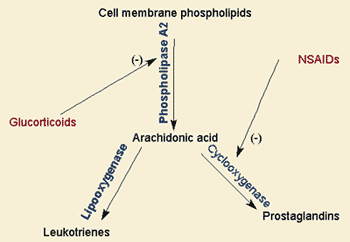
Picture Source

Serotonin itself is toxic to nerves, and is part of the adaptive system that gets out of control during prolonged inflammation. Serotonin is an important activator of the phospholipases. -Ray Peat, PhD

People who take aspirin, drink coffee, and use tobacco, have a much lower incidence of Alzheimer’s disease than people who don’t use those things. Caffeine inhibits brain phospholipase, making it neuroprotective in a wide spectrum of conditions. In recent tests, aspirin has been found to prevent the misfolding of the prion protein, and even to reverse the misfolded beta sheet conformation, restoring it to the harmless normal conformation. Nicotine might have a similar effect, preventing deposition of amyloid fibrils and disrupting those already formed (Ono, et al., 2002). Vitamin E, aspirin, progesterone, and nicotine also inhibit phospholipase, which contributes to their antiinflammatory action. Each of the amyloid-forming proteins probably has molecules that interfere with its toxic accumulation. -Ray Peat, PhD

J Biochem. 2002 Mar;131(3):285-92.
Phospholipase A2.
Murakami M, Kudo I.
Phospholipase A2 (PLA2) catalyzes the hydrolysis of the sn-2 position of membrane glycerophospholipids to liberate arachidonic acid (AA), a precursor of eicosanoids including prostaglandins (PGs) and leukotrienes (LTs). The same reaction also produces lysophosholipids, which represent another class of lipid mediators. So far, at least 19 enzymes that possess PLA2 activity have been identified in mammals. The secretory PLA2 (sPLA2) family, in which 10 isozymes have been identified, consists of low-molecular-weight, Ca2+-requiring, secretory enzymes that have been implicated in a number of biological processes, such as modification of eicosanoid generation, inflammation, host defense, and atherosclerosis. The cytosolic PLA2 (cPLA2) family consists of 3 enzymes, among which cPLA2alpha plays an essential role in the initiation of AA metabolism. Intracellular activation of cPLA2alpha is tightly regulated by Ca2+ and phosphorylation. The Ca2+-independent PLA2 (iPLA2) family contains 2 enzymes and may play a major role in membrane phospholipid remodeling. The platelet-activating factor (PAF) acetylhydrolase (PAF-AH) family represents a unique group of PLA2 that contains 4 enzymes exhibiting unusual substrate specificity toward PAF and/or oxidized phospholipids. In this review, we will overview current understanding of the properties and functions of each enzyme belonging to the sPLA2, cPLA2, and iPLA2 families, which have been implicated in signal transduction.

Crit Rev Immunol. 1997;17(3-4):225-83.
Regulatory functions of phospholipase A2.
Murakami M, Nakatani Y, Atsumi G, Inoue K, Kudo I.
Phospholipase A2 (PLA2) plays crucial roles in diverse cellular responses, including phospholipid digestion and metabolism, host defense and signal transduction. PLA2 provides precursors for generation of eicosanoids, such as prostaglandins (PGa) and leukotrienes (LTs), when the cleaved fatty acid is arachidonic acid, platelet-activating factor (PAF) when the sn-1 position of the phosphatidylcholine contains an alkyl ether linkage and some bioactive lysophospholipids, such as lysophosphatidic acid (lysoPA). As overproduction of these lipid mediators causes inflammation and tissue disorders, it is extremely important to understand the mechanisms regulating the expression and functions of PLA2. Recent advances in molecular and cellular biology have enabled us to understand the molecular nature, possible function, and regulation of a variety of PLA2 isozymes. Mammalian tissues and cells generally contain more than one enzyme, each of which is regulated independently and exerts distinct functions. Here we classify mammalian PLA2s into there large groups, namely, secretory (sPLA2), cytosolic (cPLA2), and Ca(2+)-independent PLA2s, on the basis of their enzymatic properties and structures and focus on the general understanding of the possible regulatory functions of each PLA2 isozyme. In particular, the roles of type II sPLA2 and cPLA2 in lipid mediator generation are discussed.

C R Seances Soc Biol Fil. 1996;190(4):409-16.
[Diversity of phospholipases A2 and their functions].
[Article in French]
Bereziat G.
Membrane phospholipids not only constitute structural membrane components, they also contain a wealth of biochemical information. They are the source of numerous lipid mediators (prostaglandins, leukotrienes, thromboxane, paf, lysophosphatidic acid and free fatty acids). These lipids act as second messengers inside the cell to modulate enzyme (e.g. PKC and GAP), ion channels (e.g. Ca2+ and K+) or the activity of factors regulating gene expression either at the transcriptional level (e.g. on the TNF alpha gene) or at the post-transcriptional level (e.g. on the GLUT4 transporter). The synthesis of lipid mediators results from the stimulation of phospholipase A2 (PLA2) activities. PLA2 cleaves membrane phospholipids to give rise to lysophospholipids and to free fatty acids from which second messengers are generated. More specifically, PLA2 provides the precursor for the eicosanoids, when the cleaved fatty acid is arachidonic acid, or for PAF, when the sn-1 position of the phospholipid is an alkyl ether linkage. Therefore, PLA2 is a key enzyme in the regulation of lipid mediators of inflammatory process. The purification and cloning of several PLA2s have demonstrated clear differences between secreted and intracellular PLA2. The secreted PLA2s are closely related proteins of low molecular weight (14 kDa) with calcium requirement in the mM range. They contain numerous bonds and retain the same amino-acids at the active site. In mammals, two types of secreted PLA2 have been identified: type I pancreatic PLA2 and type II inflammatory PLA2 which show 70% sequence homology. Recently, two others 14 kDa sPLA2 have been cloned which share also high homologies with type I and type II but contain respectively 6 and 8 disulpide bonds. In contrast, cellular PLA2s have higher molecular weights (40-110 kDa) and are either calcium independent or require microM amounts for activity. Cellular PLA2s preferentially act on sn-2-arachidonoyl phospholipids in vitro whereas sPLA2 do not display such selectivity in vitro. Both cellular and secreted PLA2s are involved in lipid mediator production. Cellular PLA2 can be activated by membrane receptors coupled to G proteins or by tyrosine kinase receptor, through the ras-raf1-MAP kinases network. Cellular PLA2s are thought to be involved in the initial production of lipid mediators after cell activation. Several lines of evidence suggest that secreted PLA2 is involved in the sustained production of lipid mediators in several cell types. These lines of evidence include the decrease in eicosanoid production by antibodies RNA of sPLA2. Furthermore, secreted PLA2s might trigger autocrine loops and proliferation responses through interaction with a specific receptor.

Biochem J. 1994 Aug 1;301 ( Pt 3):721-6.
Fatty acid and phospholipid selectivity of different phospholipase A2 enzymes studied by using a mammalian membrane as substrate.
Diez E, Chilton FH, Stroup G, Mayer RJ, Winkler JD, Fonteh AN.
Previous studies using phospholipid mixed vesicles have demonstrated that several types of phospholipase A2 (PLA2) enzymes exhibit different selectivity for fatty acids at the sn-2 position, for the type of chemical bond at the sn-1 position or for the phosphobase moiety at the sn-3 position of phospholipids. In the present study, we have utilized natural mammalian membranes from U937 monocytes to determine whether two purified 14 kDa PLA2 isoenzymes (Type I, Type II) and a partially purified 110 kDa PLA2 exhibit substrate selectivity for certain fatty acids or phospholipids. In these studies, arachidonic acid (AA) release from membranes was measured under conditions where the remodelling of AA mediated by CoA-independent transacylase (CoA-IT) activity has been eliminated. In agreement with the mixed-vesicle models, AA was the major unsaturated fatty acid hydrolysed from membranes by the 110 kDa PLA2, suggesting that this PLA2 is selective in releasing AA from natural membranes. By contrast, Type I and Type II PLA2s were less selective in releasing AA from phospholipids and released a variety of unsaturated fatty acids at molar ratios that were proportional to the ratios of these fatty acids in U937 microsomal membranes. Examination of AA release from phospholipid classes indicated that all three enzymes released AA from the major AA-containing phospholipid classes (phosphatidylethanolamine, phosphatidylcholine, and phosphatidylinositol) of U937 membranes. The 110 kDa PLA2 released AA from phospholipid subclasses in ratios that were proportional to the AA content within phospholipid classes and subclasses of U937 membranes. These data suggested that the 110 kDa PLA2 shows no preference either for the sn-1 linkage or for the sn-3 phosphobase moiety of phospholipids. By contrast, Type I and Type II PLA2s preferentially released AA from ethanolamine-containing phospholipids and appeared to prefer the 1-acyl-linked subclass. Taken together, these data indicate that the 110 kDa PLA2 selectively releases AA from U937 membranes, whereas Type I and Type II PLA2 release a variety of unsaturated fatty acids. Furthermore, the 110 kDa PLA2 releases the same molar ratios of AA from all major phospholipid subclasses, whereas Type I and Type II PLA2s show some specificity for phosphatidylethanolamine when these enzymes are incubated with a complex mammalian membrane substrate.

J Neurotrauma. 1995 Oct;12(5):791-814.
Mediators of injury in neurotrauma: intracellular signal transduction and gene expression.
Bazan NG, Rodriguez de Turco EB, Allan G.
Membrane lipid-derived second messengers are generated by phospholipase A2 (PLA2) during synaptic activity. Overstimulation of this enzyme during neurotrauma results in the accumulation of bioactive metabolites such as arachidonic acid, oxygenated derivatives of arachidonic acid, and platelet-activating factor (PAF). Several of these bioactive lipids participate in cell damage, cell death, or repair-regenerative neural plasticity. Neurotransmitters may activate PLA2 directly when linked to receptors coupled to G proteins and/or indirectly as calcium influx or mobilization from intracellular stores is stimulated. The release of arachidonic acid and its subsequent metabolism to prostaglandins are early responses linked to neuronal signal transduction. Free arachidonic acid may interact with membrane proteins, i.e., receptors, ion channels, and enzymes, modifying their activity. It can also be acted upon by prostaglandin synthase isoenzymes (the constitutive prostaglandin synthase PGS-1 or the inducible PGS-2) and by lipoxygenases, with the resulting formation of different prostaglandins and leukotrienes. Glutamatergic synaptic activity and activation of postsynaptic NMDA receptors are examples of neuronal activity, linked to memory and learning processes, which activate PLA2 with the consequent release of arachidonic acid and platelet-activating factor (PAF), another lipid mediator. Both mediators may exert presynaptic and postsynaptic effects contributing to long-lasting changes in glutamate synaptic efficacy or long-term potentiation (LTP), PAF, a potential retrograde messenger in LTP, stimulates glutamate release. The PAF antagonist BN 52021 competes for receptors in presynaptic membranes and blocks this effect. PAF may also be involved in plasticity responses because PAF leads to the expression of early response genes and subsequent gene cascades. The PAF antagonist BN 50730, selective for PAF intracellular binding, blocks PAF-mediated induction of gene expression. A consequence of neural injury induced by ischemia, trauma, or seizures is an increased release of neurotransmitters, that in turn generates an overproduction of second messengers. Glutamate, a key player in excitotoxic neuronal damage, triggers increased permeation of calcium mediated by NMDA receptors and activation of PLA2 in postsynaptic neurons. NMDA receptor antagonists reduce the accumulation of free fatty acids and elicit neuroprotection in ischemic damage. Increased production of free arachidonic acid and PAF converges to exacerbate glutamate-mediated neurotransmission. These neurotoxic actions may be brought about by arachidonic acid-induced potentiation of NMDA receptor activity and decreased glutamate reuptake. On the other hand, PAF stimulates the further release of glutamate at presynaptic endings. The neuroprotective effects of the PAF antagonist BN 52021 in ischemia-reperfusion are due, at least in part, to an inhibition of presynaptic glutamate release. PAF also induces expression of the inducible prostaglandin synthase gene, and PAF antagonists selective for the intracellular sites inhibit this effect. The PAF antagonist also inhibits the enhanced abundance, due to vasogenic cerebral edema and ischemia-reperfusion damage, of inducible prostaglandin synthase mRNA in vivo. Therefore, PAF, an injury-generated mediator, may favor the formation of other cell injury and inflammation mediators by turning on the expression of the gene that encodes prostaglandin synthase.

Drug Discov Today. 2003 Aug 1;8(15):710-6.
Phospholipase A2 expression in tumours: a target for therapeutic intervention?
Laye JP, Gill JH.
Phospholipase A(2) (PLA(2)) enzymes are involved in lipid metabolism and, as such, are central to several cellular processes. The different PLA(2)s identified to date can be classified into three groups: secreted PLA(2) (sPLA(2)), calcium-independent PLA(2) (iPLA(2)) and calcium-dependent cytosolic PLA(2) (cPLA(2)). In addition to their role in cellular signalling, PLA(2)s have been implicated in diverse pathological conditions, including inflammation, tissue repair and cancer. Elevated levels of sPLA(2) and cPLA(2) have been reported in several tumour types. Here, we summarize the current views on the PLA(2)s, and look at their expression, role in human malignancy and potential as targets for anticancer drug development.
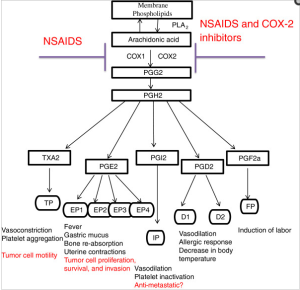
Screenshot 2017-06-14 at 6.36.36 AM

Picture Source

Curr Mol Med. 2001 Dec;1(6):739-54.
Mammalian secreted phospholipases A2 and their pathophysiological significance in inflammatory diseases.
Touqui L, Alaoui-El-Azher M.
Phospholipases A2 (PLA2s) represent a growing family of enzymes that catalyze the hydrolysis of phospholipids at the sn-2 position leading to the generation of free fatty acids and lysophospholipids. Mammalian PLA2s are divided into two major classes according to their molecular mass and location: intracellular PLA2 and secreted PLA2 (sPLA2). Type-IIA sPLA2 (sPLA2-IIA), the best studied enzyme of sPLA2, plays a role in the pathogenesis of various inflammatory diseases. Conversely, sPLA2-IIA can exert beneficial action in the context of infectious diseases since recent studies have shown that this enzyme exhibits potent bactericidal effects. Induction of the synthesis of sPLA2-IIA is generally initiated by endotoxin and a limited number of cytokines via paracrine and/or autocrine processes. If the mechanisms involved in the regulation of sPLA2-IIA gene expression have been relatively clarified, little is known on the mechanisms that regulate the expression of other sPLA2. There have been substantial progresses in understanding the transcriptional regulation of sPLA2-IIA expression. Recently, transcription factors including NF-kappaB, PPAR, C/EBP have been identified to play a prominent role in the regulation of sPLA2-IIA gene expression. The activation of these transcription factors is under the control of distinct signaling pathways (PKC, cAMP …). Accumulating evidences in the literature suggest that cytosolic PLA2 together with two sPLA2 isozymes (sPLA2-IIA and sPLA2-V) are functionally coupled with cyclooxygenase-1 and 2 pathways, respectively, for immediate and delayed PG biosynthesis. This spatio-temporal coupling of cyclooxygenase enzymes with PLA2s may represent a key mechanism in the propagation of inflammatory reaction. Unraveling the mechanisms involved in the regulation of the expression of sPLA2s is important for understanding their pathophysiological roles in inflammatory diseases.

J Biol Chem. 1995 Jun 23;270(25):14855-8.
Nitric oxide activates the glucose-dependent mobilization of arachidonic acid in a macrophage-like cell line (RAW 264.7) that is largely mediated by calcium-independent phospholipase A2.
Gross RW, Rudolph AE, Wang J, Sommers CD, Wolf MJ.
Herein, we demonstrate that nitric oxide is a potent (> 20% release) and highly selective inducer of [3H]arachidonic acid mobilization in the macrophage-like cell line RAW 264.7. Treatment of RAW 264.7 cells with (E)-6-(bromomethylene)-3-(1-naphthalenyl)-2H-tetrahydropyran-2-one resulted in the inhibition of the large majority (86%) of nitric oxide-induced [3H]arachidonic acid release into the medium (IC50 < 0.5 microM) and the concomitant inhibition of in vitro measurable calcium-independent phospholipase A2 activity (92% inhibition) without demonstrable effects on calcium-dependent phospholipase A2 activity. Since nitric oxide is a potent stimulator of glycolysis (and therefore glycolytically derived ATP) and since cytosolic calcium-independent phospholipase A2 exists as a catalytic complex comprised of ATP-modulated phosphofructokinase-like regulatory polypeptides and a catalytic subunit, we examined the role of glucose in facilitating nitric oxide-mediated arachidonic acid release. Nitric oxide-induced release of [3H]arachidonic acid possessed an obligatory requirement for glucose, was highly correlated with the concentration of glucose in the medium, and was dependent on the metabolism of glucose. Thus, [3H]arachidonic acid release is coupled to cellular glucose metabolism through alterations in the activity of calcium-independent phospholipase A2. Collectively, these results identify a unifying metabolic paradigm in which the generation of lipid second messengers is coordinately linked to the signalstimulated acceleration of glycolytic flux, thereby facilitating integrated metabolic responses to cellular stimuli.

Estrogen, by activating phospholipase A2, acts to amplify the toxic effects of PUFA in the tissues, and these effects increase with age, and with decreased amounts of thyroid and progesterone. -Ray Peat, PhD

Estrogen increases lipid peroxidation, and maintains a chronically high circulating level of free fatty acids, mainly PDFA, activates the phospholipases that release arachidonic acid from cells leading to formation of prostaglandins and isoprostanes, and increases the enzymes that form the inflammation-promoting platelet activating factor (PAF) while suppressing the enzymes that destroy it, and increases a broad range of other inflanunatory mediators, interleukins, and NF-kappa B. -Ray Peat, PhD

Steroids. 2006 Mar;71(3):256-65. Epub 2005 Dec 22.
Estrogen induces phospholipase A2 activation through ERK1/2 to mobilize intracellular calcium in MCF-7 cells.
Thomas W, Coen N, Faherty S, Flatharta CO, Harvey BJ.
The principal secreted estrogen, 17beta-estradiol rapidly activates signaling cascades that regulate important physiological processes including ion transport across membranes, cytosolic pH and cell proliferation. These effects have been extensively studied in the MCF-7 estrogen-responsive human breast carcinoma cell line. Here, we demonstrate that a physiological concentration of 17beta-estradiol caused a rapid, synchronous and transient increase in intracellular calcium concentration in a confluent monolayer of MCF-7 cells 2-3 min after treatment. This response was abolished when cells were pre-incubated with the phospholipase A(2) (PLA(2)) inhibitor quinacrine or with the cyclooxygenase inhibitor indomethacin. The translocation of GFP-cPLA(2)alpha to perinuclear membranes occurred 1-2 min after 17beta-estradiol treatment; this translocation was concurrent with the transient phosphorylation of cPLA(2)alpha at serine residue 505. The phosphorylation and translocation of cPLA(2) were sensitive to inhibition of the extracellular signal regulated kinase (ERK) signaling cascade and occurred simultaneously with a transient activation of ERK. The phosphorylation of cPLA(2) could be stimulated by membrane impermeable 17beta-estradiol conjugated to bovine serum albumen and was blocked by an antagonist of the classical estrogen receptor. Here we show, for the first time, that PLA(2) and the eicosanoid biosynthetic pathway are involved in the 17beta-estradiol induced rapid calcium responses of breast cancer cells.

Prostaglandins. 1996 Mar;51(3):191-201.
Effect of hormones and antihormones on phospholipase A2 activity in human endometrial stromal cells.
Periwal SB, Farooq A, Bhargava VL, Bhatla N, Vij U, Murugesan K.
Phospholipase A2 activity was studied in isolated human endometrial predecidual cells, and in human endometrium collected from day 19-23 of the menstrual cycle, by performing a radiochemical assay. Phospholipase A2 activity on day 20 was significantly higher than other days (P < 0.001), and the activity was found to gradually decrease after day 20 of the menstrual cycle. The effects of the hormones estradiol and progesterone, and antihormones tamoxifen and RU 486, were studied on the phospholipase A2 activity in isolated predecidual stromal cells. Estradiol produced a significant stimulatory effect (P < 0.001) on phospholipase A2 activity in predecidual cells, and this effect was antagonized by tamoxifen. The combination of estradiol and tamoxifen was significantly different from estradiol alone (P < 0.001), but not from tamoxifen alone. RU 486 alone significantly increased (P < 0.001) phospholipase A2 activity in predecidual stromal cells. However, progesterone had no effect on phospholipase A2 activity in predecidual stromal cells.

If the cells adapt to the increased calcium, rather than dying, their sensitivity is reduced. This is probably involved in the “defensive inhibition” seen in many types of cell. In the brain, DHA and arachidonic acid “brought the cells to a new steady state of a moderately elevated [intracellular calcium] level, where the cells became virtually insensitive to external stimuli. This new steady state can be considered as a mechanism of self protection” (Sergeeva, et al., 2005). -Ray Peat, PhD

Reprod Nutr Dev. 2005 Sep-Oct;45(5):633-46.
Regulation of intracellular calcium levels by polyunsaturated fatty acids, arachidonic acid and docosahexaenoic acid, in astrocytes: possible involvement of phospholipase A2.
Sergeeva M, Strokin M, Reiser G.
Pathological conditions in the brain, such as ischemia, trauma and seizure are accompanied by increased levels of free n-6 and n-3 polyunsaturated fatty acids (PUFA), mainly arachidonic acid (AA, 20:4n-6) and docosahexaenoic acid (DHA, 22:6n-3). A neuroprotective role has been suggested for PUFA. For investigation of the potential molecular mechanisms involved in neuroprotection by PUFA, we studied the regulation of the concentration of intracellular Ca2+ ([Ca2+]i) in rat brain astrocytes. We evaluated the presence of extracellular PUFA and the release of intracellular PUFA. Interestingly, only the constitutive brain PUFA AA and DHA, but not eicosapentaenoic acid (EPA) had prominent effects on intracellular Ca2+. AA and DHA suppressed [Ca2+]i oscillation, inhibited store-operated Ca2+ entry, and reduced the amplitudes of Ca2+ responses evoked by agonists of G protein-coupled receptors. Moreover, prolonged exposure of astrocytes to AA and DHA brought the cells to a new steady state of a moderately elevated [Ca2+]i level, where the cells became virtually insensitive to external stimuli. This new steady state can be considered as a mechanism of self-protection. It isolates disturbed parts of the brain, because AA and DHA reduce pathological overstimulation in the tissue surrounding the damaged area. In inflammation-related events, frequently AA and DHA exhibit opposite effects. However, in astrocytes AA and DHA exerted comparable effects on [Ca2+]i. Extracellularly added AA and DHA, but not EPA, were also able to induce the release of [3H]AA from prelabeled astrocytes. Therefore, we also suggest the involvement of phospholipase A2 activation and lysophospholipid generation in the regulation of intracellular Ca2+ in astrocytes.

Increasing intracellular calcium activates phospholipases, releasing more polyunsaturated fats (Sweetman, et al., 1995). -Ray Peat, PhD

Arch Biochem Biophys. 1995 Oct 20;323(1):97-107.
Effect of linoleic acid hydroperoxide on endothelial cell calcium homeostasis and phospholipid hydrolysis.
Sweetman LL, Zhang NY, Peterson H, Gopalakrishna R, Sevanian A.

J Biol Chem 1995 Jun 23;270(25):14855-8.
Nitric oxide activates the glucose-dependent mobilization of arachidonic acid in a macrophage-like cell line (RAW 264.7) that is largely mediated by calcium-independent phospholipase A2.
Gross RW; Rudolph AE; Wang J; Sommers CD; Wolf MJ.
Herein, we demonstrate that nitric oxide is a potent (> 20% release) and highly selective inducer of [3H]arachidonic acid mobilization in the macrophage-like cell line RAW 264.7. Treatment of RAW 264.7 cells with (E)-6-(bromomethylene)-3-(1-naphthalenyl)-2H-tetrahydropyran-2-one resulted in the inhibition of the large majority (86%) of nitric oxide-induced [3H]arachidonic acid release into the medium (IC50 < 0.5 microM) and the concomitant inhibition of in vitro measurable calcium-independent phospholipase A2 activity (92% inhibition) without demonstrable effects on calcium-dependent phospholipase A2 activity. Since nitric oxide is a potent stimulator of glycolysis (and therefore glycolytically derived ATP) and since cytosolic calcium-independent phospholipase A2 exists as a catalytic complex comprised of ATP-modulated phosphofructokinase-like regulatory polypeptides and a catalytic subunit, we examined the role of glucose in facilitating nitric oxide-mediated arachidonic acid release. Nitric oxide-induced release of [3H]arachidonic acid possessed an obligatory requirement for glucose, was highly correlated with the concentration of glucose in the medium, and was dependent on the metabolism of glucose. Thus, [3H]arachidonic acid release is coupled to cellular glucose metabolism through alterations in the activity of calcium-independent phospholipase A2. Collectively, these results identify a unifying metabolic paradigm in which the generation of lipid second messengers is coordinately linked to the signal stimulated acceleration of glycolytic flux, thereby facilitating integrated metabolic responses to cellular stimuli.

Proc Natl Acad Sci U S A 1990 Nov;87(22):8845-9.
Incorporation of marine lipids into mitochondrial membranes increases susceptibility to damage by calcium and reactive oxygen species: evidence for enhanced activation of phospholipase A2 in mitochondria enriched with n-3 fatty Acids.
Malis CD, Weber PC, Leaf A, Bonventre JV.
Experiments were designed to evaluate the susceptibility of mitochondrial membranes enriched with n-3 fatty acids to damage by Ca2+ and reactive oxygen species. Fatty acid content and respiratory function were assessed in renal cortical mitochondria isolated from fish-oil- and beef-tallow-fed rats. Dietary fish oils were readily incorporated into mitochondrial membranes. After exposure to Ca2+ and reactive oxygen species, mitochondria enriched in n-3 fatty acids, and using pyruvate and malate as substrates, had significantly greater changes in state 3 and uncoupled respirations, when compared with mitochondria from rats fed beef tallow. Mitochondrial site 1 (NADH coenzyme Q reductase) activity was reduced to 45 and 85% of control values in fish-oil- and beef-tallow-fed groups, respectively. Exposure to Ca2+ and reactive oxygen species enhance the release of polyunsaturated fatty acids enriched at the sn-2 position of phospholipids from mitochondria of fish-oil-fed rats when compared with similarly treated mitochondria of beef-tallow-fed rats. This release of fatty acids was partially inhibited by dibucaine, the phospholipase A2 inhibitor, which we have previously shown to protect mitochondria against damage associated with Ca2+ and reactive oxygen species. The results indicate that phospholipase A2 is activated in mitochondria exposed to Ca2+ and reactive oxygen species and is responsible, at least in part, for the impairment of respiratory function. Phospholipase A2 activity and mitochondrial damage are enhanced when mitochondrial membranes are enriched with n-3 fatty acids.

Serum amyloid A, which can increase 1000-fold under the influence of proinflammatory cytokines, resulting from irradiation, stress, trauma, or infection, is an activator of phospholipase A2 (PLA2), which releases fatty acids. Some of the neurodegenerative states, including amyloid-prion diseases, involve activated PLA2, as well as increases in the toxic breakdown products of the polyunsaturated fatty acids, such as 4-hydroxynonenal. The quantity of PUFA in the tissues strongly determines the susceptibility of the tissue to injury by radiation and other stresses. But a diet rich in PUFA will produce brain damage even without exceptional stressors, when there aren’t enough antioxidants, such as vitamin E and selenium, in the diet. -Ray Peat, PhD

J Biol Chem. 2004 Aug 27;279(35):36405-11. Epub 2004 Jun 21.
Phospholipase A2 inhibitors or platelet-activating factor antagonists prevent prion replication.
Bate C, Reid S, Williams A.
A key feature of prion diseases is the conversion of the cellular prion protein (PrP(C)) into disease-related isoforms (PrP(Sc)), the deposition of which is thought to lead to neurodegeneration. In this study a pharmacological approach was used to determine the metabolic pathways involved in the formation of protease-resistant PrP (PrP(res)) in three prion-infected cell lines (ScN2a, SMB, and ScGT1 cells). Daily treatment of these cells with phospholipase A(2) (PLA(2)) inhibitors for 7 days prevented the accumulation of PrP(res). Glucocorticoids with anti-PLA(2) activity also prevented the formation of PrP(res) and reduced the infectivity of SMB cells. Treatment with platelet-activating factor (PAF) antagonists also reduced the PrP(res) content of cells, while the addition of PAF reversed the inhibitory effect of PLA(2) inhibitors on PrP(res) formation. ScGT1 cells treated with PLA(2) inhibitors or PAF antagonists for 7 days remained clear of detectable (PrPres) when grown in control medium for a further 12 weeks. Treatment of non-infected cells with PLA(2) inhibitors or PAF antagonists reduced PrP(C) levels suggesting that limiting cellular PrP(C) may restrict prion formation in infected cells. These data indicate a pivotal role for PLA(2) and PAF in controlling PrP(res) formation and identify them as potential therapeutic agents.

Zhongguo Yao Li Xue Bao. 1994 Jul;15(4):299-302.
Three drugs inhibit phospholipase A2-induced high permeability of endothelial monolayers.
Chen SF, Li SH, Ding FY.
The permeability of aortic endothelial monolayers to fluid and albumin increased 13.5 and 16.1 times respectively after pretreatment with phospholipase A2 (PLA2, 100 U.ml-1) for 30 min. 1-(p-Chlorobenzoyl)-5-methylindole-3-acetic acid (1.16 mmol.L-1), SRI 63-441 (30 nmol.L-1), and 1,25-dihydroxycholecalciferol (0.1 mumol.L-1) decreased PLA2-induced high permeability. PLA2 did not damage the endothelial cells significantly. Our results indicate that the action of PLA2 to increase the permeability of endothelial monolayers is mainly due to PLA2-induced lipid mediators released from endothelial cells.

Inflammation. 1990 Jun;14(3):267-73.
Phospholipase A2-induced lung edema and its mechanism in isolated perfused guinea pig lung.
Chen SF, Li SH, Fei X, Wu ZL.
Lung injury induced by phospholipase A2 (PLA2, 0.046 IU/ml perfusate) was studied in a continuous weighing system of isolated perfused guinea pig lungs. The results revealed that lung weight increased progressively during the 30-min perfusion of PLA2. No change of pulmonary arterial pressure was observed in the same period. Albumin permeability-surface area product, lung index, lung water content, exudate from pleura, and angiotensin-converting-enzyme activity increased significantly at the end of 30 min PLA2 perfusion. p-Bromophenacyl bromide, a PLA2 inhibitor, may block the above changes nearly completely. The effects of inhibitors of cyclooxygenase (indomethacin, IM), lipoxygenase (diethylcarbamaxine, DE), and platelet-activating factor (SRI 63-441) on PLA2-induced lung injury were also studied. We found: (1) PLA2 may induce high permeability lung edema. The role of endothelial injury in the permeability change remains to be further investigated. (2) DE ameliorated lung injury significantly within 10 min of PLA2 treatment but showed no effect after 15 min. IM ameliorated lung injury during the whole experimental period. SRI 63-441 had no effect. It is suggested that PLA2 may damage lung by inducing products of cyclooxygenase and lipoxygenase besides its direct effect.

Am Rev Respir Dis. 1990 Nov;142(5):1193-9.
Phospholipase A2-induced pulmonary and hemodynamic responses in the guinea pig. Effects of enzyme inhibitors and mediators antagonists.
Tocker JE, Durham SK, Welton AF, Selig WM.
The effect of phospholipase A2 (Naja naja) PLA2) on mean arterial blood pressure and intratracheal pressure was examined in anesthetized guinea pigs. Intracheally administered PLA2 (1 to 10 U) produced acute, dose-dependent increases in mean arterial blood pressure and intracheal pressure. However, Intravenously administered PLA2 (doses as large as 1,000 U) did not alter monitored variables. Acute PLA2-induced morphologic alterations were characterized by airway constriction, airway/alveolar cell damage, and pulmonary sequestration of both leukocytes and platelets. PLA2-induced increases in both mean arterial blood pressure and intratracheal pressure were attenuated to varying degrees by pretreating intravenously with indomethacin (10 mg/kg), a cyclooxygenase inhibitor, and WEB 2086 (0.1 mg/kg), a platelet-activating factor antagonist. Both ICI 198,615 (1 mg/kg), a leukotriene D4, receptor antagonist given intravenously, and dexamethasone (50 mg/kg), a steroidal anti-inflammatory agent given intraperitoneally as a 2-day pretreatment, reduced PLA2-induced increases in intratracheal pressure. Pyrilamine (2 mg/kg), a histamine1-receptor antagonist given intravenously, did not modify PLA2-induced pathophysiologic responses. Guinea pigs exposed to aerosolized PLA2 (100 U/ml) exhibited evidence of increased bronchoalveolar lavage macrophage, leukocyte, and lymphocyte accumulation at 24 h post-PLA2. These studies suggest that in vivo PLA2-induced pathophysiologic changes in the guinea pig involve alterations in resident airway cell populations as well as sequestration and infiltration of inflammatory cells. Both eicosanoids and platelet-activating factor appear to contribute to these PLA2-induced pathophysiologic effects.

Prostaglandins Leukot Essent Fatty Acids. 1990 Mar;39(3):167-75.
The effects of neutrophils and phospholipase A2 on transvascular albumin flux in isolated rabbit lungs.
Littner MR, Lott FD.
In this study, addition of phospholipase A2 (PLA2) to salt-perfused isolated rabbit lungs containing rabbit polymorphonuclear leukocytes leads to an increase in pulmonary capillary permeability. We add 1.5 X 10(8) polymorphonuclear leukocytes to the perfusate. Next, indomethacin is added to the perfusate and 40 units of PLA2 are infused into the pulmonary arterial inflow of the lungs. At the end of the study, a lung sample is removed for measurement of transvascular albumin flux using I125-albumin as a measure of the permeability-surface area product. Control studies demonstrate no increase in transvascular albumin flux. Addition of a dual cyclooxygenase and lipoxygenase inhibitor, BW755C, to the perfusate prevents the increase in transvascular albumin flux. We conclude that PLA2 interacts with polymorphonuclear leukocytes to increase protein permeability. Since PLA2 can release endogenous arachidonic acid and platelet-activating factor from cells, this suggests that release of such products may contribute to an increase in pulmonary capillary permeability from polymorphonuclear leukocytes. The ability of BW755C to prevent the increase suggests the possibility that lipoxygenase products contribute.

Am J Pathol. 1990 Jun;136(6):1283-91.
Phospholipase A2-induced pathophysiologic changes in the guinea pig lung.
Durham SK, Selig WM.
The pathophysiology of lung injury induced by phospholipase A2 (PLA2), a lipolytic enzyme implicated in a variety of pulmonary diseases, was examined in the guinea pig. One hundred microliters of saline or 10 units of PLA2 suspended in saline was given as a bolus injection into either the trachea or jugular vein. Intratracheal pressure and mean arterial blood pressure were continuously monitored. The lungs were examined by light and transmission electron microscopy at 1, 10, and 30 minutes after administration. Pulmonary morphologic and physiologic changes were only observed in animals that received PLA2 via the trachea. Significant increases in peak intratracheal pressure occurred as early as 1 minute after intratracheal PLA2 administration. Morphologic evidence of airway constriction, accompanied by blebbing of the apical cytoplasm of airway epithelium, was also observed at this time. A transient increase in mean arterial blood pressure occurred 5 minutes after challenge. At 10 minutes after intratracheal PLA2, there was marked swelling of airway epithelial cells, pronounced blebbing of the apical cytoplasm, and a resultant decrease in size of the airway lumen. Morphologic changes in alveolar cell populations were initially observed 10 minutes after intratracheal PLA2. Interalveolar septa were hypercellular and multifocally thickened. There was prominent perivascular edema and alveolar spaces contained abundant proteinaceous material and occasional hemorrhage. Ultrastructurally, there was marked cell swelling and fragmentation of type I alveolar epithelium resulting in a denuded basal lamina. Sequestration of neutrophils and eosinophils, many of which lacked secretory granules, within alveolar capillaries was accompanied by aggregates of platelets and was observed in close proximity to injured endothelium. Morphologic changes indicative of cell injury were also observed in type II alveolar epithelium. Similar, but more frequent and severe, morphologic injury occurred 30 minutes after intratracheal PLA2. It is concluded that PLA2 induces pronounced morphologic and physiologic changes in the guinea pig and that the route of administration is important in the development of PLA2-induced lung injury.

Thorax. 2008 Jan;63(1):21-6. Epub 2007 Jun 15.
Plasma phospholipase A2 activity in patients with asthma: association with body mass index and cholesterol concentration.
Misso NL, Petrovic N, Grove C, Celenza A, Brooks-Wildhaber J, Thompson PJ.
BACKGROUND:
Secretory phospholipases A2 (sPLA2) have functions relevant to asthmatic inflammation, including eicosanoid synthesis and effects on dendritic cells and T cells. The aim of this study was to measure sPLA2 activity in patients with stable and acute asthma and to assess potential associations with body mass index (BMI), and plasma cholesterol and vitamin C concentrations.
METHODS:
Plasma sPLA2 activity and concentrations of cholesterol and vitamin C were measured in 23 control subjects and 61 subjects with stable asthma (42 mild to moderate, 19 severe). In addition, sPLA2 activity was measured in 36 patients experiencing acute asthma and in 22 of these patients after recovery from the acute attack.
RESULTS:
sPLA2 activity was not significantly greater in severe (499.9 U; 95% confidence interval (CI) 439.4 to 560.4) compared with mild to moderate asthmatic subjects (464.8; 95% CI 425.3 to 504.3) or control subjects (445.7; 95% CI 392.1 to 499.4), although it was higher in patients with acute asthma (581.6; 95% CI 541.2 to 622.0; p<0.001). Male gender, high plasma cholesterol, increased BMI and atopy were associated with increased sPLA2 activity, while plasma vitamin C was inversely correlated with sPLA2 activity in patients with stable asthma and in control subjects. There were significant interactions between gender and plasma cholesterol and between gender and vitamin C in relation to sPLA2 activity.
CONCLUSIONS:
Plasma sPLA2 may provide a biological link between asthma, inflammation, increased BMI, lipid metabolism and antioxidants. Interactions among these factors may be pertinent to the pathophysiology and increasing prevalence of both asthma and obesity.

Cell Mol Biol (Noisy-le-grand). 2004 Feb;50(1):87-94.
The role of secretory phospholipase A2 in acute chest syndrome.
Kuypers FA, Styles LA.
Acute chest syndrome (ACS) is the leading cause of death in sickle cell disease. Severe ACS often develops in the course of a vasoocclusive crisis (VOC), and frequently involves pulmonary fat embolism. Secretory phospholipase A2 (sPLA2), a potent inflammatory mediator, is elevated in ACS, and sPLA2 levels in serum or plasma predict impending ACS. In addition sPLA2 may play a major role in the actual damage to the lung resulting in a new pulmonary infiltrate on chest radiography, respiratory symptoms, and ultimately alveolar collapse and the impairment of gas exchange. The data indicate that measurement of sPLA2 can be useful in alerting the clinician to patients with impending ACS, and suggest that instituting early therapies based on sPLA2 levels, including inhibition of sPLA2 activity, may be useful to prevent or reduce the clinical morbidity of ACS in sickle cell disease.

Blood. 1996 Mar 15;87(6):2573-8.
Phospholipase A2 levels in acute chest syndrome of sickle cell disease.
Styles LA, Schalkwijk CG, Aarsman AJ, Vichinsky EP, Lubin BH, Kuypers FA.
Acute chest syndrome (ACS) is associated with significant morbidity and is the leading cause of death in patients with sickle cell disease (SCD). Recent reports suggest that bone marrow fat embolism can be detected in many cases of severe ACS. Secretory phospholipase A2 (sPLA2) is an important inflammatory mediator and liberates free fatty acids, which are felt to be responsible for the acute lung injury of the fat embolism syndrome. We measured SPLA2 levels in 35 SCD patients during 20 admissions for ACS, 10 admissions for vaso-occlusive crisis, and during 12 clinic visits when patients were at the steady state. Eleven non-SCD patients with pneumonia were also evaluated. To determine if there was a relationship between sPLA2 and the severity of ACS we correlated SPLA2 levels with the clinical course of the patient. In comparison with normal controls (mean = 3.1 +/- 1.1 ng/mL), the non-SCD patients with pneumonia (mean = 68.6 +/- 82.9 ng/mL) and all three SCD patient groups had an elevation of SPLA2 (steady state mean = 10.0 +/- 8.4 ng/mL; vaso-occlusive crisis mean = 23.7 +/- 40.5 ng/mL; ACS mean = 336 +/- 209 ng/mL). In patients with ACS sPLA2 levels were 100-fold greater than normal control values, 35 times greater than values in SCD patients at baseline, and five times greater than non-SCD patients with pneumonia. The degree of SPLA2 elevation in ACS correlated with three different measures of clinical severity and, in patients followed sequentially, the rise in SPLA2 coincided with the onset of ACS. The dramatic elevation of SPLA2 in patients with ACS but not in patients with vaso-occlusive crisis or non-SCD patients with pneumonia and the correlation between levels of SPLA2 and clinical severity suggest a role for SPLA2 in the diagnosis and, perhaps, in the pathophysiology of patients with ACS.

Blood. 2000 Nov 1;96(9):3276-8.
Secretory phospholipase A(2) predicts impending acute chest syndrome in sickle cell disease.
Styles LA, Aarsman AJ, Vichinsky EP, Kuypers FA.
Acute chest syndrome (ACS) is the leading cause of death in sickle cell disease. Severe ACS often develops in the course of a vaso-occlusive crisis (VOC), but currently there are no predictors for its development. Secretory phospholipase A(2) (sPLA(2)), a potent inflammatory mediator, is elevated in ACS, and previous work suggests that sPLA(2) predicts impending ACS. We prospectively evaluated sPLA(2) concentration during 21 admissions for VOC; 6 of these patients went on to develop ACS. Elevation of sPLA(2) was detected all 6 patients 24 to 48 hours before ACS was clinically diagnosed. Adding the requirement for fever raised the specificity of sPLA(2) to 87% while retaining 100% sensitivity. These data indicate that sPLA(2) can be useful in alerting the clinician to patients with impending ACS. In addition, sPLA(2) may be useful for instituting early therapies to prevent or reduce the clinical morbidity of ACS.

Am J Respir Crit Care Med. 1997 Feb;155(2):421-5.
Phospholipase A2 and arachidonate increase in bronchoalveolar lavage fluid after inhaled antigen challenge in asthmatics.
Bowton DL, Seeds MC, Fasano MB, Goldsmith B, Bass DA.
Phospholipases A2 (PLA2) hydrolyze phospholipids resulting in the release of fatty acids including arachidonic acid (AA) and lysophospholipids. AA, in turn, serves as a substrate for the synthesis of leukotrienes which can cause bronchoconstriction and airways edema and appear to be important mediators of clinical asthma. Further, lysophospholipids may be cytotoxic and/or impair the function of surfactant. We examined the release of secretory PLA2 (sPLA2) and AA into the airways after antigen challenge in 16 subjects with allergic asthma. Asthmatic subjects underwent bronchoscopy with bronchoalveolar lavage (BAL) before and after inhaled antigen challenge; in addition, a single BAL, without inhaled antigen, was performed in 10 control subjects. BAL was obtained at 4 h (n = 7), the time of the late asthmatic response (LAR) (n = 5), or 24 h (n = 4) after challenge. There was no difference between normal and asthmatic subjects in either BAL fluid (BALF) sPLA2 activity or AA concentration at baseline. Both sPLA2 and AA increased after antigen challenge (p < 0.01 and 0.05, respectively). These changes were most marked 4 h after challenge (p < 0.03 for both). sPLA2 may play an important role in the generation of AA in patients with asthma.

Allergy. 2000;55 Suppl 61:27-30.
Arachidonic acid metabolism in inflammatory cells of patients with bronchial asthma.
Calabrese C, Triggiani M, Marone G, Mazzarella G.
Over the last few years, the demonstration of beneficial effects of leukotriene receptor antagonists in various forms of asthma has renewed clinical and pharmacologic interest in this class of lipid mediators. Several studies demonstrated an increased biosynthesis of cysteinyl leukotrienes (CysLT) in asthmatic patients. However, the reasons for the dysregulated production of CysLTs in asthmatic patients are not completely defined. An improved method of lipid mediator detection and the availability of cells isolated from human airways (by bronchoalveolar lavage [BAL] and bronchial biopsies) have allowed initial studies to address this issue. Eosinophils retrieved from inflamed airways of asthmatics have a larger arachidonic acid (AA) content than their blood counterpart. The high level of AA in these cells is primarily due to a remodeling of endogenous arachidonate pools with the accumulation of this fatty acid in a triglyceride-associated pool. In addition, elevated levels of a secretory form of phospholipase A2, the key enzyme initiating the cascade of CysLTs, are found in the BAL of asthmatics. Finally, eosinophils isolated from the BAL of asthmatics have an increased expression of LTC4 synthase. The level of expression of this enzyme correlates with the increased amount of CysLTs produced in the airways of these patients. Taken together, these data identify at least two possible mechanisms to explain the excessive CysLT production in asthmatics: 1) an increased content of AA in the glycerolipid pools of inflammatory cells 2) an enhanced activity of key biosynthetic enzymes involved in CysLT synthesis.

J Leukoc Biol. 1996 Dec;60(6):704-9.
Secretory phospholipase A2 activity is elevated in bronchoalveolar lavage fluid after ovalbumin sensitization of guinea pigs.
Sane AC, Mendenhall T, Bass DA.
Arachidonic acid (AA), the precursor of eicosanoids, is released from the sn-2 position of phospholipids by both secretory (sPLA2) and cytosolic phospholipase A2 (cPLA2). Eicosanoids have been shown to contribute to bronchospasm in asthma. We measured the enzymatic activity of sPLA2 and cPLA2 in the bronchoalveolar lavage fluid and cells, respectively, in male Hartley guinea pigs sensitized with ovalbumin. sPLA2 activity was also measured from alveolar macrophages (AM) in culture from unsensitized and sensitized animals. There was an increase in sPLA2 activity and AA content in the lavage fluid following sensitization (18.73 +/- 1.33 to 25.74 +/- 3.22% hydrolysis and 17.97 +/- 12.39 to 44.76 +/- 13.37 pmol AA/mL BAL, mean +/- SD), which remained elevated but without further increase 4 or 24 h after antigen challenge. AM from unsensitized and sensitized-unchallenged animals did not secrete sPLA2 activity in culture for 3 h and therefore do not appear to be the cell source of the sPLA2 activity present in the alveolar lavage fluid following OA sensitization. In contrast to the increase in sPLA2 in lung lavage fluid, Western blotting for cPLA2 from lung lavage cells showed no increase 4 or 24 h after antigen challenge compared with sensitization alone. cPLA2 enzymatic activity of the cytosol fraction of lung lavage cells showed no changes with antigen sensitization or challenge. In summary, intraperitoneal sensitization with ovalbumin in male Hartley guinea pigs caused an increase in both sPLA2 and AA in bronchoalveolar lavage fluid without a need for antigen challenge. The increased sPLA2 enzymatic activity following sensitization may be responsible for the elevation of AA in the bronchoalveolar lavage fluid observed after antigen sensitization.

J Thromb Thrombolysis. 2010 Apr;29(3):276-81. Epub 2009 May 17.
Secretory phospholipase A2 in patients with coronary artery disease.
Lima LM, Carvalho MG, da Fonseca Neto CP, Garcia JC, Sousa MO.
This study investigated the correlation of sPLA2 (secretory phospholipase A2) activity with the atheromatosis extent in subjects with coronary artery disease (CAD) undergoing coronary angiography. We analyzed 123 patients, including 35 subjects with angiographically normal coronary arteries (controls), 31 with mild/moderate atheromatosis (stenosis of 30-70% of the luminal diameter in one or more coronary arteries) and 57 with severe atheromatosis (>70% stenosis). Plasma sPLA2 activity was significantly higher in subjects with severe [127.7 U/ml (102.3-162.7); p < 0.0001] and mild/moderate [112.0 U/ml (100.6-146.9); p < 0.0001] atheromatosis than in controls [19.8 U/ml (15.1-32.1)]. In a multiple logistic regression model, adjusted for age, gender, body mass index, tabagism, hypertension, sedentarism, family history for coronary artery disease, diabetes mellitus, total cholesterol, HDLc, LDLc, triglycerides, high sensitivity C-reactive protein and phospholipase A2, only sPLA2 was observed to be independently associated with severe CAD (>70% of stenosis) (p < 0.0001).

Arterioscler Thromb Vasc Biol. 2005 Apr;25(4):839-46. Epub 2005 Feb 3.
Serum levels of type II secretory phospholipase A2 and the risk of future coronary artery disease in apparently healthy men and women: the EPIC-Norfolk Prospective Population Study.
Boekholdt SM, Keller TT, Wareham NJ, Luben R, Bingham SA, Day NE, Sandhu MS, Jukema JW, Kastelein JJ, Hack CE, Khaw KT.
OBJECTIVES:
To study the prospective relationship between serum levels of type II secretory phospholipase A2 (sPLA2) and the risk of future coronary artery disease (CAD) in apparently healthy men and women.
METHODS AND RESULTS:
We conducted a prospective nested case-control study among apparently healthy men and women aged 45 to 79 years. Cases (n=1105) were people in whom fatal or nonfatal CAD developed during follow-up. Controls (n=2209) were matched by age, sex, and enrollment time. sPLA2 levels were significantly higher in cases than controls (9.5 ng/mL; interquartile range [IQR], 6.4 to 14.8 versus 8.3 ng/mL; IQR, 5.8 to 12.6; P<0.0001). sPLA2 plasma levels significantly correlated with age, body mass index, systolic blood pressure, high-density lipoprotein (HDL) cholesterol levels, and C-reactive protein (CRP) levels. Taking into account matching for sex and age and adjusting for body mass index, smoking, diabetes, systolic blood pressure, low-density lipoprotein cholesterol, HDL cholesterol, and CRP levels, the risk of future CAD was 1.34 (1.02 to 1.71; P=0.02) for people in the highest sPLA2 quartile, compared with those in the lowest (P for linearity=0.03).
CONCLUSIONS:
Elevated levels of sPLA2 were associated with an increased risk of future CAD in apparently healthy individuals. The magnitude of the association was similar to that observed between CRP and CAD risk, and both associations were independent.

Increased intracellular calcium activates lipolysis (by phospholipases), producing more free fatty acids, as well as excitation and protein breakdown, and in the brain neurodegenerative diseases, calcium excess contributes to clumping synuclein (Wojda, et al., 2008), an important regulator of cytoskeleton proteins. -Ray Peat, PhD

IUBMB Life. 2008 Sep;60(9):575-90.
Calcium ions in neuronal degeneration.
Wojda U, Salinska E, Kuznicki J.
Neuronal Ca(2+) homeostasis and Ca(2+) signaling regulate multiple neuronal functions, including synaptic transmission, plasticity, and cell survival. Therefore disturbances in Ca(2+) homeostasis can affect the well-being of the neuron in different ways and to various degrees. Ca(2+) homeostasis undergoes subtle dysregulation in the physiological ageing. Products of energy metabolism accumulating with age together with oxidative stress gradually impair Ca(2+) homeostasis, making neurons more vulnerable to additional stress which, in turn, can lead to neuronal degeneration. Neurodegenerative diseases related to aging, such as Alzheimer’s disease, Parkinson’s disease, or Huntington’s disease, develop slowly and are characterized by the positive feedback between Ca(2+) dyshomeostasis and the aggregation of disease-related proteins such as amyloid beta, alfa-synuclein, or huntingtin. Ca(2+) dyshomeostasis escalates with time eventually leading to neuronal loss. Ca(2+) dyshomeostasis in these chronic pathologies comprises mitochondrial and endoplasmic reticulum dysfunction, Ca(2+) buffering impairment, glutamate excitotoxicity and alterations in Ca(2+) entry routes into neurons. Similar changes have been described in a group of multifactorial diseases not related to ageing, such as epilepsy, schizophrenia, amyotrophic lateral sclerosis, or glaucoma. Dysregulation of Ca(2+) homeostasis caused by HIV infection or by sudden accidents, such as brain stroke or traumatic brain injury, leads to rapid neuronal death. The differences between the distinct types of Ca(2+) dyshomeostasis underlying neuronal degeneration in various types of pathologies are not clear. Questions that should be addressed concern the sequence of pathogenic events in an affected neuron and the pattern of progressive degeneration in the brain itself. Moreover, elucidation of the selective vulnerability of various types of neurons affected in the diseases described here will require identification of differences in the types of Ca(2+) homeostasis and signaling among these neurons. This information will be required for improved targeting of Ca(2+) homeostasis and signaling components in future therapeutic strategies, since no effective treatment is currently available to prevent neuronal degeneration in any of the pathologies described here.

J Invest Dermatol. 1993 Jan;100(1):35S-41S.
Mechanisms of UV-induced inflammation.
Hruza LL, Pentland AP.
The inflammation produced by exposure to ultraviolet (UV) light has been well documented clinically and histologically. However, the mechanisms by which mediators induce this clinical response remain poorly defined. It is clear that photochemistry occurring after UV absorption must be responsible for initiating these events. Some of these underlying mechanisms have been defined. After exposure to UV light, the formation of prostaglandins and the release of histamine are increased. In addition to an increase in the quantity of these mediators, an increase in sensitivity of irradiated tissue to agonist stimulation also occurs. This increased sensitivity may cause tissue to respond to agonist levels previously present. Phospholipase activity also increases, making more substrate available for prostaglandin formation. Oxygen radical-induced peroxidation of membrane lipids caused by irradiation may contribute to increased phospholipase activity. Oxygen-free radicals also participate in sunburn cell formation and in UV-induced decreases in Langerhans cell numbers. Several enzymatic and non-enzymatic mechanisms are present in skin for reducing these highly reactive oxygen species.

Posted in General.

Tagged with , , , , , , , , , , , , , , , , , , , , , , , , , , , , , , .


Dietary PUFA Reflected in Human Subcutaneous Fat Tissue

Also see:
Toxicity of Stored PUFA
Vitamin E Needs Increases with PUFA Consumption and Greater Unsaturation
Israeli Paradox: High Omega -6 Diet Promotes Disease
Protective “Essential Fatty Acid Deficiency”
PUFA Accumulation & Aging
Arachidonic Acid’s Role in Stress and Shock
Saturated and Monousaturated Fatty Acids Selectively Retained by Fat Cells
PUFA Promote Stress Response; Saturated Fats Suppress Stress Response
Your MUFA + PUFA Intakes Determine Your True Vitamin E Requirements – N-3s are the Worst Offenders + Even MUFAs Need Buffering | Tool to Calculate Your Individual Needs
The Dangers of Fat Metabolism and PUFA: Why You Don’t Want to be a Fat Burner

Some studies accumulated orginially by Stephan Guyenet, PhD.

Am J Clin Nutr. 1975 Jun;28(6):577-83.
Recommended dietary allowance for vitamin E: relation to dietary, erythrocyte and adipose tissue linoleate.
Witting LA, Lee L.
The general trend toward increased consumption of polyunsaturated fatty acids is apparent in the linoleate level of adipose tissue (13.0 plus or minus 1.3%) and erythrocyte lipids (14.0 plus or minus 1.9%) in the present group of female undergraduate student volunteers compared to values reported in the early 1960’s. On the basis of the level of linoleate in their diets (19.5 plus or minus 0.8%), it is also apparent that further increases in tissue lipid linoleate levels are to be anticipated, which in turn will result in an increased requirement for vitamin E. It is suggested that adipose tissue linoleate levels in the general population be used as a baseline for the periodic evaluation and revision of the recommended dietary allowance for vitamin E. The recommended dietary allowance could then be phrased in terms of the quantity of vitamin E activity to be consumed per gram linoleate in 100 g adipose tissue fatty acids. A recommendation of 0.6 IU vitamin E activity/g linoleate in 100 g adipose tissue fatty acids is tentatively suggested.

Am J Clin Nutr. 1991 Aug;54(2):340-5.
Fatty acid composition of subcutaneous adipose tissue and diet in postmenopausal US women.
London SJ, Sacks FM, Caesar J, Stampfer MJ, Siguel E, Willett WC.
The distributions of fatty acids in subcutaneous-adipose-tissue aspirates and their relation to intake as assessed by a semiquantitative food-frequency questionnaire were investigated in 115 postmenopausal US women free from cancer. Percentages of fatty acids in adipose tissue were significantly correlated with the percentage of total fat intake for polyunsaturated fatty acids (Spearman correlation = 0.37), n-3 fatty acids of marine origin (Spearman correlation = 0.48), and trans fatty acids (Spearman correlation = 0.51) but not for saturated and monounsaturated fatty acids. Correlations were somewhat stronger in 78 women with stable weight over the 6 mo before fat aspiration. These data suggest that intakes of polyunsaturated fatty acids, including n-3 fatty acids, and trans fatty acids are reflected in the adipose tissue but that intakes of saturated and monounsaturated fatty acids are not. The data also provide further support for the validity of the food-frequency questionnaire in the assessment of fat intake.

Am J Clin Nutr. 1998 Jan;67(1):25-30.
The relation between dietary intake and adipose tissue composition of selected fatty acids in US women.
Garland M, Sacks FM, Colditz GA, Rimm EB, Sampson LA, Willett WC, Hunter DJ.
We compared fatty acid amounts in adipose tissue with fatty acid intake calculated from 2 separate weeks of diet recording and two food-frequency questionnaires for 140 participants in the Nurses’ Health Study. Our results showed that the amounts of polyunsaturated and trans fatty acids in adipose tissue reflect dietary intake and confirm those of previous studies. The correlation between the polyunsaturated fatty acid content of adipose tissue and polyunsaturated fatty acid intake from the average of the two food-frequency questionnaires was 0.40; this correlation for trans fatty acids was also 0.40. Linolenic acid amounts in adipose tissue were also moderately correlated with intake from the average of the food-frequency questionnaires (r = 0.34). An estimate of trans fatty acid intake from vegetable sources correlated much more strongly with adipose trans fatty acids than did an estimate of trans fatty acids from animal sources. Adipose tissue aspirates can be used to indicate intake of exogenous fatty acids.

Am J Epidemiol. 1992 Feb 15;135(4):418-27.
Comparison of measures of fatty acid intake by subcutaneous fat aspirate, food frequency questionnaire, and diet records in a free-living population of US men.
Hunter DJ, Rimm EB, Sacks FM, Stampfer MJ, Colditz GA, Litin LB, Willett WC.
In 1986-1987, the authors assessed the fatty acid intake of 118 Boston-area men, aged 40-75 years, by a semiquantitative food frequency questionnaire administered twice, by two 7-day diet records, and by capillary gas chromatography of subcutaneous fat samples obtained by needle aspirate from the lateral buttock. Spearman correlation coefficients between diet record estimates of fatty acid intake (as a percentage of total fat) and fat aspirate measures (as a percentage of total peak area) were as follows: saturated fat, r = 0.16 (p = 0.09); monounsaturated fat, r = 0.22 (p = 0.01); and polyunsaturated fat, r = 0.49 (p = 0.0001). Spearman correlation coefficients between estimates derived from the food frequency questionnaire were as follows: saturated fat, r = 0.18 ( p = 0.05); monounsaturated fat, r = 0.14 (p = 0.14); polyunsaturated fat, r = 0.50 (p = 0.0001); and eicosapentaenoic acid, r = 0.47 (p = 0.0001). These data confirm that the polyunsaturated and eicosapentaenoic fatty acid content of subcutaneous fat is a measure of dietary intake of these fats. Although diet records are commonly thought to be the “gold standard” method of dietary assessment, the similar correlations observed between the fatty acid composition of adipose tissue and estimates of intake from the food frequency questionnaire and from diet records suggest that these two dietary assessment methods have similar validity in the measurement of polyunsaturated fatty acid intake.

Ann Epidemiol. 2003 Feb;13(2):119-27.
Comparison of adipose tissue fatty acids with dietary fatty acids as measured by 24-hour recall and food frequency questionnaire in Black and White Adventists: the Adventist Health Study.
Knutsen SF, Fraser GE, Beeson WL, Lindsted KD, Shavlik DJ.
PURPOSE:
To calibrate and compare intake of different fats and individual fatty acids as assessed with a food frequency questionnaire (FFQ) against that estimated with (i) a series of dietary recalls and; (ii) the relative fat concentration in an adipose tissue biopsy. The FFQ was specially designed for use in a cohort of Seventh-day Adventists. In preparation for a large cohort study investigating the effect of diet on risk of colon, prostate and breast cancer.
METHODS:
The association of adipose tissue fatty acids and dietary fat intake was assessed in 49 black and 72 white Seventh-day Adventists subjects using 8 different 24-hour recalls, a 200-item food frequency questionnaire (FFQ) and adipose tissue biopsies from each subject.
RESULTS:
Pearson correlation between fatty acids in adipose tissue and dietary intake as assessed by multiple 24-hour recalls were as follows: Linoleic acid: 0.77 in black and 0.71 in white subjects, respectively; Linolenic acid: 0.68 (blacks) and 0.62 (whites); Total Polyunsaturated fat (PUFA): 0.78 (blacks) and 0.70 (whites); Total Monounsaturated fat (MUFA): 0.35 (blacks) and 0.03 (whites); Total Saturated fat (SFA): 0.46 (blacks) and 0.56 (whites). Correlations between fatty acids in adipose tissue and dietary intake as assessed by FFQ were: Linoleic acid: 0.61 (blacks) and 0.52 (whites), respectively; Linolenic acid: 0.29 (blacks) and 0.49 (whites); PUFA: 0.62 (blacks) and 0.53 (whites); MUFA: 0.07 (blacks) and 0.31 (whites), SFA: 0.21 (blacks) and 0.31 (whites).
CONCLUSIONS:
Our study confirms findings of others that 24-hour recalls are valid for assessing dietary intake of different types of fat. The FFQ we developed and used in this study gave reasonably valid measures of fatty acid intake in our population and is thus suitable for use in large cohort studies. It had validity comparable to that observed for other FFQs.

Am J Clin Nutr. 1995 Nov;62(5):956-9.
Biomarkers of habitual fish intake in adipose tissue.
Marckmann P, Lassen A, Haraldsdóttir J, Sandström B.
The association between habitual fish and marine n-3 polyunsaturated fatty acid (PUFA) intake, and the fatty acid composition of subcutaneous fat was studied in 24 healthy young volunteers. Habitual dietary intakes were estimated from three 7-d weighted food records made at months 0, 5, and 8 of the 8-mo study period. The adipose tissue fatty acid composition of each individual was determined by gas chromatography as the mean of two gluteal biopsies, obtained in the first and the last month of the study. The daily consumption of fish and of marine n-3 PUFAs in absolute terms (g/d) was significantly associated with adipose tissue docosahexaenoic acid content (DHA; r = 0.55 and 0.58, respectively, P < 0.001), but not with eicosapentaenoic and docosapentaenoic acid contents. Our study indicates that the adipose tissue DHA content is the biomarker of choice for the assessment of long-term habitual dietary intakes of fish and marine n-3 PUFAs.

Am J Clin Nutr. 2002 Oct;76(4):750-7.
Adipose tissue biomarkers of fatty acid intake.
Baylin A, Kabagambe EK, Siles X, Campos H.
BACKGROUND:
Biomarkers can provide a more accurate measure of long-term intake than can dietary questionnaires.
OBJECTIVE:
The objective was to identify which adipose tissue fatty acids are suitable biomarkers of intake as assessed with a validated food-frequency questionnaire.
DESIGN:
Costa Rican men with a mean (+/- SD) age of 56 +/- 11 y (n = 367) and women aged 60 +/- 10 y (n = 136) completed a 135-item food-frequency questionnaire and provided an adipose tissue sample. Fifty fatty acids were identified by capillary gas chromatography. Correlation coefficients were calculated after adjustment for age, sex, body mass index, and smoking status.
RESULTS:
The best adipose tissue marker for total intake of saturated fatty acids was 15:0 + 17:0 (r = 0.18). Both 15:0 and 17:0 were also the best correlates of dairy product intake (r = 0.31 for each). The diet-adipose tissue correlations for n-3 fatty acids were r = 0.34 for 18:3, r = 0.15 for 20:5, and r = 0.18 for 22:6. Fish intake correlated significantly with these adipose tissue n-3 fatty acids. Dietary and adipose tissue n-6 fatty acids were highly correlated: 18:2 (r = 0.58) and 18:3 (r = 0.24). The best indicators of total trans fatty acid intake were ct18:2n-6 and tc18:2n-6 (r = 0.58 for each); total 18:1 trans fatty acid (r = 0.45) and 16:1 trans fatty acid (r = 0.16) were the next best indicators.
CONCLUSIONS:
Adipose tissue is a suitable biomarker of dietary fatty acid intake, particularly for n-3 and n-6 cis polyunsaturated fatty acids and trans fatty acids. Ideally, adipose tissue and dietary questionnaires should complement, rather than substitute for, each other in epidemiologic studies.

Am J Epidemiol. 1999 Jul 1;150(1):75-87.
Evaluation of a food frequency questionnaire with weighed records, fatty acids, and alpha-tocopherol in adipose tissue and serum.
Andersen LF, Solvoll K, Johansson LR, Salminen I, Aro A, Drevon CA.
The authors examined the validity of a self-administered 180-item food frequency questionnaire in 125 Norwegian men aged 20-55 years who filled in the questionnaire and completed 14-day weighed records in fall 1995 to winter 1995/6. Spearman correlation coefficients between the two measurements ranged from 0.42 for percent of energy from fat to 0.66 for sugar intake (median r = 0.51). On average, 39% of the men were classified in the same quartile with the two methods, and 3% in the opposite quartile. Correlation coefficients between intake of fatty acids estimated from the questionnaire and the relative amounts of fatty acids in adipose tissue were: linoleic acid (18:2, n-6), r = 0.38; alpha-linolenic acid (18:3, n-3), r = 0.42; eicosapentaenoic acid (20:5, n-3), r = 0.52; and docosahexaenoic acid (22:6, n-3), r = 0.49. The correlations for these fatty acids between the total serum lipids and the diet were 0.16, 0.28, 0.51 and 0.52, respectively. The data suggest that very-long-chain n-3 fatty acids in adipose tissue and total serum lipids reflect the dietary intake of very-long-chain n-3 fatty acids to the same degree. No associations were observed between intake of alpha-tocopherol and concentration in adipose tissue and serum.

Am J Clin Nutr. 1990 Sep;52(3):486-90.
Subcutaneous adipose-tissue fatty acids and vitamin E in humans: relation to diet and sampling site.
Schäfer L, Overvad K.
The influence of diet and sampling site on subcutaneous adipose-tissue fatty acid composition and vitamin E content was examined in 20 healthy subjects. A dietary history and adipose-tissue biopsies from the buttock were obtained from 14 individuals. In another six individuals, samples were taken from both waist and buttock. The relative dietary intake of both polyunsaturated and saturated fatty acids correlated with the relative content in adipose tissue (r = 0.6, p = 0.02). Adipose-tissue vitamin E was strongly associated with dietary intake (r = 0.76, p = 0.004). The content of n – 3 (omega-3) fatty acids in adipose tissue was shown to influence adipose-tissue vitamin E negatively. Waist and buttock fat differed (p less than 0.05) with regard to fatty acid composition whereas no systematic variation was seen in the vitamin E content. The use of adipose-tissue biopsies in epidemiologic studies as measures of the habitual relative intake of fatty acids and vitamin E is suggested.

Lipids. 1988 Jun;23(6):598-604.
Biopsy method for human adipose with vitamin E and lipid measurements.
Handelman GJ, Epstein WL, Machlin LJ, van Kuijk FJ, Dratz EA.
An adaptation of the needle biopsy procedure of Beynen and Katan for human adipose tissue, which yields 2-10 mg adipose samples, is described and evaluated. Micromethods are presented for the analysis of alpha-tocopherol, cholesterol and fatty acids in each adipose specimen. The needle biopsy procedure, which uses a Vacutainer to create suction, is compared with a punch biopsy method. The needle biopsy is rapid (6 samples/hr), simple and unobjectionable to the subjects, and provides samples with reproducible ratios of cholesterol and alpha-tocopherol. Unlike the punch biopsy, the needle biopsy reliably obtains specimens with a lipid composition typical of adipocytes. The needle biopsy method is adaptable to nutritional studies of tocopherol and fatty acid metabolism in adipose, and to studies of hazardous compounds stored in adipose. The linoleic acid content of adipose from residents of the West Coast was found to be considerably higher than values reported earlier. The adipose fatty acid data indicate an increase in human adipose linoleate when compared with earlier reports and suggest a trend toward increasing linoleic acid in the American diet.

Am J Clin Nutr. 1985 Dec;42(6):1206-20.
Relationship of diet to the fatty acid composition of human adipose tissue structural and stored lipids.
Field CJ, Angel A, Clandinin MT.
The habitual intake of 20 healthy free-living subjects was determined by two 7-day food records. Documented fatty acid intakes were utilized to examine the influence of fatty acid intake on fatty acid composition of stored and structural lipids in subcutaneous adipose tissue. Subjects with higher intakes of saturated fatty acids exhibited increased levels of total saturated fatty acids and decreased polyunsaturated fatty acids in adipose tissue triglycerides (p less than 0.01). The dietary P/S ratio was significantly related to the saturated and polyunsaturated content of stored lipids. In the phospholipid fraction, relationships were found between dietary C18:2(6) and the P/S ratio of phosphatidylcholine (p less than 0.05). The essential fatty acid content of the two phospholipids studied was related to the dietary fats consumed. Relationships were identified between major fatty acids in the triglyceride and phospholipid fraction. Although diet was found to relate to fatty acid composition, the structural lipids in human adipose tissue appear more resistant to compositional change than stored triglycerides.

Am J Epidemiol. 1986 Mar;123(3):455-63.
Validity of the fatty acid composition of subcutaneous fat tissue microbiopsies as an estimate of the long-term average fatty acid composition of the diet of separate individuals.
van Staveren WA, Deurenberg P, Katan MB, Burema J, de Groot LC, Hoffmans MD.
The relationship between the fatty acid composition of subcutaneous adipose tissue and diet was estimated in 59 Dutch women aged 32-35 years. Food consumption was estimated by taking the means of nineteen 24-hour recalls administered over a period of two and a half years, August 1981-December 1983. Highly significant correlations were found between linoleic acid content of fat tissue and diet (r = 0.70) and also between the linoleic acid-to-saturated fatty acid (linoleic/S) ratio of fat tissue and diet (r = 0.62). This confirms the hypothesis that on an individual level the fatty acid composition of the adipose tissue is a valid index for the habitual dietary fatty acid composition of free-living adults. When using one 24-hour recall instead of the average of 19 recalls, the correlation coefficient between the linoleic/S ratio of the diet and that of the adipose tissue was substantially decreased. This demonstrates the weakening effect of the large day-to-day variation in within-person intake on the correlation between a short-term assessment of the nutrient intake of an individual and a biochemical indicator of long-term nutritional status.

Adv Nutr November 2015 Adv Nutr vol. 6: 660-664, 2015
Increase in Adipose Tissue Linoleic Acid of US Adults in the Last Half Century
Stephan J Guyenet and Susan E Carlson
Linoleic acid (LA) is a bioactive fatty acid with diverse effects on human physiology and pathophysiology. LA is a major dietary fatty acid, and also one of the most abundant fatty acids in adipose tissue, where its concentration reflects dietary intake. Over the last half century in the United States, dietary LA intake has greatly increased as dietary fat sources have shifted toward polyunsaturated seed oils such as soybean oil. We have conducted a systematic literature review of studies reporting the concentration of LA in subcutaneous adipose tissue of US cohorts. Our results indicate that adipose tissue LA has increased by 136% over the last half century and that this increase is highly correlated with an increase in dietary LA intake over the same period of time.

Posted in General.

Tagged with , , , , , , , , , , , , , , .