Categories:

Polyunsaturated Fats Suppress The Immune System

by Barry Groves
http://www.second-opinions.co.uk/immunity2.html

Polyunsaturated fats (PUFs) are greatly immunosuppressive. The first person to suggest that polyunsaturated fats suppress the immune system was Dr E A Newsholme of Oxford University, England.[i] What Newsholme wrote was that when our bodies get sufficient nutrition, our diet includes immunosuppressive PUFs which make us prone to infection by bacteria and viruses. When we are starved, however, our body stores of PUFs are depleted. This allows our bodies’ immune systems to recover which, in turn, allows us to fight existinginfection and prevent other infections.

He was making the point that the immunosuppressive effects of PUFs in sunflower seeds are useful in treating autoimmune diseases such as multiple sclerosis,[ii] and that the same fatty acids could be used to suppress the immune system to prevent rejection of kidney transplants.

It was during the early days of kidney transplantation that doctors first encountered the problem of tissue rejection as their patients’ bodies destroyed the alien transplanted kidneys. If transplantation were to be a success, they had to find a way to suppress the immune system. Newsholme had said that there was no better way to immunosuppress a renal patient than with sunflower seed oil. So kidney transplant doctors fed their patients linoleic acid.[iii] (Linoleic acid is the major polyunsaturated fatty acid in vegetable oils.) But the transplant doctors were then astonished to see how quickly their patients developed cancers and the treatment was stopped.

This was in line with heart trials using diets that were high in PUFs which also reported an excess of cancer deaths from as early as 1971.[iv]

By the early 1980s, we were being exhorted by doctors and nutritionists to eat more PUFs because they were ‘good for us’ despite the fact that Oncology Times carried a paper in January 1980 from the University of California at Davis that mice fed PUFs were more prone to develop melanoma. In May 1980, the same publication carried a similar report from Oregon State University which said that PUFs fed to cancer-prone mice increased the numbers of cancers formed.

In 1989 there was a report of a 10-year trial at a Veterans’ Administration Hospital in Los Angeles. In this trial half the patients were fed a diet which had twice as much PUFs as saturated fats. In the half of patients on the high PUF diet there was a 15% increase in cancer deaths compared to the saturated fat group.[v] The authors of the report said that the PUFs had been the cause of the increase in cancer deaths. The 6 October 1973 issue of the British Medical Journal asked if PUFs were carcinogenic and came to the conclusion that they were.

The late American cancer researcher, Wayne Martin, liked to tell a story which suggests just how cancer-causing are PUFs. In 1930 in the USA, he told me, 80% of men smoked cigarettes and the tar content of cigarettes was much higher than it is today. The death rate at that time from lung cancer was very low. In 1955 doctors decided that PUFs were beneficial in terms of heart disease protection. After this lung cancer deaths increased dramatically. By 1980 although the number of American men who smoked had dropped to only 30%, three times as much PUF was being eaten — and there were 60 times as manylung cancer deaths.[vi]

In 1990, Martin called Newsholme’s Oxford University office but by then Newsholme had retired. Martin spoke to his successor to find that they were still treating autoimmune diseases with PUFs. By then they were using fish oil. The Oxford doctor said the reason for the fish oil was that the degree of immunosuppression increased with the degree of unsaturation and fish oil was much more unsaturated than sunflower oil. Martin asked the doctor why they were not talking about PUFs causing cancer. The doctor replied that if he did that he would be run out of Oxford.

With a high intake of margarine and cooking oils, therefore, a tumour may grow too rapidly for the weakened immune system to cope thus increasing our risk of a cancer.

And the same, of course, goes for any infectious disease.

References

[i]. Newsholme E A. Mechanism for starvation suppression and refeeding activity of infection. Lancet 1977; i: 654.

[ii]. Miller JHD, et al. Double blind trial of linoleate supplementation in the diet in multiple sclerosis. BMJ 1973; i: 765-8.

[iii]. Uldall PR, et al. Unsaturated fatty acids and renal transplantation. Lancet 1974; ii: 514.

[iv]. Pearce M L, Dayton S. Incidence of cancer in men on a diet high in polyunsaturated fat. Lancet 1971; i: 464.

[v]. American Heart Association Monograph, No 25. 1969.

[vi]. Nauts HC. Cancer Research Institute Monograph No 18. 1984, p 91.

Posted in General.

Tagged with , , , , , , , , , .


Natural Desiccated Thyroid: Dr. Richard Guttler’s False Claim about It

Natural Desiccated Thyroid: Dr. Richard Guttler’s False Claim about It by Dr. John C. Lowe

Posted in General.

Tagged with , , , , , , , .


Stability, Effectiveness, and Safety of Desiccated Thyroid vs Levothyroxine: A Rebuttal to the British Thyroid Association

Stability, Effectiveness, and Safety of Desiccated Thyroid vs Levothyroxine: A Rebuttal to the British Thyroid Association by Dr. John C. Lowe

Posted in General.

Tagged with , , , , , , , .


SOS for PMS

Also see:
Quotes: Thyroid, Estrogen, Menstrual Symptoms, PMS, and Infertility
Ray Peat, PhD on the Menstrual Cycle
Estrogen Related to Loss of Fat Free Mass with Aging
Fat Tissue and Aging – Increased Estrogen
Estrogen Levels Increase with Age
Ray Peat, PhD on the Benefits of the Raw Carrot

Consult a medical professional regarding all things related to your health.

Despite popular opinion, PMS isn’t normal. It’s akin to a check engine light that goes off monthly. If you’re looking to have an easy menopause, don’t ignore PMS. If you’re looking for easier weight management, it’s recommended to remedy the hormonal imbalances and metabolism suppression associated with PMS. This blog discusses the underlying issues of PMS and provides insight into correction. Correction won’t involve birth control.

The Menstrual Cycle
The menstrual cycle encompasses 26 to 30 days involving cyclical rises in certain hormones. The two steroidal hormones responsible for creating the menstrual cycle are progesterone and estrogen. Both are made from cholesterol in various female tissues but mostly the adrenal glands and ovaries. Fat cells in the overweight are also a chronic source of estrogen. Progesterone and estrogen are antagonistic hormones, each with their own function, that create PMS-free menstrual cycles when balanced.

Estrogen has tightly controlled functions during the cycle and stimulates the release of the egg. Estrogen rises to its highest levels at ovulation which occurs between days 12 to 16. Estrogen in healthy women should only be dominant for a few hours each month. The modern diet, birth control, poor lifestyle, stress, inadequate liver function, gut toxicity, and IUDs are causing women to be estrogen dominant 24/7.

Estrogen is very dangerous if not checked by its opposing hormone, progesterone, which surges from the corpus luteum after ovulation and lowers estrogen and its effects by eliminating it from cells. When progesterone is available, it destroys the estrogen receptor and inhibits the enzymes (sulfatase, aromatase, and glucuronidase) that stimulate estrogen production. Progesterone is very strongly anti-estrogen.

0723131317

Progesterone stimulates the making of the lining of the uterus. If the egg is fertilized, this “progestational hormone” (progesterone) is produced in very large amounts in healthy mothers to oxygenate the fetus and protect it from stress.

Progesterone is one of the most protective substances the body makes allowing us to handle stress, create energy, offset estrogen, and regulate blood sugar and salt metabolism without the need to produce cortisol and aldosterone respectively. When progesterone is high, it minimizes the stress inducing effects of estrogen, cortisol, and aldosterone.

When progesterone is high after ovulation, PMS doesn’t exist or is minimal at worst. In a progesterone deficient (also know as estrogen dominant) state, the effects of estrogen are unopposed resulting in the common symptoms of PMS – bloating, cramping, heavy bleeding, breast tenderness, acne, mood changes, food cravings, back pain, migraine, fluid retention, etc. The progesterone deficient state is also associated with irregular periods, infertility, and miscarriage as these are the unfortunate effects of unopposed estrogen. So the question is what are some of the factors that lead to this progesterone deficient state?

Thyroid Deficiency and Progesterone
Not many know that the thyroid has a nickname – “the third ovary” – due to its role in producing hormones involved in fertility and the menstrual cycle. High cholesterol was historically used as a diagnostic marker for hypothyroidism. When thyroid is low, cholesterol turnover into bile salts and steroids falls resulting in a rise in serum cholesterol.

The thyroid deficient state is an important factor in estrogen dominance. Thyroid and vitamin A are needed for the conversion of cholesterol into pregnenolone; deficiency in any of these substances decreases steroid synthesis. Pregnenolone is the precursor to both progesterone and DHEA. Progesterone is a protective hormone that offsets or opposes the effects of estrogen (and aldosterone). Low thyroid function, low cholesterol, and/or a vitamin deficiency (particularly Vitamin A) results in a low progesterone. The hypothyroid have a difficult time converting carotene to Vitamin A sometimes resulting in orange calluses on the hands and feet which further feeds the progesterone deficiency. Vitamin A in liver, pastured eggs, and dairy are recommended.

A progesterone deficiency contributes to the overproduction of cortisol and serotonin which further feeds the stress state associated with estrogen dominance. Cortisol is associated with the accumulation of back and belly fat. Until the progesterone deficient state is addressed, weight loss in these areas will prove difficult. Supplemental progesterone from day 14 until the first day of menstruation helps remedy PMS symptoms and sometimes gets rid of them completely. Ultimately though, the health of the thyroid is paramount to improving progesterone production. Anything that contributes to thyroid deficiency will work against your efforts to correct PMS (and fat loss). If progesterone doesn’t help, estrogen removal, nutrition, and thyroid health will have to be ramped up.

“Thyroid is needed to keep the cell in an oxidative, rather than reductive state, and progesterone (which is produced elsewhere only when cells are in a rapidly oxidizing state) activates the processes that remove estrogen from the cell, and inactivates the processes that would form new estrogen in the cell.” -Ray Peat, PhD

Thyroid Deficiency, Bile Salts, and Bowel Regularity
Bile salts are another substance made from cholesterol in the liver and stored in the gallbladder. Bile salts are used to remove toxins and old hormones, excrete excess cholesterol, and breakdown dietary fats that enter the small intestine.

Bile salt production, like steroid synthesis, falls when the metabolic rate decreases. Bile is vital for the removal of estrogen and other toxins through the bowel that have been readied for excretion by a healthy, nourished liver. A toxic bowel can negatively affect this process (glucornidation) if glucoronic acid is stripped off the estrogen leading to estrogen re-absorption back into the body. Bamboo shoots and raw carrots lower gut bacteria and support estrogen removal.

Bowel regularity is needed to reduce estrogen and exposure to endotoxin (lipopolysachharides). A sluggish bowel results in the re-absorption of estrogen back into the bloodstream (enterohepatic recirculation) and increases exposure to endotoxin putting further strain on the liver. Thyroid deficiency is historically related to constipation so once again the health of the thyroid is a vital component to prevent or reverse estrogen dominance. Salt and sugar lower cortisol, adrenaline, and aldosterone and improve gut motility as does a diet that contain foods digestible by humans.

Birth Control
Early in the 20th century, natural dessicated thyroid had been used to correct infertility, menstrual irregularities, delayed or premature onset of puberty (or menopause), and premenstrual syndrome. The medical community at large has forgotten this valuable information and now chooses to poison women of all ages by giving them birth control.

The effects of birth control are due to excess estrogen which inhibit pregnancy. Estrogen has been known as the hormone that causes miscarriage, infertility, and spontaneous abortion. This effect in birth control is intentional and harmful as it manipulates hormones in such a way which promotes age-related degeneration. Did you know that the “morning after pill” is  a very high dose of estrogen? For twenty years, this same pill was previously said to “prevent abortions” by the synthetic estrogen industry. The industry was and still is confused about estrogen.

Excess estrogen is associated with osteoporosis, cancer, stroke, heart disease, and serves as a prime player in accelerated aging. Dementia, migraine, chorea, and scleroderma are more dysfunctions promoted by estrogen dominance. Progesterone and high thyroid are protective against all of these.

In much the same way birth control is poisoning younger women, hormone replacement treatment (HRT) is poisoning post menopausal women as the medical community falsely teaches that this population lacks estrogen. Menopause is the prolonged exposure to estrogen. The Women’s Health Initiative Study (2002) was a major showcase of the tragic flaw in allopathic medicine’s methodology. Instead of showing the wonders of estrogen, the study lead to premature death in the estrogen treated group. Gary Null, Phd et al. discusses this in “Death by Medicine.”

“Synthetic hormone replacement therapy (HRT) does not prevent heart disease or dementia, but does increase the risk of breast cancer, heart disease, stroke, and gall bladder attack.

As many as one-third of postmenopausal women use HRT. This number is important in light of the much-publicized Women’s Health Initiative Study, which was halted before its completion because of a higher death rate in the synthetic estrogen-progestin (HRT) group.” -Gary Null, PhD

Menopause occurs not due to lack of estrogen as the estrogen industry would have us believe. The fall in the metabolic rate as aging occurs leads to a fall in progesterone production which leaves estrogen unopposed which further suppresses metabolism, stimulate the pituitary, and promotes stress and aging. The inability to cyclically make progesterone leads to ceasing of menstruation. Progesterone is the hormone that is lacking in menopause NOT estrogen. Pharma’s synthetic progesterone (progestins) acts more like estrogen and cause cancer.

“Since the Women’s Health Initiative study involved the use of Prempro, the emphasis of the industry has been to divert attention from the toxic effects of estrogen, by blaming everything on “progesterone.” An intense campaign is underway to assign all of estrogen’s harmful effects to progesterone.” -Ray Peat, PhD

“Estrogen can be produced in so many different tissues, there’s no deficiency condition that has ever been defined factually. Menopause is exhaustion of the nerves that regulate the pituitary, caused by overexposure to estrogen. Thus, menopause is the result of prolonged exposure to estrogen. In addition to the estrogen produced by many different tissues, other estrogenic substances and xenoestrogens, which are not measured, exacerbate the estrogen dominance condition. These include soy products and other phyto (plant) estrogens (such as black cohosh, sage, pennyroyal, etc.), all unsaturated oils, synthetic estrogens in commercial meat and pesticides.” -Ray Peat, PhD

Menopause and post-menopause is an estrogen dominant state so everything described here for the PMS sufferer would benefit the menopausal woman. This thought makes sense when you consider the dysfunctions associated with menopause like increased risk of osteoporosis, stroke, heart disease, and cancers of the breast and uterus which are all highly correlated with estrogen excess. Progesterone and high thyroid, once again, protects against these conditions. The medical community appears to have the situation backward.

Polyunsaturated Fatty Acids (PUFA)
Digestible seeds don’t stand the test of time. Part of seeds’ and seed oils’ (as well nuts, bean, grains, above ground vegetables) defense mechanism against being eaten is they contain polyunsaturated fatty acids which poison the digestion of the animals that consume them.

In addition to poisoning protein digestion, PUFA promote the production of estrogen in the human body, and estrogen promotes the release of free fatty acids (PUFA) into the blood which block glucose oxidation (Randle Effect) creating a metabolism with an over reliance on fatty acids, which has a myriad of negative effects. Women are more likely to get diabetes as a result of this chronic elevation in free fatty acids. Birth control, because of its estrogen content, has been shown to have this effect.

PUFA and estrogen both block thyroid function at multiple points, decreasing progesterone production, and harming liver function. Because estrogen and PUFA promote each other and both have a metabolism lowering effect, trying to lose weight in an estrogen dominant state can prove very difficult as can correcting hormonal imbalance. Saturated fats, like coconut oil and butter, help offset the affects of PUFA.

One of the effects of excess PUFA on the liver is that it reflexively withholds cholesterol. For those that see cholesterol as harmful, this is a positive effect. However, because cholesterol itself is anti-stress and is the raw material for all of the steroids, vitamin D, and bile salts, this action serves as just another toxic effect. The withholding of cholesterol affects bile salt and steroid synthesis contributing to poor estrogen detoxification and progesterone production.

Liver Health
Digestible proteins from animal-based sources (NOT vegetable sources) are important as they are needed by the liver to detoxify estrogen and other toxins. A healthy liver will destroy all estrogen (and PUFA) that passes through it. A protein deficiency results in thyroid deficiency as estrogen, which is strongly anti-thyroid, is allowed to accumulate. There is a negative feedback loop that occurs here as thyroid hormone activates liver metabolism, but it’s being suppressed due to estrogen accumulation and high free fatty acids in the blood which further lowers thyroid function and thus liver function allowing more estrogen to accumulate.

Remember that PUFA poison the proteolytic enzymes responsible for protein digestion so you can be “eating well” and still have the symptoms of protein deficiency. B vitamins are also a needed component for a healthy liver. Fruit sugars are liver friendly and allow it to store energy (glycogen) for use in detoxification or during times of low blood sugar.

Much of the active thyroid hormones, triiodothyronine (T3), is made in peripheral tissues not the thyroid itself. T4, or thyroxine, is an inactive hormone that cells cannot use and must be converted to T3 to be used. Approximately 70% to 80% percent of this conversion happens in the liver and requires glucose and selenium for the enzymes (deiodinases) involved in the conversion to function. The health of the liver is paramount to correcting hormonal imbalances and maintaining or improving the metabolic rate.

Tryptophan and Serotonin
As the precursor to serotonin, excess dietary tryptophan can be dangerous. Food rich in tryptophan are egg white, muscle and organ meat, and some fruits like kiwis, prunes, plums, pineapple, and bananas. The body can convert tryptophan to vitamin B3 or serotonin, but during stressful times, aging, and malnutrition the preferred pathway is to serotonin. Tryptophan, serotonin, PUFA, and estrogen contribute extensively to age-related degeneration and slowing of the metabolic rate.

Serotonin lowers the metabolic rate and body temperature and has a clear role in hibernation in animals as a function of these effects. Serotonin’s interference with energy metabolism, particularly in the brain, serves as a catalysts for a cascade of anti-thyroid, pro-degeneration effects that involves the production of more inflammatory mediators. It is these harmful anti-metabolic and inflammation promoting effects that cause the adverse symptoms in some SSRI and tryptophan using individuals.

Stress, low metabolism, and aging lead to a rise in the hormone cortisol. Cortisol’s role is to break down proteins from skeletal muscle and other tissues to be made into glucose in the liver to provide the fuel the body needs to meet the demands of the stressor. Skeletal muscle contains high amounts of tryptophan and other anti-thryoid amino acids. Muscle tissue breakdown during times of stress under the influence of cortisol results in high serotonin just as it does when taking SSRIs. Serotonin unfortunately promotes the production of cortisol leading to perpetuation of the issue. Cortisol inhibits the production of T3 in the liver, further suppressing the metabolic rate.

A PUFA-rich diet encourages the production of serotonin as well. PUFA increases the entry and formation of serotonin in the brain; serotonin liberates PUFA from stored fat creating another negative feedback loop. Reductions in the dietary intake of PUFA and tryptophan prolong the healthy life span. Estrogen promotes the release of serotonin (and histamine and prolactin) so it’s imperative that substances that offset the excitatory, stress-promoting effects of estrogen are maximized in order to prevent a serotonin dominant physiology.

PMS symptoms are exacerbated by excess serotonin so reducing dietary tryptophan intake during the entire cycle or during the second half can help diminish or stop unwanted side effects. Optimizing sodium (salt) intake helps lower the production of serotonin, lower adrenaline, improve body temperature, and raise the metabolic rate. Saturated fats, unlike polyunsaturated fats, do not encourage the production of serotonin or its entry into the brain and represent a major part of a protective nutrition plan. Carbohydrate choices like fruit juice, milk, and ripe fruits help spark the thyroid, provide important vitamins/minerals, and balance blood sugar. Carbon dioxide, light exposure, thyroid, caffeine, aspirin, progesterone, and high altitude helps antagonize the anti-metabolism effects of excess serotonin release. Temperature and pulse will provide further insight into whether your metabolism and health enhancing strategy is proving fruitful.

Salt and Sugar
Salt and sugar are your friend. Cravings for salty and sugary treats can occur during the menstrual cycle particularly during and after ovulation. Salt improves circulation, helps improve CO2 production and the elimination of intracellular calcium, lowers stress mediators like cortisol and aldosterone, and assists with cycle-related water retention and puffiness. The hypothyroid tend to lose excess sodium in the urine. Magnesium found in coffee, ripe fruits, and bone broth helps with sodium retention and T3 helps with magnesium retention. Sugars (ripe fruits, milk sugars, and sucrose) also lower cortisol as well as adrenaline, support T3 production, allow the liver to store glycogen, and keep PUFA in storage where their anti-thyroid and degenerative affects described above are not realized. A word from Ray Peat on the matter:

“Many young women periodically crave salt and sugar, especially around ovulation and premenstrually, when estrogen is high. Physiologically, this is similar to the food cravings of pregnancy. Premenstrual water retention is a common problem, and physicians commonly offer the same advice to cycling women that was offered as a standard treatment for pregnant women–the avoidance of salt, sometimes with a diuretic. But when women premenstrually increase their salt intake according to their craving, the water retention can be prevented.

Blood volume changes during the normal menstrual cycle, and when the blood volume is low, it is usually because the water has moved into the tissues, causing edema. When estrogen is high, the osmolarity of the blood is low. (Courtar, et al., 2007; Stachenfeld, et al., 1999). Hypothyroidism (which increases the ratio of estrogen to progesterone) is a major cause of excessive sodium loss.” -Ray Peat, PhD

Excess estrogen stimulates insulin making individuals in such a state prone to low blood sugar (hypoglycemia) and overeating which isn’t ideal with a low metabolic rate. Higher amounts of saturated fat maybe be needed initially in an estrogen dominant state to help balance blood sugar.

Exercise
Exercise is a slippery slope for those with hormonal imbalances. When one cannot lose weight, he/she instantly goes the more, more, more exercise route to lose the weight. This strategy can and will backfire in the stressed individual. More stress means more estrogen because the actions of aromatase enzymes, which convert androgens to estrogens, increase under such conditions. The more you try, the worse it gets. Those will excess fat tissue are even more susceptible to such effects because remember that fat cells are a chronic source of estrogen. Exercise can deplete progesterone because of the increased need for cortisol from exercise. Female athletes are known to get amenorrhea or other menstrual disorders because of the chronic depletion of progesterone from training.

Exercise can lower thyroid hormone. Active thyroid hormone (T3) production tends to halt with exercise. This is likely due to a combination of a decrease in blood sugar, increase in free fatty acids in the blood, and rise in adrenaline and cortisol. A healthy person can restore T3 production following exercise, but the stressed person remains hypothyroid. Low thyroid leads to low progesterone production further feeding the presenting hormone imbalance. Hyperventilation (excessive loss of carbon dioxide) and a rise in lactic acid are two other parameters that can promote cellular stress and synergize with dietary polyunsaturates and estrogen in creating oxygen deficiency, promoting inefficient glycolytic metabolism.

The mindset should switch from “lose weight to get healthy” to “get healthy and correct the underlying imbalances to lose weight.”

Summary
The correction of hormonal imbalances is multifaceted. The body is a systems of systems with each system dependent upon the function of the other. Manipulating one system affects all others. It’s the combination of the right moves within this system that synergistically can make the unit function optimally. PMS and a difficult menopause are signs that your systems are not working well. Will you make the right moves in diet, lifestyle, and in some cases supplementation to help correct the underlying issues at hand?

Synopsis of corrective measures for estrogen dominance
1. Decrease PUFA in the diet. Eat more saturated fat.
2. Support liver health – animal based proteins and B vitamins (beef liver, egg yolks).
3. Bowel regularity is very important.
4. Support thyroid function for improved cholesterol turnover and reduced bodyfat.
5. Supplement with progesterone at the appropriate times if needed.
6. Use sodium, sucrose, milk, OJ and fruit sugars appropriately.
7. Decrease consumption of tryptophan rich foods to decrease serotonin production.
8. Use friendly fibers like carrots and bamboo shoots to assist in decreasing bowel toxicity and estrogen removal.
9. Balance blood sugar – don’t eat protein alone, don’t eat carbohydrate alone.
10. Reduce stress and be very careful with exercise.

Consult a medical professional regarding all things related to your health. FPS coaches a 12 to 16 week nutrition course based solely on the methodology of Ray Peat, PhD. Please click here for more information.

References:
Salt, energy, metabolic rate, and longevity by Ray Peat, PhD
Death by Medicine by Gary Null, PhD et al.
Tissue-bound estrogen in aging by Ray Peat, PhD
Radio Interview – Progesterone v. Estrogen – EastWest Healing Blog Talk
Serotonin, depression, and aggression: The problem of brain energy by Ray Peat, PhD

Posted in General.

Tagged with , , , , , , , , , , , , , , , , , , , .


Calcium Paradox

Also see:
Hypertension and Calcium Deficiency
Phosphate, activation, and aging.
Blood Pressure Management with Calcium & Dairy
Carbohydrates and Bone Health
Calcium to Phosphorus Ratio, PTH, and Bone Health
Low CO2 in Hypothyroidism
Fatty Acid Synthase (FAS), Vitamin D, and Cancer
Parmigiano Reggiano cheese and bone health
Source of Dietary Calcium: Chicken Egg Shell Powder

Thumbs Up: Fructose
Intestinal Serotonin and Bone Loss
Bone Health and Vitamin K
Estrogen Dominance and Magnesium Deficiency
Benefits of Aspirin

“All cell death is characterized by an increase of intracellular calcium….” “Increase of cytoplasmic free calcium may therefore be called ‘the final common path’ of cell disease and cell death. Aging as a background of diseases is also characterized by an increase of intracellular calcium. Diseases typically associated with aging include hypertension, arteriosclerosis, diabetes mellitus and dementia.” -Fujita, 1991

Quotes by Ray Peat, PhD:
“With only a small change in the theory of the nature of a living organism, recognizing the importance of the interactions of metabolites and structural substances, controlled by energetic metabolism, real progress could be made in understanding disease and health. The most important calcium paradox is that medical journals (e.g., International J. of Cardiology, Dec., 2002) are still promoting the idea that eating too much calcium causes hardening of the arteries and other diseases of calcification.”

“A diet that provides enough calcium to limit activity of the parathyroid glands, and that is low in phosphate and polyunsaturated fats, with sugar rather than starch as the main carbohydrate, possibly supplemented by niacinamide and aspirin, should help to avoid some of the degenerative processes associated with high phosphate: fatigue, heart failure, movement discoordination, hypogonadism, infertility, vascular calcification, emphysema, cancer, osteoporosis, and atrophy of skin, skeletal muscle, intestine, thymus, and spleen. The foods naturally highest in phosphate, relative to calcium, are cereals, legumes, meats, and fish. Many prepared foods contain added phosphate. Foods with a higher, safer ratio of calcium to phosphate are leaves, such as kale, turnip greens, and beet greens, and many fruits, milk, and cheese. Coffee, besides being a good source of magnesium, is probably helpful for lowering phosphate, by its antagonism to adenosine.”

“There are many energy-related vicious circles associated with aging, but the central one seems to be the fat-thyroid-estrogen-free-radical-calcium sequence, in which the ability to produce stabilizing substances including carbon dioxide and progesterone is progressively lost, increasing susceptibility to the unstable unsaturated fats.”

“Estrogen can cause a positive calcium balance, the retention of more calcium than is excreted, and the estrogen promoters argued that this showed it was being stored in the bones, but the endocrine physiologists showed that estrogen causes the retention of calcium by soft tissues. There are many reasons for not wanting calcium to accumulate in the soft tissues; this occurs normally in aging and stress.”

“Calcium, which is released into the cytoplasm by the excitotoxins, triggers the release of fatty acids, the activation of nerve and muscle, and the release of a variety of transmitter substances, in a cascade of excitatory processes, but at the same time, it tends to impair mitochondrial metabolism, and progressively tends to accumulate in mitochondria, leading to their calcification death, which is also promoted by the antirespiratory effects of the unsaturated fatty acids and the lipid peroxidation they promote.”

“It is extremely important to realize that calcium deposits in soft tissues become worse when the diet is low in calcium.”

“It is counterproductive to eat a calcium-deficient diet, since that leads to increase the intracellular calcium at the expense of calcium from the bones.”

“Calcium is the most studied of all regulatory molecules, so it isnt surprising that there is more than one calcium paradox. But there are ways of looking at the organism, focusing on energy metabolism, that dont involve the ad hoc theory of calcium pumps, and that make it easy to keep things in context.

Ionized atoms and molecules behave in orderly ways, in relation to their size and their electrical charge. Organic material, even when its dead, selectively binds certain metal ions, and excludes others. The living organism produces a stream of metabolic products, such as carbon dioxide or lactic acid, which interact specifically with each other and with the metal ions, modifying their concentrations inside cells and in the body fluids. This movement of ions can be called active transport, without invoking the mysterious machinery of membrane pumps. Chemical changes produced inside cells, for example by respiration, create different electrical charges in different compartments (inside and outside of capillaries, for example) which affect the movements of water and ions, by simple physical processes, not by molecular pumps.

The result of these passive and active processes is that each kind of ion has a characteristic concentration in each compartment, according to the metabolic energy state of the organism.

Magnesium and potassium are mainly intracellular ions, sodium and calcium are mainly extracellular ions. When cells are excited, stressed, or de-energized, they lose magnesium and potassium, and take up sodium and calcium. The mitochondria can bind a certain amount of calcium during stress, but accumulating calcium can reach a point at which it inactivates the mitochondria, forcing cells to increase their inefficient glycolytic energy production, producing an excess of lactic acid. Abnormal calcification begins in the mitochondria.

When cells are stressed or dying, they take up calcium, which tends to excite the cells at the same time that it inhibits their energy production, intensifying their stress. A cramp or a seizure is an example of uncontrolled cellular excitation. Prolonged excitation and stress contribute to tissue inflammation and fibrosis.

Gross calcification generally follows the fibrosis that is produced by inflammation.

Arteries, kidneys, and other organs calcify during aging. At the age of 90, the amount of calcium in the elastic layer of an artery is about 35 times greater than at the age of 20. Nearly every type of tissue, including the brain, is susceptible to the inflammatory process that leads through fibrosis to calcification. The exception is the skeleton, which loses its calcium as the soft tissues absorb calcium.

These observations lead to some simplifying ideas about the nature of aging and disease.

Some people who know about the involvement of calcium in aging, stress, and degeneration suggest eating a low calcium diet, but since we all have skeletons, dietary calcium restriction cant protect our cells, and in fact, it usually intensifies the process of calcification of the soft tissues. Statistics from several countries have clearly shown that the mortality rate (especially from arteriosclerotic heart disease, but also from some other diseases, including cancer) is lower than average in regions that have hard water, which often contains a very large amount of either calcium or magnesium.

Many studies have shown that dietary calcium (or vitamin D, which increases calcium absorption) can have very important antiinflammatory effects.”

======================

Dietary calcium deficiency results in calcium being placed where it does not belong – in the soft tissues and inside cells. This happens at the expense of our bones, increasing inflammation, interfering with energy production, and causing dysfunctions like hypertension, arteriosclerosis, type 2 diabetes, neurodegenerative diseases, obesity, metabolic syndrome, and degenerative joint disease. Inappropriate calcification occurs ironically due to a lack of calcium. This phenomenon is known as the calcium paradox.

Parathyroid hormone (PTH), produced by the parathyroid gland, is a regulator of blood calcium. If dietary calcium isn’t optimal, blood calcium will be deficient, and PTH will rise. PTH increases absorption of calcium and leaches calcium from bones to maintain serum calcium causing bone loss. As bones lose calcium, the soft tissue calcify. Cells also inappropriately take up too much calcium, stressing the cell, and leading to inefficient energy production and lactic acid creating inflammation and fibrotic conditions. Chronically high PTH contributes to the calcification of soft tissues, stress, inflammation, and depressed cellular respiration. Calcium deficiency has a clear link to high blood pressure due to high PTH. Sodium excess often wrongly gets blamed on hypertension.

Small, frequent meals lower PTH as do dietary magnesium, calcium, and vitamin D. Meats, nuts, seeds, grains, and beans have a high phosphorus to calcium ratio which isn’t ideal for bone health. Dairy products serve as a digestible sources of calcium and have a high calcium to phosphorus helping to keep PTH low. Niacinamide and vitamin A can help regulate the phosphorus and calcium balance.

Egg shell powder is good source of dietary calcium but should be used sparingly because of the potential of intestinal irritation. Always consume egg shell powder with a meal, preferably containing plenty of saturated fat. Coffee, ripe fruits, a quality orange juice, bone broth, and epsom salt baths are recommended magnesium sources.

Thyroid function, progesterone, sodium, carbon dioxide therapies, and vitamin K also play a vital role in calcium metabolism and bone health. Cortisol, prolactin, estrogen, and serotonin have anti-bone characteristics and these factors should be minimized or offset by the substances that oppose them (like thyroid, progesterone, gelatin, DHEA, and pregnenolone).

Protect the health of your bones, kidneys, and arteries by keeping PTH low with daily digestible dietary calcium and other cofactors.

FPS coaches at 12 to 16 week nutrition course based solely on the methodology of Ray Peat, PhD. Please click here for more information.

References:
J Bone Miner Metab (2000) 18:234–236. Calcium paradox: consequences of calcium deficiency manifested by a wide variety of diseases.
Takuo Fujita
Calcium deficiency is a global problem, especially in the aging population. Among various nutrients, calcium is one of the few that is still deficient in industrialized countries such as Japan and many Western countries. Calcium deficiency is readily connected with osteoporosis, which is a decrease of bone calcium content. Less well known is the calcium outflow from bone that occurs to prevent decrease of blood calcium in calcium deficiency caused by the parathyroid hormone, with consequent calcium overflow into soft tissues and the intracellular compartment. Such intracellular paradoxical Ca overload as a consequence of nutritional calcium deficiency may give rise to a number of diseases common in old age: hypertension, arteriosclerosis, diabetes mellitus, neurodegenerative diseases, malignancy, and degenerative joint disease.

Contrib Nephrol. 1991;90:206-11.
Calcium, parathyroids and aging.
Fujita T.
Calcium is unique in its distribution in living organisms with an extremely high hard and soft tissue and extra- intracellular concentration gradient. Calcium deficiency through stimulating parathyroid hormone secretion tends to blunt such a difference by paradoxically increasing the calcium concentration in the soft tissue and intracellular compartment. Since aging is associated with the progressive aggravation of calcium deficiency, such blunting also progresses with aging. The dysfunction, damage and death of cells occurring in all diseases is always associated with a blunting of the extra- and intracellular calcium components. Calcium supplement especially with highly biologically available active absorbable calcium, was associated with the suppression of parathyroid hormone secretion and the normalization of a such blunting of intercompartmental distribution of calcium examples in hypertension and diabetes mellitus with evident improvement of clinical manifestations and laboratory tests.

Adv Second Messenger Phosphoprotein Res. 1990;24:542-7.
Aging and calcium metabolism.
Fujita T.
It is imperative to understand calcium metabolism under a unified concept, despite the vast concentration difference among the three major calcium compartments in human body. Total body calcium homeostasis supported by adequate calcium intake and normal skeletal metabolism is quite important to maintain adequate extra- and intracellular calcium concentration gradient and consequent signal transduction system mediated by calcium entry into the cell. Aging and diseases are associated with blunting of the calcium concentration gradient, due to calcium deficiency and consequent secondary hyperparathyroidism.

J Nutr Sci Vitaminol (Tokyo). 1985 Dec;31 Suppl:S15-9.
Aging and calcium as an environmental factor.
Fujita T.
Calcium deficiency is a constant menace to land-abiding animals, including mammals. Humans enjoying exceptional longevity on earth are especially susceptible to calcium deficiency in old age. Low calcium and vitamin D intake, short solar exposure, decreased intestinal absorption, and falling renal function with insufficient 1,25(OH)2 vitamin D biosynthesis all contribute to calcium deficiency, secondary hyperparathyroidism, bone loss and possibly calcium shift from the bone to soft tissue, and from the extracellular to the intracellular compartment, blunting the sharp concentration gap between these compartments. The consequences of calcium deficiency might thus include not only osteoporosis, but also arteriosclerosis and hypertension due to the increase of calcium in the vascular wall, amyotrophic lateral sclerosis and senile dementia due to calcium deposition in the central nervous system, and a decrease in cellular function, because of blunting of the difference in extracellular-intracellular calcium, leading to diabetes mellitus, immune deficiency and others (Fig. 6).

Clin Calcium. 2008 Jul;18(7):918-22. doi: CliCa0807918922.
[Calcium metabolism and anti-aging of bone].
[Article in Japanese]
Hosoi T.
Age-dependent change in calcium metabolism is affected by nutritional factors like calcium and vitamin D as well as by endocrine factors including parathyroid hormone. Because calcium deficiency could deteriorate bone metabolisms and cardiovascular systems, adequate intakes of calcium and vitamin D are important for anti-aging.

Milk in context: allergies, ecology, and some myths by Ray Peat, PhD

Posted in General.

Tagged with , , , , , , , , , , , , , , , , , , , , , , , , , , , , .


Hypothyroidism and Parkinson’s Disease

Also see:
Mitochondrial Medicine
Protect the Mitochondria
Mitochondria and mortality
Power Failure: Does mitochondrial dysfunction lie at the heart of common, complex diseases like cancer and autism?
New evidence suggests Parkinson’s might start in the gut, not the brain
Shining a (red) light on Parkinson’s disease

Rev Neurol. 2002 Oct 16-31;35(8):741-2.
[Hypothyroidism concealed by Parkinson’s disease].
[Article in Spanish]
García-Moreno JM, Chacón J.
AIMS:
Although it is commonly recognised that diseases of the thyroids can simulate extrapyramidal disorders, a review of the causes of Parkinsonism in the neurology literature shows that they are not usually mentioned or, if so, only very briefly. The development of hypothyroidism in a patient with Parkinson s disease can go undetected, since the course of both diseases can involve similar clinical features. Generally speaking there is always an insistence on the need to conduct a thyroidal hormone study in any patient with symptoms of Parkinson, but no emphasis is put on the need to continue to rule out dysthyroidism throughout the natural course of the disease, in spite of the fact that the concurrence of both pathological conditions can be high and that, in the same way hypothyroidism can simulate Parkinson s disease, the latter can also conceal hypothyroidism.
CASE REPORT:
We report the case of a female patient who had been suffering from Parkinson s disease for 17 years and started to present on off fluctuations that did not respond to therapy. Hypothyroidism was observed and the hormone replacement therapy used to resolve the problem allowed the Parkinsonian fluctuations to be controlled.
CONCLUSIONS:
We believe that it is very wise to suspect hypothyroidism in patients known to be suffering from Parkinson s disease, and especially so in cases where the clinical condition worsens and symptoms no longer respond properly to antiparkinsonian treatment. These observations stress the possible role played by thyroid hormones in dopaminergic metabolism and vice versa.

Mov Disord. 2003 Sep;18(9):1058-9.
Hypothyroidism and Parkinson’s disease and the issue of diagnostic confusion.
García-Moreno JM, Chacón-Peña J.
Development of hypothyroidism may easily be overlooked when occurring together with Parkinson’s disease (PD), because many of the symptoms of the two disorders are similar. We report on a case of a woman suffering from both PD and hypothyroidism and review the literature on the subject.

Postgrad Med. 1993 Oct;94(5):187-90.
Parkinson’s disease camouflaging early signs of hypothyroidism.
Tandeter HB, Shvartzman P.
Development of hypothyroidism in a patient with Parkinson’s disease may be overlooked because the clinical manifestations of the two disorders are similar. In addition, drugs used to treat Parkinson’s disease may mask the slight rise in thyrotropin level that is characteristic of the early stages of hypothyroidism. In this article, the authors discuss a case in which the diagnosis of hypothyroidism was delayed in a patient who had previously been diagnosed with signs and symptoms of Parkinson’s disease.

Posted in General.

Tagged with , , , , , , , , .


Dietary Fats, Temperature, and Your Body

Also see:
Why Fish Oil Fails: A Comprehensive 21st Century Lipids-Based Physiologic Analysis
Charts: Mean SFA, MUFA, & PUFA Content of Various Dietary Fats
Dangers of PUFA Videos
Fats and Oils: The significance of temperature
Fish Oil Toxicity
Errors in Nutrition: Essential Fatty Acids
“Curing” a High Metabolic Rate with Unsaturated Fats
Fat Deficient Animals – Activity of Cytochrome Oxidase
Anti-Inflammatory Omega -9 Mead Acid (Eicosapentaenoic acid)
Protective “Essential Fatty Acid Deficiency”
PUFA Accumulation & Aging
Unsaturated Fats and Longevity
Dietary PUFA Reflect in Human Subcutaneous Fat Tissue
Toxicity of Stored PUFA
PUFA, Development, and Allergy Incidence
PUFA, Aging, Cytochrome Oxidase, and Cardiolipin
Calorie Restriction, PUFA, and Aging

“Saturated fats are more abundant in the animal world and unsaturated fats predominate in the vegetable world and in fish. This has been a part of nature’s adaptation to the environment, and does not signify that a mistake was made in the creation of warm-blooded animals.” -Broda and Charlotte Barnes

“Unsaturated oils: When an oil is saturated, that means that the molecule has all the hydrogen atoms it can hold. Unsaturation means that some hydrogen atoms have been removed, and this opens the structure of the molecule in a way that makes it susceptible to attack by free radicals.

Free radicals are reactive molecular fragments that occur even in healthy cells, and can damage the cell. When unsaturated oils are exposed to free radicals they can create chain reactions of free radicals that spread the damage in the cell, and contribute to the cell’s aging.

Rancidity of oils occurs when they are exposed to oxygen, in the body just as in the bottle. Harmful free radicals are formed, and oxygen is used up.” -Ray Peat PhD.

Marketing Magic
“The image of “hard, white saturated coconut oil” isn’t relevant to the oil’s biological action, but the image of “sticky varnish-like easily oxidized unsaturated seed oils” is highly relevant to their toxicity.”-Ray Peat, PhD

There is much marketing momentum behind some fats, like fish oils and seed oils, so taking into account how financial interests play a role is important in what the public and what professionals believe as truth. Anyone who has a conflict of interest in the matter (a reason to gain financially) should not be trusted on the matter – think Charles Poliquin and Udo Erasmus.

Structure
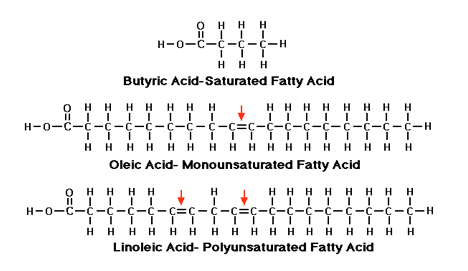
Dietary fats come in three different structures predominantly – saturated, monounsaturated, and polyunsaturated. Each dietary fat is actually a combination of all three of these structures. For example, 100% saturated fats don’t exist but rather a saturated fat will contain mostly saturated fat as well as smaller amounts of monounsaturated fat and polyunsaturated fat.

Saturated fats are very stable and remain solid at room temperature and below while turning into liquid above room temperature (they are liquid at human body temperature). Saturated fats do not contain any double bonds between carbon atoms like those seen in their unsaturated counterparts. The carbon atoms of saturated fats are saturated with single bonds to hydrogen atoms; the carbon atoms have the maximum amount of hydrogen atoms. This means that oxygen, light, or temperature does not easily break these bonds apart and change them. Saturated fats are non reactive.

Monounsaturated fats (MUFA) are liquid at room temperature and become cloudy in the refrigerator. MUFA have one (“mono”) double carbon bond and are relatively stable but this double bond can be affected by oxygen, temperature, and light over time which contributes to MUFA’s instability. This single double bond is susceptible to being modified and broken down. The single bond also manipulates the structure of the fat and creates a “kink” or bend.

Polyunsaturated fats (PUFA) are liquid at any temperature above freezing, are highly reactive, spoil quickly, & have two or more (”poly”) open double carbon bonds. PUFA are the most unstable of the three types of fats.

Because PUFA have multiple double bonds, they also have multiple kinks or bends in their structure. Oxygen, light, and temperature can easily break these fats apart at the site of the double bonds and create free radicals (lipid peroxides) that destroy important enzymes and damage vital energy producing cell structures. You cannot digest foods, dissolve blood clots, or release your thyroid hormone without enzymes. By reacting with oxygen, PUFA promote harmful oxidation while interfering with the productive use of oxygen.

Photobucket

Nature’s Examples
“Over the years, it has become evident that the polyunsaturated fats are not very compatible with a high rate of metabolism, though they are necessary for organisms that live at low temperatures and metabolize slowly, such as fish and vegetables. The saturated fats solidify at low temperature; beef fat is very stiff at refrigerator temperature, and in a fat fish, such stiffness would be lethal.” -Ray Peat, PhD

Many fish live in waters near freezing temperatures and are required to have liquid fats (polyunsaturated fats). Butter in your refrigerator hardens because it’s mostly saturated. This difference between the fats of a fish and the fats of cow’s milk from which butter is derived is explained by their different structures.

It’s these structural differences that we need to pay close attention to when making dietary choices. There are examples in nature that make things the picture clear. For example, if a fish had predominantly saturated fats in its tissues, it would have hardened fat and wouldn’t be able to move through cold water. Seeds exposed to cold temperatures have mostly PUFA in their tissues for similar reasons.

“The other reason is that the seeds are designed to germinate in early spring, so their energy stores must be accessible when the temperatures are cool, and they normally don’t have to remain viable through the hot summer months. Unsaturated oils are liquid when they are cold, and this is necessary for any organism that lives at low temperatures. For example, fish in cold water would be stiff if they contained saturated fats. These oils easily get rancid (spontaneously oxidizing) when they are warm and exposed to oxygen. Seeds contain a small amount of vitamin E to delay rancidity. When the oils are stored in our tissues, they are much warmer, and more directly exposed to oxygen, than they would be in the seeds, and so their tendency to oxidize is very great. These oxidative processes can damage enzymes and other parts of cells, and especially their ability to produce energy.” -Ray Peat, PhD

“The fact that saturated fats are dominant in tropical plants and in warm-blooded animals relates to the stability of these oils at high temperatures. Coconut oil which had been stored at room temperature for a year was found to have no measurable rancidity. Since growing coconuts often experience temperatures around 100 degrees Fahrenheit, ordinary room temperature isn’t an oxidative challenge. Fish oil or safflower oil, though, can’t be stored long at room temperature, and at 98 degrees F the spontaneous oxidation is very fast.” -Ray Peat, PhD

Just as liquid oils are necessary for organisms that can’t regulate their temperature but live at cold temperatures, saturated fats are necessary for organisms that live at high temperature or have a warm body temperature. For example, coconuts grow in tropical environments with temperatures that mimic the human body’s internal temperature (around 100 degress). A predominance of liquid polyunsaturated fatty acids in a coconut’s tissues would quickly go rancid and breakdown at such temperatures just as they do when exposed to heat and oxygen in our body. Amazonian fish and soy beans living or growing respectively in hot temps have more saturated fat in their tissues relative to the same species living or growing in colder environments.

Saturated fats don’t work in cold-water fish; polyunsaturates don’t work in the high temperatures of the tropics. We should learn from natures’ examples. The organism’s exposure to oxygen, body temperature, and/or environment determine the fats which are ideal for the organism.

Since we are omnivorous, our consumption of polyunsaturates is reflected in our fat tissues. As we eat more polyunsaturates with aging, these fats accumulate. It’s not to our advantage to eat foods containing large amounts of polyunsaturates or to refine these liquid oils, take them out of their intended environment, and introduce them into a place (i.e. our bodies) where they don’t belong. Our fats should be predominantly stable at warm temperatures (~98F/37C) and when exposed to oxygen, but when we consistently eat foods rich in polyunsaturates we violate this rule. The warm, oxygen-rich internal environment of humans isn’t the place for large amounts of reactive polyunsaturates.

Protective Saturated Fat
Non-reactive saturated fats are best for our physiology because they do not breakdown into toxic by products (lipid peroxides) like PUFA do in such an environment. It’s important to also note that when the body forms fats from carbohydrate, it does not form these unstable, toxic fats. This left the door open for some to believe in “essential fatty acids.”

An essential nutrient is a nutrient required for normal functioning that either cannot be synthesized by our body at all, or cannot be made in amounts adequate for good health, and thus must be obtained from a dietary source. It’s true that the body doesn’t synthesize the so called “essential fatty acids” (EFA). “EFA” and other PUFA are environmentally derived, but these fats are not needed for human health. The body doesn’t make these fats because they’re toxic, not because they’re essential. More discussion on that topic here and here.

Endogenously formed fats or saturated fats from the diet carry none of PUFA’s negatives effects. PUFA harm fetal and childhood development, immunity, mitochondrion health, thyroid function, and the activity of key enzyme involved in energy production called cytochrome oxidase . These fats also promote estrogen, development of age pigmentation, liver inflammation, heart damage, brain degeneration, slowed detoxification, and depressed longevity. PUFA are protectively found in seeds, nuts, beans, and above ground vegetables to inhibit the digestion of grazing animals except those which have developed a digestive physiology to overcome them (herbivores). Humans are omnivores.

Fish Oil
The fish oils are the most unsaturated fat (have the most double bonds) and pose many dangers for humans. EPA and DHA, polyunsaturated fats found in fish, have five and six double bonds respectively. EPA and DHA are ideal for cold waters, but your body temperature is far warmer and not suited for such fats.

Fish oils are exceptionally well-suited at suppressing immune function. They “reduce inflammation” in large part by destroying immunity much the way x-rays used to for inflammatory conditions. The use of x-rays to reduce inflammation in rheumatic sufferers brought about atrophy, fibrosis, and cancer. The massive use of fish oils will prove to do the same.

Fish oils do inhibit the production of prostaglandins by interfering with the conversion of linoleic acid into arachidonic acid making them anti-inflammatory in that way. Aspirin, vitamin E, and a PUFA-deficient diet produce similar effects without the suppressive effects on the immune system and thyroid. Fish oils are directly associated with Alzheimer’s. Saturated fats are protective against the disease.

Paints & Varnishes
“When exposed to air natural fatty acids having two or more double bonds tend to undergo a complex process called autoxidation, in which molecular oxygen attacks a double bond to yield a series of products which ultimately polymerize to form a hard resinous material. Linseed oil, used a base for paints, is rich in highly unsaturated fatty acids, and undergoes this polymerization process as it “dries.” Autoxidation of unsaturated fats in the tissues is also believed to occur in some disease.” -Albert Lehninger, PhD

Take a look at the video below for evidence of polyunsaturates’ reactivity. It’s the formation of this resinous material that should make polyunsaturates garner more attention in discussions regarding heart disease.

Food marketers want the public to forget the liquid oils’ historic uses. Fish and seeds oils were previously used as paints/varnishes because of their propensity to react with oxygen (“autooxidation”) and stick to the canvas. When petroleum based paints came around, the market for fish and seed oils vanished because it’s cheaper to make paints/varnishes from oil. The clever seed and fish oil industries created a new market – the supermarket – capitalizing on the erroneous research saying the fats within these oils were essential, heart healthy, and/or lowered cholesterol.

The third reason is true (although it’s another toxic effect) and the first two reasons are false and prove harmful. This mega market for PUFA still exits today to the financial benefit of seed and fish oil manufacturers but to the detriment of human health. Don’t fall for the marketing.

Dollars and Cents
Most processed/packaged food manufacturers and restaurants use polyunsaturated oilsso make sure to check food labels. These oils are cheaper than safer options, like butter and coconut oil. When money is at stake, your health takes a back seat. Below is a list showing the major dietary sources of PUFA and saturated fat. Keep dietary fat consumption high in saturated fats and low in polyunsaturated fats.

Polyunsaturates
These fats are liquid at refrigerator temperatures
Any nut, seed, bean, or vegetable oil
Soy oil
Sesame Oil
Peanut Oil
Wheat Germ Oil
Corn oil
Safflower oil
Cottonseed Oil
Canola Oil (used in cooking at Whole Foods Market)
Fish oil
Hempseed Oil
Grape Seed Oil
Flax Seed Oil/Linseed Oil
Walnut Oil
Almond Oil
Borage Oil
Evening Primrose Oil
Grains
Above ground vegetables
Beans
Nuts
Industrially fed poultry and pigs
“Omega 3” or “Omega 6” on labels

Saturated Fats
These fats are solid at refrigerator temperatures
Cocoa butter, chocolate (without soy lecithin)
(Refined) coconut oil
(Salted) Butter
Ghee
Dairy
Ruminant fat (buffalo, cow, goat, lamb, deer)
Pastured eggs
Pastured or wild animal fats

FPS coaches a 12 week informational nutrition course based solely on the methodology of Ray Peat, PhD. Please click here for more information.

Resources:
Unsaturated Vegetable Oils: Toxic by Ray Peat, PhD
The Great Fish Oil Experiment by Ray Peat, PhD

Posted in General.

Tagged with , , , , , , , , , , , , , , , , , , , , , , , , , .


Death by Medicine

By Gary Null, PhD; Carolyn Dean MD, ND; Martin Feldman, MD; Debora Rasio, MD; and Dorothy Smith, PhD

Something is wrong when regulatory agencies pretend that vitamins are dangerous, yet ignore published statistics showing that government-sanctioned medicine is the real hazard.

Until now, Life Extension could cite only isolated statistics to make its case about the dangers of conventional medicine. No one had ever analyzed and combined ALL of the published literature dealing with injuries and deaths caused by government-protected medicine. That has now changed.

A group of researchers meticulously reviewed the statistical evidence and their findings are absolutely shocking.4 These researchers have authored a paper titled “Death by Medicine” that presents compelling evidence that today’s system frequently causes more harm than good.

This fully referenced report shows the number of people having in-hospital, adverse reactions to prescribed drugs to be 2.2 million per year. The number of unnecessary antibiotics prescribed annually for viral infections is 20 million per year. The number of unnecessary medical and surgical procedures performed annually is 7.5 million per year. The number of people exposed to unnecessary hospitalization annually is 8.9 million per year.

The most stunning statistic, however, is that the total number of deaths caused by conventional medicine is an astounding 783,936 per year. It is now evident that the American medical system is the leading cause of death and injury in the US. (By contrast, the number of deaths attributable to heart disease in 2001 was 699,697, while the number of deaths attributable to cancer was 553,251.5)

We placed this article on our website to memorialize the failure of the American medical system. By exposing these gruesome statistics in painstaking detail, we provide a basis for competent and compassionate medical professionals to recognize the inadequacies of today’s system and at least attempt to institute meaningful reforms.

Natural medicine is under siege, as pharmaceutical company lobbyists urge lawmakers to deprive Americans of the benefits of dietary supplements. Drug-company front groups have launched slanderous media campaigns to discredit the value of healthy lifestyles. The FDA continues to interfere with those who offer natural products that compete with prescription drugs.

These attacks against natural medicine obscure a lethal problem that until now was buried in thousands of pages of scientific text. In response to these baseless challenges to natural medicine, the Nutrition Institute of America commissioned an independent review of the quality of “government-approved” medicine. The startling findings from this meticulous study indicate that conventional medicine is “the leading cause of death” in the United States .

The Nutrition Institute of America is a nonprofit organization that has sponsored independent research for the past 30 years. To support its bold claim that conventional medicine is America ‘s number-one killer, the Nutritional Institute of America mandated that every “count” in this “indictment” of US medicine be validated by published, peer-reviewed scientific studies.

What you are about to read is a stunning compilation of facts that documents that those who seek to abolish consumer access to natural therapies are misleading the public. Over 700,000 Americans die each year at the hands of government-sanctioned medicine, while the FDA and other government agencies pretend to protect the public by harassing those who offer safe alternatives.

A definitive review of medical peer-reviewed journals and government health statistics shows that American medicine frequently causes more harm than good.

Each year approximately 2.2 million US hospital patients experience adverse drug reactions (ADRs) to prescribed medications.(1) In 1995, Dr. Richard Besser of the federal Centers for Disease Control and Prevention (CDC) estimated the number of unnecessary antibiotics prescribed annually for viral infections to be 20 million; in 2003, Dr. Besser spoke in terms of tens of millions of unnecessary antibiotics prescribed annually.(2, 2a) Approximately 7.5 million unnecessary medical and surgical procedures are performed annually in the US,(3) while approximately 8.9 million Americans are hospitalized unnecessarily.(4)

As shown in the following table, the estimated total number of iatrogenic deaths—that is, deaths induced inadvertently by a physician or surgeon or by medical treatment or diagnostic procedures— in the US annually is 783,936. It is evident that the American medical system is itself the leading cause of death and injury in the US . By comparison, approximately 699,697 Americans died of heart in 2001, while 553,251 died of cancer.(5)

Table 1: Estimated Annual Mortality and Economic Cost of Medical Intervention

Condition Deaths Cost Author
Adverse Drug Reactions 106,000 $12 billion Lazarou(1), Suh (49)
Medical error 98,000 $2 billion IOM(6)
Bedsores 115,000 $55 billion Xakellis(7), Barczak (8)
Infection 88,000 $5 billion Weinstein(9), MMWR (10)
Malnutrition 108,800 ———– Nurses Coalition(11)
Outpatients 199,000 $77 billion Starfield(12), Weingart(112)
Unnecessary Procedures 37,136 $122 billion HCUP(3,13)
Surgery-Related 32,000 $9 billion AHRQ(85)
Total 783,936 $282 billion

Using Leape’s 1997 medical and drug error rate of 3 million(14) multiplied by the 14% fatality rate he used in 1994(16) produces an annual death rate of 420,000 for drug errors and medical errors combined. Using this number instead of Lazorou’s 106,000 drug errors and the Institute of Medicine ‘s (IOM) estimated 98,000 annual medical errors would add another 216,000 deaths, for a total of 999,936 deaths annually.

Table 2: Estimated Annual Mortality and Economic Cost of Medical Intervention

Condition Deaths Cost Author
ADR/med error 420,000 $200 billion Leape(14)
Bedsores 115,000 $55 billion Xakellis(7), Barczak (8)
Infection 88,000 $5 billion Weinstein(9), MMWR (10)
Malnutrition 108,800 ———– Nurses Coalition(11)
Outpatients 199,000 $77 billion Starfield(12), Weingart(112)
Unnecessary Procedures 37,136 $122 billion HCUP(3,13)
Surgery-Related 32,000 $9 billion AHRQ(85)
Total 999,936

The enumerating of unnecessary medical events is very important in our analysis. Any invasive, unnecessary medical procedure must be considered as part of the larger iatrogenic picture. Unfortunately, cause and effect go unmonitored. The figures on unnecessary events represent people who are thrust into a dangerous health care system. Each of these 16.4 million lives is being affected in ways that could have fatal consequences. Simply entering a hospital could result in the following:

  • In 16.4 million people, a 2.1% chance (affecting 186,000) of a serious adverse drug reaction(1)
  • In 16.4 million people, a 5-6% chance (affecting 489,500) of acquiring a nosocomial infection(9)
  • In16.4 million people, a 4-36% chance (affecting 1.78 million) of having an iatrogenic injury (medical error and adverse drug reactions).(16)
  • In 16.4 million people, a 17% chance (affecting 1.3 million) of a procedure error.(40)

These statistics represent a one-year time span. Working with the most conservative figures from our statistics, we project the following 10-year death rates.

Table 3: Estimated 10-Year Death Rates from Medical Intervention

Condition

10-Year Deaths

Author
Adverse Drug Reaction 1.06 million (1)
Medical error 0.98 million (6)
Bedsores 1.15 million (7,8)
Nosocomial Infection 0.88 million (9,10)
Malnutrition 1.09 million (11)
Outpatients 1.99 million (12, 112)
Unnecessary Procedures 371,360 (3,13)
Surgery-related 320,000 (85)
Total 7,841,360

Our estimated 10-year total of 7.8 million iatrogenic deaths is more than all the casualties from all the wars fought by the US throughout its entire history.

Our projected figures for unnecessary medical events occurring over a 10-year period also are dramatic.

Table 4: Estimated 10-Year Unnecessary Medical Events

Unnecessary Events 10-year Number Iatrogenic Events
Hospitalization 89 million(4) 17 million
Procedures 75 million(3) 15 million
Total 164 million

These figures show that an estimated 164 million people—more than half of the total US population—receive unneeded medical treatment over the course of a decade.

INTRODUCTION

Never before have the complete statistics on the multiple causes of iatrogenesis been combined in one article. Medical science amasses tens of thousands of papers annually, each representing a tiny fragment of the whole picture. To look at only one piece and try to understand the benefits and risks is like standing an inch away from an elephant and trying to describe everything about it. You have to step back to see the big picture, as we have done here. Each specialty, each division of medicine keeps its own records and data on morbidity and mortality. We have now completed the painstaking work of reviewing thousands of studies and putting pieces of the puzzle together.

Is American Medicine Working?

US health care spending reached $1.6 trillion in 2003, representing 14% of the nation’s gross national product.(15) Considering this enormous expenditure, we should have the best medicine in the world. We should be preventing and reversing disease, and doing minimal harm. Careful and objective review, however, shows we are doing the opposite. Because of the extraordinarily narrow, technologically driven context in which contemporary medicine examines the human condition, we are completely missing the larger picture.

Medicine is not taking into consideration the following critically important aspects of a healthy human organism: (a) stress and how it adversely affects the immune system and life processes; (b) insufficient exercise; (c) excessive caloric intake; (d) highly processed and denatured foods grown in denatured and chemically damaged soil; and (e) exposure to tens of thousands of environmental toxins. Instead of minimizing these disease-causing factors, we cause more illness through medical technology, diagnostic testing, overuse of medical and surgical procedures, and overuse of pharmaceutical drugs. The huge disservice of this therapeutic strategy is the result of little effort or money being spent on preventing disease.

Underreporting of Iatrogenic Events

As few as 5% and no more than 20% of iatrogenic acts are ever reported.(16,24,25,33,34) This implies that if medical errors were completely and accurately reported, we would have an annual iatrogenic death toll much higher than 783,936. In 1994, Leape said his figure of 180,000 medical mistakes resulting in death annually was equivalent to three jumbo-jet crashes every two days.(16) Our considerably higher figure is equivalent to six jumbo jets are falling out of the sky each day.

What we must deduce from this report is that medicine is in need of complete and total reform—from the curriculum in medical schools to protecting patients from excessive medical intervention. It is obvious that we cannot change anything if we are not honest about what needs to be changed. This report simply shows the degree to which change is required.

We are fully aware of what stands in the way of change: powerful pharmaceutical and medical technology companies, along with other powerful groups with enormous vested interests in the business of medicine. They fund medical research, support medical schools and hospitals, and advertise in medical journals. With deep pockets, they entice scientists and academics to support their efforts. Such funding can sway the balance of opinion from professional caution to uncritical acceptance of new therapies and drugs. You have only to look at the people who make up the hospital, medical, and government health advisory boards to see conflicts of interest. The public is mostly unaware of these interlocking interests.

For example, a 2003 study found that nearly half of medical school faculty who serve on institutional review boards (IRB) to advise on clinical trial research also serve as consultants to the pharmaceutical industry.(17) The study authors were concerned that such representation could cause potential conflicts of interest. A news release by Dr. Erik Campbell, the lead author, said, “Our previous research with faculty has shown us that ties to industry can affect scientific behavior, leading to such things as trade secrecy and delays in publishing research. It’s possible that similar relationships with companies could affect IRB members’ activities and attitudes.”(18)

Medical Ethics and Conflict of Interest in Scientific Medicine

Jonathan Quick, director of essential drugs and medicines policy for the World Health Organization (WHO), wrote in a recent WHO bulletin: “If clinical trials become a commercial venture in which self-interest overrules public interest and desire overrules science, then the social contract which allows research on human subjects in return for medical advances is broken.”(19)

As former editor of the New England Journal of Medicine , Dr. Marcia Angell struggled to bring greater attention to the problem of commercializing scientific research. In her outgoing editorial entitled “ Is Academic Medicine for Sale?” Angell said that growing conflicts of interest are tainting science and called for stronger restrictions on pharmaceutical stock ownership and other financial incentives for researchers:(20) “When the boundaries between industry and academic medicine become as blurred as they are now, the business goals of industry influence the mission of medical schools in multiple ways.” She did not discount the benefits of research but said a Faustian bargain now existed between medical schools and the pharmaceutical industry.

Angell left the New England Journal in June 2000. In June 2002, the New England Journal of Medicine announced that it would accept journalists who accept money from drug companies because it was too difficult to find ones who have no ties. Another former editor of the journal, Dr. Jerome Kassirer, said that was not the case and that plenty of researchers are available who do not work for drug companies.(21) According to an ABC news report, pharmaceutical companies spend over $2 billion a year on over 314,000 events attended by doctors.

The ABC news report also noted that a survey of clinical trials revealed that when a drug company funds a study, there is a 90% chance that the drug will be perceived as effective whereas a non-drug-company-funded study will show favorable results only 50% of the time. It appears that money can’t buy you love but it can buy any “scientific” result desired.

Cynthia Crossen, a staffer for the Wall Street Journal, i n 1996 published Tainted Truth : The Manipulation of Fact in America , a book about the widespread practice of lying with statistics.(22) Commenting on the state of scientific research, she wrote: “The road to hell was paved with the flood of corporate research dollars that eagerly filled gaps left by slashed government research funding.” Her data on financial involvement showed that in l981 the drug industry “gave” $292 million to colleges and universities for research. By l991, this figure had risen to $2.1 billion.

THE FIRST IATROGENIC STUDY

Dr. Lucian L. Leape opened medicine’s Pandora’s box in his 1994 paper, “Error in Medicine,” which appeared in the Journal of the American Medical Association (JAMA).(16) He found that Schimmel reported in 1964 that 20% of hospital patients suffered iatrogenic injury, with a 20% fatality rate. In 1981 Steel reported that 36% of hospitalized patients experienced iatrogenesis with a 25% fatality rate, and adverse drug reactions were involved in 50% of the injuries. In 1991, Bedell reported that 64% of acute heart attacks in one hospital were preventable and were mostly due to adverse drug reactions.

Leape focused on the “Harvard Medical Practice Study” published in 1991, (16a) which found a 4% iatrogenic injury rate for patients, with a 14% fatality rate, in 1984 in New York State. From the 98,609 patients injured and the 14% fatality rate, he estimated that in the entire U.S. 180,000 people die each year partly as a result of iatrogenic injury.

Why Leape chose to use the much lower figure of 4% injury for his analysis remains in question. Using instead the average of the rates found in the three studies he cites (36%, 20%, and 4%) would have produced a 20% medical error rate. The number of iatrogenic deaths using an average rate of injury and his 14% fatality rate would be 1,189,576.

Leape acknowledged that the literature on medical errors is sparse and represents only the tip of the iceberg, noting that when errors are specifically sought out, reported rates are “distressingly high.” He cited several autopsy studies with rates as high as 35-40% of missed diagnoses causing death. He also noted that an intensive care unit reported an average of 1.7 errors per day per patient, and 29% of those errors were potentially serious or fatal.

Leape calculated the error rate in the intensive care unit study. First, he found that each patient had an average of 178 “activities” (staff/procedure/medical interactions) a day, of which 1.7 were errors, which means a 1% failure rate. This may not seem like much, but Leape cited industry standards showing that in aviation, a 0.1% failure rate would mean two unsafe plane landings per day at Chicago’s O’Hare International Airport; in the US Postal Service, a 0.1% failure rate would mean 16,000 pieces of lost mail every hour; and in the banking industry, a 0.1% failure rate would mean 32,000 bank checks deducted from the wrong bank account.

In trying to determine why there are so many medical errors, Leape acknowledged the lack of reporting of medical errors. Medical errors occur in thousands of different locations and are perceived as isolated and unusual events. But the most important reason that the problem of medical errors is unrecognized and growing, according to Leape, is that doctors and nurses are unequipped to deal with human error because of the culture of medical training and practice. Doctors are taught that mistakes are unacceptable. Medical mistakes are therefore viewed as a failure of character and any error equals negligence. No one is taught what to do when medical errors do occur. Leape cites McIntyre and Popper, who said the “infallibility model” of medicine leads to intellectual dishonesty with a need to cover up mistakes rather than admit them. There are no Grand Rounds on medical errors, no sharing of failures among doctors, and no one to support them emotionally when their error harms a patient.

Leape hoped his paper would encourage medical practitioners “to fundamentally change the way they think about errors and why they occur.” It has been almost a decade since this groundbreaking work, but the mistakes continue to soar.

In 1995, a JAMA report noted, “Over a million patients are injured in US hospitals each year, and approximately 280,000 die annually as a result of these injuries. Therefore, the iatrogenic death rate dwarfs the annual automobile accident mortality rate of 45,000 and accounts for more deaths than all other accidents combined.”(23)

At a 1997 press conference, Leape released a nationwide poll on patient iatrogenesis conducted by the National Patient Safety Foundation (NPSF), which is sponsored by the American Medical Association (AMA). Leape is a founding member of NPSF. The survey found that more than 100 million Americans have been affected directly or indirectly by a medical mistake. Forty-two percent were affected directly and 84% personally knew of someone who had experienced a medical mistake.(14)

At this press conference, Leape updated his 1994 statistics, noting that as of 1997, medical errors in inpatient hospital settings nationwide could be as high as 3 million and could cost as much as $200 billion . Leape used a 14% fatality rate to determine a medical error death rate of 180,000 in 1994.(16) In 1997, using Leape’s base number of 3 million errors, the annual death rate could be as high as 420,000 for hospital inpatients alone.

ONLY A FRACTION OF MEDICAL ERRORS ARE REPORTED

In 1994, Leape said he was well aware that medical errors were not being reported.(16) A study conducted in two obstetrical units in the UK found that only about one-quarter of adverse incidents were ever reported, to protect staff, preserve reputations, or for fear of reprisals, including lawsuits.(24). An analysis by Wald and Shojania found that only 1.5% of all adverse events result in an incident report, and only 6% of adverse drug events are identified properly. The authors learned that the American College of Surgeons estimates that surgical incident reports routinely capture only 5-30% of adverse events. In one study, only 20% of surgical complications resulted in discussion at morbidity and mortality rounds.(25) From these studies, it appears that all the statistics gathered on medical errors may substantially underestimate the number of adverse drug and medical therapy incidents. They also suggest that our statistics concerning mortality resulting from medical errors may be in fact be conservative figures.

An article in Psychiatric Times (April 2000) outlines the stakes involved in reporting medical errors.(26) The authors found that the public is fearful of suffering a fatal medical error, and doctors are afraid they will be sued if they report an error. This brings up the obvious question: who is reporting medical errors? Usually it is the patient or the patient’s surviving family. If no one notices the error, it is never reported. Janet Heinrich, an associate director at the U.S. General Accounting Office responsible for health financing and public health issues, testified before a House subcommittee hearing on medical errors that “the full magnitude of their threat to the American public is unknown” and “gathering valid and useful information about adverse events is extremely difficult.” She acknowledged that the fear of being blamed, and the potential for legal liability, played key roles in the underreporting of errors. The Psychiatric Times noted that the AMA strongly opposes mandatory reporting of medical errors.(26) If doctors are not reporting, what about nurses? A survey of nurses found that they also fail to report medical mistakes for fear of retaliation.(27)

Standard medical pharmacology texts admit that relatively few doctors ever report adverse drug reactions to the FDA.(28) The reasons range from not knowing such a reporting system exists to fear of being sued.(29) Yet the public depends on this tremendously flawed system of voluntary reporting by doctors to know whether a drug or a medical intervention is harmful.

Pharmacology texts also will tell doctors how hard it is to separate drug side effects from disease symptoms. Treatment failure is most often attributed to the disease and not the drug or doctor. Doctors are warned, “Probably nowhere else in professional life are mistakes so easily hidden, even from ourselves.”(30) It may be hard to accept, but it is not difficult to understand why only 1 in 20 side effects is reported to either hospital administrators or the FDA.(31, 31a)

If hospitals admitted to the actual number of errors for which they are responsible, which is about 20 times what is reported, they would come under intense scrutiny.(32) Jerry Phillips, associate director of the FDA’s Office of Post Marketing Drug Risk Assessment, confirms this number. “In the broader area of adverse drug reaction data, the 250,000 reports received annually probably represent only 5% of the actual reactions that occur.”(33) Dr. Jay Cohen, who has extensively researched adverse drug reactions, notes that because only 5% of adverse drug reactions are reported, there are in fact 5 million medication reactions each year.(34)

A 2003 survey is all the more distressing because there seems to be no improvement in error reporting, even with all the attention given to this topic. Dr. Dorothea Wild surveyed medical residents at a community hospital in Connecticut and found that only half were aware that the hospital had a medical error-reporting system, and that the vast majority did not use it at all. Dr. Wild says this does not bode well for the future. If doctors don’t learn error reporting in their training, they will never use it. Wild adds that error reporting is the first step in locating the gaps in the medical system and fixing them. Not even that first step has been taken to date.(35)

PUBLIC SUGGESTIONS ON IATROGENESIS

In a telephone survey, 1,207 adults ranked the effectiveness of the following measures in reducing preventable medical errors that result in serious harm.(36) (Following each measure is the percentage of respondents who ranked the measure as “very effective.”)

  • giving doctors more time to spend with patients (78%)
  • requiring hospitals to develop systems to avoid medical errors (74%)
  • better training of health professionals (73%)
  • using only doctors specially trained in intensive care medicine on intensive care units (73%)
  • requiring hospitals to report all serious medical errors to a state agency (71%)
  • increasing the number of hospital nurses (69%)
  • reducing the work hours of doctors in training to avoid fatigue (66%)
  • encouraging hospitals to voluntarily report serious medical errors to a state agency (62%).

DRUG IATROGENESIS

Prescription drugs constitute the major treatment modality of scientific medicine. With the discovery of the “germ theory,” medical scientists convinced the public that infectious organisms were the cause of illness. Finding the “cure” for these infections proved much harder than anyone imagined. From the beginning, chemical drugs promised much more than they delivered. But far beyond not working, the drugs also caused incalculable side effects. The drugs themselves, even when properly prescribed, have side effects that can be fatal, as Lazarou’s study(1) showed. But human error can make the situation even worse.

Medication Errors

A survey of a 1992 national pharmacy database found a total of 429,827 medication errors from 1,081 hospitals. Medication errors occurred in 5.22% of patients admitted to these hospitals each year. The authors concluded that at least 90,895 patients annually were harmed by medication errors in the US as a whole.(37)

A 2002 study shows that 20% of hospital medications for patients had dosage errors. Nearly 40% of these errors were considered potentially harmful to the patient. In a typical 300-patient hospital, the number of errors per day was 40.(38)

Problems involving patients’ medications were even higher the following year. The error rate intercepted by pharmacists in this study was 24%, making the potential minimum number of patients harmed by prescription drugs 417,908.(39)

Recent Adverse Drug Reactions

More-recent studies on adverse drug reactions show that the figures from 1994 published in Lazarou’s 1998 JAMA article may be increasing. A 2003 study followed 400 patients after discharge from a tertiary care hospital setting (requiring highly specialized skills, technology, or support services). Seventy-six patients (19%) had adverse events. Adverse drug events were the most common, at 66% of all events. The next most common event was procedure-related injuries, at 17%.(40)

In a New England Journal of Medicine study, an alarming one in four patients suffered observable side effects from the more than 3.34 billion prescription drugs filled in 2002.(41) One of the doctors who produced the study was interviewed by Reuters and commented, “With these 10-minute appointments, it’s hard for the doctor to get into whether the symptoms are bothering the patients.”(42) William Tierney, who editorialized on the New England Journal study, said “… given the increasing number of powerful drugs available to care for the aging population, the problem will only get worse.” The drugs with the worst record of side effects were selective serotonin reuptake inhibitors ( SSRIs), nonsteroidal anti-inflammatory drugs (NSAIDs), and calcium-channel blockers. Reuters also reported that prior research has suggested that nearly 5% of hospital admissions (over 1 million per year) are the result of drug side effects. But most of the cases are not documented as such. The study found that one of the reasons for this failure is that in nearly two-thirds of the cases, doctors could not diagnose drug side effects or the side effects persisted because the doctor failed to heed the warning signs.

Medicating Our Feelings

Patients seeking a more joyful existence and relief from worry, stress, and anxiety often fall victim to the messages endlessly displayed on TV and billboards. Often, instead of gaining relief, they fall victim to the myriad iatrogenic side effects of antidepressant medication.

Moreover, a whole generation of antidepressant users has been created from young people growing up on Ritalin. Medicating youth and modifying their emotions must have some impact on how they learn to deal with their feelings. They learn to equate coping with drugs rather than with their inner resources. As adults, these medicated youth reach for alcohol, drugs, or even street drugs to cope. According to JAMA , “Ritalin acts much like cocaine.”(43) Today’s marketing of mood-modifying drugs such as Prozac and Zoloft ® makes them not only socially acceptable but almost a necessity in today’s stressful world.

Television Diagnosis

To reach the widest audience possible, drug companies are no longer just targeting medical doctors with their marketing of antidepressants. By 1995, drug companies had tripled the amount of money allotted to direct advertising of prescription drugs to consumers. The majority of this money is spent on seductive television ads. From 1996 to 2000, spending rose from $791 million to nearly $2.5 billion.(44) This $2.5 billion represents only 15% of the total pharmaceutical advertising budget. While the drug companies maintain that direct-to-consumer advertising is educational, Dr. Sidney M. Wolfe of the Public Citizen Health Research Group in Washington, DC, argues that the public often is misinformed about these ads.(45) People want what they see on television and are told to go to their doctors for a prescription. Doctors in private practice either acquiesce to their patients’ demands for these drugs or spend valuable time trying to talk patients out of unnecessary drugs. Dr. Wolfe remarks that one important study found that people mistakenly believe that the “FDA reviews all ads before they are released and allows only the safest and most effective drugs to be promoted directly to the public.”(46)

How Do We Know Drugs Are Safe?

Another aspect of scientific medicine that the public takes for granted is the testing of new drugs. Drugs generally are tested on individuals who are fairly healthy and not on other medications that could interfere with findings. But when these new drugs are declared “safe” and enter the drug prescription books, they are naturally going to be used by people who are on a variety of other medications and have a lot of other health problems. Then a new phase of drug testing called “post-approval” comes into play, which is the documentation of side effects once drugs hit the market. In one very telling report, the federal government’s General Accounting Office “found that of the 198 drugs approved by the FDA between 1976 and 1985… 102 (or 51.5%) had serious post-approval risks… the serious post-approval risks (included) heart failure, myocardial infarction, anaphylaxis, respiratory depression and arrest, seizures, kidney and liver failure, severe blood disorders, birth defects and fetal toxicity, and blindness.”(47)

NBC Television’s investigative show “Dateline” wondered if your doctor is moonlighting as a drug company representative. After a yearlong investigation, NBC reported that because doctors can legally prescribe any drug to any patient for any condition, drug companies heavily promote “off label” and frequently inappropriate and untested uses of these medications, even though these drugs are approved only for the specific indications for which they have been tested.(48)

The leading causes of adverse drug reactions are antibiotics (17%), cardiovascular drugs (17%), chemotherapy (15%), and analgesics and anti-inflammatory agents (15%).(49)

Specific Drug Iatrogenesis: Antibiotics

According to William Agger, MD, director of microbiology and chief of infectious disease at Gundersen Lutheran Medical Center in La Crosse, WI, 30 million pounds of antibiotics are used in America each year.(50) Of this amount, 25 million pounds are used in animal husbandry, and 23 million pounds are used to try to prevent disease and the stress of shipping, as well as to promote growth. Only 2 million pounds are given for specific animal infections. Dr. Agger reminds us that low concentrations of antibiotics are measurable in many of our foods and in various waterways around the world, much of it seeping in from animal farms.

Agger contends that overuse of antibiotics results in food-borne infections resistant to antibiotics. Salmonella is found in 20% of ground meat, but the constant exposure of cattle to antibiotics has made 84% of salmonella resistant to at least one anti-salmonella antibiotic. Diseased animal food accounts for 80% of salmonellosis in humans, or 1.4 million cases per year. The conventional approach to countering this epidemic is to radiate food to try to kill all organisms while continuing to use the antibiotics that created the problem in the first place. Approximately 20% of chickens are contaminated with Campylobacter jejuni, an organism that causes 2.4 million cases of illness annually. Fifty-four percent of these organisms are resistant to at least one anti-campylobacter antimicrobial agent.

Denmark banned growth-promoting antibiotics beginning in 1999, which cut their use by more than half within a year, from 453,200 to 195,800 pounds. A report from Scandinavia found that removing antibiotic growth promoters had no or minimal effect on food production costs. Agger warns that the current crowded, unsanitary methods of animal farming in the US support constant stress and infection, and are geared toward high antibiotic use.

In the US, over 3 million pounds of antibiotics are used every year on humans. With a population of 284 million Americans, this amount is enough to give every man, woman, and child 10 teaspoons of pure antibiotics per year. Agger says that exposure to a steady stream of antibiotics has altered pathogens such as Streptococcus pneumoniae, Staplococcus aureus, and entercocci, to name a few.

Almost half of patients with upper respiratory tract infections in the U.S. still receive antibiotics from their doctor.(51) According to the CDC, 90% of upper respiratory infections are viral and should not be treated with antibiotics. In Germany, the prevalence of systemic antibiotic use in children aged 0-6 years was 42.9%.(52)

Data obtained from nine US health insurers on antibiotic use in 25,000 children from 1996 to 2000 found that rates of antibiotic use decreased. Antibiotic use in children aged three months to under 3 years decreased 24%, from 2.46 to 1.89 antibiotic prescriptions per patient per year. For children aged 3 to under 6 years, there was a 25% reduction from 1.47 to 1.09 antibiotic prescriptions per patient per year. And for children aged 6 to under 18 years, there was a 16% reduction from 0.85 to 0.69 antibiotic prescriptions per patient per year.(53) Despite these reductions, the data indicate that on average every child in America receives 1.22 antibiotic prescriptions annually.

Group A beta-hemolytic streptococci is the only common cause of sore throat that requires antibiotics, with penicillin and erythromycin the only recommended treatment. Ninety percent of sore-throat cases, however, are viral. Antibiotics were used in 73% of the estimated 6.7 million adult annual visits for sore throat in the US between 1989 and 1999. Furthermore, patients treated with antibiotics were prescribed non-recommended broad-spectrum antibiotics in 68% of visits. This period saw a significant increase in the use of newer, more expensive broad-spectrum antibiotics and a decrease in use of the recommended antibiotics penicillin and erythromycin.(54) A ntibiotics being prescribed in 73% of sore-throat cases instead of the recommended 10% resulted in a total of 4.2 million unnecessary antibiotic prescriptions from 1989 to 1999.

The Problem with Antibiotics

In September 2003, the CDC re-launched a program started in 1995 called “Get Smart: Know When Antibiotics Work.”(55) This $1.6 million campaign is designed to educate patients about the overuse and inappropriate use of antibiotics. Most people involved with alternative medicine have known about the dangers of antibiotic overuse for decades. Finally the government is focusing on the problem, yet it is spending only a miniscule amount of money on an iatrogenic epidemic that is costing billions of dollars and thousands of lives. The CDC warns that 90% of upper respiratory infections, including children’s ear infections, are viral and that antibiotics do not treat viral infection. More than 40% of about 50 million prescriptions for antibiotics written each year in physicians’ offices are inappropriate.(2) U sing antibiotics when not needed can lead to the development of deadly strains of bacteria that are resistant to drugs and cause more than 88,000 deaths due to hospital-acquired infections.(9) The CDC, however, seems to be blaming patients for misusing antibiotics even though they are available only by prescription from physicians. According to Dr. Richard Besser, head of “Get Smart”: “Programs that have just targeted physicians have not worked. Direct-to-consumer advertising of drugs is to blame in some cases.” Besser says the program “teaches patients and the general public that antibiotics are precious resources that must be used correctly if we want to have them around when we need them. Hopefully, as a result of this campaign, patients will feel more comfortable asking their doctors for the best care for their illnesses, rather than asking for antibiotics.”(56)

What constitutes the “best care”? The CDC does not elaborate and ignores the latest research on the dozens of nutraceuticals that have been scientifically proven to treat viral infections and boost immune-system function. Will doctors recommend vitamin C, echinacea, elderberry, vitamin A, zinc, or homeopathic oscillococcinum? Probably not. The CDC’s common-sense recommendations that most people follow anyway include getting proper rest, drinking plenty of fluids, and using a humidifier.

The pharmaceutical industry claims it supports limiting the use of antibiotics. The drug company Bayer sponsors a program called “Operation Clean Hands” through an organization called LIBRA.(57) The CDC also is involved in trying to minimize antibiotic resistance, but nowhere in its publications is there any reference to the role of nutraceuticals in boosting the immune system, nor to the thousands of journal articles that support this approach. This tunnel vision and refusal to recommend the available non-drug alternatives is unfortunate when the CDC is desperately trying to curb the overuse of antibiotics.

Drugs Pollute Our Water Supply

We have reached the point of saturation with prescription drugs. Every body of water tested contains measurable drug residues. The tons of antibiotics used in animal farming, which run off into the water table and surrounding bodies of water, are conferring antibiotic resistance to germs in sewage, and these germs also are found in our water supply. Flushed down our toilets are tons of drugs and drug metabolites that also find their way into our water supply. We have no way to know the long-term health consequences of ingesting a mixture of drugs and drug-breakdown products. These drugs represent another level of iatrogenic disease that we are unable to completely measure.(58-67)

Specific Drug Iatrogenesis: NSAIDs

It’s not just the US that is plagued by iatrogenesis. A survey of more than 1,000 French general practitioners (GPs) tested their basic pharmacological knowledge and practice in prescribing NSAIDs, which rank first among commonly prescribed drugs for serious adverse reactions. The study results suggest that GPs do not have adequate knowledge of these drugs and are unable to effectively manage adverse reactions.(68)

A cross-sectional survey of 125 patients attending specialty pain clinics in South London found that possible iatrogenic factors such as “over-investigation, inappropriate information, and advice given to patients as well as misdiagnosis, over-treatment, and inappropriate prescription of medication were common.”(69)

Specific Drug Iatrogenesis: Cancer Chemotherapy

In 1989, German biostatistician Ulrich Abel, PhD, wrote a monograph entitled “Chemotherapy of Advanced Epithelial Cancer.” It was later published in shorter form in a peer-reviewed medical journal.(70) Abel presented a comprehensive analysis of clinical trials and publications representing over 3,000 articles examining the value of cytotoxic chemotherapy on advanced epithelial cancer. Epithelial cancer is the type of cancer with which we are most familiar, arising from epithelium found in the lining of body organs such as the breast, prostate, lung, stomach, and bowel. From these sites, cancer usually infiltrates adjacent tissue and spreads to the bone, liver, lung, or brain. With his exhaustive review, Abel concluded there is no direct evidence that chemotherapy prolongs survival in patients with advanced carcinoma; in small-cell lung cancer and perhaps ovarian cancer, the therapeutic benefit is only slight. According to Abel, “Many oncologists take it for granted that response to therapy prolongs survival, an opinion which is based on a fallacy and which is not supported by clinical studies.”

Over a decade after Abel’s exhaustive review of chemotherapy, there seems no decrease in its use for advanced carcinoma. For example, when conventional chemotherapy and radiation have not worked to prevent metastases in breast cancer, high-dose chemotherapy (HDC) along with stem-cell transplant (SCT) is the treatment of choice. In March 2000, however, results from the largest multi-center randomized controlled trial conducted thus far showed that, compared to a prolonged course of monthly conventional-dose chemotherapy, HDC and SCT were of no benefit, (71) with even a slightly lower survival rate for the HDC/SCT group. Serious adverse effects occurred more often in the HDC group than the standard-dose group. One treatment-related death (within 100 days of therapy) was recorded in the HDC group, but none was recorded in the conventional chemotherapy group. The women in this trial were highly selected as having the best chance to respond.

Unfortunately, no all-encompassing follow-up study such as Dr. Abel’s exists to indicate whether there has been any improvement in cancer-survival statistics since 1989. In fact, research should be conducted to determine whether chemotherapy itself is responsible for secondary cancers instead of progression of the original disease. We continue to question why well-researched alternative cancer treatments are not used.

Drug Companies Fined

Periodically, the FDA fines a drug manufacturer when its abuses are too glaring and impossible to cover up. In May 2002, The Washington Post reported that Schering-Plough Corp., the maker of Claritin, was to pay a $500 million dollar fine to the FDA for quality-control problems at four of its factories.(72) The indictment came after the Public Citizen Health Research Group, led by Dr. Sidney Wolfe, called for a criminal investigation of Schering-Plough, charging that the company distributed albuterol asthma inhalers even though it knew the units were missing the active ingredient.

The FDA tabulated infractions involving 125 products, or 90% of the drugs made by Schering-Plough since 1998. Besides paying the fine, the company was forced to halt the manufacture of 73 drugs or suffer another $175 million fine. Schering-Plough’s news releases told another story, assuring consumers that they should still feel confident in the company’s products.

This large settlement served as a warning to the drug industry about maintaining strict manufacturing practices and has given the FDA more clout in dealing with drug company compliance. According to The Washington Post article, a federal appeals court ruled in 1999 that the FDA could seize the profits of companies that violate “good manufacturing practices.” Since that time, Abbott Laboratories has paid a $100 million fine for failing to meet quality standards in the production of medical test kits, while Wyeth Laboratories paid $30 million in 2000 to settle accusations of poor manufacturing practices.

UNNECESSARY SURGICAL PROCEDURES

In 1974, 2.4 million unnecessary surgeries were performed, resulting in 11,900 deaths at a cost of $3.9 billion.(73,74) In 2001, 7.5 million unnecessary surgical procedures were performed, resulting in 37,136 deaths at a cost of $122 billion (using 1974 dollars).(3)

It is very difficult to obtain accurate statistics when studying unnecessary surgery. In 1989, Leape wrote that perhaps 30% of controversial surgeries—which include cesarean section, tonsillectomy, appendectomy, hysterectomy, gastrectomy for obesity, breast implants, and elective breast implants(74)— are unnecessary. In 1974, the Congressional Committee on Interstate and Foreign Commerce held hearings on unnecessary surgery. It found that 17.6% of recommendations for surgery were not confirmed by a second opinion. The House Subcommittee on Oversight and Investigations extrapolated these figures and estimated that, on a nationwide basis, there were 2.4 million unnecessary surgeries performed annually, resulting in 11,900 deaths at an annual cost of $3.9 billion.(73)

According to the Healthcare Cost and Utilization Project within the Agency for Healthcare Research and Quality(13), in 2001 the 50 most common medical and surgical procedures were performed approximately 41.8 million times in the US. Using the 1974 House Subcommittee on Oversight and Investigations’ figure of 17.6% as the percentage of unnecessary surgical procedures, and extrapolating from the death rate in 1974, produces nearly 7.5 million (7,489,718) unnecessary procedures and a death rate of 37,136, at a cost of $122 billion (using 1974 dollars).

In 1995, researchers conducted a similar analysis of back surgery procedures, using the 1974 “unnecessary surgery percentage” of 17.6. Testifying before the Department of Veterans Affairs, they estimated that of the 250,000 back surgeries performed annually in the US at a hospital cost of $11,000 per patient, the total number of unnecessary back surgeries approaches 44,000, costing as much as $484 million.(75)

Like prescription drug use driven by television advertising, unnecessary surgeries are escalating. Media-driven surgery such as gastric bypass for obesity “modeled” by Hollywood celebrities seduces obese people to think this route is safe and sexy. Unnecessary surgeries have even been marketed on the Internet.(76) A study in Spain declares that 20-25% of total surgical practice represents unnecessary operations.(77)

According to data from the National Center for Health Statistics for 1979 to 1984, the total number of surgical procedures increased 9% while the number of surgeons grew 20%. The study notes that the large increase in the number of surgeons was not accompanied by a parallel increase in the number of surgeries performed, and expressed concern about an excess of surgeons to handle the surgical caseload.(78)

From 1983 to 1994, however, the incidence of the 10 most commonly performed surgical procedures jumped 38%, to 7,929,000 from 5,731,000 cases. By 1994, cataract surgery was the most common procedure with more than 2 million operations, followed by cesarean section (858,000 procedures) and inguinal hernia operations (689,000 procedures). Knee arthroscopy procedures increased 153% while prostate surgery declined 29%.(79)

The list of iatrogenic complications from surgery is as long as the list of procedures themselves. One study examined catheters that were inserted to deliver anesthetic into the epidural space around the spinal nerves for lower cesarean section, abdominal surgery, or prostate surgery. In some cases, non-sterile technique during catheter insertion resulted in serious infections, even leading to limb paralysis.(80)

In one review of the literature, the authors found “a significant rate of overutilization of coronary angiography, coronary artery surgery, cardiac pacemaker insertion, upper gastrointestinal endoscopies, carotid endarterectomies, back surgery, and pain-relieving procedures.”(81)

A 1987 JAMA study found the following significant levels of inappropriate surgery: 17% of coronary angiography procedures, 32% of carotid endarterectomy procedures, and 17% of upper gastrointestinal tract endoscopy procedures.(82) Based on the Healthcare Cost and Utilization Project (HCUP) statistics provided by the government for 2001, 697,675 upper gastrointestinal endoscopies (usually entailing biopsy) were performed, as were 142,401 endarterectomies and 719,949 coronary angiographies.(13) Extrapolating the JAMA study’s inappropriate surgery rates to 2001 produces 118,604 unnecessary endoscopy procedures, 45,568 unnecessary endarterectomies, and 122,391 unnecessary coronary angiographies. These are all forms of medical iatrogenesis.

MEDICAL AND SURGICAL PROCEDURES

It is instructive to know the mortality rates associated with various medical and surgical procedures. Although we must sign release forms when we undergo any procedure, many of us are in denial about the true risks involved; because medical and surgical procedures are so commonplace, they often are seen as both necessary and safe. Unfortunately, allopathic medicine itself is a leading cause of death, as well as the most expensive way to die.

Perhaps the words “health care” confer the illusion that medicine is about health. Allopathic medicine is not a purveyor of health care but of disease care. The HCUP figures are instructive,(13) but the computer program that calculates annual mortality statistics for all US hospital discharges is only as good as the codes entered into the system. In email correspondence, HCUP indicated that the mortality rates for each procedure indicated only that someone undergoing that procedure died either from the procedure or from some other cause.

Thus there is no way of knowing exactly how many people die from a particular procedure. While codes for “poisoning & toxic effects of drugs” and “complications of treatment” do exist, the mortality figures registered in these categories are very low and do not correlate with what is known from research such as the 1998 JAMA study(1) that estimated an average of 106,000 prescription medication deaths per year. No codes exist for adverse drug side effects, surgical mishaps, or other types of medical error. Until such codes exist, the true mortality rates tied to of medical error will remain buried in the general statistics.

AN HONEST LOOK AT US HEALTH CARE

In 1978, the US Office of Technology Assessment (OTA) reported: “Only 10-20% of all procedures currently used in medical practice have been shown to be efficacious by controlled trial.”(83) In 1995, the OTA compared medical technology in eight countries ( Australia , Canada, France, Germany, the Netherlands, Sweden, the UK, and the US ) and again noted that few medical procedures in the US have been subjected to clinical trial. It also reported that US infant mortality was high and life expectancy low compared to other developed countries.(84)

Although almost 10 years old, much of what was written in the OTA report holds true today. The report blames the high cost of American medicine on the medical free-enterprise system and failure to create a national health care policy. It attributes the government’s failure to control health care costs to market incentives and profit motives inherent in the current financing and organization of health care, which includes such interests as private health insurers, hospital systems, physicians, and the drug and medical-device industries. “Health Care Technology and Its Assessment in Eight Countries” is the last report prepared by the OTA, which was disbanded in 1995. It also is perhaps the US government’s last honest, detailed examination of the nation’s health care system. An appendix summarizing this 60-page report follows this article.

SURGICAL ERRORS FINALLY REPORTED

An October 2003 JAMA study from the US government’s Agency for Healthcare Research and Quality (AHRQ) documented 32,000 mostly surgery-related deaths costing $9 billion and accounting for 2.4 million extra hospital days in 2000.(85) Data from 20% of the nation’s hospitals were analyzed for 18 different surgical complications, including postoperative infections, foreign objects left in wounds, surgical wounds reopening, and post-operative bleeding.

In a press release accompanying the study, AHRQ director Carolyn M. Clancy, MD, noted: “This study gives us the first direct evidence that medical injuries pose a real threat to the American public and increase the costs of health care.”(86) According to the study’s authors, “The findings greatly underestimate the problem, since many other complications happen that are not listed in hospital administrative data.” They added: “The message here is that medical injuries can have a devastating impact on the health care system. We need more research to identify why these injuries occur and find ways to prevent them from happening.” The study authors said that improved medical practices, including an emphasis on better hand washing, might help reduce morbidity and mortality rates. In an accompanying JAMA editorial, health-risk researcher Dr. Saul Weingart of Harvard’s Beth Israel-Deaconess Medical Center wrote, “Given their staggering magnitude, these estimates are clearly sobering.”(87)

UNNECESSARY X-RAYS

When x-rays were discovered, no one knew the long-term effects of ionizing radiation. In the 1950s, monthly fluoroscopic exams at the doctor’s office were routine, and you could even walk into most shoe stores and see x-rays of your foot bones. We still do not know the ultimate outcome of our initial fascination with x-rays.

In those days, it was common practice to x-ray pregnant women to measure their pelvises and make a diagnosis of twins. Finally, a study of 700,000 children born between 1947 and 1964 in 37 major maternity hospitals compared the children of mothers who had received pelvic x-rays during pregnancy to those of mothers who did not. It found that cancer mortality was 40% higher among children whose mothers had been x-rayed.(88)

In present-day medicine, coronary angiography is an invasive surgical procedure that involves snaking a tube through a blood vessel in the groin up to the heart. To obtain useful information, X-rays are taken almost continuously, with minimum dosages ranging from 460 to 1,580 mrem. The minimum radiation from a routine chest x-ray is 2 mrem. X-ray radiation accumulates in the body, and ionizing radiation used in X-ray procedures has been shown to cause gene mutation. The health impact of this high level of radiation is unknown, and often obscured in statistical jargon such as, “The risk for lifetime fatal cancer due to radiation exposure is estimated to be 4 in one million per 1,000 mrem.”(89)

Dr. John Gofman has studied the effects of radiation on human health for 45 years. A medical doctor with a PhD in nuclear and physical chemistry, Gofman worked on the Manhattan Project, discovered uranium-233, and was the first person to isolate plutonium. In five scientifically documented books, Gofman provides strong evidence that medical technology—specifically x-rays, CT scans, and mammography and fluoroscopy devices—are a contributing factor to 75% of new cancers. In a nearly 700-page report updated in 2000, “Radiation from Medical Procedures in the Pathogenesis of Cancer and Ischemic Heart Disease: Dose-Response Studies with Physicians per 100,000 Population,”(90) Gofman shows that as the number of physicians increases in a geographical area along with an increase in the number of x-ray diagnostic tests performed, the rate of cancer and ischemic heart disease also increases. Gofman elaborates that it is not x-rays alone that cause the damage but a combination of health risk factors that include poor diet, smoking, abortions, and the use of birth control pills. Dr. Gofman predicts that ionizing radiation will be responsible for 100 million premature deaths over the next decade.

In his book, “Preventing Breast Cancer,” Dr. Gofman notes that breast cancer is the leading cause of death among American women between the ages of 44 and 55. Because breast tissue is highly sensitive to radiation, mammograms can cause cancer. The danger can be heightened other factors including a woman’s genetic makeup, preexisting benign breast disease, artificial menopause, obesity, and hormonal imbalance.(91)

Even x-rays for back pain can lead someone into crippling surgery. Dr. John E. Sarno, a well-known New York orthopedic surgeon, found that there is not necessarily any association between back pain and spinal x-ray abnormality. He cites studies of normal people without a trace of back pain whose x-rays indicate spinal abnormalities and of people with back pain whose spines appear to be normal on x-ray.(92) People who happen to have back pain and show an abnormality on x-ray may be treated surgically, sometimes with no change in back pain, worsening of back pain, or even permanent disability. Moreover, doctors often order x-rays as protection against malpractice claims, to give the impression of leaving no stone unturned. It appears that doctors are putting their own fears before the interests of their patients.

UNNECESSARY HOSPITALIZATION

Nearly 9 million (8,925,033) people were hospitalized unnecessarily in 2001.(4) In a study of inappropriate hospitalization, two doctors reviewed 1,132 medical records. They concluded that 23% of all admissions were inappropriate and an additional 17% could have been handled in outpatient clinics. Thirty-four percent of all hospital days were deemed inappropriate and could have been avoided.(93) The rate of inappropriate hospital admissions in 1990 was 23.5%.(94) In 1999, another study also found an inappropriate admissions rate of 24%, indicating a consistent pattern from 1986 to 1999.(95) The HCUP database indicates that the total number of patient discharges from US hospitals in 2001 was 37,187,641,(13) meaning that almost 9 million people were exposed to unnecessary medical intervention in hospitals and therefore represent almost 9 million potential iatrogenic episodes.(4)

WOMEN’S EXPERIENCE IN MEDICINE

Dr. Martin Charcot (1825-1893) was world-renowned, the most celebrated doctor of his time. He practiced in the Paris hospital La Salpetriere. He became an expert in hysteria, diagnosing an average of 10 hysterical women each day, transforming them into “iatrogenic monsters” and turning simple “neurosis” into hysteria.(96) The number of women diagnosed with hysteria and hospitalized rose from 1% in 1841 to 17% in 1883. Hysteria is derived from the Latin “hystera” meaning uterus. According to Dr. Adriane Fugh-Berman, US medicine has a tradition of excessive medical and surgical interventions on women. Only 100 years ago, male doctors believed that female psychological imbalance originated in the uterus. When surgery to remove the uterus was perfected, it became the “cure” for mental instability, effecting a physical and psychological castration. Fugh-Berman notes that US doctors eventually disabused themselves of that notion but have continued to treat women very differently than they treat men.(97) She cites the following statistics:

  1. Thousands of prophylactic mastectomies are performed annually.
  2. One-third of US women have had a hysterectomy before menopause.
  3. Women are prescribed drugs more frequently than are men.
  4. Women are given potent drugs for disease prevention, which results in disease substitution due to side effects.
  5. Fetal monitoring is unsupported by studies and not recommended by the CDC.(98) It confines women to a hospital bed and may result in a higher incidence of cesarean section.(99)
  6. Normal processes such as menopause and childbirth have been heavily “medicalized.”
  7. Synthetic hormone replacement therapy (HRT) does not prevent heart disease or dementia, but does increase the risk of breast cancer, heart disease, stroke, and gall bladder attack.(100)

As many as one-third of postmenopausal women use HRT.(101,102) This number is important in light of the much-publicized Women’s Health Initiative Study, which was halted before its completion because of a higher death rate in the synthetic estrogen-progestin (HRT) group.(103)

Cesarean Section

In 1983, 809,000 cesarean sections (21% of live births) were performed in the US, making it the nation’s most common obstetric-gynecologic (OB/GYN) surgical procedure. The second most common OB/GYN operation was hysterectomy (673,000), followed by diagnostic dilation and curettage of the uterus (632,000). In 1983, OB/GYN procedures represented 23% of all surgery completed in the US.(104)

In 2001, cesarean section is still the most common OB/GYN surgical procedure. Approximately 4 million births occur annually, with 24% (960,000) delivered by cesarean section. In the Netherlands, only 8% of births are delivered by cesarean section. This suggests 640,000 unnecessary cesarean sections—entailing three to four times higher mortality and 20 times greater morbidity than vaginal delivery(105)—are performed annually in the US.

The US cesarean rate rose from just 4.5% in 1965 to 24.1% in 1986. Sakala contends that an “uncontrolled pandemic of medically unnecessary cesarean births is occurring.”(106) VanHam reported a cesarean section postpartum hemorrhage rate of 7%, a hematoma formation rate of 3.5%, a urinary tract infection rate of 3%, and a combined postoperative morbidity rate of 35.7% in a high-risk population undergoing cesarean section.(107)

NEVER ENOUGH STUDIES

Scientists claimed there were never enough studies revealing the dangers of DDT and other dangerous pesticides to ban them. They also used this argument for tobacco, claiming that more studies were needed before they could be certain that tobacco really caused lung cancer. Even the American Medical Association (AMA) was complicit in suppressing the results of tobacco research. In 1964, when the Surgeon General’s report condemned smoking, the AMA refused to endorse it, claiming a need for more research. What they really wanted was more money, which they received from a consortium of tobacco companies that paid the AMA $18 million over the next nine years during which the AMA said nothing about the dangers of smoking.(108)

The Journal of the American Medical Association (JAMA), “after careful consideration of the extent to which cigarettes were used by physicians in practice,” began accepting tobacco advertisements and money in 1933. State journals such as the New York State Journal of Medicine also began to run advertisements for Chesterfield cigarettes that claimed cigarettes are “Just as pure as the water you drink… and practically untouched by human hands.” In 1948, JAMA argued “more can be said in behalf of smoking as a form of escape from tension than against it… there does not seem to be any preponderance of evidence that would indicate the abolition of the use of tobacco as a substance contrary to the public health.”(109) Today, scientists continue to use the excuse that more studies are needed before they will support restricting the inordinate use of drugs.

ADVERSE DRUG REACTIONS

The Lazarou study(1) analyzed records for prescribed medications for 33 million US hospital admissions in 1994. It discovered 2.2 million serious injuries due to prescribed drugs; 2.1% of inpatients experienced a serious adverse drug reaction, 4.7% of all hospital admissions were due to a serious adverse drug reaction, and fatal adverse drug reactions occurred in 0.19% of inpatients and 0.13% of admissions. The authors estimated that 106,000 deaths occur annually due to adverse drug reactions.

Using a cost analysis from a 2000 study in which the increase in hospitalization costs per patient suffering an adverse drug reaction was $5,483, costs for the Lazarou study’s 2.2 million patients with serious drug reactions amounted to $12 billion.(1,49)

Serious adverse drug reactions commonly emerge after FDA approval of the drugs involved. The safety of new agents cannot be known with certainty until a drug has been on the market for many years.(110)

BEDSORES

Over one million people develop bedsores in U.S. hospitals every year. It’s a tremendous burden to patients and family, and a $55 billion dollar healthcare burden. (7) Bedsores are preventable with proper nursing care. It is true that 50% of those affected are in a vulnerable age group of over 70. In the elderly bedsores carry a fourfold increase in the rate of death. The mortality rate in hospitals for patients with bedsores is between 23% and 37%. (8) Even if we just take the 50% of people over 70 with bedsores and the lowest mortality at 23%, that gives us a death rate due to bedsores of 115,000. Critics will say that it was the disease or advanced age that killed the patient, not the bedsore, but our argument is that an early death, by denying proper care, deserves to be counted. It is only after counting these unnecessary deaths that we can then turn our attention to fixing the problem.

MALNUTRITION IN NURSING HOMES

The General Accounting Office (GAO), a special investigative branch of Congress, cited 20% of the nation’s 17,000 nursing homes for violations between July 2000 and January 2002. Many violations involved serious physical injury and death.(111)

A report from the Coalition for Nursing Home Reform states that at least one-third of the nation’s 1.6 million nursing home residents may suffer from malnutrition and dehydration, which hastens their death. The report calls for adequate nursing staff to help feed patients who are not able to manage a food tray by themselves.(11) It is difficult to place a mortality rate on malnutrition and dehydration. The Coalition report states that malnourished residents, compared with well-nourished hospitalized nursing home residents, have a fivefold increase in mortality when they are admitted to a hospital. Multiplying the one-third of 1.6 million nursing home residents who are malnourished by a mortality rate of 20%(8,14) results in 108,800 premature deaths due to malnutrition in nursing homes.

Nosocomial Infections

The rate of nosocomial infections per 1,000 patient days rose from 7.2 in 1975 to 9.8 in 1995, a 36% jump in 20 years. Reports from more than 270 US hospitals showed that the nosocomial infection rate itself had remained stable over the previous 20 years, with approximately five to six hospital-acquired infections occurring per 100 admissions, a rate of 5-6%. Due to progressively shorter inpatient stays and the increasing number of admissions, however, the number of infections increased. It is estimated that in 1995, nosocomial infections cost $4.5 billion and contributed to more than 88,000 deaths, or one death every 6 minutes.(9) The 2003 incidence of nosocomial mortality is quite probably higher than in 1995 because of the tremendous increase in antibiotic-resistant organisms. Morbidity and Mortality Report found that nosocomial infections cost $5 billion annually in 1999,(10) representing a $0.5 billion increase in just four years. At this rate of increase, the current cost of nosocomial infections would be around $5.5 billion.

Outpatient Iatrogenesis

In a 2000 JAMA article, Dr. Barbara Starfield presents well-documented facts that are both shocking and unassailable.(12) The U.S. ranks 12th of 13 industrialized countries when judged by 16 health status indicators. Japan, Sweden, and Canada were first, second, and third, respectively. More than 40 million people in the US have no health insurance, and 20-30% of patients receive contraindicated care.

Starfield warns that one cause of medical mistakes is overuse of technology, which may create a “cascade effect” leading to still more treatment. She urges the use of ICD (International Classification of Diseases) codes that have designations such as “Drugs, Medicinal, and Biological Substances Causing Adverse Effects in Therapeutic Use” and “Complications of Surgical and Medical Care” to help doctors quantify and recognize the magnitude of the medical error problem. Starfield notes that many deaths attributable to medical error today are likely to be coded to indicate some other cause of death. She concludes that against the backdrop of our poor health report card compared to other Westernized countries, we should recognize that the harmful effects of health care interventions account for a substantial proportion of our excess deaths.

Starfield cites Weingart’s 2000 article, “Epidemiology of Medical Error,” as well as other authors to suggest that between 4% and 18% of consecutive patients in outpatient settings suffer an iatrogenic event leading to:

  1. 116 million extra physician visits
  2. 77 million extra prescriptions filled
  3. 17 million emergency department visits
  4. 8 million hospitalizations
  5. 3 million long-term admissions
  6. 199,000 additional deaths
  7. $77 billion in extra costs(112)

Unnecessary Surgeries

While some 12,000 deaths occur each year from unnecessary surgeries, results from the few studies that have measured unnecessary surgery directly indicate that for some highly controversial operations, the proportion of unwarranted surgeries could be as high as 30%.(74)

MEDICAL ERRORS: A GLOBAL ISSUE

A five-country survey published in the Journal of Health Affairs found that 18-28% of people who were recently ill had suffered from a medical or drug error in the previous two years. The study surveyed 750 recently ill adults. The breakdown by country showed the percentages of those suffering a medical or drug error were 18% in Britain, 23% in Australia and in New Zealand, 25% in Canada, and 28% in the US.(113)

HEALTH INSURANCE

The Institute of Medicine recently found that the 41 million Americans with no health insurance have consistently worse clinical outcomes than those who are insured, and are at increased risk for dying prematurely (114).

When doctors bill for services they do not render, advise unnecessary tests, or screen everyone for a rare condition, they are committing insurance fraud. The US GAO estimated that $12 billion dollars was lost to fraudulent or unnecessary claims in 1998, and reclaimed $480 million in judgments in that year. In 2001, the federal government won or negotiated more than $1.7 billion in judgments, settlements, and administrative impositions in health care fraud cases and proceedings.(115)

WAREHOUSING OUR ELDERS

One way to measure the moral and ethical fiber of a society is by how it treats its weakest and most vulnerable members. In some cultures, elderly people lives out their lives in extended family settings that enable them to continue participating in family and community affairs. American nursing homes, where millions of our elders go to live out their final days, represent the pinnacle of social isolation and medical abuse.

  • In America, approximately 1.6 million elderly are confined to nursing homes. By 2050, that number could be 6.6 million.(11,116)
  • Twenty percent of all deaths from all causes occur in nursing homes.(117)
  • Hip fractures are the single greatest reason for nursing home admissions.(118)
  • Nursing homes represent a reservoir for drug-resistant organisms due to overuse of antibiotics.(119)

Presenting a report he sponsored entitled “Abuse of Residents is a Major Problem in U.S. Nursing Homes” on July 30, 2001, Rep. Henry Waxman (D-CA) noted that “as a society we will be judged by how we treat the elderly.” The report found one-third of the nation’s approximately 17,000 nursing homes were cited for an abuse violation in a two-year period from January 1999 to January 2001.(116) According to Waxman, “the people who cared for us deserve better.” The report suggests that this known abuse represents only the “tip of the iceberg” and that much more abuse occurs that we aware of or ignore.(116a) The report found:

  • Over 30% of US nursing homes were cited for abuses, totaling more than 9,000 violations.
  • 10% of nursing homes had violations that caused actual physical harm to residents or worse.
  • Over 40% (3,800) of the abuse violations followed the filing of a formal complaint, usually by concerned family members.
  • Many verbal abuse violations were found.
  • Occasions of sexual abuse.
  • Incidents of physical abuse causing numerous injuries such as fractured femur, hip, elbow, wrist, and other injuries.

Dangerously understaffed nursing homes lead to neglect, abuse, overuse of medications, and physical restraints. In 1990, Congress mandated an exhaustive study of nurse-to-patient ratios in nursing homes. The study was finally begun in 1998 and took four years to complete.(120) A spokesperson for The National Citizens’ Coalition for Nursing Home Reform commented on the study: “They compiled two reports of three volumes each thoroughly documenting the number of hours of care residents must receive from nurses and nursing assistants to avoid painful, even dangerous, conditions such as bedsores and infections. Yet it took the Department of Health and Human Services and Secretary Tommy Thompson only four months to dismiss the report as ‘insufficient.’”(121) Although preventable with proper nursing care, bedsores occur three times more commonly in nursing homes than in acute care or veterans hospitals.(122).

Because many nursing home patients suffer from chronic debilitating conditions, their assumed cause of death often is unquestioned by physicians. Some studies show that as many as 50% of deaths due to restraints, falls, suicide, homicide, and choking in nursing homes may be covered up.(123,124) It is possible that many nursing home deaths are instead attributed to heart disease. In fact, researchers have found that heart disease may be over-represented in the general population as a cause of death on death certificates by 8-24%. In the elderly, the overreporting of heart disease as a cause of death is as much as twofold.(125)

That very few statistics exist concerning malnutrition in acute-care hospitals and nursing homes demonstrates the lack of concern in this area. While a survey of the literature turns up few US studies, one revealing US study evaluated the nutritional status of 837 patients in a 100-bed subacute-care hospital over a 14-month period. The study found only 8% of the patients were well nourished, while 29% were malnourished and 63% were at risk of malnutrition. As a result, 25% of the malnourished patients required readmission to an acute-care hospital, compared to 11% of the well-nourished patients. The authors concluded that malnutrition reached epidemic proportions in patients admitted to this subacute-care facility.(126)

Many studies conclude that physical restraints are an underreported and preventable cause of death. Studies show that compared to no restraints, the use of restraints carries a higher mortality rate and economic burden.(127-129) Studies have found that physical restraints, including bedrails, are the cause of at least 1 in every 1,000 nursing-home deaths.(130-132)

Deaths caused by malnutrition, dehydration, and physical restraints, however, are rarely recorded on death certificates. Several studies reveal that nearly half of the listed causes of death on death certificates for elderly people with chronic or multi-system disease are inaccurate.(133) Even though 1 in 5 people die in nursing homes, an autopsy is performed in less than 1% of these deaths.(134).

Overmedicating Seniors

Dr. Robert Epstein, chief medical officer of Medco Health Solutions Inc. (a unit of Merck & Co.), conducted a study in 2003 of drug trends among the elderly.(135) He found that seniors are going to multiple physicians, getting multiple prescriptions, and using multiple pharmacies. Medco oversees drug-benefit plans for more than 60 million Americans, including 6.3 million seniors who received more than 160 million prescriptions. According to the study, the average senior receives 25 prescriptions each year. Among those 6.3 million seniors, a total of 7.9 million medication alerts were triggered: less than one-half that number, 3.4 million, were detected in 1999. About 2.2 million of those alerts indicated excessive dosages unsuitable for seniors, and about 2.4 million alerts indicated clinically inappropriate drugs for the elderly. Reuters interviewed Kasey Thompson, director of the Center on Patient Safety at the American Society of Health System Pharmacists, who noted: “There are serious and systemic problems with poor continuity of care in the United States .” He says this study represents only “the tip of the iceberg” of a national problem.

According to Drug Benefit Trends , the average number of prescriptions dispensed per non-Medicare HMO member per year rose 5.6% from 1999 to 2000, – from 7.1 to 7.5 prescriptions. The average number dispensed for Medicare members increased 5.5%, from 18.1 to 19.1 prescriptions.(136) The total number of prescriptions written in the US in 2000 was 2.98 billion, or 10.4 prescriptions for every man, woman, and child.(137)

In a study of 818 residents of residential care facilities for the elderly, 94% were receiving at least one medication at the time of the interview. The average intake of medications was five per resident; the authors noted that many of these drugs were given without a documented diagnosis justifying their use.(138)

Seniors and groups like the American Association for Retired Persons (AARP) are demanding that prescription drug coverage be a basic right.(139) They have accepted allopathic medicine’s overriding assumption that aging and dying in America must be accompanied by drugs in nursing homes and eventual hospitalization. Seniors are given the choice of either high-cost patented drugs or low-cost generic drugs. Drug companies attempt to keep the most expensive drugs on the shelves and suppress access to generic drugs, despite facing stiff fines of hundreds of millions of dollars levied by the federal government.(140,141) In 2001, some of the world’s largest drug companies were fined a record $871 million for conspiring to increase the price of vitamins.(142)

Current AARP recommendations for diet and nutrition assume that seniors are getting all the nutrition they need in an average diet. At most, AARP suggests adding extra calcium and a multivitamin and mineral supplement.(143)

Ironically, studies also indicate underuse of proper pain medication for patients who need it. One study evaluated pain management in a group of 13,625 cancer patients, aged 65 and over, living in nursing homes. While almost 30% of the patients reported pain, more than 25% received no pain relief medication, 16% received a mild analgesic drug, 32% received a moderate analgesic drug, and 26% received adequate pain-relieving morphine. The authors concluded that older patients and minority patients were more likely to have their pain untreated.(144)

WHAT REMAINS TO BE UNCOVERED

Our ongoing research will continue to quantify the morbidity, mortality, and financial loss due to:

  1. X-ray exposures (mammography, fluoroscopy, CT scans).
  2. Overuse of antibiotics for all conditions.
  3. Carcinogenic drugs (hormone replacement therapy,* immunosuppressive and prescription drugs).
  4. Cancer chemotherapy(70)
  5. Surgery and unnecessary surgery (cesarean section, radical mastectomy, preventive mastectomy, radical hysterectomy, prostatectomy, cholecystectomies, cosmetic surgery, arthroscopy, etc.).
  6. Discredited medical procedures and therapies.
  7. Unproven medical therapies.
  8. Outpatient surgery.
  9. Doctors themselves.

* Part of our ongoing research will be to quantify the mortality and morbidity caused by hormone replacement therapy (HRT) since the 1940s. In December 2000, a government scientific advisory panel recommended that synthetic estrogen be added to the nation’s list of cancer-causing agents. HRT, either synthetic estrogen alone or combined with synthetic progesterone, is used by an estimated 13.5 to 16 million women in the US.(145) The aborted Women’s Health Initiative Study (WHI) of 2002 showed that women taking synthetic estrogen combined with synthetic progesterone have a higher incidence of ovarian cancer, breast cancer, stroke, and heart disease, with little evidence of osteoporosis reduction or dementia prevention. WHI researchers, who usually never make recommendations except to suggest more studies, advised doctors to be very cautious about prescribing HRT to their patients.(100,146-150)

Results of the “Million Women Study” on HRT and breast cancer in the UK were published in medical journal The Lancet in August 2003. According to lead author Prof. Valerie Beral, director of the Cancer Research UK Epidemiology Unit: “We estimate that over the past decade, use of HRT by UK women aged 50-64 has resulted in an extra 20,000 breast cancers, estrogen-progestagen (combination) therapy accounting for 15,000 of these.”(151) We were unable to find statistics on breast cancer, stroke, uterine cancer, or heart disease caused by HRT used by American women. Because the US population is roughly six times that of the UK, it is possible that 120,000 cases of breast cancer have been caused by HRT in the past decade.


OFFICE OF TECHNOLOGY ASSESSMENT (OTA)

Health Care Technology and Its Assessment in Eight Countries, 1995.

General Facts

  1. In 1990, US life expectancy was 71.8 years for men and 78.8 years for women, among the lowest rates in the developed countries.
  2. The 1990 US infant mortality rate in the US was 9.2 per 1,000 live births, in the bottom half of the distribution among all developed countries.
  3. Health status is correlated with socioeconomic status.
  4. Health care is not universal.
  5. Health care is based on the free market system with no fixed budget or limitations on expansion.
  6. Health care accounts for 14% of the US GNP ($800 billion in 1993).
  7. The federal government does no central planning, though it is the major purchaser of health care for older people and some poor people.
  8. Americans are less satisfied with their health care system than people in other developed countries.
  9. US medicine specializes in expensive medical technology; some large US cities have more magnetic resonance image (MRI) scanners than most countries.
  10. Huge public and private investments in medical research and pharmaceutical development drive this “technological arms race.”
  11. Any efforts to restrain technological developments in health care are opposed by policymakers concerned about negative impacts on medical-technology industries.

Hospitals

  1. In 1990, the US had 5,480 acute-care hospitals, 880 specialty (psychiatric, long-term care, and rehabilitation) hospitals, and 340 federal (military, veterans, and Native American) hospitals, or 2.7 hospitals per 100,000 population.
  2. In 1990, the average length of stay for 33 million admissions was 9.2 days. The bed occupancy rate was 66%. Lengths of stay were shorter and admission rates lower than other countries.
  3. In 1990, the US had 615,000 physicians, or 2.4 per 1,000 population; 33% were primary care (family medicine, internal medicine, and pediatrics) and 67% were specialists.
  4. In 1991, government-run health care spending totaled $81 billion.
  5. Total US health care spending rose to $752 billion in 1991 from $70 billion in 1950. Spending grew five-fold per capita.
  6. Reasons for increased healthcare spending include:
    1. The high cost of defensive medicine, with an escalation in services solely to avoid malpractice litigation.
    2. US health care based on defensive medicine costs nearly $45 billion per year, or about 5% of total health care spending, according to one source.
    3. The availability and use of new medical technologies have contributed the most to increased health care spending, argue many analysts. These costs are impossible to quantify.
  7. The reasons government attempts to control health care costs have failed include:
    1. Market incentive and profit-motive involvement in the financing and organization of health care, including private insurers, hospital systems, physicians, and the drug and medical-device industries.
    2. Expansion is the goal of free enterprise.

Health-Related Research and Development

  1. The US spends more than any other country on health-related R&D.
  2. In 1989, the federal government spent $9.2 billion on R&D, while private industry spent an additional $9.4 billion.
  3. Total US R&D expenditures rose 50% from 1983 to 1992.
  4. NIH receives about half of US government R&D funding.
  5. NIH spent more on basic research ($4.1 billion in 1989) than for clinical trials of medical treatments on humans ($519 million in 1989).
  6. Most of the clinical trials evaluate new treatment protocols for cancer and complications of AIDS, and do not study existing treatments, even though their effectiveness is in many cases unknown and questionable.
  7. In 1990, the NIH had just begun to do meta-analysis and cost-effectiveness analysis.

Pharmaceutical and Medical-Device Industries

  1. About two-thirds of the industry’s $9.4 billion budget went to drug research; device manufacturers spent the remaining one-third.
  2. In addition to R&D, the medical industry spent 24% of total sales on promoting their products and 15% of total sales on development.
  3. Total marketing expenses in 1990 were over $5 billion.
  4. Many products provide no benefit over existing products.
  5. Public and private health care consumers buy these products.
  6. If health care spending is perceived as a problem, a highly profitable drug industry exacerbates the problem.

Controlling Health Care Technology

  1. The FDA ensures the safety and efficacy of drugs, biologics, and medical devices.
  2. The FDA does not consider costs of therapy.
  3. The FDA does not consider the effectiveness of a therapy.
  4. The FDA does not compare a product to currently marketed products
  5. The FDA does not consider nondrug alternatives for a given clinical problem.
  6. It costs $200 million in development costs to bring a new drug to market. AIDS-drug interest groups forced new regulations that speed up the approval process.
  7. Such drugs should be subject to greater post-marketing surveillance requirements. As of 1995, these provisions had not yet come into play.
  8. Many argue that reductions in the pre-approval testing of drugs open the possibility of significant undiscovered toxicities.

Health Care Technology Assessment

  1. Failure to evaluate technology was a focus of a 1978 report from OTA with examples of many common medical practices supported by limited published data (10-20%).
  2. In 1978, Congress created the National Center for Health Care Technology (NCHCT) to advise Medicare and Medicaid.
  3. With an annual budget of $4 million, NCHCT published three broad assessments of high-priority technologies and made about 75 coverage recommendations to Medicare.
  4. Congress disbanded NCHCT in 1981. The medical profession opposed it from the beginning. The AMA testified before Congress in 1981 that “clinical policy analysis and judgments are better made—and are being responsibly made—within the medical profession. Assessing risks and costs, as well as benefits, has been central to the exercise of good medical judgment for decades.”
  5. The medical device lobby also opposed government oversight by NCHCT.

Examples of Lack of Proper Management of HealthCare

Treatments for Coronary Artery Disease

  1. Since the early 1970s, the number of coronary artery bypass surgeries (CABGS) has risen rapidly without government regulation or clinical trials.
  2. Angioplasty for single vessel disease was introduced in 1978. The first published trial of angioplasty versus medical treatment was done in 1992.
  3. Angioplasty did not reduce the number of CABGS, as was promoted.
  4. Both procedures increase in number every year as the patient population grows older and sicker.
  5. Rates of use are higher in white patients and private insurance patients, and vary greatly by geographic region, suggesting that use of these procedures is based on non-clinical factors.
  6. As of 1995, the NIH consensus program had not assessed CABGS since 1980 and had never assessed angioplasty.
  7. RAND researchers evaluated CABGS in New York in 1990. They reviewed 1,300 procedures and found 2% were inappropriate, 90% were appropriate, and 7% were uncertain. For 1,300 angioplasties, 4% were inappropriate and 38% uncertain. Using RAND methodologies, a panel of British physicians rated twice as many procedures “inappropriate” as did a US panel rating the same clinical cases. The New York numbers are in question because New York State limits the number of surgery centers, and the per-capita supply of cardiac surgeons in New York is about one-half of the national average.
  8. The estimated five-year cost is $33,000 for angioplasty and $40,000 for CABGS. Angioplasty did not lower costs, due to its high failure rates.

Computed Tomography (CT)

  1. The first CT scanner in the US was installed at the Mayo Clinic in 1973. By 1992, the number of operational CT scanners in the US had grown to 6,060. By comparison, in 1993 there were 216 CT units in Canada .
  2. There is little information available on how CT scans improve or affect patient outcomes
  3. In some institutions, up to 90% of scans performed were negative.
  4. Approval by the FDA was not required for CT scanners, nor was any evidence of safety or efficacy.

Magnetic Resonance Imaging (MRI)

  1. MRIs were introduced in Great Britain in 1978 and in the US in 1980. By 1988, there were 1,230 units and by 1992 between 2,800 and 3,000.
  2. A definitive review published in 1994 found less than 30 studies of 5,000 that were prospective comparisons of diagnostic accuracy or therapeutic choice.
  3. The American College of Physicians assessed MRI studies and rated 13 of 17 trials as “weak,” i.e., lacking data concerning therapeutic impact or patient outcomes.
  4. The OTA concluded: “It is evident that hospitals, physician-entrepreneurs, and medical device manufacturers have approached MRI and CT as commodities with high-profit potential, and decision-making on the acquisition and use of these procedures has been highly influenced by this approach. Clinical evaluation, appropriate patient selection, and matching supply to legitimate demand might be viewed as secondary forces.”

Laparoscopic Surgery

  1. Laparoscopic cholecystectomy was introduced at a professional surgical society meeting in late 1989. By 1992, 85% of all cholecystectomies were performed laparoscopically.
  2. There was an associated increase of 30% in the number of cholecystectomies performed.
  3. Because of the increased volume of gall bladder operations, their total cost increased 11.4% between 1988 and 1992, despite a 25.1% drop in the average cost per surgery.
  4. The mortality rate for gall bladder surgeries did not decline as a result of the lower risk because so many more were performed.
  5. When studies were finally done on completed cases, the results showed that laparoscopic cholecystectomy was associated with reduced inpatient duration, decreased pain, and a shorter period of restricted activity. But rates of bile duct and major vessel injury increased and it was suggested that these rates were worse for people with acute cholecystitis. No clinical trials had been done to clarify this issue.
  6. Patient demand, fueled by substantial media attention, was a major force in promoting rapid adoption of these procedures.
  7. The major manufacturer of laparoscopic equipment produced the video that introduced the procedure in 1989.
  8. Doctors were given two-day training seminars before performing the surgery on patients.

Infant Mortality

  1. In 1990, the US ranked 24th in infant mortality of 38 developed countries with a rate of 9.2 deaths per 1,000 live births.
  2. US black infant mortality is 18.6 per 1,000 live births, compared to 8.8 for whites.

Screening for Breast Cancer

  1. Mammography screening in women under 50 has always been a subject of debate.
  2. In 1992, the Canadian National Breast Cancer Study of 50,000 women showed that mammography had no effect on mortality for women aged 40-50.
  3. The National Cancer Institute (NCI) refused to change its recommendations on mammography.
  4. The American Cancer Society decided to wait for more studies on mammography.
  5. In December 1993, NCI announced that women over 50 should have routine screenings every one to two years but that younger women would derive no benefit from mammography.

Summary

  1. The OTA concluded: “There are no mechanisms in place to limit dissemination of technologies regardless of their clinical value.”
    Shortly after the release of this report, the OTA was disbanded.

References found here

http://www.lef.org/magazine/mag2004/mar2004_awsi_death_06.htm

Article taken from

http://www.lef.org/magazine/mag2004/mar2004_awsi_death_01.htm

Posted in General.

Tagged with , , , , , , .


Desiccated thyroid in the management of hypothyroidism: Part I, II, III

-A three-part article portraying the typical idiotic thought process of the classically trained endocrinologist.

all parts by Thomas Repas, DO, FACP, FACE, CDE  January 2009

Desiccated thyroid in the management of hypothyroidism: Part I

Before I go any further, I must disclose: I do not use desiccated thyroid (Armour Thyroid, Forest Laboratories Inc.) in the management of hypothyroidism. Like most of my endocrinologist peers, I believe that desiccated thyroid is antiquated therapy and should no longer be used. Guidelines published by the American Association of Clinical Endocrinologists and other major endocrinology professional organizations support this position.

However, I am frequently asked by my patients about desiccated thyroid. Some of them tell me that a family member, friend, alternative care practitioner or other acquaintance has told them they do not “believe” in levothyroxine and advised them to be switched. This, along with several negative comments by patients on this blog about levothyroxine, is why I chose to write about this issue in detail now.

Desiccated thyroid is made from dried and powdered animal thyroid gland, a by-product of domesticated animals raised for the meat industry. For many years in the past, it had been successfully used in the management of hypothyroidism. However, once levothyroxine became available, desiccated thyroid fell out of favor. Recently, there has been resurgence in the use of desiccated thyroid as alternative medicine practitioners have proclaimed the benefits of natural over synthetic thyroid hormone preparations.

So why do I and most other endocrinologists refuse to use desiccated thyroid?

There are a number of reasons. First and foremost, desiccated thyroid preparations have an unacceptable level of variability batch to batch, often resulting in unacceptable variation in thyroid-stimulating hormone. The current USP standards specify that the amounts of levothyroxine and liothyronine in each 65 mg of desiccated thyroid should be 38 mcg and 9 mcg; however, the actual amounts vary considerably. According to the American Society of Health-System Pharmacists “Big Red Book,” the mean concentrations of levothyroxine and liothyronine in each 60 mg of desiccated thyroid ranged from 8.8 mcg to 59 mcg and 7.9 mcg to 18 mcg, respectively.

Part of the problem is that many manufacturers have used iodine content rather than actual thyroid hormone to standardize their preparations. Some manufacturers (ie, Armour Thyroid) perform bioassays to maximize batch-to-batch reproducibility. However, as noted above, the range of levothyroxine and liothyronine can vary considerably, even in products standardized by bioassay instead of iodine content.

I and many endocrinologists are concerned when the brand of levothyroxine is switched without our knowledge to other brands or from brand to generic. Whenever a patient must be switched from one levothyroxine product to another, we always recheck the TSH in several weeks to confirm the dose remains optimal. Even as little as a 10% difference between similarly labeled levothyroxine products can result in large variation in clinical response as measured by TSH. When managing my patients on levothyroxine, sometimes I change the dose by as little as an extra half pill more or less per week

If we consider slight variation between various levothyroxine products to be clinically important, then the much larger variation within desiccated thyroid preparations is unacceptable.

Desiccated thyroid in the management of hypothyroidism: Part II

Most board-certified endocrinologists avoid desiccated thyroid in the management of hypothyroidism for additional reasons.

Desiccated thyroid preparations contain an approximately 4:1 ratio of thyroxine (T4) to triiodothyronine (T3), whereas the normal human thyroid has of a ratio of 11:1. These preparations result in supraphysiologic levels of T3 in the two to four hours after ingestion. This is due to the rapid release of T3 from thyroglobulin and the immediate almost complete absorption of T3.

In my own practice, I have seen numerous individuals referred to me on desiccated thyroid with fully suppressed thyroid-stimulating hormone. This is because the dose was titrated based on symptoms or clinical findings rather than biochemical assays. Some have had anxiety, insomnia, tremulousness, heat intolerance and other symptoms clearly due to iatrogenic hyperthyroidism. The long-term consequences of hyperthyroidism are not benign. Nevertheless, many have absolutely refused to allow me to decrease their dose, despite my concerns.

With hormone therapy, just as too little is unacceptable, too much is also unacceptable. More is not always better.

Some alternative care practitioners claim that standardized laboratory testing is unreliable. They use other methods to justify their approach such as basal body temperature measurement, testing of tendon reflexes and how the patient generally feels subjectively.

Although thyroid hormone certainly has effects on metabolism, in order for there to be a consistently measurable increase in body temperature, many patients must be rendered hyperthyroid. There are many other factors that affect basal body temperature, not only the thyroid. In addition, there is wide intra-individual variation in body temperature. Body temperature varies depending on time of day and how it is measured. “Normal” body temperature should not be defined as 98.6º F ± 0º, just as we do not define “normal” TSH as exactly 1.00 mIU/L. Normal is a range, not a single value. Using basal body temperature to modify the dose of thyroid HT is imprecise and not supported by the scientific evidence. It is the same with measurement of reflexes and other non-specific clinical findings.

Regarding symptoms and the subjective feeling of wellness, that is problematic. My goal is not only to prevent and treat disease, but for all of my patients to feel better on whatever therapy we have chosen. The problem here is that there are innumerable reasons to feel poorly, often with identical symptoms to hypothyroidism, and yet not due to thyroid dysfunction.

Too many times have I seen other medical diagnoses missed, because every symptom a patient had was attributed to their thyroid and no further evaluation was done. It is easier and less time consuming to write a prescription than it is to think, ask questions and most important of all … to listen.

Sometimes we need to tell patients what they need to hear, even if it is not what they would like to hear. This should be done as kindly and tactfully as possible, but it must be done nonetheless.

Desiccated thyroid in the management of hypothyroidism: Part III

Most people would not dream of directing a cardiologist how to perform cardiopulmonary resuscitation during a cardiac arrest. They also would not come in to see the surgeon with a specific outline on how to do the procedure. Most would decline to have their surgery done in the same way and with the same techniques as in the 1970s. Despite this, many intelligent, otherwise reasonable people have no hesitation trying to “teach” me about the thyroid. Many of these same people also request to have their thyroid disorder managed similar to how we did decades ago.

Why is this?

There are several reasons. For one, despite the advances made in technology, scientific knowledge and outcomes over recent decades, modern medicine has failed many patients from a humanistic perspective. It is not too much to expect for questions to be answered and treatment options explained. Everyone desires to be listened to and heard. There is nothing more discouraging than when one’s symptoms are ignored. I have witnessed this myself when I and family members have been patients. It is extremely frustrating. Not surprisingly, some pursue alternative options.

Some believe in a more natural approach towards health. Their goal is to minimize the synthetic, processed and man-made. I actually understand this philosophy very well. My family and I grow a large portion of our vegetables organically. We enjoy the sense of connection with the land and the seasons. We take pride in knowing that we participated in the sustainable production of our food. If someone presented to us a well-crafted, scientifically valid argument as to why there is no benefit to organic vs. conventional gardening, we would smile, nod and keep doing what we are doing. We garden organically as much on philosophical grounds as any other reason.

For me to argue for patients to change someone’s belief system based on science is equivalent to attempting to convince them to change their religion or political party on the same grounds. It would be futile as well as absolutely inappropriate.

Health care is different, however, because there is the potential for harm as well as benefit. I am obliged to inform my patients about the positive as well as negative potential consequences of one option over another. This is true no matter if we are discussing alternative vs. more mainstream therapies. However, I realize that I am only one advisor among many. My duty is to provide the most accurate information possible. Patients are free to choose for themselves how they would like to proceed.

Finally, last week I saw a woman who had been on desiccated thyroid for decades. I explained that we now prefer levothyroxine instead of desiccated thyroid. I also quickly pointed out that her thyroid-stimulating hormone has been perfect, between 0.7 mIU/L and 1.0 mIU/L over the last several years. She had no symptoms; it was difficult for me to argue with success. After discussing and asking her what she wanted to do, she left my office still on desiccated thyroid.

Comment by Tom Repas DO FACP FACE CDE — June 12, 2009 12:24 PM

Hello all – I continue to read the comments posted on this and related threads.

I appreciate everyone sharing their insights and experiences. I haven’t responded to every single posted comment because the sheer volume makes it impossible.

I also get the impression that no matter what else I might add, it would be futile and encourage only further attacks.

I confess to purposely choosing a subject which many are passionate about — and which many of my peers avoid discussing at all.

However, if we take our respective positions, dig our heels in and never talk to those with differing opinions, how will medical care ever progress and improve?

Rather than avoiding talking about such topics, I usually prefer to meet them head on and encourage — not discourage — conversation. I’ll do that even if I know that everyone does not agree with me. I could have written about something or taken a position that everyone agrees with — but that would have been too easy.

Several endocrinologist colleagues have told me I’m crazy for writing about such a sensitive issue and in a way that I know would be sure to make me a target.

They are probably correct — but then I’ve never been known to be one who takes the easiest route, simply because is it easy. Don’t forget, I run ultramarathons in my spare time because marathons are “too easy.”

We might not agree on many things but I appreciate everyone sharing their thoughts, opinions and experiences. It actually has helped me in discussing this issue with patients in my own practice.

You have been heard — loud and clear.

Thank you all again for commenting.

(Please DO NOT accuse me of being patronizing — I sincerely do appreciate your comments, even if they differ from my own).

http://www.endocrinetoday.com/comments.aspx?rid=35717

—————————–

Reader comments regarding this article. A tragic thing is happen to patients nowadays.

Comment by Micki Jacobs — March 20, 2009 05:39 AM 

see: http://www.thyroidscience.com/Criticism/lowe.3.16.09/lowe.bta.rebuttal.3.16.09.pdf

Comment by Leah — February 1, 2009 01:32 PM 

I’ve an idea, I have a friend who is very good mechanically, why don’t I get him to make a TSH measuring machine, then patients can just put their arm in, the blood test can be taken, and the levothyroxine script could be automatically be printed out!! Why has nobody thought of this before??

And by the way – why is using TSH less abitrary than using basal temperature measurement combined with symptoms?

Comment by rcp — January 30, 2009 11:53 PM 

(a) Yes, there are some hypothyroid patients with pituitary, adrenal, and other more complex factors, but (b) the vast majority of hypothyroid patients, in my clinical experience, are not that complicated and do better by adding even as little as 5 mcg of triiodothyronine [T3].

To set this up as science/ Synthroid versus non-science/ Dessicated Thyroid argument is to set up a false argument. For the vast majority of patients, in my clinical experience, it is not “rocket science” to measure the Free T3 as well as the Free T4 and TSH and then to (a) keep both FT3 and FT4 in the upper half of the lab’s “normal” range while (b) keeping the TSH above the rock-bottom level of the lab’s range. It also helps, while starting treatment, to get the patient physically active. As another blog entry noted, it is not that complicated to split the dose if an occasional patient does better in that manner. In my clinical experience it is very unusual for a patient so treated to become hyperthyroid or to feel jittery, etc; that is just a “straw man” argument. Of course it helps if patient and physician actually communicate with each other on a regular basis [I have seen patients coming in with a 1-year supply of Synthroid without any lab tests in recent memory and that approach does not exactly reflect any real communication between two people who are working together, trying to solve a problem.]

Comment by E — January 28, 2009 06:39 PM 

“In my own practice, I have seen numerous individuals referred to me on desiccated thyroid with fully suppressed thyroid-stimulating hormone…..Nevertheless, many have absolutely refused to allow me to decrease their dose, despite my concerns.” I wonder what would happen if you said decreasing their dose would trigger weight loss. I’m serious and think a study of that nature would be beneficial to perhaps bring forth the true motive behind the desire to obtain and maintain such a physical state.

“Some alternative care practitioners claim that standardized laboratory testing is unreliable.” That’s because they usually don’t qualify to get the license required to be able to order such laboratory testing in the first place. Same goes for scans, etc. Amazing what a lack of making the grade will do to a mind. …Kidding aside, this is one particular area where things cross over from the trivial to the serious. What if a thyroid diagnosis gets missed? I have seen it happen (I met a woman who describes herself as ‘lucky to be alive’ after getting caught up in a stint with one of these yahoos that turned out to be thyroid cancer).

As a real patient with real thyroid disease, who interacts with others of the same, I think I can safely speak for many of us in that group by saying: We are not paying insurance premiums, co-pays and cash toward our thyroid disease to have a doctor treat us primarily on how we”re ”feeling.” We’re paying all that to have them treat us primarily on how we’re ”doing!”

Comment by Lily — January 28, 2009 02:58 PM 

Thank God I have always had doctors who were smart enough to prescribe Armour Thyroid. I feel so sorry for your suffering patients.

Low TSH alone does not equal hyperthyroid in people being treated with supplemental hormones.

None of my friends on Armour are being kept in a hyperthyroid state. Instead their doctor monitors their symptoms. Imagine that!

You remind me of the doctors who promoted lobotomies as a great medical breakthrough for patients with mental illness. So sure of your medical wisdom, oblivious to the suffering you cause.

As a Public Health professional, with degrees in patient education, I can say that the current under treatment and mistreatment of thyroid patients has reached epidemic proportions.

Comment by Upset — January 9, 2009 07:42 PM 

Can you explain to me why someone with a normal TSH and taking Synthroid still feels horrible? Do you just dismiss them as mental cases? When someone who has a TSH of say .01 feels great on dessicated thyroid?

Comment by So sad — January 9, 2009 09:51 AM 

Its pretty sad that patients know more than their doctors about thyroid disease.

Why do our thyroids make so many hormones if we only need t4?

Comment by D.B. — January 9, 2009 01:30 AM 

Dr. Repas,
Don’t you think this illustrates how little the medical community understands in regards to treating the thyroid? Obviously dosing by the TSH isn’t working because patients are suffering and not being diagnosed properly. I recently had a doctor claim that I was hyperthyroid because all she looked at was the TSH, which was 0.01. (No I am not taking any thyroid medications). She immediately diagnosed me as on the verge of becoming hyper without any further testing! However going with my gut (and my other pituitary problem-diabetes insipidus), I opted for more testing. I am now finding that it is likely secondary HYPOthyroid. She had put so much emphasis on the TSH that she had misdiagnosed me big time! Even with my history, she did not see my concern with the TSH being a pituitary problem whatsoever. Rather than talking to the patient and getting the free T3 and free T4 checked, she went by what the TSH told her. You claim that doctors are listening, but they are not. I had to go to a naturopathic doctor to get the other testing done. Something is seriously wrong with that.

You said that a lot of patients have undiagnosed conditions. I agree with you there. There is likely more than just a thyroid problem. However, let’s not forget that conventional medicine doesn’t even acknowledge conditions like adrenal fatigue, heavy metal poisoning (from dental amalgams) and estrogen dominance (from plastics and commercially raised meats) to name a few. It is hard to get people better when you don’t believe conditions exist. That is why more and more people are opting for alternative doctors and treatments. Conventional medicine has repeatedly burned the very patients they were supposed to help. It should be no surprise we’ve given up trying to listen to doctors, when the doctors (and big organizations in charge) themselves won’t listen. It goes both ways, sir.

Dare I say, you are in need of a paradigm shift, Dr. Repas. Bear with me for a second with this analogy. Let’s say for a moment, we are all looking at the hourglass/faces optical illusion and we (the patients) can see both pictures. Meanwhile you (majority of doctors) can only see the hourglass. You (majority of doctors) continue to tell us there aren’t any faces in the picture. The problem here is that you have all the big endo/thyroid organizations agreeing with you proclaiming there isn’t a face in this picture (when there clearly is one). Thankfully there is a small minority of doctors who can see the faces AND the hourglass. The doctors prescribing armour and dosing by symptoms are the ones who can see both in the picture. Who is right and who is wrong? Obviously neither is right or wrong, but the doctors who can see both pictures are looking at this much differently than you. Maybe you should take another look at the picture…

Comment by Darla — January 8, 2009 04:22 PM 

You and various other doctors are overlooking the obvious. Like low ferritin and adrenal fatigue.

I took Synthroid for 20 years. I developed carpal tunel and plantar fasciitis. It got to where I couldn’t climb stairs from muscle weakness. I had developed a stutter and brain fog so bad that I was to be tested for Alzheimer’s at 45.

My TSH was anywhere between 3.5 and 14. My Free T4 was above range and my Free T3 way below.

But after just one month of desiccated thyroid and a low dose cortisol replacement these symptoms quickly started to go away. Since I have reached an optimal dose of desiccated thyroid symptoms are completely gone.

TSH is completely suppressed. My Free T3 is now towards the top of the range and Free T4 is a little below that. My blood pressure, pulse, cholesterol and other labs are perfect.

I wish more doctors would treat hypothyroidism with desiccated thyroid and pay closer attention to cortisol and ferrtin. Maybe some one else wouldn’t have to waste 20 years looking for an answer. Then you wouldn’t have to tell patients what they “need” to hear. It really isn’t that hard.

Comment by Julie Sue — January 8, 2009 03:11 PM 

As with most doctors and especially endocrinologist you are missing the point.

Get off the TSH train and you may be able to actually practice medicine. What happened to “do no harm”. Using TSH and Synthroid is killing us and is certainly doing us harm. Wasn’t the intent of practicing medicine to help people, to stop suffering because you sure aren’t doing that? By continuing with the “company line” you are doing harm. Might I remind you that TSH is a pituitary hormone not a thyroid hormone. That’s like testing your ankles to see how you knee is doing. Give me a break. This practice and that’s what you’re doing is practicing on us, is destroying lives. People have lost everything, marriages, jobs, homes etc because of their inability to work because of this way of practicing medicine.

You are TSH obsessed like 99% of the doctors in this country. What happened to signs and symptoms and how a person felt? The way they used to doctor before the might TSH test was invented. Try treating someone by symptoms, it’s not that difficult. Perhaps you need some further education in this matter. Might I suggest Dr. Broda Barnes, the father of thyroid treatment. You could certainly learn something from him.

I agree with the other posters with regard to adrenal support. Open your eyes!!! Did you not learn that one needs excellent working adrenals to be able to tolerate thyroid medications. I direct you to an article from John Hopkins University (Adrenal Insufficiency – Grand Rounds) that clears states NO thyroid treatment should be started unless adrenal stability is established. Even in the literature that comes with ones Synthroid prescription, it states it is not to be used with adrenal insufficiency. Before you jump on this by saying, “they are referring to Addisons Disease” please be aware that it does NOT state Addisons Disease. Adrenal Insufficiency comes in all kind of forms, from fatigued and exhausted adrenals due to years of stress, especially stress from lousy thyroid treatement all the way to Secondary Adrenal Insufficiency. If the general public can figure this out why can’t you “professionals”.

There are thousands of thyroid patients who will not sit idly by any longer. We will not give you our business until you learn how to treat us properly. Use the proper testing (Free T3, Free T4, Thyroid Antibodies, Reverse T3, Cortisol, Aldosterone, DHEA etc) and then we’ll continue to LET you help us. Since it seems that many doctors are driven by the might dollar please remember YOU WORK FOR US, not the other way around. We have fired many a doctor and will continue to do so until you learn how to work for us in the proper manner.

Stop torturing us with your subpar treatment and then blaming us because we must “be depressed” or because we have “high anxiety”. Yes, we have high anxiety because you people are not listening. This is for you to solve not for us but luckily for some of us we have. We have gotten our lives back in spite of you. Yes, it’s true…proper testing and proper treatment of adrenals and thyroid with desiccated thyroid actually allows people to have jobs, marriage that aren’t strained by illness and fully functioning lives.

As I’m sure this and other posts will be deleted, heaven forbid someone contradict you, perhaps the folks doing the deleting would at least have the decency to print out our suggestion, comments and complaints. It never hurts to learn something new. Your patients seem to be able to do it everyday.

Comment by Maria — January 8, 2009 02:53 PM 

I must say that your letter is very upsetting to me. But I am glad that I ran across it. As a hypothyroid patient myself I understand this disorder better than anyone, I live it every single day. I was told by a dozen doctors that I need antidepressants and that I was a hypochondriac (by many Endocrinologists) because my TSH level was normal and all blood tests were normal. Once I did find a good doctor, not an endocrinologist, but a regular MD who believed that my symptoms were real and not just in my head, then I was put on Armour thyroid. I got very sick on the Armour thyroid at first, so I had to quit it and the doctor told me about a great book called “Safe uses of Cortisol” by Dr. Jefferies and asked me if I would be willing to try cortisol, and I said YES, he then put me on a low, safe dose of cortisol, turns out I had very low cortisol levels (within range) but still very low. Once I got my adrenals working properly on cortisol (after a few weeks) then I was able to handle the Armour thyroid and thank GOD I did! Armour thyroid and cortisol saved me from a life of misery. 15 years I lived a life of misery and nobody could help me. Now others that I know have made the switch from Synthroid to Armour with AMAZING results. My friends and family now have their lives back, life is worth living once again. Armour is amazing, and if it doesn’t work then don’t give up, try cortisol first, and try lowering the dose of Armour. I started out on very small doses of Armour. Like 1/4 grain for many weeks, and then raised by 1/4 grain every few weeks, very slowly, once I felt better I stopped raising and it took 3 grains to feel better. Now life is great and completely worth living again, I got my energy back and I can focus and I have no complaints now, my husband is in heaven having his old wife back again and I am a better mother for it! So many people are not completely symptom free on Synthroid, but millions are symptom free on Armour, like me you just have to know how to use it properly. Armour saved my life!!
God Bless!
Virginia, USA

Comment by Valerie Taylor — January 7, 2009 06:38 PM 

You say there are many things that affect the body temperature, what are they? I am sorry but I was in Synthroid for 25 long miserable uears with an “in range” TSH and I was dying of Myxedemaa from LOW T3. Many hypothyroid patients do not convert well and NEED the higher T3 in Armour Thyriod. Why did it work so well for 100 years without problems until the MIGHTY TSH lab and Synthroid were produced? That hyperthyroid symptoms you are talking about is due to adrenals being too weak and the HPA being downregulated due to hypothyroidism not being diagnosed in a timely manner due to poor testing such as the TSH lab is. Please come into the 21st century with thyroid treatment!

Comment by Janie — January 7, 2009 06:25 PM 

You have continued to miss some important information about the dosing and treatment of desiccated thyroid in reference to the 4:1 ratio of T4 to T3. Namely, wise doctors have their patients multi-dose desiccated thyroid, which means that 2 hour peak is not as severe as you describe it.

Second, the symptoms of “anxiety, insomnia, tremulousness, heat intolerance” are due to adrenal fatigue, not “iatrogenic hyperthyroidism” from a suppressed TSH. Adrenal fatigue is the result of too many years of undiagnosis from the lousy TSH lab test (which can be normal for years before it rises high enough to reveal the patient’s hypothyroidism) or from undertreatment on the lousy T4-only thyroxine medications (which leaves the vast majority of patients with their own degree of lingering hypothyroid symptoms). As a result of either of the above, the patient’s adrenals have been kicking in, and kicking in again to support the patient. And over time, the adrenals become fatigued with its low cortisol. And since cortisol is needed to transport thyroid hormones from the blood to the cells, these patients are wrongly dismissed as having “iatrogenic hyperthyroidism because of a suppressed TSH”. Instead, they are having pooled thyroid hormones in the blood not making it to the cells, and thus the above symptoms.

And to call it problematic to regard “symptoms and the subjective feeling of wellness” is exactly why patients all over the world are running from doctors who say that. What has been truly “problematic” are the years and years of hundreds of millions of patients who came into their doctors offices with problems of depression, poor stamina, easy fatigue, rising cholesterol, rising blood pressure, thinning hair, feeling cold..and a myriad of other clear hypothyroid symptoms while undiagnosed because of the TSH, or on thyroxine, and the doctor pronounced them “normal” simply because the dubious TSH range said so. THAT is problematic.

You betcha there are innumerable reasons to feel poorly. But doctors have routinely failed patients for five decades in their belief that Thyroxine was adequately treating patients (it hasn’t been) or that the TSH was diagnosing them soon enough (it hasn’t been) or that staying in the TSH range was resulting in euthyroidism (it hasn’t).

Sometimes patients need to tell doctors what they need to hear, even if it isn’t what they want to hear. Are you going to listen?

Janie

Posted in General.

Tagged with , , , , , , , , , .


Synthroid Sucks! The Rallying Cry of Thyroid Patients vs. Clueless Doctors

By Janie Bowthorpe

The advent of the Internet plopped into the laps of hapless hypothyroid patients like gold by the turn of this century-the seed of a now-fervent global movement against a 50-year medical scandal.

In 1955, Knoll Pharmaceuticals of Germany developed the ever well-known Synthroid, a synthetic T4-only thyroid storage hormone pill. It was not the first time T4 was used. T4 was first isolated in 1914, then produced and used intravenously in 1926-27. But it lost favor due to its light and air instability, besides due to the fact that another treatment, desiccated thyroid, was working anyway.

When Knoll reintroduced it years later, they used strategic marketing, promoting it as a “new and modern” treatment and convincing doctors to switch nearly all hypothyroid patients to Synthroid by the 1960’s. Later, other pharmaceuticals followed suit, promoting their brands of synthetic T4. Newly diagnosed hypothyroid patients followed suit.

In 2001, Synthroid was acquired by Abbott Labs through their acquisition of Knoll. By the next year, Wall Street Journal reported that Abbott was going to aggressively pitch the immensely popular Synthroid, “the fifth-most prescribed medication in the U.S.” with roughly 44 million prescriptions each year. And that figure did not include those prescriptions for other synthetic T4 medications, which include brand names like Levoyxl, Unithroid, Eltroxin, Norton, and generic Levothyroxine.

Doctors all around the world fell into line with the treatment of synthetic T4 for hypothyroidism like good little soldiers.

A successful treatment??

Only in the minds of pharmaceutical-patsy doctors, say a growing body of hypothyroid patients who, thanks to internet contact, discovered they weren’t alone in having lingering hypothyroid symptoms which doctors dismissed or bandaided with other pills.

I am one of those patients.

And like the reported experience of a growing body of thyroid patients around the world, T4-only treatment left me with lingering hypothyroid symptoms for nearly two decades, even though a slew of doctors kept telling me “It’s not your thyroid. You are adequately treated.”

The lingering symptoms reported by T4-only treated patients all across the internet? Chronic low-grade depression, easy weight gain, dry skin and hair, less stamina than others, rising cholesterol, higher blood pressure, feeling cold, constipation, brain fog, low sex drive, poor exercise tolerance, heart problems, a need to nap, prenancy issues, anxiety, poor stress tolerance and a slew of other hypothyroid symptoms.

Adding insult to injury, patients report doctors being as clueless as they are rigid, denying continuing symptoms as being related to T4 treatment, and persistently prescribing it come hell or high water.

Equally as maddening is the ignorance that abounds in the medical community about a treatment that has removed those lingering hypothyroid symptoms: a grassroots return to prescription desiccated natural thyroid aka Armour, Naturethroid, etc.– the very hypothyroid treatment that was successful for decades before it was replaced.

Natural desiccated thyroid contains exactly what your thyroid would be making: T4, T3, T2, T1 and calcitonin.

Patients are flocking to Armour and other desiccated thyroid as fast as they can find a doctor to prescribe it, which for many, is as difficult as finding a Republican to wrap his arms around Obama’s stimulus package. But a small but growing body of doctors are embracing desiccated thyroid, even though the majority still have a long way to go.

A recent three-part blog post by endocrinologist and osteopath Thomas Repas, DO, FACP, FACE, CDE on the website Endocrinology Today best represents the current struggle between doctors rigid beliefs in Synthroid and other T4-only brand treatment, and patients frustration and struggle in educating their doctors about a far better treatment.

(NOTE:  the Endocrine Today website may require you to register to see the below.)

Part One here: http://www.endocrinetoday.com/comments.aspx?rid=35717

Part Two here: http://www.endocrinetoday.com/comments.aspx?rid=35766

Part Three here: http://www.endocrinetoday.com/comments.aspx?rid=35803

In fact, patients will repeatedly report that Endocrinologists have been the worst nightmare when it comes to thyroxine treatment rigidity and ignorance about a better treatment with desiccated natural thyroid. On my patient-to-patient activist website, there is a compilation of statements made by doctors, especially Endocrinologists, and reported by patients, and you can multiply those statements by thousands according to patients who repeatedly report them. http://www.stopthethyroidmadness.com/give-me-a-break

This patient movement is not going to go away. Synthroid and other T4-only medications have not worked well for the majority for fifty years, and will never work as well as desiccated thyroid. Sure, there will always be some patients who claim they do fine on T4-only. But as they age, the proof will be in the pudding, because the body is not meant to live on a storage hormone alone.

Janie A. Bowthorpe, M.Ed. is a thyroid patient activist, author of the book Stop the Thyroid Madness: a Patient Revolution Against Decades of Inferior Thyroid Treatment and owner of the website www.stopthethyroidmadness.com

http://www.opednews.com/articles/Synthroid-Sucks-The-Rally-by-Janie-Bowthorpe-090130-594.html

Posted in General.