Categories:

Kathleen Porter Videos – Natural Alignment


K. Porter Books:
Ageless Spine, Lasting Health: The Open Secret to Pain-Free Living and Comfortable Aging
Natural Posture for Pain-Free Living: The Practice of Mindful Alignment
Sad Dog Happy Dog: How Poor Posture Affects Your Child’s Health & What You Can Do About It

Website:
Natural Posture Solutions

Posted in General.

Tagged with , , , , , , , , , .


Serotonin in Fruits

Also see:
Estrogen, Serotonin, and Aggression
Fermentable Carbohydrates, Anxiety, Aggression
Anti Serotonin, Pro Libido
Gelatin > Whey
Thyroid peroxidase activity is inhibited by amino acids
Whey, Tryptophan, & Serotonin
Tryptophan, Fatigue, Training, and Performance
Carbohydrate Lowers Free Tryptophan
Protective Glycine
Intestinal Serotonin and Bone Loss
Hypothyroidism and Serotonin
Estrogen Increases Serotonin
Whey, Tryptophan, & Serotonin
Tryptophan, Sleep, and Depression
Intestinal Serotonin and Bone Loss
Linoleic Acid and Serotonin’s Role in Migraine
Gelatin, Glycine, and Metabolism
Serotonin and Melatonin Lower Progesterone
The Serotonin Irritation Syndrome (SIS)
Plant Toxins in Response to Stress
Toxic Plant Estrogens
Dietary Fiber, Bowel Health, and Cancer
Fermentable Carbohydrates, Anxiety, Aggression
Bowel Toxins Accelerate Aging

“Plantains are very proinflammatory, with a high serotonin content; commercial orange juice, especially if it doesn’t separate when standing for a few hours, can produce bowel irritation by supporting bacterial growth because of the suspended modified fiber, and watermelons that aren’t perfectly ripe have enough starch to cause problems, though very ripe watermelon is safe.” -Ray Peat, PhD

Am J Clin Nutr. 1985 Oct;42(4):639-43.
Serotonin content of foods: effect on urinary excretion of 5-hydroxyindoleacetic acid.
Feldman JM, Lee EM.
Using a highly specific radioenzymatic assay we determined the serotonin concentration in 80 types of foods. The following fruits had a high serotonin concentration (mean +/- SEM) expressed in micrograms/g weight: plantain 30.3 +/- 7.5; pineapple 17.0 +/- 5.1; banana 15.0 +/- 2.4; Kiwi fruit 5.8 +/- 0.9; plums 4.7 +/- 0.8; and tomatoes 3.2 +/- 0.6. Only nuts in the walnut or hickory family had a high serotonin concentration expressed in micrograms/g weight; butternuts 398 +/- 90; black walnuts 304 +/- 46; English walnuts 87 +/- 20; shagbark hickory nuts 143 +/- 23; mockernut hickory nuts 67 +/- 13; pecans 29 +/- 4; and sweet pignuts 25 +/- 8. Ingestion of these fruits and nuts resulted in an increase in urinary 5-hydroxyindoleacetic acid excretion with no change in platelet serotonin concentration. The above foods should not be eaten while a urine is being collected for 5-hydroxyindoleacetic acid analysis.

J Chromatogr A. 2011 Jun 24;1218(25):3890-9. doi: 10.1016/j.chroma.2011.04.049. Epub 2011 Apr 27.
Simultaneous analysis of serotonin, melatonin, piceid and resveratrol in fruits using liquid chromatography tandem mass spectrometry.
Huang X, Mazza G.
An analytical method was developed for the simultaneous quantification of serotonin, melatonin, trans- and cis-piceid, and trans- and cis-resveratrol using reversed-phase high performance liquid chromatography coupled to mass spectrometry (HPLC-MS) with electrospray ionization (ESI) in both positive and negative ionization modes. HPLC optimal analytical separation was achieved using a mixture of acetonitrile and water with 0.1% formic acid as the mobile phase in linear gradient elution. The mass spectrometry parameters were optimized for reliable quantification and the enhanced selectivity and sensitivity selected reaction monitoring mode (SRM) was applied. For extraction, the direct analysis of initial methanol extracts was compared with further ethyl acetate extraction. In order to demonstrate the applicability of this analytical method, serotonin, melatonin, trans- and cis-piceid, and trans- and cis-resveratrol from 24 kinds of commonly consumed fruits were quantified. The highest serotonin content was found in plantain, while orange bell peppers had the highest melatonin content. Grape samples possessed higher trans- and cis-piceid, and trans- and cis-resveratrol contents than the other fruits. The results indicate that the combination of HPLC-MS detection and simple sample preparation allows the rapid and accurate quantification of serotonin, melatonin, trans- and cis-piceid, and trans- and cis-resveratrol in fruits.

J Pharm Pharmacol. 1960 Jun;12:360-4.
A note on the presence of noradrenaline and 5-hydroxytryptamine in plantain (Musa sapientum, var. paradisiaca).
FOY JM, PARRATT JR.
Noradrenaline, 5-hydroxytryptamine and dopamine are present in the fruit of Musa sapientum, var. paradisiaca (Plantain), which forms a staple food of many inhabitants of West Africa. The amounts of 5-hydroxytryptamine and noradrenaline are highest when the fruit is ripe. An estimated daily intake of 10 mg. of 5-hydroxytryptamine by West Africans has little apparent effect on the normal functioning of the intestinal tract.

J Assoc Off Anal Chem. 1980 Jan;63(1):19-21.
Spectrofluorometric determination and thin layer chromatographic identification of serotonin in foods.
García-Moreno C, Nogales-Alarcon A, Gómez-cerro A, Marine-Font A.
A method is described for determining serotonin in foods, based on alkaline butanol-sand column elution followed by spectrofluorometric and spectrofluorometric determination with thin layer chromatographic confirmation. The method has been applied to fresh bananas, banana-based baby food, and fresh and canned tomatoes. The average recovery was 91%. The amounts of serotonin found were 10–30 ppm in bananas, 0.1–1.9 ppm in banana-based baby foods, 4.4–5.6 ppm in fresh tomatoes, and 2.8–5.6 ppm in canned tomatoes.

J Assoc Off Anal Chem. 1983 Jan;66(1):115-7.
Improved method for determination and identification of serotonin in foods.
García-Moreno C, Rivas-Gonzalo JC, Peña-Egido MJ, Mariné-Font A.
A previously described method to identify and quantitate serotonin in foods has been improved. The extraction and separation of serotonin from interfering substances has been improved, and the scope of material to which the method may be applied has been widened. The relative standard deviation (RSD) for repeated determinations of serotonin in canned fried tomato purée and the average recovery of serotonin added to the same sample was 6.25 and 89.9%, respectively. The method showed the presence of serotonin in apricots, cherries, and peaches.

Posted in General.

Tagged with , , , , , , , , , , , , , .


The Serotonin Irritation Syndrome (SIS)

Also see:
THE EFFECTS OF AIR QUALITY ON THE SEROTONIN IRRITATION SYNDROME
TREATMENT OF ACUTE MANIA WITH AMBIENT AIR ANIONIZATION: VARIANTS OF CLIMACTIC HEAT STRESS AND SEROTONIN SYNDROME
Estrogen, Serotonin, and Aggression
Fermentable Carbohydrates, Anxiety, Aggression
Anti Serotonin, Pro Libido
Gelatin > Whey
Thyroid peroxidase activity is inhibited by amino acids
Whey, Tryptophan, & Serotonin
Tryptophan, Fatigue, Training, and Performance
Carbohydrate Lowers Free Tryptophan
Protective Glycine
Intestinal Serotonin and Bone Loss
Hypothyroidism and Serotonin
Estrogen Increases Serotonin
Whey, Tryptophan, & Serotonin
Tryptophan, Sleep, and Depression
Intestinal Serotonin and Bone Loss
Linoleic Acid and Serotonin’s Role in Migraine
Gelatin, Glycine, and Metabolism
Serotonin and Melatonin Lower Progesterone

“The Serotonin Irritation Syndrome is defined as a significant disturbance of normal nervous system activity and/or the malfunction of various metabolic processes which is characterized by abnormally high levels of serotonin (5-Hydroxytrlptamine or 5-HT, a highly active neurochemical) in the human bloodstream.” -Charles Wallach, Ph.D

Int J Psychiatry Med. 1978-1979;9(2):199-204.
Serotonin irritation syndrome: an hypothesis.
Giannini AJ.
Two patients were seen with multisystememic complaints and anxious feelings. Their history was similar for chronic exposure to potentially ionized atmospheric environments–a waterfall and high-voltage equipment. Physical examination showed various signs sometimes associated with hyperserotonergic states. Laboratory testing showed increased levels of serum serotonin and decreased levels of its metabolite, urinary 5-hydroxyindoleacetic acid (5-HIAA). Removal of the patients from these environments or the use of a serotonin-blocker ameliorated all symptoms and reestablished normal serotonin and 5-HIAA levels. A literature-review disclosed a similar symptom-complex reported with air-ionization during the sweep of hot winds across desert lands. Animal studies are cited in which cation aerosols are used to block serotonin metabolism, producing clinical and laboratory results some of which are similar to those seen in the patients described. It is suggested that a “serotonin irritation syndrome” might be related to cation-induced serotonin metabolic dysfunctions.

J Clin Psychiatry. 1986 Jan;47(1):22-5.
The serotonin irritation syndrome–a new clinical entity?
Giannini AJ, Malone DA, Piotrowski TA.
The literature on the possible existence of a “serotonin irritation syndrome” is examined. This syndrome is an anxiety state occurring in the presence of elevated levels of atmospheric or ambient cations and is associated with elevated central and peripheral serotonin levels. Investigation of these cations’ effects on microbes, insects, and mammals, including humans, shows a disruption of normal activity. It is suggested that clinicians become acquainted with the potential relationship between cation exposure and serotonin in their treatment of anxious patients. Further research exploring the etiology and diagnostic definition of this entity is urged.

J Clin Psychiatry. 1983 Jul;44(7):262-4.
Anxiety states: relationship to atmospheric cations and serotonin.
Giannini AJ, Castellani S, Dvoredsky AE.
Five cases are described that offer evidence for the existence of the “serotonin irritation syndrome,” an anxiety state associated with high cation environments, elevated serum serotonin, and decreased urinary 5-hydroxyindoleacetic acid. The therapeutic response and reduction in serum serotonin after treatment with methysergide and/or removal from the high-cation environment support a serotonergic basis of the anxiety.

Int J Psychiatry Med. 1986-1987;16(3):243-8.
Anxiogenic effects of generated ambient cations–a preliminary study.
Giannini AJ, Jones BT, Loiselle RH, Price WA.
The existence of the putative “serotonin irritation syndrome” (SIS) was tested in a human population. Volunteers were exposed to a highly cationized environment for two hours. Symptoms of anxiety and excitement significantly increased. During the time of exposure serum serotonin levels also increased significantly. These results support the existence of SIS as a clinical entity.

J Clin Psychiatry. 1986 Mar;47(3):141-3.
Reversibility of serotonin irritation syndrome with atmospheric anions.
Giannini AJ, Jones BT, Loiselle RH.
Clinical reports and animal studies support the existence of a “serotonin irritation syndrome.” This is a putative anxiety state caused by a rise in atmospheric cations and reversed by a corresponding rise in anions. Volunteers were exposed to generated ambient cations and anions under controlled conditions. Cations were found to increase anxiety, excitement, and suspicion. Anions reversed the effects of cations and, in addition, reduced suspicion and excitement to levels below those occurring before cationization. Implications of these findings and the possible mediation of effects by serotonin are discussed.

J Gen Physiol. 1960 Nov;44:269-76.
The biological mechanisms of air ion action. II. Negative air ion effects on the concentration and metabolism of 5-hydroxytryptamine in the mammalian respiratory tract.
KRUEGER AP, SMITH RF.
Negative air ions are shown to decrease 5-hydroxytryptamine concentrations in extirpated strips of rabbit trachea and in the respiratory tracts of living mice. An initial exposure of guinea pigs to (-) air ions causes a transient rise in urinary 5-hydroxyindoleacetic acid excretion which is not observed upon subsequent exposures. These findings are compatible with the hypothesis advanced earlier that (-) air ion effects depend on the ability of (-) ions to accelerate enzymatic oxidation of 5-hydroxytryptamine.

J Gen Physiol. 1960 Jan;43:533-40.
The biological mechanisms of air ion action. I. 5-Hydroxytryptamine as the endogenous mediator of positive air ion effects on the mammalian trachea.
KRUEGER AP, SMITH RF.
Intravenous administration of 5-hydroxytryptamine to rabbits and guinea pigs is shown to bring about changes very similar to those produced by (+) air ions, including (1) decreased ciliary rate, (2) contraction of the posterior tracheal wall, (3) exaggerated response of the tracheal mucosa to trauma, (4) marked vasoconstriction in the tracheal wall, and (5) increased respiratory rate. These effects are reversed by (-) air ions. Iproniazid, which raises 5-hydroxytryptamine levels in the animal by blocking monamine oxidase, produces similar but non-reversible effects. Reserpine, which depletes 5-hydroxytryptamine in the animal, causes changes that resemble those produced by (-) air ions, including (1) increased ciliary rate, (2) relaxed posterior sulcus, (3) hyperemia of the tracheal mucosa, (4) lowered respiratory rate, and (5) increased volume and rate of mucus flow. On the basis of these facts, the hypothesis is advanced that (+) air ion effects are mediated by the release of free 5-hydroxytryptamine, while (-) air ion effects depend on the ability of (-) ions to accelerate the enzymatic oxidation of 5-hydroxytryptamine.

Int J Biometeorol. 1978 Mar;22(1):53-8.
Absence of harmful effects of protracted negative air ionisation.
Sulman FG, Levy D, Lunkan L, Pfeifer Y, Tal E.
The absence of harmful effects of protracted negative air ionisation was studied in 5 weather-sensitive women and 5 normal men chosen at random. Negative ions were generated by the Modulion of Amcor-Amron (Herzliya, Israel). The patients were exposed separately during 8 sleeping hours and 8 working hours to the apparatus at 1–2 m distance in a 4 × 4 m room, for 2 months. Thus they were exposed to a daily uptake of 1 × 10⁴ negative ions/cm3 for 16 h/day during 2 months. Urinary 17-KS, 17-OH, adrenaline and noradrenaline excretion was not affected by the negative ionisation. However serotonin, 5-HIAA, histamine and thyroxine excretion — if increased before — diminished by 50% on an average. There were no changes in body weight, blood pressure, pulse, respiratory rate, oral morning temperature, dynamometer grip strength, routine liver function tests, urinary pH, albumen, glucose, ketones, bilirubin, or occult blood, red and white blood count and ECG records. The EEG revealed the typical changes due to negative air ionisation: stabilising of frequency, increased amplitudes, spreading of brainwaves from the perceptive occipital area to the conceptive frontal area and synchronisation of both hemisphere tracings.

Int J Biometeorol. 1973 Sep;17(3):267-75.
Effect of negative air ions upon emotionality and brain serotonin levels in isolated rats.
Gilbert GO.
The effect of small negative air ions on the emotional behavior and brain serotonin content of isolated rats was studied. The results indicate that isolated subjects were more reactive to handling and had larger levels of serotonin than did isolated subjects undergoing continuous ion treatment. Group housed subjects were less reactive to handling than were either isolated subjects or isolated subjects intermittently exposed to ions. Thus ions were effective in reducing both emotionality and serotonin. Only continuous ion treatment was effective.

International Journal of Biometeorology, Volume 7, Issue 1, pp.3-16
The biological mechanism of air ion action: The effect of CO2+ in inhaled air on the blood level of 5-hydroxytryptamine in mice (1963)
Krueger, Albert P.; Andriese, Paul C.; Kotaka, Sadao
Abstract Mice inhaling positively ionized air exhibited a significant rise in the blood level of 5-hydroxytryptamine [5-HT]BL. This effect was duplicated by non-ionized air to which CO2 + was added but did not occur when the same amount of either nonionized CO2 or CO2 − replaced CO2 +. The rise in [5-HT]BL was associated with physiological changes that parallel those appearing after the injection of 5-HT or after administration of iproniazid. Some of the animals exposed to CO2 + in air became ill and suffered tissue damage attributable to excessive concentrations of 5-HT. A few of the mice died and at autopsy pulmonary and enteric lesions were found which also were reasonably ascribed to the increased 5-HTBL.The physiological,pathological and biochemical changes described furnish additional support for the 5-HT hypothesis of air ion action presented in earlier publications. There is good reason to believe that some of the known biological effects of gaseous ions involve other mechanisms.

International Journal of Biometeorology July 1966, Volume 10, Issue 1, pp 17-28
The effects of inhaling non-ionized or positively ionized air containing 2–4% CO2 on the blood levels of 5-hydroxytryptamine in mice
A. P. Krueger, P. C. Andriese, S. Kotaka
An animal chamber was constructed which made possible the exposure of small animals for long periods of time to uniform controlled atmospheres containing a given number of cluster ions. Monitoring of the microenvironment was made possible by the fabrication of a minaturized ion collector. Using these two developments mice were exposed to non-ionized or to positively ionized air containing either 2% or 4% CO2. Non-ionized 2% or 4% CO2 produced a fall in the blood level of 5-HT.Positively ionized 2% or 4% CO2 elicited a rise in 5-HT providing the ionic density was sufficiently great.

Posted in General.

Tagged with , , , , , , , , , , , , , , , , , , , , , .


Lactic Acidosis and Diabetes

Also see:
Aldosterone, Sodium Deficiency, and Insulin Resistance
Diabetes: Conversion of Alpha-cells into Beta-cells
Women, Estrogen, and Circulating DHA
Insulin Inhibits Lipolysis
The Randle Cycle
Comparison: Carbon Dioxide v. Lactic Acid
Carbon Dioxide Basics
Carbon Dioxide as an Antioxidant
Comparison: Oxidative Metabolism v. Glycolytic Metabolic
Promoters of Efficient v. Inefficient Metabolism
Trauma & Resuscitation: Toxicity of Lactated Ringer’s Solution
Enzyme to Know: Pyruvate Dehydrogenase
Glycolysis Inhibited by Palmitate
Insulin Inhibits Lipolysis
PUFA Breakdown Products Depress Mitochondrial Respiration
PUFA Decrease Cellular Energy Production
Free Fatty Acids Suppress Cellular Respiration

“Diabetics typically have elevated lactate, which shows that glucose doesn’t have a problem getting into their cells, just getting oxidized.” -Ray Peat, PhD

“Diabetics are relatively unable to oxidize glucose, they produce lactate in the presence of O2, and may synthesize fat inappropriately. Diabetes is relevant to cancer exactly because of their shared inability to oxidize sugar and lactic acid.” -Ray Peat, PhD

“The presence of lactic acid in our tissues is very meaningful, but it is normally treated as only an indicator, rather than as a cause, of biological problems. Its presence in rosacea, arthritis, heart disease, diabetes, neurological diseases and cancer has been recognized, and recently it is being recognized that suppressing it can be curative, after fifty years of denial.

Lactate contributes to diabetes, inhibiting the ability to oxidize glucose.

A focus on correcting the respiratory defect would be relevant for all of the diseases and conditions (including heart disease, diabetes, dementia) involving inflammation and inappropriate excitation, not just for cancer.” -Ray Peat, PhD

Glucose is said to not be able to enter the cell in diabetes, but the presence of lactic acid suggest glucose is entering the cell but is being wasted, producing lactate via inefficient and stress promoting glycolytic metabolism.

Clin Endocrinol (Oxf). 2011 Feb;74(2):191-6. doi: 10.1111/j.1365-2265.2010.03891.x.
Diabetes, metformin and lactic acidosis.
Scale T, Harvey JN.
OBJECTIVE:
Metformin has long been thought to cause lactic acidosis (LA) but evidence from various sources has led researchers to question a direct causative relationship. We assessed the relationship of metformin prescription and other factors to the incidence of LA.
METHODS:
All cases of LA at a single hospital were identified from laboratory lactate measurements. We compared patients classified as Cohen and Woods class A and B, patients with and without diabetes, and those taking metformin or not.
RESULTS:
LA was more common than in published analyses based on hospital coding of diagnoses. The incidence of LA was greater in diabetes than in the nondiabetic population but with no further increase in patients taking metformin. Lactate levels were no greater in patients on metformin than in patients with type 2 diabetes not on metformin even if patients with acute cardiorespiratory disturbance (Cohen and Woods class A) were excluded. Acidosis was greater in diabetes (hydrogen ion 94·9 ± 4·6 vs 83·2 ± 2·3 10(-9) m, P = 0·027) but factors besides lactate contributed. Acute cardiorespiratory illness, acute renal impairment and sepsis were the most common of the recognized precipitating factors. Age (P = 0·01), acute renal failure (P = 0·015) and sepsis (P = 0·005) were associated with mortality.
CONCLUSIONS:
Diabetes rather than metformin therapy is the major risk factor for the development of LA. Lactic acidosis occurs in association with acute illness particularly in diabetes. Current guidance for the prevention of lactic acidosis may overemphasize the role of metformin.

Int J Epidemiol. 2010 Dec;39(6):1647-55. Epub 2010 Aug 25.
Association of blood lactate with type 2 diabetes: the Atherosclerosis Risk in Communities Carotid MRI Study.
Crawford SO, Hoogeveen RC, Brancati FL, Astor BC, Ballantyne CM, Schmidt MI, Young JH.
BACKGROUND:
Accumulating evidence implicates insufficient oxidative capacity in the development of type 2 diabetes. This notion has not been well tested in large, population-based studies.
METHODS:
To test this hypothesis, we assessed the cross-sectional association of plasma lactate, an indicator of the gap between oxidative capacity and energy expenditure, with type 2 diabetes in 1709 older adults not taking metformin, who were participants in the Atherosclerosis Risk in Communities (ARIC) Carotid MRI Study.
RESULTS:
The prevalence of type 2 diabetes rose across lactate quartiles (11, 14, 20 and 30%; P for trend <0.0001). Following adjustment for demographic factors, physical activity, body mass index and waist circumference, the relative odds of type 2 diabetes across lactate quartiles were 0.98 [95% confidence interval (CI) 0.59-1.64], 1.64 (95% CI 1.03-2.64) and 2.23 (95% CI 1.38-3.59), respectively. Furthermore, lactate was associated with higher fasting glucose among non-diabetic adults.
CONCLUSIONS:
Plasma lactate was strongly associated with type 2 diabetes in older adults. Plasma lactate deserves greater attention in studies of oxidative capacity and diabetes risk.

Diabetes. 1988 Aug;37(8):1020-4.
Measurement of plasma glucose, free fatty acid, lactate, and insulin for 24 h in patients with NIDDM.
Reaven GM, Hollenbeck C, Jeng CY, Wu MS, Chen YD.
Fasting and postprandial plasma glucose, free fatty acid (FFA), lactate, and insulin concentrations were measured at hourly intervals for 24 h in 27 nonobese individuals—9 with normal glucose tolerance, 9 with mild non-insulin-dependent diabetes mellitus (NIDDM, fasting plasma glucose < 175 mg/dl), and 9 with severe NIDDM (fasting plasma glucose > 250 mg/dl). In addition, hepatic glucose production (HGP) was measured from midnight to 0800 in normal individuals and patients with severe NIDDM. Plasma glucose concentration was highest in patients with severe NIDDM, lowest in those with normal glucose tolerance, and intermediate in those with mild NIDDM (two-way ANOVA, P < .001). Variations in plasma FFA and lactate levels of the three groups were qualitatively similar, with lowest concentrations seen in normal individuals, intermediate levels in the group with mild NIDDM, and the highest concentration in those with severe NIDDM (two-way ANOVA, P < .001). Of particular interest was the observation that plasma FFA concentrations were dramatically elevated from midnight to 0800 in patients with severe NIDDM. The 24-h insulin response was significantly increased in patients with mild NIDDM, with comparable values seen in the other two groups. Values for HGP fell progressively throughout the night in normal individuals and patients with severe NIDDM, despite a concomitant decline in plasma glucose and insulin levels. Although the magnitude of the fall in HGP was greater in NIDDM, the absolute value was significantly (P < .001) greater than normal throughout the period of observation. These results demonstrate that there are differences in substrate level between individuals with normal glucose tolerance and patients with NIDDM and differing degrees of glucose intolerance, unrelated to ambient insulin level, and these changes persist over 24 h.

Posted in General.

Tagged with , , , , , , , , , , , , , , .


Carbohydrate Consumption During Exercise

Also see:
Low carb + intensive training = fall in testosterone levels
Low Blood Sugar Basics
Carbohydrate Lowers Serotonin from Exercise
Serotonin, Fatigue, Training, and Performance
Ray Peat, PhD on Low Blood Sugar & Stress Reaction
PUFA Promote Stress Response; Saturated Fats Suppress Stress Response
Belly Fat, Cortisol, and Stress
Sugar (Sucrose) Restrains the Stress Response
Carbohydrate Lowers Exercise Induced Stress
Exercise Induced Stress
The Randle Cycle

J Nutr. 1992 Mar;122(3 Suppl):788-95.
Carbohydrate supplementation during exercise.
Coyle EF.
Muscle glycogen and plasma glucose are oxidized by skeletal muscle to supply the carbohydrate energy needed to exercise strenuously for several hours (i.e., 70% maximal O2 consumption). With increasing exercise duration there is a progressive shift from muscle glycogen to blood glucose. Blood glucose concentration declines to hypoglycemic levels (i.e., 2.5 mmol/L) in well-trained cyclists after approximately h of exercise and this appears to cause muscle fatigue by reducing the contribution of blood glucose to oxidative metabolism. Carbohydrate feeding throughout exercise delays fatigue by 30-60 min, apparently by maintaining blood glucose concentration and the rate of carbohydrate oxidation necessary to exercise strenuously. Carbohydrate feedings do not spare muscle glycogen utilization. Very little muscle glycogen is used for energy during the 3-4-h period of prolonged exercise when fed carbohydrate, suggesting that blood glucose is the predominant carbohydrate source. At this time, exogenous glucose disposal exceeds 1 g/min (i.e., 16 mg.kg-1.min-1) as evidenced by the observation that intravenous glucose infusion at this rate is required to maintain blood glucose at 5 mmol/L. However, at this time these cyclist cannot exercise more intensely than 74% of maximal O2 consumption, suggesting a limit to the rate at which blood glucose can be used for energy. It is important to realize that carbohydrate supplementation during exercise delays fatigue by 30-60 min, but does not prevent fatigue. In conclusion, fatigue during prolonged strenuous exercise is often due to inadequate carbohydrate oxidation. This is partly a result of hypoglycemia, which limits carbohydrate oxidation and causes muscle fatigue.(ABSTRACT TRUNCATED AT 250 WORDS)

Int J Sports Med. 1992 Oct;13 Suppl 1:S126-8.
Carbohydrate feeding during exercise.
Coyle EF.
During strenuous exercise (i.e. 70% maximal O2 consumption) there is a progressive shift from muscle glycogen to blood glucose oxidation with increasing duration of exercise. By maintaining blood glucose concentration and the rate of carbohydrate oxidation necessary to exercise strenuously, carbohydrate consumption throughout exercise delays fatigue by 30-60 min in endurance-trained subjects. This requires exogenous glucose supplementation at rates in excess of 1 gram/min (i.e., 16 mg/kg/min) as evidenced by the observation that intravenous glucose infusion at this rate is required to maintain blood glucose at 5 mM. Exogenous glucose must be infused at a rate of 2.6 gram/min (i.e., 37 mg/kg/min), which is similar to the total rate of carbohydrate oxidation, in order to maintain blood glucose at 10 mM after 2 h of exercise. However, carbohydrate supplementation during intense exercise does not spare muscle glycogen utilization in people. This suggests that over the course of 2-4 hours of exercise at 70% VO2max, muscle glycogen and blood glucose contribute equally to total carbohydrate oxidation. Furthermore, during the latter stages of prolonged exercise, exogenous blood glucose supplementation may be capable of supplying almost all of the carbohydrate requirements of exercise at intensities up to 70% VO2max.

J Appl Physiol. 1986 Jul;61(1):165-72.
Muscle glycogen utilization during prolonged strenuous exercise when fed carbohydrate.
Coyle EF, Coggan AR, Hemmert MK, Ivy JL.
The purpose of this study was to determine whether the postponement of fatigue in subjects fed carbohydrate during prolonged strenuous exercise is associated with a slowing of muscle glycogen depletion. Seven endurance-trained cyclists exercised at 71 +/- 1% of maximal O2 consumption (VO2max), to fatigue, while ingesting a flavored water solution (i.e., placebo) during one trial and while ingesting a glucose polymer solution (i.e., 2.0 g/kg at 20 min and 0.4 g/kg every 20 min thereafter) during another trial. Fatigue during the placebo trial occurred after 3.02 +/- 0.19 h of exercise and was preceded by a decline (P less than 0.01) in plasma glucose to 2.5 +/- 0.5 mM and by a decline in the respiratory exchange ratio (i.e., R; from 0.85 to 0.80; P less than 0.05). Glycogen within the vastus lateralis muscle declined at an average rate of 51.5 +/- 5.4 mmol glucosyl units (GU) X kg-1 X h-1 during the first 2 h of exercise and at a slower rate (P less than 0.01) of 23.0 +/- 14.3 mmol GU X kg-1 X h-1 during the third and final hour. When fed carbohydrate, which maintained plasma glucose concentration (4.2-5.2 mM), the subjects exercised for an additional hour before fatiguing (4.02 +/- 0.33 h; P less than 0.01) and maintained their initial R (i.e., 0.86) and rate of carbohydrate oxidation throughout exercise. The pattern of muscle glycogen utilization, however, was not different during the first 3 h of exercise with the placebo or the carbohydrate feedings. The additional hour of exercise performed when fed carbohydrate was accomplished with little reliance on muscle glycogen (i.e., 5 mmol GU X kg-1 X h-1; NS) and without compromising carbohydrate oxidation. We conclude that when they are fed carbohydrate, highly trained endurance athletes are capable of oxidizing carbohydrate at relatively high rates from sources other than muscle glycogen during the latter stages of prolonged strenuous exercise and that this postpones fatigue.

J Appl Physiol. 1993 Oct;75(4):1477-85.
Carbohydrate supplementation spares muscle glycogen during variable-intensity exercise.
Yaspelkis BB 3rd, Patterson JG, Anderla PA, Ding Z, Ivy JL.
Effects of carbohydrate (CHO) supplementation on muscle glycogen utilization and endurance were evaluated in seven well-trained male cyclists during continuous cycling exercise that varied between low [45% maximal O2 uptake (VO2 max)] and moderate intensity (75% VO2 max). During each exercise bout the subjects received either artificially flavored placebo (P), 10% liquid CHO supplement (L; 3 x 18 g CHO/h), or solid CHO supplement (S; 2 x 25 g CHO/h). Muscle biopsies were taken from vastus lateralis during P and L trials immediately before exercise and after first (124 min) and second set (190 min) of intervals. Subjects then rode to fatigue at 80% VO2 max. Plasma glucose and insulin responses during L treatment reached levels of 6.7 +/- 0.7 mM and 70.6 +/- 17.2 microU/ml, respectively, and were significantly greater than those of P treatment (4.4 +/- 0.1 mM and 17.7 +/- 1.6 microU/ml) throughout the exercise bout. Plasma glucose and insulin responses of S treatment were intermediate to those of L and P treatments. Times to fatigue for S (223.9 +/- 3.5 min) and L (233.4 +/- 7.5 min) treatments did not differ but were significantly greater than that of P treatment (202.4 +/- 9.8 min). After the first 190 min of exercise, muscle glycogen was significantly greater during L (79 +/- 3.5 mumol/g wet wt) than during P treatment (58.5 +/- 7.2 mumol/g wet wt). Furthermore, differences in muscle glycogen concentrations between L and P treatments after 190 min of exercise and in time to fatigue for these treatments were positively related (r = 0.76, P < 0.05). These results suggest that CHO supplementation can enhance prolonged continuous variable-intensity exercise by reducing dependency on muscle glycogen as a fuel source.

Med Sci Sports Exerc. 1992 Sep;24(9 Suppl):S331-5.
Nutritional manipulations before and during endurance exercise: effects on performance.
Coggan AR, Swanson SC.
1) Ingesting CHO during prolonged, moderate-intensity (60-85% VO2max) exercise can improve performance by maintaining plasma glucose availability and oxidation during the later stages of exercise. 2) Plasma glucose may be oxidized at rates in excess of 1 g.min-1 late in exercise. Athletes therefore need to ingest sufficient quantities of CHO in order to meet this demand. This can be accomplished by ingesting CHO at 40-75 g.h-1 throughout exercise or by ingesting approximately 200 g of CHO late in exercise. Ingesting CHO after fatigue has already occurred, however, is generally ineffective in restoring and maintaining plasma glucose availability, CHO oxidation, and/or exercise tolerance. 3) No apparent differences exist between glucose, sucrose, or maltodextrins in their ability to improve performance. Ingesting fructose during exercise, however, does not improve performance and may cause gastrointestinal distress. 4) The form of CHO (i.e., solid vs liquid) ingested during exercise is unlikely to be important provided that sufficient water is also consumed when ingesting CHO in solid form. 5) Ingesting 50-200 g of CHO 30-60 min before exercise results in transient hypoglycemia early in exercise, but this does not affect the rate of muscle glycogen utilization or, in most people, cause overt symptoms of neuroglucopenia. Whether performance is impaired, unaffected, or enhanced by such pre-exercise CHO feedings remains equivocal. 6) Ingesting 200-350 g of CHO 3-6 h before exercise appears to improve performance, possibly by maximizing muscle and/or liver glycogen stores or by supplying CHO from the small intestine during exercise itself.(ABSTRACT TRUNCATED AT 250 WORDS)

J Appl Physiol. 1983 Jul;55(1 Pt 1):230-5.
Carbohydrate feeding during prolonged strenuous exercise can delay fatigue.
Coyle EF, Hagberg JM, Hurley BF, Martin WH, Ehsani AA, Holloszy JO.
This study was undertaken to determine whether carbohydrate feeding during exercise can delay the development of fatigue. Ten trained cyclists performed two bicycle ergometer exercise tests 1 wk apart. The initial work rate required 74 +/- 2% of maximum O2 consumption (VO2 max) (range 70-79% of VO2 max). The point of fatigue was defined as the time at which the exercise intensity the subjects could maintain decreased below their initial work rate by 10% of VO2 max. During one exercise test the subjects were fed a glucose polymer solution beginning 20 min after the onset of exercise; during the other they were given a placebo. Blood glucose concentration was 20-40% higher during the exercise after carbohydrate ingestion than during the exercise without carbohydrate feeding. The exercise-induced decrease in plasma insulin was prevented by carbohydrate feeding. The respiratory exchange ratio was unchanged by the glucose feeding. Fatigue was postponed by carbohydrate feeding in 7 of the 10 subjects. This effect appeared to be mediated by prevention of hypoglycemia in only two subjects. The exercise time to fatigue for the 10 subjects averaged 134 +/- 6 min (mean +/- SE) without and 157 +/- 5 min with carbohydrate feeding (P less than 0.01).

“Many studies have found that sucrose is less fattening than starch or glucose, that is, that more calories can be consumed without gaining weight. During exercise, the addition of fructose to glucose increases the oxidation of carbohydrate by about 50% (Jentjens and Jeukendrup, 2005).” -Ray Peat, PhD

Br J Nutr. 2005 Apr;93(4):485-92.
High rates of exogenous carbohydrate oxidation from a mixture of glucose and fructose ingested during prolonged cycling exercise.
Jentjens RL, Jeukendrup AE.
A recent study from our laboratory has shown that a mixture of glucose and fructose ingested at a rate of 1.8 g/min leads to peak oxidation rates of approximately 1.3 g/min and results in approximately 55% higher exogenous carbohydrate (CHO) oxidation rates compared with the ingestion of an isocaloric amount of glucose. The aim of the present study was to investigate whether a mixture of glucose and fructose when ingested at a high rate (2.4 g/min) would lead to even higher exogenous CHO oxidation rates (>1.3 g/min). Eight trained male cyclists (VO2max: 68+/-1 ml/kg per min) cycled on three different occasions for 150 min at 50% of maximal power output (60+/-1% VO2max) and consumed either water (WAT) or a CHO solution providing 1.2 g/min glucose (GLU) or 1.2 g/min glucose+1.2 g/min fructose (GLU+FRUC). Peak exogenous CHO oxidation rates were higher (P<0.01) in the GLU+FRUC trial compared with the GLU trial (1.75 (SE 0.11) and 1.06 (SE 0.05) g/min, respectively). Furthermore, exogenous CHO oxidation rates during the last 90 min of exercise were approximately 50% higher (P<0.05) in GLU+FRUC compared with GLU (1.49 (SE 0.08) and 0.99 (SE 0.06) g/min, respectively). The results demonstrate that when a mixture of glucose and fructose is ingested at high rates (2.4 g/min) during 150 min of cycling exercise, exogenous CHO oxidation rates reach peak values of approximately 1.75 g/min.

Substrate interaction during exercise (randle cycle at work):
Can J Appl Physiol. 1998 Dec;23(6):558-69.
The role of glucose in the regulation of substrate interaction during exercise.
Sidossis LS.
Glucose and fatty acids are the main energy sources for oxidative metabolism in endurance exercise. Although a reciprocal relationship exists between glucose and fatty acid contribution to energy production for a given metabolic rate, the controlling mechanism remains debatable. Randle et al.’s (1963) glucose-fatty acid cycle hypothesis provides a potential mechanism for regulating substrate interaction during exercise. The cornerstone of this hypothesis is that the rate of lipolysis, and therefore fatty acid availability, controls how glucose and fatty acids contribute to energy production. Increasing fatty acid availability attenuates carbohydrate oxidation during exercise, mainly via sparing intramuscular glycogen. However, there is little evidence for a direct inhibitory effect of fatty acids on glucose oxidation. We found that glucose directly determines the rate of fat oxidation by controlling fatty acid transport into the mitochondria. We propose that the intracellular availability of glucose, rather than fatty acids, regulates substrate interaction during exercise.

Posted in General.


Gelatin Ads

Also see:
Sugar Ads
Polyunsaturating America: Mazola’s Marketing
Gelatin, stress, longevity
Gelatin > Whey
Thyroid peroxidase activity is inhibited by amino acids
Whey, Tryptophan, & Serotonin
Tryptophan, Fatigue, Training, and Performance
Carbohydrate Lowers Free Tryptophan
Protective Glycine
Enzyme to Know: Tryptophan Hydroxylase
Tryptophan Metabolism: Effects of Progesterone, Estrogen, and PUFA
Intestinal Serotonin and Bone Loss
Serotonin and Melatonin Lower Progesterone
Role of Serotonin in Preeclampsia
Maternal Ingestion of Tryptophan and Cancer in Female Offspring
Melatonin Lowers Body Temperature
Serotonin, Fatigue, Training, and Performance
Gelatin, Glycine, and Metabolism
Omega -3 “Deficiency” Decreases Serotonin Producing Enzyme
Hypothyroidism and Serotonin
Estrogen Increases Serotonin
10 Tips for Better Sleep

Posted in General.

Tagged with , , , , , , , , , .


Granulated Sugar as Healer

Also see:
Theurapeutic Honey – Cancer and Wound Healing
Wound Healing: Topical Omega -9 is Superior to the “Essential Fatty Acids”
Sugar (Sucrose) Restrains the Stress Response
Thumbs Up: Fructose

The Sugar Cure
“Applying glucose and insulin topically to the wound, it heals quickly. The very old practice of treating deep wounds with honey or granulated sugar has been studied in controlled situations, including the treatment of diabetic ulcers, infected deep wounds following heart surgery, and wounds of lepers. The treatment eradicates bacterial infections better than some antiseptics, and accelerates healing without scarring, or with minimal scarring. The sugar regulates the communication between cells, and optimizes the synthesis of collagen and extracellular matrix.” -Ray Peat, PhD

J Wound Care. 2002 Feb;11(2):53-5.
Why do some cavity wounds treated with honey or sugar paste heal without scarring?
Topham J.
As well as having antimicrobial properties, honey and sugar paste are associated with scarless healing in some cavity wounds. This article uses evidence to suggest why these products can modify excessive collagen production to prevent scarring.

J Tissue Viability. 2000 Jul;10(3):86-9.
Sugar for wounds.
Topham J.
Sugar in its pure form, or incorporated into a paste containing an adhesive hydropolymer (gum), is a non-toxic treatment for a variety of wounds. Not only does it provide a suitable clean environment for angiogenesis to take place, but it will debride the wound surface and reduce odour. The presence of an adhesive hydropolymer seems to prevent hypergranulation, scarring and contraction.

Lancet. 1985 Jul 27;2(8448):180-4.
Use of granulated sugar in treatment of open mediastinitis after cardiac surgery.
Trouillet JL, Chastre J, Fagon JY, Pierre J, Domart Y, Gibert C.
19 critically ill adults with acute mediastinitis after cardiac surgery were treated with granulated sugar, either directly (11 patients) or after failure of continuous irrigation (8 patients). Mediastinal tissue cultures were positive in 18 patients. Packing the mediastinal cavity with granulated sugar every 3 or 4 h resulted in near-complete debridement of the wound and rapid formation of granulation tissue in all patients and sterilisation of the wound after an average of 7.6 days. Dressings were easy and painless to change. 5/19 (26%) patients died before discharge, but none because of wound complications. The rest were discharged on average 54.2 days (range 29-120) after initial debridement of the wound; 11 underwent secondary surgical closure of the wound and in 3 the wound healed by granulation tissue formation alone. No recurrence of sternal infection has occurred after a mean follow-up of 8.2 months (range 3 to 17).

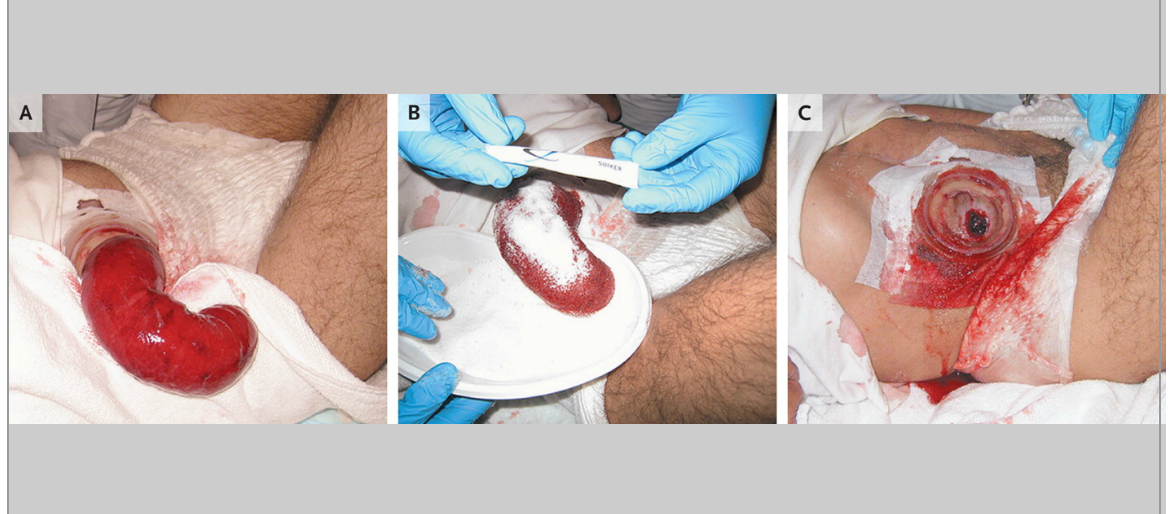
Sugar to Reduce a Prolapsed Ileostomy

N Engl J Med 2011; 364:1855May 12, 2011DOI: 10.1056/NEJMicm1012908
Sugar to Reduce a Prolapsed Ileostomy
Alexandra R.M.L. Brandt, M.D., and Olaf Schouten, M.D., Ph.D.
A 62-year-old man presented to the emergency department with a prolapsed ileostomy (Panel A). He had undergone ileostomy 25 months earlier for the treatment of mesenteric ischemia requiring an extended right hemicolectomy. The prolapse had occurred 12 hours before presentation, with no known cause. An attempt at manual reduction of the prolapse was unsuccessful. The patient’s severe coexisting cardiovascular and respiratory conditions made the use of general anesthesia and surgical reduction a risky therapeutic option. As has been previously described in the management of anal prolapse, bovine uterine prolapse, and (rarely) ileostomal prolapse, plain granulated sugar was applied to the mucosa of the prolapsed ileum to promote the osmotic shift of fluid out of the edematous tissue (Panel B). Within 2 minutes, the edema had diminished sufficiently to allow spontaneous reduction of the prolapsed ileum (Panel C). Twenty-four hours later, endoscopic evaluation revealed mild ischemia of the lower portion of the ileum, which required no treatment. The patient was discharged the following day. Ileostomal prolapse did not recur during 6 months of follow-up.

Orv Hetil. 1990 Apr 1;131(13):691-5.
[Topical treatment using granulated sugar in advanced mediastinitis following open heart surgery].
[Article in Hungarian]
Szerafin T, Vaszily M, Péterffy A.
The complications caused by infection were examined prospectively in the case of 1164 patients who had undergone open heart operation. Postoperative mediastinitis occurred in 15 cases (1.3%). Owing to mediastinal infection verified by bacteriological findings all patients had to undergo surgical intervention. Ten patients were treated by closed mediastinal irrigation. This method was effective in the case of five patients. Granulated sugar treatment was locally applied in five cases because of an infection, relapsing in spite of a closed treatment, and in four cases primarily, because of advanced mediastinitis and sternum osteomyelitis. With the mediastinal cavity being filled with granulated sugar twice a day, a rapid emptying of the wound and granulation tissue formation was observed in all patients. Redressing was easy and painless. Out of the 9 patients treated by granulated sugar three died before being discharged, but none of the deaths were due to wound complications. The rest of the patients were discharged cured averagely after 91.6 +/- 8.0 days. During the average 22 months’ follow up period recurrence of sternal infection was not observed in the group treated by granulated sugar, while out of the 5 patients cured by closed mediastinal irrigation two had to undergo another operation after a few months because of the formation of sternal fistula. The authors consider the granulated sugar treatment to be an effective method in the treatment of obstinate and advanced mediastinal infections.

J Cardiovasc Surg (Torino). 2000 Oct;41(5):715-9.
Treatment of recurrent postoperative mediastinitis with granulated sugar.
De Feo M, Gregorio R, Renzulli A, Ismeno G, Romano GP, Cotrufo M.
BACKGROUND:
The authors report their experience with granulated sugar as dressing technique in the treatment of postoperative mediastinitis refractory to a closed irrigation system.
METHODS:
Between January 1990 and January 1998, mediastinitis developed in 61 (0,93%) of 6521 patients who had undergone open heart surgery. Diagnosis of sternal infections was based on wound tenderness, drainage, cellulitis, fever associated with sternal instability. All of them were initially treated with surgical debridement and closed chest irrigation. Nine patients with postcardiotomy mediastinitis refractory to closed chest irrigation underwent open dressing with granulated sugar. All of them were febrile with leukocytosis and positive wound cultures.
RESULTS:
Bacteria isolated were staphylococcus aureus in 6 cases, staphylococcus epidermidis in 2 and pseudomonas in 1. Redebridement was performed in all cases and the wound was filled with granulated sugar four times a day. Fever ceased within 4.3+/-1.3 days from the beginning of treatment and WBC became normal after 6.6+/-1.6 days. Three patients had hyperbaric therapy as associated treatment. Complete wound healing was achieved in 58.8+/-32.9 days (three patients underwent successful pectoralis muscle flaps).
CONCLUSIONS:
Sugar treatment is a reasonable and effective option in patients with mediastinitis refractory to closed irrigation treatment. It may be used either as primary treatment or as a bridge to pectoralis muscle flaps.

Scand J Thorac Cardiovasc Surg. 1991;25(1):77-80.
Granulated sugar treatment of severe mediastinitis after open-heart surgery.
Szerafin T, Vaszily M, Péterffy A.
Fifteen cases of mediastinitis developing after 1,164 open-heart operations (incidence 1.3%) were analyzed. Closed mediastinal irrigation was used as primary therapy in ten cases and led to complete healing in five. Granulated sugar treatment was given primarily to four patients and to five others after failure of closed mediastinal irrigation. The sugar treatment was successful in six patients with hospital stay averaging 91.6 +/- 8 days. The three other patients in this group died before discharge from hospital. During 22-month follow-up there was no recurrence of mediastinitis in the granulated sugar group, but reoperation was necessitated by sternal fistula in two of the patients with closed mediastinal irrigation. Granulated sugar treatment is effective in refractory, severe mediastinal infections.

South Med J. 1981 Nov;74(11):1329-35.
Use of sugar and povidone-iodine to enhance wound healing: five year’s experience.
Knutson RA, Merbitz LA, Creekmore MA, Snipes HG.
Over a 56-month period (January 1976 to August 1980), we treated 605 patients for wounds, burns, and ulcers with granulated sugar and povidone-iodine. Rapid healing ensued, due to a reduction in bacterial contamination, rapid debridement of eschar, probable nourishment of surface cells, filling of defects with granulation tissue, and covering of granulation tissue with epithelium. The requirements for skin grafting and antibiotics were greatly reduced, as were hospital costs for wound, burn, and ulcer care.

BMJ Case Rep. 2013 Feb 28;2013. pii: bcr2012007565. doi: 10.1136/bcr-2012-007565.
Granulated sugar to reduce an incarcerated prolapsed defunctioning ileostomy.
Mohammed O, West M, Chandrasekar R.
This case report discusses the successful application of granulated sugar to reduce a prolapsed ileostomy thereby eliminating the need for an emergency surgery.

Tech Coloproctol. 2010 Sep;14(3):269-71. doi: 10.1007/s10151-009-0507-1. Epub 2009 Jul 11.
Reduction of an incarcerated, prolapsed ileostomy with the assistance of sugar as a desiccant.
Shapiro R, Chin EH, Steinhagen RM.
Prolapse is a well-described complication after ileostomy or colostomy, and is typically asymptomatic and easily reduced. Acute incarceration of a prolapsed stoma is a rare event, however. A patient presented with an incarcerated, prolapsed ileostomy causing small bowel obstruction and stomal ischemia. Successful reduction was performed with the assistance of sugar as a desiccant. Incarceration of a prolapsed ileostomy is highly atypical, but can be approached in a similar manner to an incarcerated rectal prolapse. Successful reduction can prevent an emergent operation, allowing for medical optimization and elective surgical treatment if necessary.

J Diabetes Sci Technol. 2010 Sep 1;4(5):1139-45.
Use of sugar on the healing of diabetic ulcers: a review.
Biswas A, Bharara M, Hurst C, Gruessner R, Armstrong D, Rilo H.
With the advent of several innovative wound care management tools, the choice of products and treatment modalities available to clinicians continues to expand. High costs associated with wound care, especially diabetic foot wounds, make it important for clinician scientists to research alternative therapies and optimally incorporate them into wound care protocols appropriately. This article reviews using sugar as a treatment option in diabetic foot care and provides a guide to its appropriate use in healing foot ulcers. In addition to a clinical case study, the physiological significance and advantages of sugar are discussed.

J Exp Pathol (Oxford). 1990 Apr;71(2):155-70.
A controlled model of moist wound healing: comparison between semi-permeable film, antiseptics and sugar paste.
Archer HG, Barnett S, Irving S, Middleton KR, Seal DV.
An established wound model in the pig has been modified using a Stomahesive ring to enable study of the effects of fluids used in wound care. Full thickness wounds (up to 9 mm deep) were treated with the substances under test. Each application was held in place with a Stomahesive flange, the inner part of which had been excised as far as the hard plastic ring. All dressings were then covered with OpSite which allowed gaseous exchange whilst retaining treatment fluids and secretions. Wounds were treated immediately and at 2 and 4 days. The experiment was terminated after 7 days and the whole wound, with dressing, was excised for histological examination. The wounds covered with OpSite alone and those treated with sugar paste under Opsite were found to be infilled with granulation tissue over which epidermal migration was taking place. Those wounds which had been packed with gauze, to which had been added one of the following: chlorhexidine gluconate 0.2%, Irgasan 0.2%, povidone iodine 0.8% or EUSOL half-strength, showed delayed healing in that less infilling had taken place over the same time period. This delay could be attributed to the nature of the chemicals used and/or the influence of gauze packing. This delay in the healing of wounds treated with chemical agents was least with EUSOL half-strength and greatest with chlorhexidine. No toxic effects were observed with sugar paste which may be preferable to antiseptics for the management of dirty or infected wounds.

Pathogenesis of Wound and Biomaterial-Associated Infections 1990, pp 159-162
Development of a Semi-Synthetic Sugar Paste for Promoting Healing of Infected Wounds
Keith R. Middleton, David V. Seal
Pastes comprising primarily sucrose and polyethylene glycol 400 have been used with good effect to treat infected and malodorous wounds in many patients. The pastes have good in vitro antimicrobial activity and demonstrated no toxic effects in full thickness wounds in a controlled trial in a pig model. Other commonly used antiseptics that were tested showed impairment of wound healing. Sugar paste is inexpensive and should be considered for the treatment of infected wounds in preference to other antiseptics.

Ann Emerg Med. 1997 Sep;30(3):347-9.
Sucrose as an aid to manual reduction of incarcerated rectal prolapse.
Coburn WM 3rd, Russell MA, Hofstetter WL.
Incarcerated rectal prolapse is a potential surgical emergency. We report a case in which a simple but effective technique involving the desiccating effect of granulated sugar (sucrose) was used to aid the manual reduction of prolapsed but viable rectal tissue.

Dis Colon Rectum. 1991 May;34(5):416-8.
Sugar in the reduction of incarcerated prolapsed bowel. Report of two cases.
Myers JO, Rothenberger DA.
Incarcerated, prolapsed rectum, colostomies, and ileostomies, when viable, may be reduced using ordinary table sugar. The placing of sugar granules on the incarcerated bowel results in a decrease in tissue edema and spontaneous bowel reduction. The technique, case reports, and a review of the literature are herein reported.

J Wound Care. 2011 May;20(5):206, 208, 210 passim.
Use of granulated sugar therapy in the management of sloughy or necrotic wounds: a pilot study.
Murandu M, Webber MA, Simms MH, Dealey C.
” Preliminary data suggest that sugar is an effective wound cleansing and is safe to use in patients with insulin-dependent diabetes. In vitro studies demonstrate that sugar inhibits bacterial growth.”

Microb Pathog. 2012 Jan;52(1):85-91. doi: 10.1016/j.micpath.2011.10.008. Epub 2011 Nov 4.
Sugar inhibits the production of the toxins that trigger clostridial gas gangrene.
Méndez MB, Goñi A, Ramirez W, Grau RR.
“The present results are analyzed in the context of the role of CcpA for the development and aggressiveness of clostridial gas gangrene and the well-known, although poorly understood, anti-infective and wound healing effects of sugars and related substances.”

Arch Dermatol Res. 2007 Nov;299(9):449-56. Epub 2007 Aug 7.
Mixture of sugar and povidone-iodine stimulates healing of MRSA-infected skin ulcers on db/db mice.
Shi CM, Nakao H, Yamazaki M, Tsuboi R, Ogawa H.
“These results indicate that wounding on db/db mice provides a useful animal model of bacterial skin infections, and that a 70% sugar and 3% povidone-iodine paste is an effective topical agent for the treatment of diabetic skin ulcers.”

Arch Dermatol Res. 2006 Sep;298(4):175-82. Epub 2006 Jul 22.
Mixture of sugar and povidone–iodine stimulates wound healing by activating keratinocytes and fibroblast functions.
Nakao H, Yamazaki M, Tsuboi R, Ogawa H.
“SP, the mixture of sugar and povidone–iodine, is likely to act on wounds not only as an antibiotic agent, but also as a modulator for keratinocytes and fibroblasts.”

Antimicrob Agents Chemother. 1983 May;23(5):766-73.
In vitro study of bacterial growth inhibition in concentrated sugar solutions: microbiological basis for the use of sugar in treating infected wounds.
Chirife J, Herszage L, Joseph A, Kohn ES.
The use of sugar for the treatment of infected wounds was investigated in in vitro experiments with bacteria pathogenic to humans, such as Escherichia coli, Pseudomonas aeruginosa, Klebsiella pneumoniae, and Staphylococcus aureus. Studies showed that solutions of appropriate sugar concentration incubated at pH 7.0 and 35 degrees C were lethal to the bacterial species studied. On the basis of these results, it is proposed that an important function of sugar in the treatment of infected wounds is to create an environment of low water activity (aw), which inhibits or stresses bacterial growth.

Int Surg. 1984 Oct-Dec;69(4):308.
Sugar in the treatment of infected surgical wounds.
Rahal F, Mimica IM, Pereira V, Athié E.
Forty-two patients with infected wounds were treated with common sugar. In all cases, the infections cleared within five to 30 days.

More:
Merck Veterinary Manual: Initial Wound Treatment
“Sugar Dressings
Sugar has been used as an inexpensive wound dressing for over 3 centuries. The use of sugar is based on its high osmolality, which draws fluid out of the wound. Reducing water in the wound inhibits the growth of bacteria. The use of sugar also aids in the debridement of necrotic tissue, while preserving viable tissue. Granulated sugar is placed into the wound cavity in a layer 1-cm thick and covered with a thick dressing to absorb fluid drawn from the wound. The sugar dressing should be changed once or twice daily or more frequently as needed (eg, whenever “strike-through” is seen on the bandage). During the bandage change, the wound should be liberally lavaged with warm saline or tap water. Sugar dressings may be used until granulation tissue is seen. Once all infection is resolved, the wound may be closed or allowed to epithelize. Because a large volume of fluid can be removed from the wound, the patient’s hemodynamic and hydration status must be monitored and treated accordingly. Hypovolemia and low colloid osmotic pressure are complications that may be associated with this therapy.”

The combination of sugar with antibiotics may hold hope for treatment of persistent bacterial infections
Sweet Blood: A back country treatment for open wounds
Sugar application in reduction of incarcerated prolapsed rectum
Trick of the Trade: “Pour some sugar on me”
A spoonful of sugar helps wounds heal faster
Sugar heals wounds faster than antibiotics
The use of granulated sugar to treat two pressure ulcers
Pouring granulated sugar on wounds ‘can heal them faster than antibiotics’
Family sugar remedy tested for healing people’s wounds
HEALTH; Healing Treatment, 4,000 Years Old, Is Revived
Cut yourself? Tribal remedy of sprinkling SUGAR on wound heals it faster
Using Sugar To Treat Those Nasty Wounds
HONEY & SUGAR OUTPERFORM ANTIBIOTIC OINTMENTS IN TREATING WOUNDS AND BURNS

Posted in General.

Tagged with , , , , , , , , , , , , , , , .


Trials and Errors: Why Science Is Failing Us

Also see:
Ben Goldacre: Battling bad science

Photo: Mauricio Alejo

Every year, nearly $100 billion is invested in biomedical research in the US, all of it aimed at teasing apart the invisible bits of the body.

On November 30, 2006, executives at Pfizer—the largest pharmaceutical company in the world—held a meeting with investors at the firm’s research center in Groton, Connecticut. Jeff Kindler, then CEO of Pfizer, began the presentation with an upbeat assessment of the company’s efforts to bring new drugs to market. He cited “exciting approaches” to the treatment of Alzheimer’s disease, fibromyalgia, and arthritis. But that news was just a warm-up. Kindler was most excited about a new drug called torcetrapib, which had recently entered Phase III clinical trials, the last step before filing for FDA approval. He confidently declared that torcetrapib would be “one of the most important compounds of our generation.”

Kindler’s enthusiasm was understandable: The potential market for the drug was enormous. Like Pfizer’s blockbuster medication, Lipitor—the most widely prescribed branded pharmaceutical in America—torcetrapib was designed to tweak the cholesterol pathway. Although cholesterol is an essential component of cellular membranes, high levels of the compound have been consistently associated with heart disease. The accumulation of the pale yellow substance in arterial walls leads to inflammation. Clusters of white blood cells then gather around these “plaques,” which leads to even more inflammation. The end result is a blood vessel clogged with clumps of fat.

Lipitor works by inhibiting an enzyme that plays a key role in the production of cholesterol in the liver. In particular, the drug lowers the level of low-density lipoprotein (LDL), or so-called bad cholesterol. In recent years, however, scientists have begun to focus on a separate part of the cholesterol pathway, the one that produces high-density lipoproteins. One function of HDL is to transport excess LDL back to the liver, where it is broken down. In essence, HDL is a janitor of fat, cleaning up the greasy mess of the modern diet, which is why it’s often referred to as “good cholesterol.”

And this returns us to torcetrapib. It was designed to block a protein that converts HDL cholesterol into its more sinister sibling, LDL. In theory, this would cure our cholesterol problems, creating a surplus of the good stuff and a shortage of the bad. In his presentation, Kindler noted that torcetrapib had the potential to “redefine cardiovascular treatment.”

There was a vast amount of research behind Kindler’s bold proclamations. The cholesterol pathway is one of the best-understood biological feedback systems in the human body. Since 1913, when Russian pathologist Nikolai Anichkov first experimentally linked cholesterol to the buildup of plaque in arteries, scientists have mapped out the metabolism and transport of these compounds in exquisite detail. They’ve documented the interactions of nearly every molecule, the way hydroxymethylglutaryl-coenzyme A reductase catalyzes the production of mevalonate, which gets phosphorylated and condensed before undergoing a sequence of electron shifts until it becomes lanosterol and then, after another 19 chemical reactions, finally morphs into cholesterol. Furthermore, torcetrapib had already undergone a small clinical trial, which showed that the drug could increase HDL and decrease LDL. Kindler told his investors that, by the second half of 2007, Pfizer would begin applying for approval from the FDA. The success of the drug seemed like a sure thing.

And then, just two days later, on December 2, 2006, Pfizer issued a stunning announcement: The torcetrapib Phase III clinical trial was being terminated. Although the compound was supposed to prevent heart disease, it was actually triggering higher rates of chest pain and heart failure and a 60 percent increase in overall mortality. The drug appeared to be killing people.

That week, Pfizer’s value plummeted by $21 billion.

The story of torcetrapib is a tale of mistaken causation. Pfizer was operating on the assumption that raising levels of HDL cholesterol and lowering LDL would lead to a predictable outcome: Improved cardiovascular health. Less arterial plaque. Cleaner pipes. But that didn’t happen.

Such failures occur all the time in the drug industry. (According to one recent analysis, more than 40 percent of drugs fail Phase III clinical trials.) And yet there is something particularly disturbing about the failure of torcetrapib. After all, a bet on this compound wasn’t supposed to be risky. For Pfizer, torcetrapib was the payoff for decades of research. Little wonder that the company was so confident about its clinical trials, which involved a total of 25,000 volunteers. Pfizer invested more than $1 billion in the development of the drug and $90 million to expand the factory that would manufacture the compound. Because scientists understood the individual steps of the cholesterol pathway at such a precise level, they assumed they also understood how it worked as a whole.

This assumption—that understanding a system’s constituent parts means we also understand the causes within the system—is not limited to the pharmaceutical industry or even to biology. It defines modern science. In general, we believe that the so-called problem of causation can be cured by more information, by our ceaseless accumulation of facts. Scientists refer to this process as reductionism. By breaking down a process, we can see how everything fits together; the complex mystery is distilled into a list of ingredients. And so the question of cholesterol—what is its relationship to heart disease?—becomes a predictable loop of proteins tweaking proteins, acronyms altering one another. Modern medicine is particularly reliant on this approach. Every year, nearly $100 billion is invested in biomedical research in the US, all of it aimed at teasing apart the invisible bits of the body. We assume that these new details will finally reveal the causes of illness, pinning our maladies on small molecules and errant snippets of DNA. Once we find the cause, of course, we can begin working on a cure.

Photo: Mauricio Alejo

The problem with this assumption, however, is that causes are a strange kind of knowledge. This was first pointed out by David Hume, the 18th-century Scottish philosopher. Hume realized that, although people talk about causes as if they are real facts—tangible things that can be discovered—they’re actually not at all factual. Instead, Hume said, every cause is just a slippery story, a catchy conjecture, a “lively conception produced by habit.” When an apple falls from a tree, the cause is obvious: gravity. Hume’s skeptical insight was that we don’t see gravity—we see only an object tugged toward the earth. We look at X and then at Y, and invent a story about what happened in between. We can measure facts, but a cause is not a fact—it’s a fiction that helps us make sense of facts.

The truth is, our stories about causation are shadowed by all sorts of mental shortcuts. Most of the time, these shortcuts work well enough. They allow us to hit fastballs, discover the law of gravity, and design wondrous technologies. However, when it comes to reasoning about complex systems—say, the human body—these shortcuts go from being slickly efficient to outright misleading.

Consider a set of classic experiments designed by Belgian psychologist Albert Michotte, first conducted in the 1940s. The research featured a series of short films about a blue ball and a red ball. In the first film, the red ball races across the screen, touches the blue ball, and then stops. The blue ball, meanwhile, begins moving in the same basic direction as the red ball. When Michotte asked people to describe the film, they automatically lapsed into the language of causation. The red ball hit the blue ball, which caused it to move.

This is known as the launching effect, and it’s a universal property of visual perception. Although there was nothing about causation in the two-second film—it was just a montage of animated images—people couldn’t help but tell a story about what had happened. They translated their perceptions into causal beliefs.

Michotte then began subtly manipulating the films, asking the subjects how the new footage changed their description of events. For instance, when he introduced a one-second pause between the movement of the balls, the impression of causality disappeared. The red ball no longer appeared to trigger the movement of the blue ball. Rather, the two balls were moving for inexplicable reasons.

Michotte would go on to conduct more than 100 of these studies. Sometimes he would have a small blue ball move in front of a big red ball. When he asked subjects what was going on, they insisted that the red ball was “chasing” the blue ball. However, if a big red ball was moving in front of a little blue ball, the opposite occurred: The blue ball was “following” the red ball.

There are two lessons to be learned from these experiments. The first is that our theories about a particular cause and effect are inherently perceptual, infected by all the sensory cheats of vision. (Michotte compared causal beliefs to color perception: We apprehend what we perceive as a cause as automatically as we identify that a ball is red.) While Hume was right that causes are never seen, only inferred, the blunt truth is that we can’t tell the difference. And so we look at moving balls and automatically see causes, a melodrama of taps and collisions, chasing and fleeing.

The second lesson is that causal explanations are oversimplifications. This is what makes them useful—they help us grasp the world at a glance. For instance, after watching the short films, people immediately settled on the most straightforward explanation for the ricocheting objects. Although this account felt true, the brain wasn’t seeking the literal truth—it just wanted a plausible story that didn’t contradict observation.

This mental approach to causality is often effective, which is why it’s so deeply embedded in the brain. However, those same shortcuts get us into serious trouble in the modern world when we use our perceptual habits to explain events that we can’t perceive or easily understand. Rather than accept the complexity of a situation—say, that snarl of causal interactions in the cholesterol pathway—we persist in pretending that we’re staring at a blue ball and a red ball bouncing off each other. There’s a fundamental mismatch between how the world works and how we think about the world.

The good news is that, in the centuries since Hume, scientists have mostly managed to work around this mismatch as they’ve continued to discover new cause-and-effect relationships at a blistering pace. This success is largely a tribute to the power of statistical correlation, which has allowed researchers to pirouette around the problem of causation. Though scientists constantly remind themselves that mere correlation is not causation, if a correlation is clear and consistent, then they typically assume a cause has been found—that there really is some invisible association between the measurements.

Researchers have developed an impressive system for testing these correlations. For the most part, they rely on an abstract measure known as statistical significance, invented by English mathematician Ronald Fisher in the 1920s. This test defines a “significant” result as any data point that would be produced by chance less than 5 percent of the time. While a significant result is no guarantee of truth, it’s widely seen as an important indicator of good data, a clue that the correlation is not a coincidence.

Photo: Mauricio AlejoPhoto: Mauricio Alejo

But here’s the bad news: The reliance on correlations has entered an age of diminishing returns. At least two major factors contribute to this trend. First, all of the easy causes have been found, which means that scientists are now forced to search for ever-subtler correlations, mining that mountain of facts for the tiniest of associations. Is that a new cause? Or just a statistical mistake? The line is getting finer; science is getting harder. Second—and this is the biggy—searching for correlations is a terrible way of dealing with the primary subject of much modern research: those complex networks at the center of life. While correlations help us track the relationship between independent measurements, such as the link between smoking and cancer, they are much less effective at making sense of systems in which the variables cannot be isolated. Such situations require that we understand every interaction before we can reliably understand any of them. Given the byzantine nature of biology, this can often be a daunting hurdle, requiring that researchers map not only the complete cholesterol pathway but also the ways in which it is plugged into other pathways. (The neglect of these secondary and even tertiary interactions begins to explain the failure of torcetrapib, which had unintended effects on blood pressure. It also helps explain the success of Lipitor, which seems to have a secondary effect of reducing inflammation.) Unfortunately, we often shrug off this dizzying intricacy, searching instead for the simplest of correlations. It’s the cognitive equivalent of bringing a knife to a gunfight.

These troubling trends play out most vividly in the drug industry. Although modern pharmaceuticals are supposed to represent the practical payoff of basic research, the R&D to discover a promising new compound now costs about 100 times more (in inflation-adjusted dollars) than it did in 1950. (It also takes nearly three times as long.) This trend shows no sign of letting up: Industry forecasts suggest that once failures are taken into account, the average cost per approved molecule will top $3.8 billion by 2015. What’s worse, even these “successful” compounds don’t seem to be worth the investment. According to one internal estimate, approximately 85 percent of new prescription drugs approved by European regulators provide little to no new benefit. We are witnessing Moore’s law in reverse.

This returns us to cholesterol, a compound whose scientific history reflects our tortured relationship with causes. At first, cholesterol was entirely bad; the correlations linked high levels of the substance with plaque. Years later, we realized that there were multiple kinds and that only LDL was bad. Then it became clear that HDL was more important than LDL, at least according to correlational studies and animal models. And now we don’t really know what matters, since raising HDL levels with torcetrapib doesn’t seem to help. Although we’ve mapped every known part of the chemical pathway, the causes that matter are still nowhere to be found. If this is progress, it’s a peculiar kind.

Back pain is an epidemic. The numbers are sobering: There’s an 80 percent chance that, at some point in your life, you’ll suffer from it. At any given time, about 10 percent of Americans are completely incapacitated by their lumbar regions, which is why back pain is the second most frequent reason people seek medical care, after general checkups. And all this treatment is expensive: According to a recent study in The Journal of the American Medical Association, Americans spend nearly $90 billion every year treating back pain, which is roughly equivalent to what we spend on cancer.

When doctors began encountering a surge in patients with lower back pain in the mid-20th century, as I reported for my 2009 book How We Decide, they had few explanations. The lower back is an exquisitely complicated area of the body, full of small bones, ligaments, spinal discs, and minor muscles. Then there’s the spinal cord itself, a thick cable of nerves that can be easily disturbed. There are so many moving parts in the back that doctors had difficulty figuring out what, exactly, was causing a person’s pain. As a result, patients were typically sent home with a prescription for bed rest.

This treatment plan, though simple, was still extremely effective. Even when nothing was done to the lower back, about 90 percent of people with back pain got better within six weeks. The body healed itself, the inflammation subsided, the nerve relaxed.

Over the next few decades, this hands-off approach to back pain remained the standard medical treatment. That all changed, however, with the introduction of magnetic resonance imaging in the late 1970s. These diagnostic machines use powerful magnets to generate stunningly detailed images of the body’s interior. Within a few years, the MRI machine became a crucial diagnostic tool.

The view afforded by MRI led to a new causal story: Back pain was the result of abnormalities in the spinal discs, those supple buffers between the vertebrae. The MRIs certainly supplied bleak evidence: Back pain was strongly correlated with seriously degenerated discs, which were in turn thought to cause inflammation of the local nerves. Consequently, doctors began administering epidurals to quiet the pain, and if it persisted they would surgically remove the damaged disc tissue.

But the vivid images were misleading. It turns out that disc abnormalities are typically not the cause of chronic back pain. The presence of such abnormalities is just as likely to be correlated with the absence of back problems, as a 1994 study published in The New England Journal of Medicine showed. The researchers imaged the spinal regions of 98 people with no back pain. The results were shocking: Two-thirds of normal patients exhibited “serious problems” like bulging or protruding tissue. In 38 percent of these patients, the MRI revealed multiple damaged discs. Nevertheless, none of these people were in pain. The study concluded that, in most cases, “the discovery of a bulge or protrusion on an MRI scan in a patient with low back pain may frequently be coincidental.”

Similar patterns appear in a new study by James Andrews, a sports medicine orthopedist. He scanned the shoulders of 31 professional baseball pitchers. Their MRIs showed that 90 percent of them had abnormal cartilage, a sign of damage that would typically lead to surgery. Yet they were all in perfect health.

This is not the way things are supposed to work. We assume that more information will make it easier to find the cause, that seeing the soft tissue of the back will reveal the source of the pain, or at least some useful correlations. Unfortunately, that often doesn’t happen. Our habits of visual conclusion-jumping take over. All those extra details end up confusing us; the more we know, the less we seem to understand.

The only solution for this mental flaw is to deliberately ignore a wealth of facts, even when the facts seem relevant. This is what’s happening with the treatment of back pain: Doctors are now encouraged to not order MRIs when making diagnoses. The latest clinical guidelines issued by the American College of Physicians and the American Pain Society strongly recommended that doctors “not routinely obtain imaging or other diagnostic tests in patients with nonspecific low back pain.”

And it’s not just MRIs that appear to be counterproductive. Earlier this year, John Ioannidis, a professor of medicine at Stanford, conducted an in-depth review of biomarkers in the scientific literature. Biomarkers are molecules whose presence, once detected, are used to infer illness and measure the effect of treatment. They have become a defining feature of modern medicine. (If you’ve ever had your blood drawn for lab tests, you’ve undergone a biomarker check. Cholesterol is a classic biomarker.) Needless to say, these tests depend entirely on our ability to perceive causation via correlation, to link the fluctuations of a substance to the health of the patient.

In his resulting paper, published in JAMA, Ioannidis looked at only the most highly cited biomarkers, restricting his search to those with more than 400 citations in the highest impact journals. He identified biomarkers associated with cardiovascular problems, infectious diseases, and the genetic risk of cancer. Although these causal stories had initially triggered a flurry of interest—several of the biomarkers had already been turned into popular medical tests—Ioannidis found that the claims often fell apart over time. In fact, 83 percent of supposed correlations became significantly weaker in subsequent studies.

Consider the story of homocysteine, an amino acid that for several decades appeared to be linked to heart disease. The original paper detecting this association has been cited 1,800 times and has led doctors to prescribe various B vitamins to reduce homocysteine. However, a study published in 2010—involving 12,064 volunteers over seven years—showed that the treatment had no effect on the risk of heart attack or stroke, despite the fact that homocysteine levels were lowered by nearly 30 percent.

The larger point is that we’ve constructed our $2.5 trillion health care system around the belief that we can find the underlying causes of illness, the invisible triggers of pain and disease. That’s why we herald the arrival of new biomarkers and get so excited by the latest imaging technologies. If only we knew more and could see further, the causes of our problems would reveal themselves. But what if they don’t?

The failure of this drug in particular has not ended the development of new cholesterol medications. The potential market for them is simply too huge.

The failure of torcetrapib has not ended the development of new cholesterol medications—the potential market is simply too huge. Although the compound is a sobering reminder that our causal beliefs are defined by their oversimplifications, that even the best-understood systems are still full of surprises, scientists continue to search for the magic pill that will make cardiovascular disease disappear. Ironically, the latest hyped treatment, a drug developed by Merck called anacetrapib, inhibits the exact same protein as torcetrapib. The initial results of the clinical trial, which were made public in November 2010, look promising. Unlike its chemical cousin, this compound doesn’t appear to raise systolic blood pressure or cause heart attacks. (A much larger clinical trial is under way to see whether the drug saves lives.) Nobody can conclusively explain why these two closely related compounds trigger such different outcomes or why, according to a 2010 analysis, high HDL levels might actually be dangerous for some people. We know so much about the cholesterol pathway, but we never seem to know what matters.

Chronic back pain also remains a mystery. While doctors have long assumed that there’s a valid correlation between pain and physical artifacts—a herniated disc, a sheared muscle, a pinched nerve—there’s a growing body of evidence suggesting the role of seemingly unrelated factors. For instance, a recent study published in the journal Spine concluded that minor physical trauma had virtually no relationship with disabling pain. Instead, the researchers found that a small subset of “nonspinal factors,” such as depression and smoking, were most closely associated with episodes of serious pain. We keep trying to fix the back, but perhaps the back isn’t what needs fixing. Perhaps we’re searching for causes in the wrong place.

The same confusion afflicts so many of our most advanced causal stories. Hormone replacement therapy was supposed to reduce the risk of heart attack in postmenopausal women—estrogen prevents inflammation in blood vessels—but a series of recent clinical trials found that it did the opposite, at least among older women. (Estrogen therapy was also supposed to ward off Alzheimer’s, but that doesn’t seem to work, either.) We were told that vitamin D supplements prevented bone loss in people with multiple sclerosis and that vitamin E supplements reduced cardiovascular disease—neither turns out to be true.

It would be easy to dismiss these studies as the inevitable push and pull of scientific progress; some papers are bound to get contradicted. What’s remarkable, however, is just how common such papers are. One study, for instance, analyzed 432 different claims of genetic links for various health risks that vary between men and women. Only one of these claims proved to be consistently replicable. Another meta review, meanwhile, looked at the 49 most-cited clinical research studies published between 1990 and 2003. Most of these were the culmination of years of careful work. Nevertheless, more than 40 percent of them were later shown to be either totally wrong or significantly incorrect. The details always change, but the story remains the same: We think we understand how something works, how all those shards of fact fit together. But we don’t.

Given the increasing difficulty of identifying and treating the causes of illness, it’s not surprising that some companies have responded by abandoning entire fields of research. Most recently, two leading drug firms, AstraZeneca and GlaxoSmithKline, announced that they were scaling back research into the brain. The organ is simply too complicated, too full of networks we don’t comprehend.

David Hume referred to causality as “the cement of the universe.” He was being ironic, since he knew that this so-called cement was a hallucination, a tale we tell ourselves to make sense of events and observations. No matter how precisely we knew a given system, Hume realized, its underlying causes would always remain mysterious, shadowed by error bars and uncertainty. Although the scientific process tries to makes sense of problems by isolating every variable—imagining a blood vessel, say, if HDL alone were raised—reality doesn’t work like that. Instead, we live in a world in which everything is knotted together, an impregnable tangle of causes and effects. Even when a system is dissected into its basic parts, those parts are still influenced by a whirligig of forces we can’t understand or haven’t considered or don’t think matter. Hamlet was right: There really are more things in heaven and Earth than are dreamt of in our philosophy.

This doesn’t mean that nothing can be known or that every causal story is equally problematic. Some explanations clearly work better than others, which is why, thanks largely to improvements in public health, the average lifespan in the developed world continues to increase. (According to the Centers for Disease Control and Prevention, things like clean water and improved sanitation—and not necessarily advances in medical technology—accounted for at least 25 of the more than 30 years added to the lifespan of Americans during the 20th century.) Although our reliance on statistical correlations has strict constraints—which limit modern research—those correlations have still managed to identify many essential risk factors, such as smoking and bad diets.

And yet, we must never forget that our causal beliefs are defined by their limitations. For too long, we’ve pretended that the old problem of causality can be cured by our shiny new knowledge. If only we devote more resources to research or dissect the system at a more fundamental level or search for ever more subtle correlations, we can discover how it all works. But a cause is not a fact, and it never will be; the things we can see will always be bracketed by what we cannot. And this is why, even when we know everything about everything, we’ll still be telling stories about why it happened. It’s mystery all the way down.


Posted in General.


Bert Hill Coaches Charlie Francis Speed Rx to the Detroit Lions

Posted in General.

Tagged with , , , , , , , , .


Estrogen and Bowel Transit Time

Also see:
Ray Peat, PhD on the Benefits of the Raw Carrot
Dietary Fiber, Bowel Health, and Cancer
Hormonal profiles in women with breast cancer
Endometriosis and Estrogen
The effect of raw carrot on serum lipids and colon function
Protective Bamboo Shoots
Endotoxin-lipoprotein Hypothesis
Endotoxin: Poisoning from the Inside Out
Protection from Endotoxin
Bowel Toxins Accelerate Aging
Protective Cascara Sagrada and Emodin
Fermentable Carbohydrates, Anxiety, Aggression
Intestinal Serotonin and Bone Loss
Autoimmunity and Intestinal Flora

“Undigestible fiber, if it isn’t broken down by bowel bacteria, increases fecal bulk, and tends to speed the transit of material through the intestine, just as laxatives do. But some of these “fiber” materials, e.g., lignin, are themselves estrogenic, and other fibers, by promoting bacterial growth, can promote the conversion of harmless substances into toxins and carcinogens. When there is a clear “antiestrogen” effect from dietary fiber, it seems to be the result of accelerated transit through the intestine, speeding elimination and preventing reabsorption of the estrogen which has been excreted in the bile. Laxatives have this same effect on the excretion of estradiol.” -Ray Peat, PhD

Accelerated bowel transit time reduced estrogen:
Br J Cancer. 1997;76(3):395-400.
Lower serum oestrogen concentrations associated with faster intestinal transit.
Lewis SJ, Heaton KW, Oakey RE, McGarrigle HH.
Increased fibre intake has been shown to reduce serum oestrogen concentrations. We hypothesized that fibre exerts this effect by decreasing the time available for reabsorption of oestrogens in the colon. We tested this in volunteers by measuring changes in serum oestrogen levels in response to manipulation of intestinal transit times with senna and loperamide, then comparing the results with changes caused by wheat bran. Forty healthy premenopausal volunteers were placed at random into one of three groups. The first group took senna for two menstrual cycles then, after a washout period, took wheat bran, again for two menstrual cycles. The second group did the reverse. The third group took loperamide for two menstrual cycles. At the beginning and end of each intervention a 4-day dietary record was kept and whole-gut transit time was measured; stools were taken for measurement of pH and beta-glucuronidase activity and blood for measurement of oestrone and oestradiol and their non-protein-bound fractions and of oestrone sulphate. Senna and loperamide caused the intended alterations in intestinal transit, whereas on wheat bran supplements there was a trend towards faster transit. Serum oestrone sulphate fell with wheat bran (mean intake 19.8 g day(-1)) and with senna; total- and non-protein-bound oestrone fell with senna. No significant changes in serum oestrogens were seen with loperamide. No significant changes were seen in faecal beta-glucuronidase activity. Stool pH changed only with senna, in which case it fell. In conclusion, speeding up intestinal transit can lower serum oestrogen concentrations.

Eur J Gastroenterol Hepatol. 1998 Jan;10(1):33-9.
Intestinal absorption of oestrogen: the effect of altering transit-time.
Lewis SJ, Oakey RE, Heaton KW.
OBJECTIVE:
The mechanism by which a high fibre diet may reduce serum oestrogens is unknown. We hypothesized that time is a rate-limiting factor in oestrogen absorption from the colon so that changes in colonic transit-rate affect the proportion of oestrogen that is deconjugated and/or absorbed.
AIM:
To determine if alteration of intestinal transit rate would influence the absorption of an oral dose of oestradiol glucuronide.
PARTICIPANTS:
Twenty healthy postmenopausal women recruited by advertisement.
SETTING:
Department of Medicine, Bristol Royal Infirmary.
METHODS:
Volunteers consumed, in turn, wheat bran, senna, loperamide and bran shaped plastic flakes, each for 10 days with a minimum 2 week washout period between study periods, dietary intake being unchanged. Before and in the last 4 days of each intervention whole-gut transit-time, defecation frequency, stool form, stool beta-glucuronidase activity, stool pH and the absorption of a 1.5 mg dose of oestradiol glucuronide were measured.
RESULTS:
Wheat bran, senna and plastic flakes led to the intended reduction in whole-gut transit-time, increase in defecatory frequency and increase in stool form score. Loperamide caused the opposite effect. The length of time the absorbed oestrogen was detectable in the serum fell with wheat bran and senna, although this was only significant for oestradiol. Oestrone, but not oestradiol, was detectable for a longer time with loperamide. Plastic flakes had no effect on either oestrogen. Areas under the curve did not change significantly but tended to fall with the three transit-accelerating agents and to rise with loperamide.
CONCLUSION:
Our data indicate there is likely to be an effect of intestinal transit on the absorption of oestrogens but more refined techniques are needed to characterize this properly.

Estrogen slows bowel transit time:
Res Nurs Health. 1998 Jun;21(3):221-8.
Estrogen suppresses gastric motility response to thyrotropin-releasing hormone and stress in awake rats.
Bond EF, Heitkemper MM, Bailey SL.
Symptoms associated with gastric motility alteration vary with stress and ovarian hormone status, most notably in women with irritable bowel syndrome. This study examines combined effects, comparing gastric motility during administration of a stress-related neuropeptide thyrotropin-releasing hormone (TRH) and restraint stress in conscious rats of varied ovarian hormone status. Adult rats were ovariectomized and implanted with estrogen, progesterone, or vehicle-releasing pellets. After 21 days, intracerebroventricular (i.c.) cannula and gastric tension transducer were implanted. After 25-27 days, motility was recorded during neuropeptide injection (TRH/saline i.c.) or restraint stress. TRH induced increased motility in all groups; the response varied with hormone group, and was least and briefest in estrogen-treated rats. Motility during restraint varied with hormone group; it was diminished in estrogen-treated but not other groups. Ovarian hormone status (estrogen) modifies gut response to TRH and restraint stress.

Intestinal flora, diet, and estrogen:
Rev Infect Dis. 1984 Mar-Apr;6 Suppl 1:S85-90.
Estrogens, breast cancer, and intestinal flora.
Gorbach SL.
Epidemiologic evidence has linked diet to breast cancer, with the highest cancer rates observed in women who eat a high fat-low fiber diet. There is also substantial information, both clinical and experimental, that implicates estrogens in the etiology of breast cancer. A recent study from our laboratory has shown that diet influences levels of estrogens, and the main mechanism is metabolism of estrogens in the intestine. The intestinal microflora plays a key role in the enterohepatic circulation of estrogens by deconjugating bound estrogens that appear in the bile, thereby permitting the free hormones to be reabsorbed. By suppressing the microflora with antibiotic therapy, fecal estrogens increase and urinary estrogens decrease, changes indicating diminished intestinal reabsorption. A low fat-high fiber diet is associated with similar findings-high fecal estrogens and low urinary estrogens. It appears that the microflora plays a key role in the metabolism of female sex hormones.

Posted in General.

Tagged with , , , , , , , , , , , .